“Remembering Officer Julian: A Heartbreaking Loss of Courage and Hope” 3723c

The holiday season is traditionally a time for joy, togetherness, and celebration. But for one family, this Christmas season will forever carry a painful memory. Just days before Christmas, 10-year-old Julian Galloway, who fought an inspiring battle against brain cancer, passed away, leaving his family, community, and all who knew him heartbroken. Julian’s passing marks the end of a long and courageous journey that began when he was diagnosed with a brain tumor in December 2019. Though his fight was long and grueling, Julian’s bravery and spirit captured the hearts of everyone he met, and his legacy will live on, reminding us of the power of hope, love, and resilience.

Julian’s story began on December 23, 2019, when he was diagnosed with brain cancer at just seven years old. It was a diagnosis that no parent could ever prepare for, especially so close to Christmas. What should have been a time filled with holiday cheer quickly turned into a battle for survival. Yet, Julian did not let this diagnosis define him. He faced every obstacle with courage and determination, and instead of succumbing to the weight of the disease, he chose to be a beacon of hope for others.
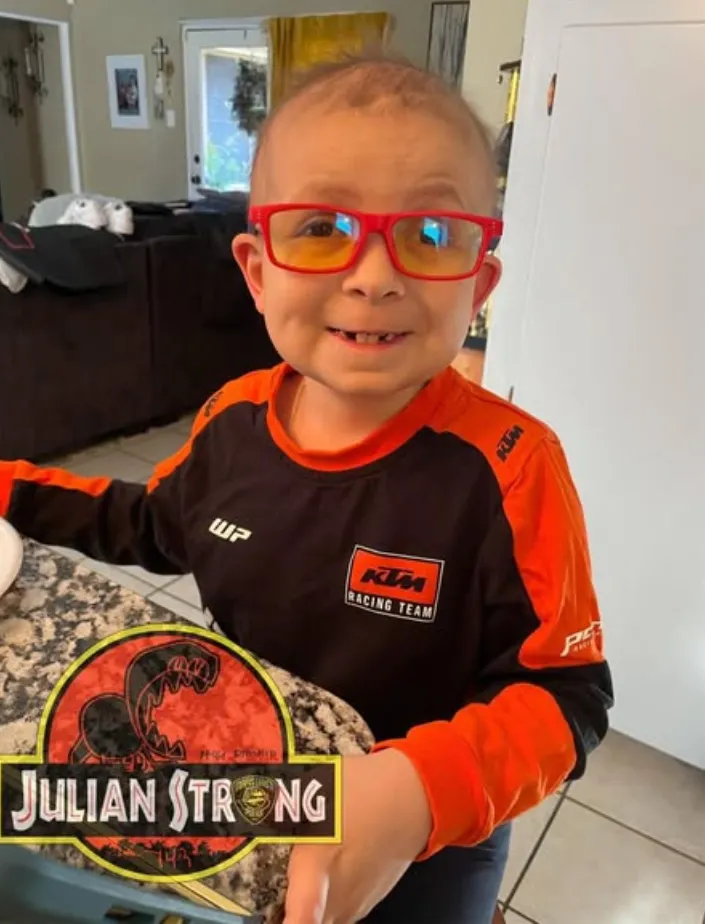
Julian’s journey through cancer treatments was nothing short of heroic. Over the years, he underwent numerous rounds of treatment, including surgeries, chemotherapy, and radiation. Despite the immense physical and emotional toll, Julian’s spirit remained unbroken. He continued to smile, laugh, and fight, never allowing cancer to steal his joy. His resilience inspired those around him and gave hope to countless families who were also battling childhood cancer.
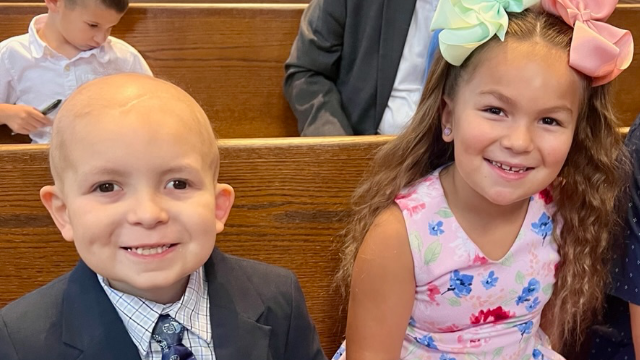
Throughout his journey, Julian became more than just a patient. He became a symbol of courage and strength. His story resonated far beyond the Coastal Bend, where he lived with his parents, Lee and Monica, and his siblings. People from all walks of life were touched by his unwavering determination and the grace with which he faced the hardest of circumstances. Julian’s battle for survival became a source of inspiration for others who were facing their own struggles.

One of the most powerful ways in which Julian touched lives was through his advocacy for childhood cancer awareness. While many children his age were focused on playing, learning, and growing, Julian was using his voice to raise awareness for the disease that threatened his life. He bravely shared his story, educating others about the realities of childhood brain cancer and encouraging people to support research and efforts to find a cure.
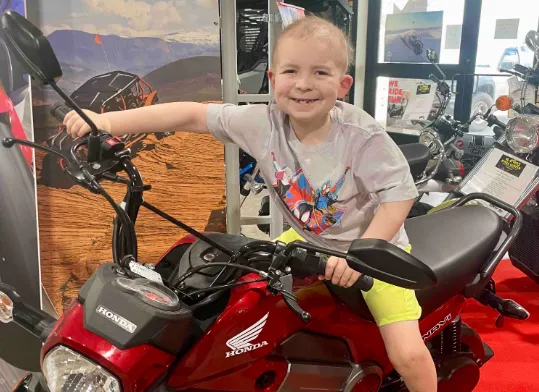
Julian’s work did not go unnoticed. In fact, the Corpus Christi Police Department recognized his incredible spirit by naming him an honorary officer. The honor was not given to him because of what he wore or the title he held, but because of who he was. Julian embodied the qualities that any officer would strive to have—fearlessness, joy, and determination. He showed the community that no matter what obstacles life throws at us, we can choose to rise above them and inspire others to do the same.
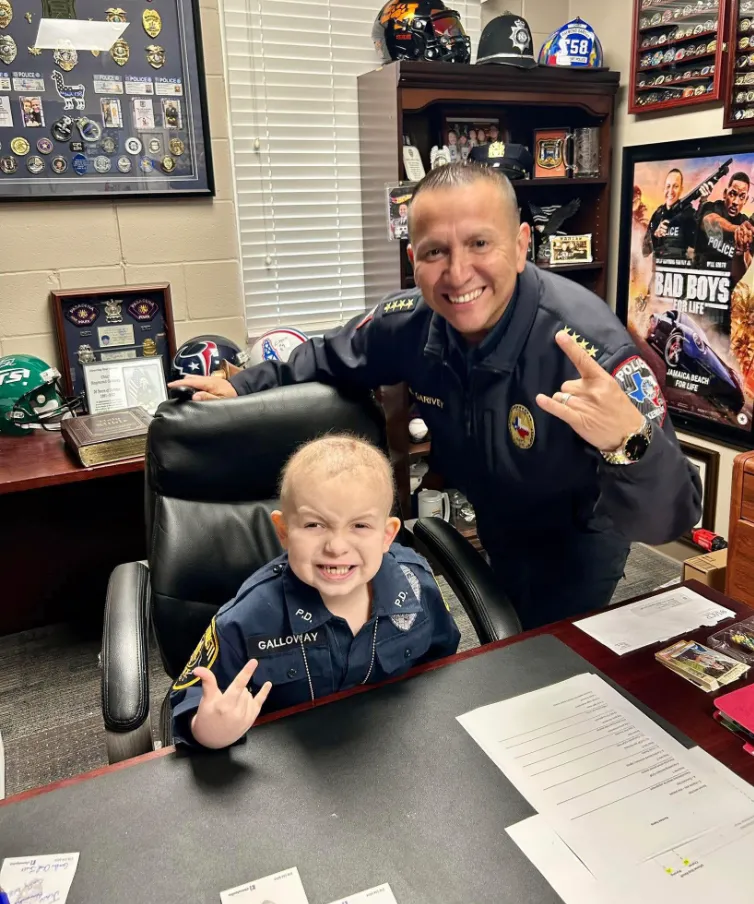
The recognition by the police department was just one of many ways in which Julian was celebrated during his life. His presence at local events, his inspiring social media posts, and his interactions with those around him all left an indelible mark on the people who had the privilege of meeting him. Julian became more than just a young boy facing cancer—he became a hero to many, an example of strength and grace in the face of unimaginable pain.

Unfortunately, despite his incredible bravery, Julian’s battle with cancer came to an end just days before Christmas in 2025. He passed away peacefully in the arms of his parents, Lee and Monica, leaving behind a family and community forever changed by his presence. His death, though expected in some ways, was still an incomprehensible loss. Julian had fought so hard for so long, and to see his journey end is a painful reminder of the fragility of life and the unpredictability of fate.
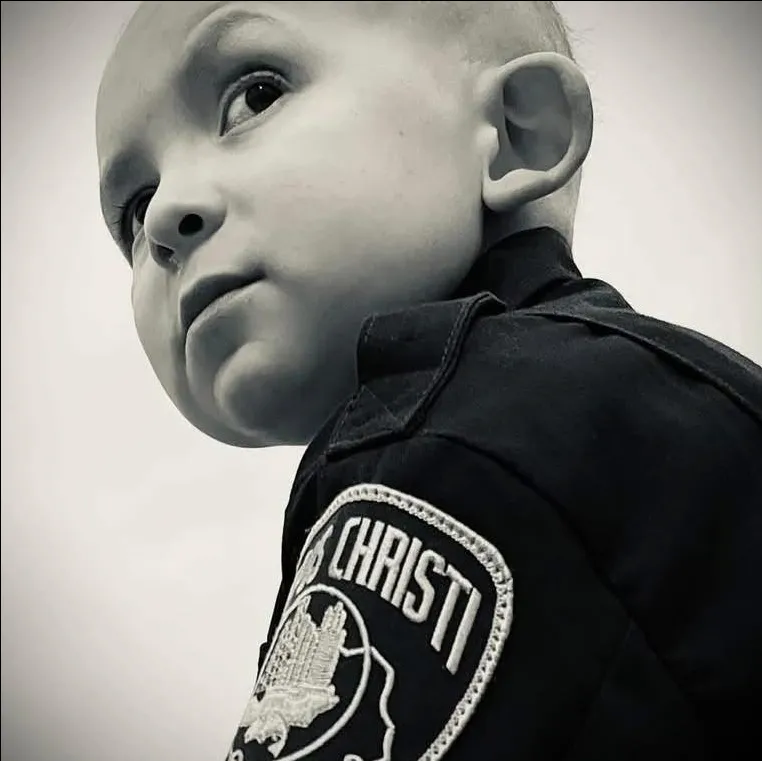
For Julian’s family, this Christmas will never be the same. The loss of a child is a pain that no parent should ever have to bear, and the Galloway family’s grief is unimaginable. But even in the midst of their sorrow, they can take comfort in knowing that Julian’s life had a profound impact on those around him. His legacy is one of courage, hope, and love. Julian showed the world what it means to fight for your life and to use your voice to make a difference. He may no longer be here in body, but his spirit lives on in the hearts of everyone he touched.
As we reflect on Julian’s life, it’s important to remember that his story is not just about the battle he fought against cancer. It’s about the love, kindness, and joy that he brought into the world despite his illness. Julian’s story is a reminder that no matter how difficult life gets, we always have the power to choose how we respond. We can choose to fight, to love, and to spread hope in even the darkest of times.
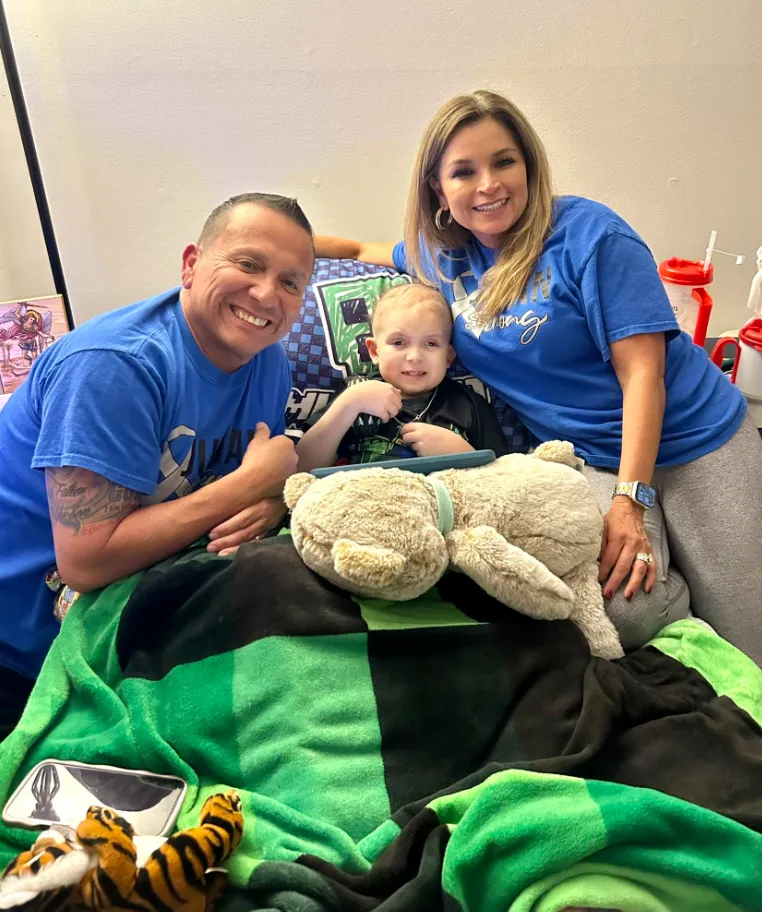
Julian’s passing has left a hole in the hearts of all who knew him, but his story will continue to inspire others. His parents, Lee and Monica, have shared their love and gratitude for the support they received during Julian’s fight. They have thanked everyone who prayed for their son, supported their family, and helped raise awareness for childhood brain cancer. Their message is one of gratitude, but also one of resilience. They will carry Julian’s memory with them always, and they know that his spirit will continue to guide them in the years to come.
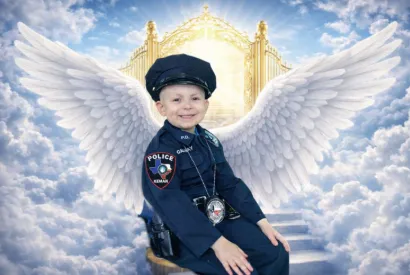
As we say goodbye to Julian, let us honor his memory by continuing the fight for childhood cancer awareness. Let us raise our voices for those who cannot speak for themselves and work together to find a cure for this devastating disease. Julian may have lost his battle, but his fight was not in vain. His story will live on, inspiring others to keep pushing forward, to keep fighting, and to keep spreading love and hope wherever they go.
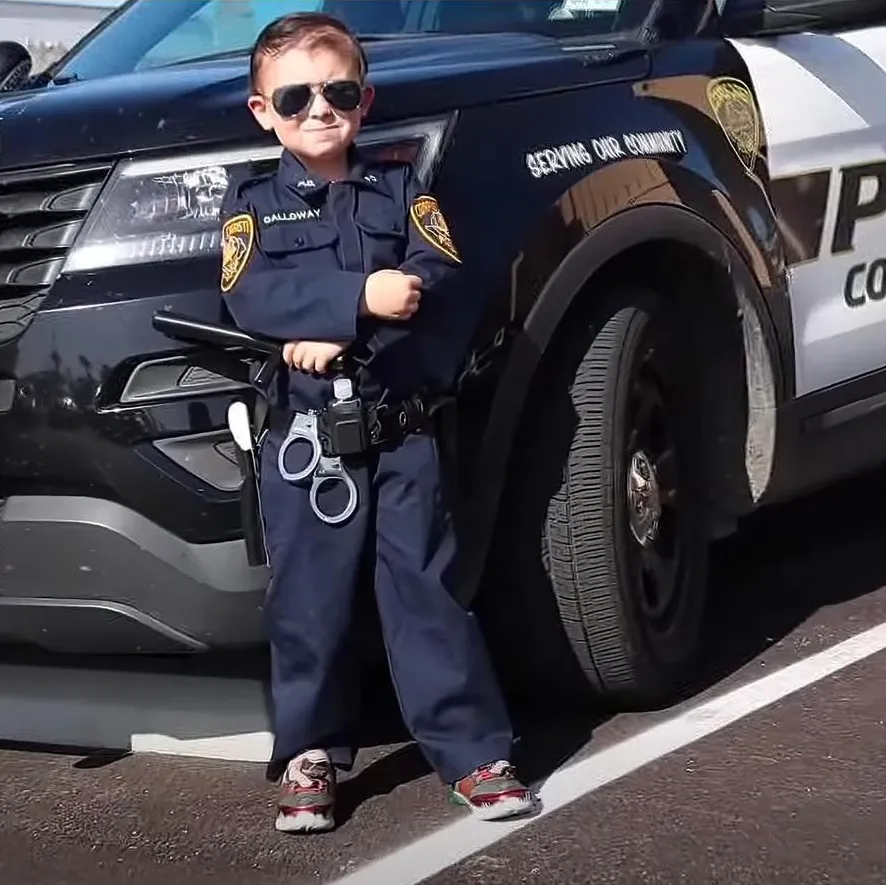
To Julian, our honorary officer, our hero, and our friend—thank you for showing us what it means to live with courage, to love with all our hearts, and to never give up. Your light will continue to shine brightly, and you will never be forgotten. Rest in peace, Julian. You will always be in our hearts. ??
A Son’s Unwavering Love: The Battle to Save His Mother from Terminal Cancer 3236c
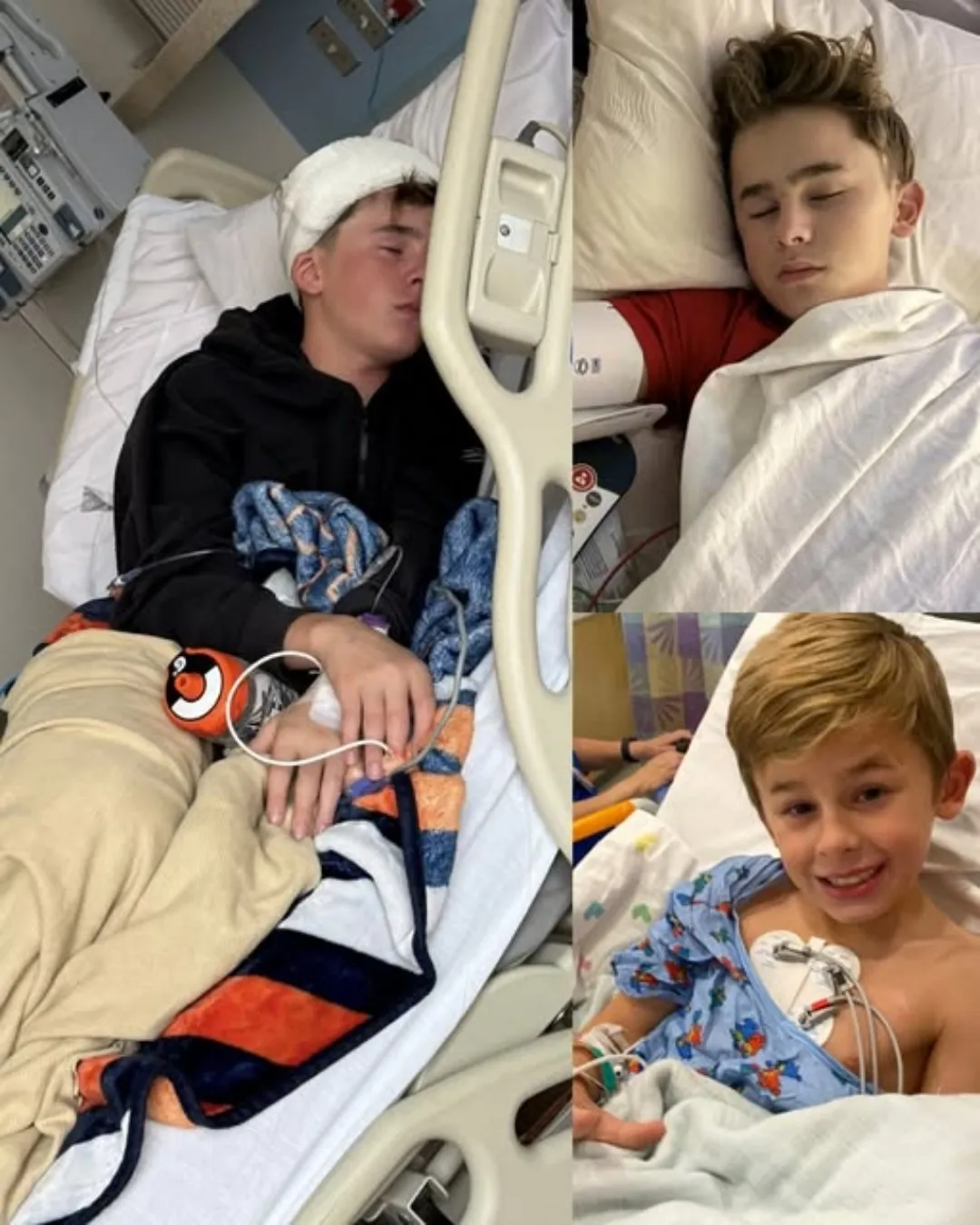
There are days in a parent’s life that feel split in two — the world before, and the world after.
And then there are days like yesterday.
Days when time moves like a contradiction: too slow to bear, too fast to understand. Days when every breath feels borrowed, every noise feels too loud, and every silence feels like a weight pressing against your ribs.
This is the story of Liam — a boy who should be out running, laughing, doing all the normal things boys his age do — and the mother who watched the hospital swallow another piece of his childhood. A story not about the dramatic chaos of emergency rooms, but about the quieter moments afterward… the ones no one warns you about.
Yesterday was one of those days.

THE MORNING THAT BEGAN IN THE DARK
They woke the family at 4 a.m.
Not gently. Not slowly. Just the bright overhead lights and the quiet urgency of a nurse whispering, “It’s time.”
Liam needed surgery at 4:30. That was the schedule, and schedules in hospitals feel like laws — unbreakable, unavoidable, indifferent to exhaustion.
His mother helped get him ready. Helped him into the gown. Helped him settle into the bed. Helped him stay calm through the nerves she could see pulsing beneath his skin.
And then, just like that… everything stopped.
They’d been bumped.
Someone else needed the operating room. Someone else needed the surgeon. Someone else’s emergency took priority. It wasn’t anyone’s fault, but it didn’t make the waiting any easier.
More hours.
More fear dressed as patience.
More of that heavy, suffocating quiet that only exists in hospitals at dawn.

THE SURGERY THAT FELT LIKE A LIFETIME
At 7:30, they finally came for him.
His mother walked alongside the rolling bed, her hand on his leg, her heart in her throat. For parents, the hallway to the OR is a tunnel — long, cold, and filled with memories of every previous moment they’ve handed their child over.
It never gets easier.
The surgery took two hours.
Two hours of pacing.
Two hours of trying not to imagine the worst.
Two hours of holding herself together because falling apart wouldn’t make anything faster, safer, or easier.
And then, finally, they wheeled him back in.
He was still asleep. Still completely under anesthesia. And in that moment, seeing him so small, swallowed by sheets and IV lines, it hit her again:
How much he’s had to endure.
How much he shouldn’t have to.
How unfair it is that hospital beds have become familiar places in his childhood.

THE MOMENT HE WOKE UP
His dad arrived with his brothers soon after. They stood around him, trying to look brave, trying to hold onto hope without letting him see the fear in their eyes.
Then Liam opened his.
And the first thing he did?
He reached out for them.
Not for a toy.
Not for water.
Not for comfort from a nurse.
For his family.
Hands.
Hugs.
Touch.
Connection.
The kind of instinct that shows exactly what fear steals from children — and exactly what love returns to them.
His mother watched all three of her boys gripping each other, trying so hard to be strong. Miles fed him small spoonfuls. Barrett held water to his lips.
It was almost too much to watch.
She cried — quietly, helplessly — because in that moment, she saw both the fragility and the fight inside her son.

THE SLEEP THAT WOULDN’T LET GO
After they left, Liam slept.
And slept.
And slept.
Hours passed in silence except for the hum of machines and the rustle of nurses checking vitals. A post-op CT scan showed good news — the shunt was functioning, the surgery had gone well — but even with that relief, he didn’t wake.
The exhaustion ran deeper than anesthesia.
It was the exhaustion of a child who’s been fighting too long.
Transfer came late — almost 10 p.m. — before they were finally moved out of the ICU. And for the first time in days, his mother slept too. Not because she stopped worrying. Not because things felt easy.
But because she was depleted.
She hadn’t realized how much of herself she’d been holding together with grit and prayer just to survive the hours.
And today?
He is still sleeping.

A DIFFERENT KIND OF RECOVERY
This recovery doesn’t look like his last one.
Not even close.
There are no silly jokes.
No bursts of energy.
No cravings for endless snacks.
No karaoke.
No mischief.
No spark that used to peek through even on the roughest days.
Instead, there is quiet.
There is sadness.
There is frustration simmering beneath the surface.
There is loneliness too, the kind that creeps in slowly and settles in the space where joy used to be.
His mother sees it — the way he stares off, the way his body curls slightly away, the way his eyes dim when the reality of his situation hits him again and again.
He knows his friends are out there, living their normal lives.
Laughing. Running. Playing.
Doing things he hasn’t been able to do in far too long.
And even though children rarely have the words for it, they feel it.
They feel left behind.

THE PART OF THE JOURNEY NO ONE TALKS ABOUT
There’s a roadmap for surgeries.
For medications.
For scans.
For procedures.
For physical recovery.
But no one prepares you for the emotional damage.
No doctor explains how to help a child grieve the childhood that slips through their fingers one hospital day at a time.
No pamphlet tells you how to explain why their friends are moving on without them, their lives untouched by medical vocabulary or sterile rooms.
No surgeon warns parents about the nights when their child will stare at the ceiling and ask, “Why me?”
Or worse — stop asking at all, because they already know there isn’t an answer.
His mother is trying her best to guide him through this part — the part after the physical trauma, when the emotional trauma comes rushing in like a second wave.
But she’s human.
She’s exhausted.
She’s hurting too.
And she knows this pain isn’t something she can bandage or medicate or negotiate away.

THE HEARTACHE ONLY A PARENT UNDERSTANDS
Every parent of a medically complex child knows this version of heartbreak:
The heartbreak of watching your child lose pieces of the life they should have had.
The heartbreak of seeing their bright spirit dim under the weight of loneliness.
The heartbreak of not being able to fix any of it, no matter how badly you want to.
It’s a unique, suffocating kind of pain — one that wraps itself around your ribs and stays there.
And yet, parents show up.
Every day.
Every hour.
Every minute.
They sit beside beds.
They whisper encouragement.
They hold hands.
They push hair off foreheads.
They relearn strength in ways most people never have to.
But even warriors need help.
Even mothers who hold the world together with trembling hands need someone to hold them too.

A QUESTION SENT INTO THE UNIVERSE
And so she asks — honestly, humbly, vulnerably:
“If anyone has ideas… or words… anything that helps a kid feel less left-behind in a journey like this… I’m all ears.”
She isn’t asking for miracles.
She isn’t asking for cures.
She isn’t asking for the impossible.
She’s asking for hope.
For guidance.
For something — anything — that might lift her son’s heart while his body heals.
Because this isn’t just about recovery.
It’s about the aftershocks.
It’s about the emotional bruises that linger longer than any surgical incision.
It’s about a boy who has already endured too much — and a mother who refuses to let the loneliness swallow him whole.

THE PART WHERE THE WORLD SHOWS UP
Maybe that’s why stories like this matter.
Because someone out there has lived this chapter before.
Someone out there knows the words that help.
Someone out there knows how to turn hospital days into moments of comfort, connection, or hope.
And maybe — just maybe — someone out there will say something that makes tomorrow a little lighter for Liam.
A little brighter.
A little less lonely.
Because healing is never just physical.
Sometimes it’s the right words at the right moment — spoken by someone who understands — that help a child feel seen again.
And sometimes, that’s the kind of medicine doctors can’t prescribe.
