“A Mother, a Belief, and a 6-Year-Old Found Dead: A Florida Community in Shock”.7552

A quiet neighborhood in Fort Pierce, Florida, woke up to a nightmare that no one could have imagined, a tragedy so disturbing that it has left an entire community struggling to understand how a six-year-old boy’s life could end this way.
On Friday morning, deputies with the St. Lucie County Sheriff’s Office arrived at a modest home for what was supposed to be a routine welfare check, the kind of call officers respond to every day.
Instead, they walked into a scene that would change everything.
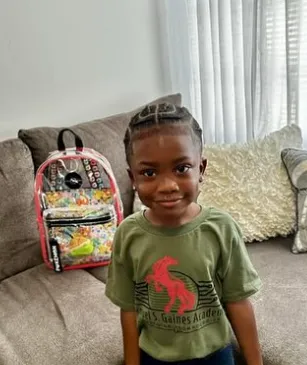
Inside the home, they found six-year-old Ra’myl Pierre lying lifeless in his bed, his small body wrapped in fabric, with only his face exposed.
The child had been dead for days.
And the person accused of causing his death was his own mother.
According to investigators, Ra’myl’s mother, 41-year-old Rhonda Paulynice, has now been charged with second-degree murder, failure to report a death, and altering a body.
Deputies say Paulynice told them she believed she was instructed by God to exorcise demons from her son’s body, a belief that allegedly led to actions that ended his life.
The welfare check was initiated around 10 a.m. after a school resource officer at Samuel Gaines Academy raised concerns.
Ra’myl had not been to school since May 14.
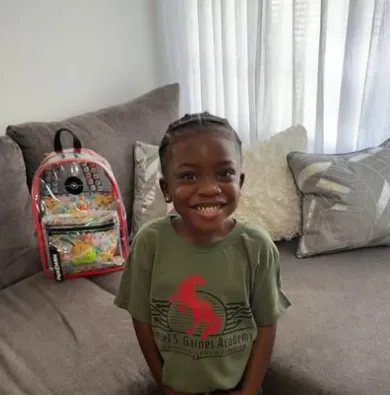
Days had passed without explanation, and for a child known to be active and well-loved at school, his absence stood out.
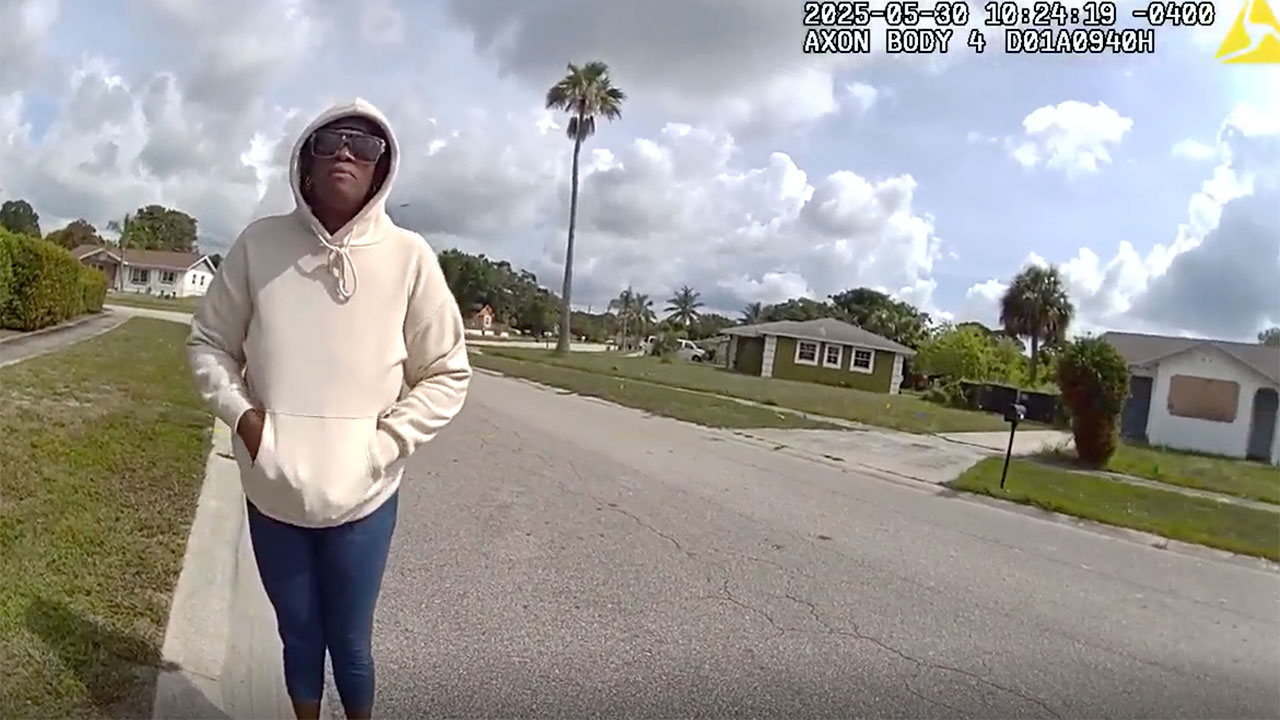
When deputies arrived at the home, Sheriff Richard Del Toro said Paulynice met them calmly in the driveway.
There were no signs of panic.
No frantic pleas.
No visible urgency.
She reportedly led the deputies inside the home and directly to her son’s bedroom.
That is where they found Ra’myl, lying motionless in his bed.
According to the criminal probable cause affidavit, Ra’myl’s body showed visible signs of decomposition, indicating he had been dead for several days.
Investigators believe Paulynice may have been attempting to preserve her son’s body, wrapping him carefully and keeping him in the bed where he had last slept.
As deputies spoke with Paulynice at the scene, her statements grew more alarming.
She allegedly told investigators that she believed God had instructed her to perform an exorcism on her son to remove demons from his body.
Sheriff Del Toro later explained that Paulynice believed when Ra’myl stopped moving and “basically passed away,” she felt the demons had been released.
According to the sheriff, she believed her son would eventually come back.
That belief, investigators say, may explain why no emergency services were called.
Why no report was made.
Why Ra’myl remained in his bed for days after his death.
Deputies say Paulynice told them the last time she spoke to her son was May 18.
Authorities believe that is the date Ra’myl was killed.
From that moment until deputies arrived, the child remained in the home, unseen by the outside world.
No one intervened.
No one knew.

Until a school noticed his absence.
Sheriff Del Toro described the case as deeply heartbreaking, not only for law enforcement, but for the entire community.
He extended condolences to Ra’myl’s classmates, teachers, and school staff, many of whom are now struggling to process the loss.
“From what I understand, this kid just lit the room up,” Del Toro said.
“He was just loved by everybody.”
“And they’re all gonna be having a very difficult time getting through this.”
Those who knew Ra’myl describe him as bright, energetic, and full of life, a child whose presence made others smile.
Now, his classroom sits with an empty seat.
His backpack will never be filled again.
His laughter will never echo down the school hallways.
Paulynice appeared in court Saturday via Zoom from jail, where a judge denied her bond.
She remains behind bars as investigators continue to piece together exactly what happened in the days leading up to Ra’myl’s death.
An autopsy was expected to be conducted to determine the official cause of death, a crucial step in understanding how the alleged exorcism turned fatal.
Authorities have not yet released those results.
Cases involving religious delusions and violence are among the most complex and painful for investigators, mental health professionals, and communities alike.
They raise difficult questions about mental illness, belief systems, and the moments when reality fractures beyond recognition.
They also raise questions about missed warning signs.
About whether intervention could have happened sooner.

About how a child could suffer and die behind closed doors without help arriving in time.
This case has shaken St. Lucie County, leaving residents stunned and searching for answers that may never fully satisfy the grief.
Neighbors have described the family as quiet.
No obvious signs of trouble had drawn attention to the home.
No calls.
No reports.
Just a child who slowly disappeared from view.
For law enforcement, the image of Ra’myl wrapped in fabric, lying in his bed days after his death, is one that will not easily fade.
For his teachers and classmates, the loss is incomprehensible.
For the wider public, the case is a grim reminder of how vulnerable children are, and how quickly belief, isolation, and untreated mental illness can turn deadly.
Authorities stress that this remains an ongoing investigation, and that all defendants are presumed innocent until proven guilty in a court of law.
Still, the charges alone paint a devastating picture.
A mother.
A child.
A belief that spiraled into irreversible loss.
As the community mourns Ra’myl Pierre, questions linger in the air.
Could someone have stepped in sooner.
Could someone have noticed sooner.
Could this have been prevented.

What remains is a six-year-old boy whose life ended far too soon, and a town left grappling with sorrow, disbelief, and the haunting reality of what was found behind one closed bedroom door.
As investigators wait for autopsy results and prosecutors prepare their case, Ra’myl’s name is being spoken with sadness across classrooms, homes, and patrol offices.
He is remembered not for the tragedy of his death, but for the light he brought into the lives around him.
And for many, that is where the focus now rests.
On remembering a child who deserved safety, care, and love.
On honoring a life that should have had so many more years ahead.
And on hoping that awareness, vigilance, and compassion might prevent another story like this from ever being written again.
Saying Goodbye to Christina, Three Days Before Christmas.5819

We’re saying goodbye to Christina this morning.
Three days before Christmas.
Three days before her three-year-old son will wake up with that uncontrollable, breathless excitement only toddlers know, tearing into wrapping paper, shouting about toys, believing without question that magic is real.
Christina won’t be there to see Constantine jump for joy.
And that truth still feels impossible to hold.
I keep trying to understand it, and I can’t.

I feel too many emotions all at once—sadness so deep it feels physical, anger that flares without warning, confusion that circles back on itself no matter how many times I replay the facts. Six days ago, Christina returned to her Hoover home after an early morning jog, her body warm from movement, her lungs full of cold air, her mind likely already moving through the quiet checklist of the day ahead.
Minutes later, her life was gone.
She was the victim of a murder-suicide.
Those words sit heavy and wrong. They don’t fit the woman I knew. They don’t fit the life she lived. They don’t explain how something so senseless could erase someone so full of light.
I keep thinking about how unfair it all is.
How cruel.

How unnecessary.
Christina Chambers packed more life into thirty-eight years than most people manage in a lifetime.
She was the kind of person who didn’t just exist—she lived, intentionally and wholeheartedly. She loved running, not just as exercise, but as a celebration of what her body could do. She loved competition, the discipline, the challenge, the quiet pride that comes from pushing past limits. Running wasn’t just a hobby; it was part of who she was—early mornings, steady breaths, miles that cleared her mind and strengthened her spirit.
She loved her parents deeply, with a gratitude that never felt obligatory. She loved her four siblings in that layered way only siblings can—equal parts loyalty, laughter, shared history, and unconditional support. Family wasn’t something she talked about; it was something she showed up for, again and again.
And above all, she loved her son.

Constantine was her heart walking around outside her body. Every choice she made, every plan she formed, every prayer she whispered carried his name inside it. She spoke of him with joy and humility, as if motherhood wasn’t something she owned but something she had been entrusted with.
She loved baking pecan pies and Christmas sugar cookies with her mother, flour on the counters, laughter in the kitchen, traditions passed down through hands that had done this many times before. She loved the quiet joy of simple moments—the kind that don’t make headlines but build a life.
She loved life.
And she loved her Lord.
Christina Chambers lived a godly life in a way that never demanded attention. She never asked people to pray for her. Instead, she asked who she could pray for. In a world where so many seek affirmation, she sought service. Where others looked inward, she looked outward. Her faith wasn’t loud, but it was steady, sincere, and deeply lived.
I keep thinking about that.

About how rare it is.
About how easy it is to say we want to live like that—and how hard it is to actually do it.
Through the years, I’ve wondered if we should do more to Be Like Christina.
Not in grand gestures or public declarations, but in the quiet, daily choices that define who we are when no one is watching.
Don’t judge, but rather love.
Not the easy kind of love—the kind that feels natural—but the kind that takes patience, humility, and restraint. The kind that listens before speaking. The kind that leaves room for grace.

Be not spiteful, but kind.
Even when kindness costs something. Even when bitterness would feel justified. Christina had a way of choosing kindness without making it look performative. She didn’t weaponize goodness. She simply lived it.
Find a way to make others find the light.
She did that effortlessly. Not by preaching, but by example. By being someone whose presence felt safe, whose words felt thoughtful, whose actions reflected genuine care. People felt seen around her. Valued. Encouraged.
Yesterday, I visited Christina’s family during the visitation.
There is no adequate word for what I saw.
They are broken.
Not just grieving, but shattered by the kind of loss that doesn’t follow logic or fairness. The kind that leaves you asking questions no one can answer. A daughter. A sister. A mother. Taken in a way that defies understanding.
And yet—even in their brokenness—there was something else present.
Love.
Stories shared softly. Tears mixed with memories. A collective effort to hold one another upright when standing felt impossible. Grief was everywhere, but so was the unmistakable imprint of the woman they loved.
Christina’s life had shaped them.
And now, her absence does too.

I believe—truly believe—that if we all strive to Be Like Christina, we will comfort this family in ways words alone never can. We will honor her not just by remembering her, but by living differently because of her.
If we choose compassion over criticism.
If we choose kindness over cruelty.
If we choose to pray for others before asking for ourselves.
Then something good can still grow from this tragedy.
I think of Constantine.
Three years old.

Too young to understand why his mother won’t be there on Christmas morning. Too young to grasp the permanence of loss. Too young to know how deeply he was loved, how fiercely she dreamed for his future.
But one day, he will know.
He will hear stories.
He will see photos.
He will learn about a mother who ran hard, loved deeply, baked joy into holidays, and lived her faith with quiet strength. He will learn that her life mattered—that it still matters.
And maybe, in time, he will carry her light forward in ways none of us can yet imagine.

As we say goodbye to Christina today, I pray that the young woman with the word “Christ” in her name is resting at the side of Jesus. I pray that she knows how profoundly she was loved here, and how enduring her impact will be.
And as we move into the New Year—tender, shaken, uncertain—I pray that we remember her not only with sorrow, but with intention.
May we speak more gently.
May we judge less and love more.
May we look for ways to serve instead of be served.
May we ask, as Christina always did, Who can I pray for?
And may we all strive, every day, in small and meaningful ways, to Be Like Christina.