The Hidden Tragedy Beneath the Floorboards: The Final Hours of Little Blu

He was small.
He was gentle.
And he deserved a life filled with warmth, safety, and love.
But the world did not give those things to Blu — a little Arkansas boy whose short life ended in fear, confusion, and unspeakable pain.
His story is one that shakes even the strongest hearts.
It is a story of warning, of heartbreak, and of the desperate hope that no child will ever endure what he endured.

Blu’s final moments, now revealed by investigators and his own mother’s words, paint a picture so grim that seasoned officers struggled to speak about it.
He was only a child — a child who loved, who felt, who trusted.
And on a September afternoon, that trust was shattered forever.
Blu lived with his mother, twenty-eight-year-old Ashley Rolland, and her boyfriend, thirty-three-year-old Nathan Bridges.
To the outside world, nothing seemed blatantly alarming.
But behind the walls of that small home in Moro, Arkansas, danger lived in every shadow.
It lingered in the hallways, in the bathroom, in the silence of closed doors.
And Blu, much too young to understand the violence around him, carried the fear alone.

According to the affidavit filed by the state, everything changed on September 9.
It was the day Ashley claimed she heard her son bite Nathan’s finger — a small act of instinct for a frightened child.
But to Nathan, that bite became a reason for punishment.
A reason to unleash cruelty.
A reason to extinguish a young life.
Ashley told investigators she was in another room when she heard the commotion.
When she entered the bathroom, Blu was limp, struggling to breathe, his tiny chest barely rising.
Nathan had shoved the child’s head repeatedly into a toilet bowl.
The affidavit says he held him there as “punishment,” drowning him in the most degrading and brutal way imaginable.

His last breaths were taken not in a bed, not in his mother’s arms, but in terror — face pressed against cold porcelain, lungs filling with water.
No child should die that way.
No human being should.
Ashley claimed she panicked.
She said she didn’t know what to do.
But the decisions she made next would betray her son all over again.
Instead of calling for help — instead of trying to save him — she allowed the nightmare to deepen.
Investigators say Nathan cut a hole in the wooden floor.
He dug into the soil beneath the house.
And he buried Blu like something to be hidden — like a secret meant to rot in darkness.

Somewhere in the layers of that dirt, someone placed a child’s small flip-flop.
A blanket.
Multiple plastic bags.
And then the floorboards were nailed back down, closing Blu away from the world that failed him.
And for three long months, no one knew.
Life in that household continued as if nothing had happened.
Meals were eaten.
Showers taken.
Nights slept through.
Even as Blu’s small body lay beneath their feet.

The truth began to unravel only when the children’s paternal grandmother, Karen Rolland, arrived for a scheduled visit.
She expected to see both Blu and his older sister.
But only the girl appeared — and she was injured, weak, terrified, and so hungry she immediately asked for food and water.
Karen knew something was terribly wrong.
Her granddaughter’s head was covered in scabbing injuries.
Her clothes were soaked in urine.
And her eyes reflected trauma no child should ever wear.
“Where is Blu?”
She asked again and again.

Ashley first claimed he wasn’t at the house.
But Karen sensed the truth was darker — much darker.
So she took her granddaughter straight to the hospital.
Doctors soon discovered the girl had been severely burned, later determined to have been caused by being held under scalding water as “punishment.”
The moment Karen learned this, she called police.
The nightmare was no longer hidden.
When deputies arrived at the home, Ashley’s own father told them what his daughter had whispered to him: Blu was dead.
He was under the house.
He told them exactly where to look.

Investigators stepped inside the hallway and immediately noticed newly nailed floorboards.
Below them, the earth looked disturbed — fresh, uneven, recently turned.
It did not take long before the pungent scent of decay began to rise.
They pulled away the boards.
Then the dirt.
Then the layers of plastic.
And what emerged was the small, wrapped body of a child who should have been turning five that very week.
A flip-flop.
A blanket.
A tangle of plastic.
And silence — the heavy, unbearable silence of death revealed far too late.
For many officers on the scene, it was one of the most haunting discoveries of their careers.

Ashley’s story began shifting.
One moment she said Nathan buried him.
Another moment, she supposedly told a woman named Rebecca that she herself buried him.
That Blu emerged from the bathroom swelling, foaming, collapsing — and she didn’t know what else to do.
But nothing could change what had happened.
Nothing could justify it.
No story could erase the months of suffering Blu’s sister endured or the three months the little boy lay beneath the floorboards.

Police arrested Ashley and Nathan the next day.
Both now face charges of capital murder, abuse of a corpse, tampering with evidence, endangering a minor, battery, and additional child abuse counts.
Neither has been granted bond.
Both wait in jail, facing the weight of a child’s life lost to cruelty.

In the aftermath, Blu’s sister remained in the hospital, where she slowly began to heal.
Her burns blistered her small feet, but she fought through the pain — just as her brother once fought for air.
Doctors expect a long recovery, one involving therapy not only for her body but for her heart and mind.
“She’s tough,” her father, Dustin, said.
But strength should never have been required of a six-year-old.

Karen has since taken guardianship of the girl, preparing her home for the long road ahead.
A family friend created a GoFundMe to help support medical care, home repairs, and the many needs of a child rebuilding her life from ashes.
In the quiet moments, Karen says she still hears her granddaughter’s voice, small and fragile, telling her she was scared.
That she didn’t know where her brother went.
That she thought he might come back.

But Blu will not come back.
His life was stolen on a day when he should have been safe.
His body was hidden on a night when the world should have been looking for him.
And his story is now a warning — a cry — a plea for us all to protect the children we do not see, the children who suffer in silence behind closed doors.
He was five.
Or six, depending on which record you read.
But his age does not change the truth: Blu’s life mattered.
His smile mattered.
His fear mattered.
His suffering mattered.
And now, his story matters.

His name was Blu.
A child who deserved better.
A child whose memory now rests not beneath floorboards, but in the hearts of every person who believes no child should ever die unseen, unheard, unloved.
And for him — for Blu — we must speak.
We must remember.
We must never let another child disappear into silence again.
A Smile Through Every Treatment—Dylan’s Inspiring Journey of Hope.1516

Dylan is quite the character.
He has a great sense of humor and loves making people laugh.
No matter where he goes, Dylan finds a way to make new friends, and his caring heart always shines through.
He has a unique and beautiful soul that touches everyone around him.
He loves singing and dancing.
He loves playing sports, riding his bike and scooter, and building things with his hands.
Homework, however, has never been his favorite.
But laughter, joy, and kindness come naturally to him.
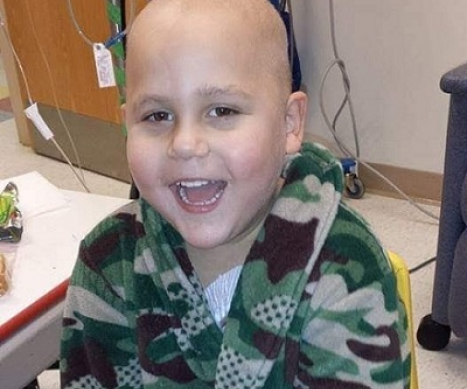
In December of 2013, Dylan began to feel unusually tired.
Doctors thought it was just a virus, the kind of bug that would soon pass.
But on Christmas morning, when three-year-old Dylan refused to go downstairs to see what Santa had left, his parents knew something was wrong.
His fever lingered, and the sparkle in his eyes seemed dimmer.
The day after Christmas, his parents brought him back to the doctor.
A chest X-ray didn’t reveal anything alarming.
Still, his fever wouldn’t go away, and by New Year’s Eve, Dylan was still listless and weak.
His mom, Ann, trusted her instincts and brought him back once more, insisting something wasn’t right.
With a temperature of 101.3, Dylan’s pediatrician decided he needed to be seen at the local hospital, which had a Children’s Hospital of Philadelphia (CHOP) satellite site.
There, bloodwork was drawn.
The results shocked everyone.
His blood counts were lower than low.
The doctor couldn’t believe Dylan was even sitting up, walking around, and talking.
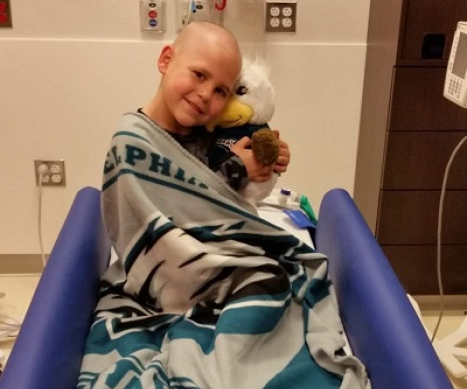
That same night, Dylan was transferred to CHOP.
As fireworks lit the sky and people celebrated the coming of a new year, Dylan lay in a hospital bed, finally getting some rest.
But just ten minutes into the new year, his parents were given life-altering news.
Dylan was diagnosed with acute lymphoblastic leukemia—ALL.
At first, doctors called it “low-risk.”
He was moved to the oncology floor, where he began receiving blood and platelet transfusions.
A chest port was placed.
Chemotherapy started almost immediately.
But a week later, more devastating news arrived.
Samples sent to Johns Hopkins revealed Dylan carried a mutated cell called iAmp21.
That mutation meant his leukemia was not low-risk at all—it was very high-risk.
Without missing a beat, Dylan began high-risk ALL induction treatments immediately after finishing the low-risk regimen.
His journey would stretch on for years.
From that winter of 2013 until June 2017, Dylan fought with everything he had.
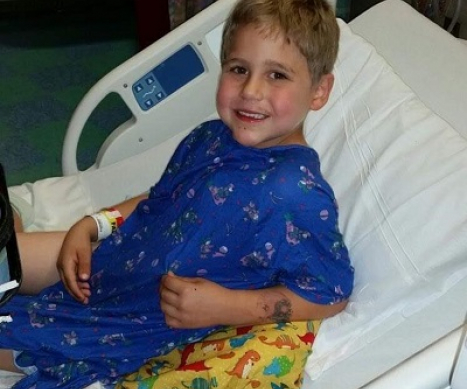
There were long nights in the hospital.
Days of sickness, weakness, and endless medications.
Times when he couldn’t run or laugh the way he wanted.
But through it all, Dylan carried a smile.
He carried determination.
And he carried the kind of courage that turned him into a hero in the eyes of everyone who knew him.
In June 2020, Dylan reached a milestone his family had prayed for.
Three years off chemotherapy.
Three years cancer-free.
Three years of reclaiming childhood.
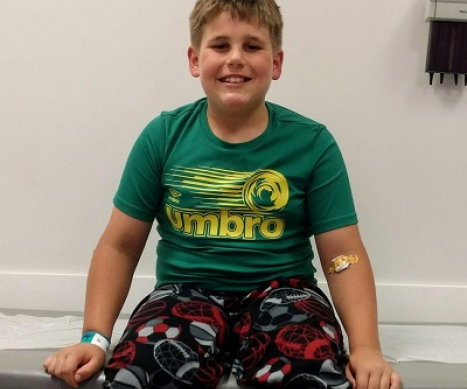
Today, Dylan dreams of one day standing on the stage of America’s Got Talent and hearing the golden buzzer ring out just for him.
He also hopes to become a police officer, to serve and protect others with the same kindness that has always defined him.
His mom, Ann, hopes even more simply—that Dylan stays in full remission and lives a healthy, joyful life.
For Ann, Dylan is her hero.
Not just because he survived cancer, but because of the way he lived through it.
Even in his hardest treatments, when his little body was tired and aching, Dylan still cared about others.
He still smiled.
He never gave up.
He pushed forward with grit and grace.
Today, Dylan still struggles with some of the long-term effects of treatment.
Retaining information is hard.
Reading, writing, and math can feel like steep hills to climb.
But Dylan faces those challenges just as he faced cancer—one day at a time, never backing down.
Ann shares advice for parents who might find themselves on a similar path.
“Don’t be afraid or too proud to ask for help,” she says.
“Remember that how you handle this is how your child will handle this.
Stay positive.
Stay strong.
And remember—you are not alone in this battle.
We are all here to support each other.”
That support has meant everything for Dylan’s family.
Alex’s Lemonade Stand Foundation has been a part of their journey, offering hope and resources.
His sister, Danielle, is part of the SuperSibs program, reminding her she’s not forgotten in this fight.
For the family, every cup of lemonade sold feels like a symbol of hope—one step closer to a cure for childhood cancer.
There is a cure out there.
There are gentler treatments waiting to be discovered.
And with support, with research, and with love, Dylan’s story can help pave the way for other children to find healing.
When people ask Dylan about his journey, his answer is simple, bold, and full of spirit.
“I kicked cancer’s butt.”
And he truly did.