From Daycare to a Hospital Bed: The Death of Jeremiah Eli Thompson.6018

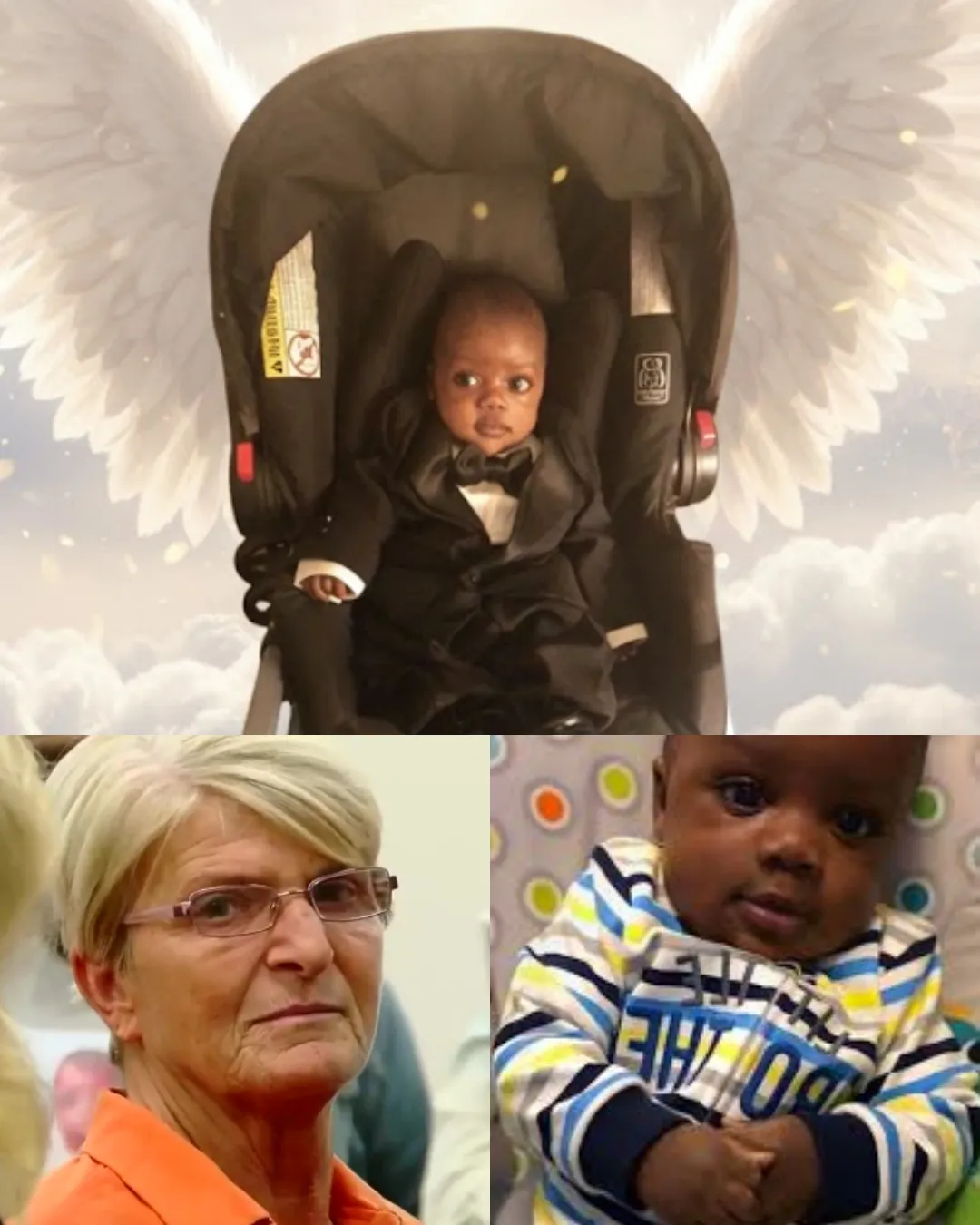
Dillon, South Carolina is the kind of place where mornings often feel predictable.
Parents kiss small foreheads at car doors.
Backpacks and diaper bags get slung over shoulders.
People rush to work believing the day will end the same way it began—with everyone coming home.
For Robert and Melissa Thompson, February 12, 2019 started like that.
They had two five-month-old boys—twins—born on September 5, 2018.
Jeremiah Eli Thompson and Zachariah.
Two matching miracles who had arrived together, two tiny lives that filled their home with twice the cries, twice the bottles, twice the exhaustion, and twice the love.
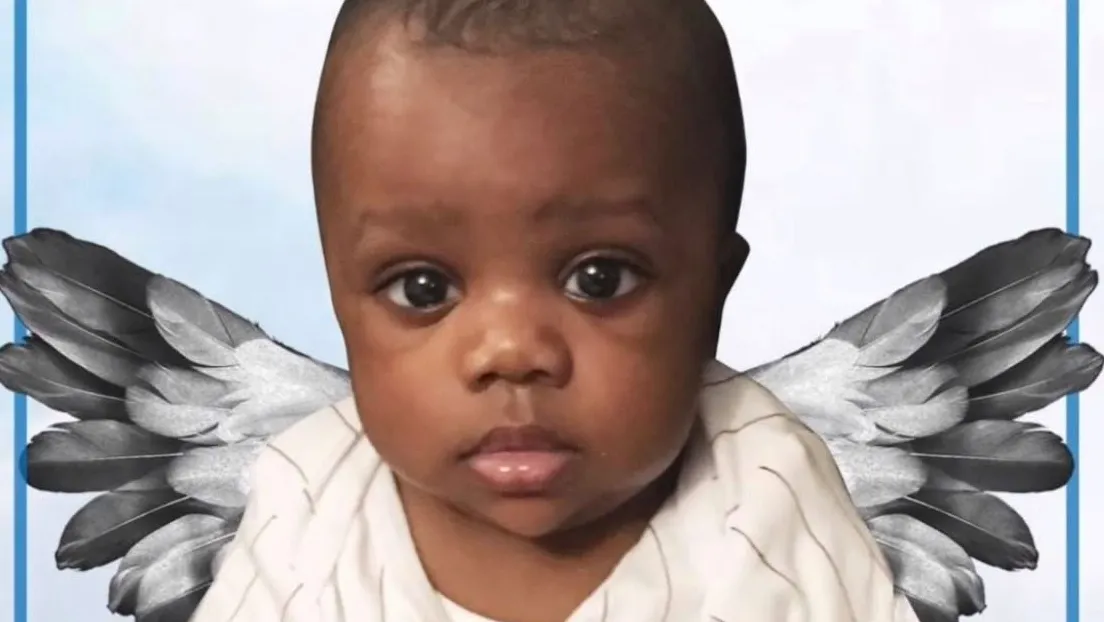
The family would later say Jeremiah was healthy, happy, and thriving.
The kind of baby who responded to voices, who looked around with curiosity, who felt like the promise of a future you could almost see.
That morning, Robert and Melissa did what countless parents do.
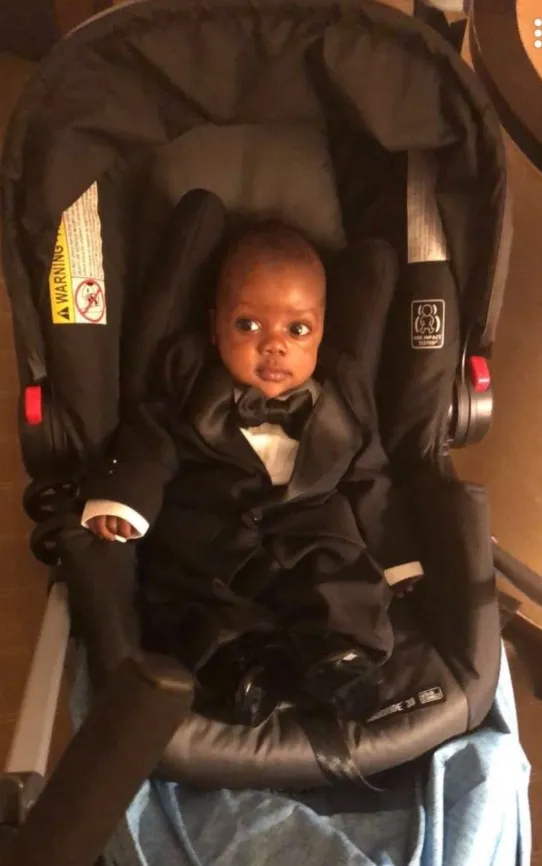
They strapped the twins into their car seats.
They packed what they needed.
They drove to Generation’s Daycare in Dillon, South Carolina.
They left both babies there in good health and spirits.
They believed they were leaving their sons in a safe place.
They believed they were doing the responsible thing—going to work, building a life, trusting the adults they were paying to protect what mattered most.
Parents have to trust someone eventually.
That’s the quiet cruelty of modern life: love requires leaving.
They dropped off their babies and walked away.
And somewhere between that goodbye and the rest of the day, Jeremiah’s life began to slip away.

According to prosecutors and what was later presented in court, Jeremiah suffered catastrophic injuries while at the daycare—severe bruising to the forehead, bleeding on the brain, and retinal hemorrhaging.
Medical experts described these injuries as consistent with violent shaking and blunt force trauma.
A baby’s body is not built to withstand force.
A baby’s brain is not built for impact.
At the time Jeremiah became unconscious, the daycare owner, Judy Wallace Cox, was reportedly alone in the room with him.
That detail matters in the way details always matter when a child is hurt.
Because it narrows the space where truth can hide.
Because it turns a room into a question.
The question is simple and horrifying: what happened to him in that room?
But what happened next—after Jeremiah was already in trouble—raised another set of questions that still haunt the family.
Despite the severity of his condition, an ambulance was not immediately called.
There are moments when the right choice is obvious.
When time is everything.
When you don’t debate, don’t delay, don’t minimize.
You call for help.
And yet, according to what was reported in this case, help was not called right away.
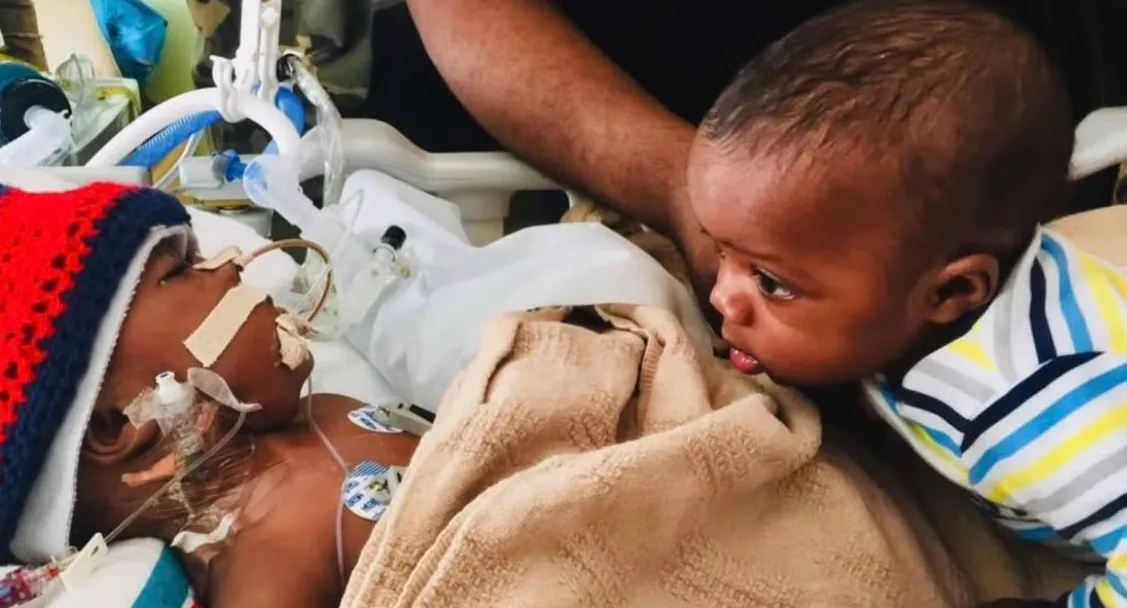
When Jeremiah was finally taken for medical care, doctors found brain bleeding so extensive that he had to be transferred to a hospital in Charlotte.
His parents—who had started their morning with normal routines—were suddenly standing at the edge of every parent’s nightmare, watching a team of medical professionals fight for their baby’s life.
It is hard to explain what that does to a family.
One moment, you are thinking about lunch breaks and errands and the mess waiting at home.
The next, you are staring at machines and monitors, listening to words you never wanted to learn: hemorrhage, trauma, catastrophic, transfer.
Time becomes a hallway with no end.
You walk it back and forth, back and forth, searching for something—anything—that feels like control.
Jeremiah lived for four more days.
Four days that likely felt like four lifetimes to his parents.
Four days of hoping, praying, bargaining with the universe, watching for any sign that their baby was still in there, still fighting his way back to them.
On February 16, 2019, Jeremiah died.
His death was ruled a homicide—caused by blunt force trauma to the head resulting from child abuse.

That sentence is an earthquake.
It doesn’t just describe a death.
It describes betrayal.
Because Jeremiah didn’t die from an illness no one could prevent.
He didn’t die from a random, unavoidable tragedy.
He died because someone hurt him.
He died because a place that was supposed to be safe became the place where his life was taken.
And while the Thompsons were trying to comprehend the unimaginable, the legal system began its slow, grinding response.
Judy Wallace Cox was charged with homicide by child abuse.
The words sounded like justice beginning.
But then came another shock: she was released on a $60,000 bond before Jeremiah’s funeral took place.
Imagine being a parent walking into a funeral home to plan the burial of your five-month-old baby—while the person charged in connection with his death is not behind bars, but free.
Grief is already unbearable.
Add that, and grief becomes something else.
It becomes fury.
It becomes disbelief.
It becomes the feeling that the world is upside down and no one is in a hurry to flip it back.
A gag order was issued, preventing the family from publicly discussing the case.
Silence became a second cage.
The Thompsons had lost their baby, and now they were told they could not speak freely about what had happened.
They could not shout their questions into the open.
They could not tell the world what they believed needed to be heard.
They had to swallow their grief in public and carry it in private.
And private grief is heavy.
It grows.
It fills every quiet moment.
The case faced years of delays, including disruptions caused by the COVID-19 pandemic.
While the world paused and changed and tried to survive a global crisis, Jeremiah’s family continued living with their own catastrophe—one that did not pause, one that did not soften with time.
Because time does not heal what you cannot make sense of.
A long-awaited trial finally began in March 2023.
By then, Jeremiah would have been four years old.
He would have been running.
Talking.
Arguing about bedtime.
Holding his twin brother’s hand.
He would have had a personality big enough to fill a room.
Instead, his family arrived at court carrying memory instead of a living child.
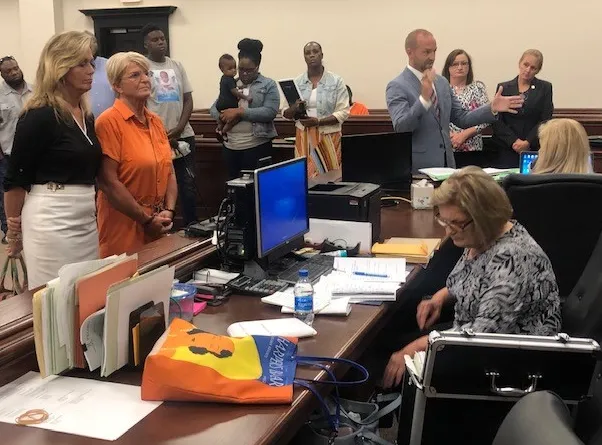
In court, conflicting testimony was presented.
According to reports from the proceedings, Cox initially denied shaking Jeremiah.
Later, she admitted to shaking him, while minimizing the severity of her actions.
The defense attempted to suggest underlying medical issues.
But medical experts testified that Jeremiah had been healthy and that his injuries were consistent with inflicted trauma.
In cases like this, the courtroom becomes a battleground between science and story.
Between what bodies show and what people say.
Between grief and doubt.

A jury is asked to carry an impossible weight: to decide what happened to a baby who can no longer speak for himself.
Despite expert testimony and evidence pointing to foul play, the trial ended in a mistrial after the jury became deadlocked.
No verdict.
No closure.
No final sentence that could tell the Thompsons, the system saw what happened, and it mattered.
Later, it was revealed that some jurors allegedly had connections to Judy Cox, raising serious concerns about impartiality.
That revelation cut deep.
Because it suggested something families fear in small towns and big systems alike: that connections can matter more than truth, that fairness can be compromised, that a baby’s case can be swallowed by relationships and influence.
After the mistrial, the South Carolina Attorney General’s Office took over the case.
And Jeremiah’s family was left where so many families in similar nightmares find themselves: waiting.

Waiting for justice.
Waiting for accountability.
Waiting for the world to treat their baby’s life like it mattered as much as it should.
A baby went to daycare and never came home the same.
Four days later, his parents buried a piece of their own hearts.
And years later, they were still being asked to wait.
People who have never lived this kind of loss sometimes ask, “How do you keep going?”
The truth is, you don’t keep going because you’re strong.
You keep going because stopping isn’t an option.
You keep going because there is another child to raise—Jeremiah’s twin brother, Zachariah—who still needs bedtime stories and breakfast and a parent who can smile sometimes, even if that smile hurts.
You keep going because if you don’t fight for your child’s name, you’re terrified the world will forget it.
And the Thompsons refused to let that happen.
In the years since Jeremiah’s death, the family worked tirelessly to honor his memory.
His mother, Melissa Thompson, wrote a book titled “29.11,” telling Jeremiah’s story.
They organized a scholarship gala, a peace rally, and a town hall meeting in Jeremiah’s name—determined that his life, though brief, would not disappear into a file cabinet and a faded headline.
That is what love looks like after loss.
It becomes work.
It becomes advocacy.
It becomes a refusal.
Because Jeremiah Eli Thompson was not just a case.
He was a baby.
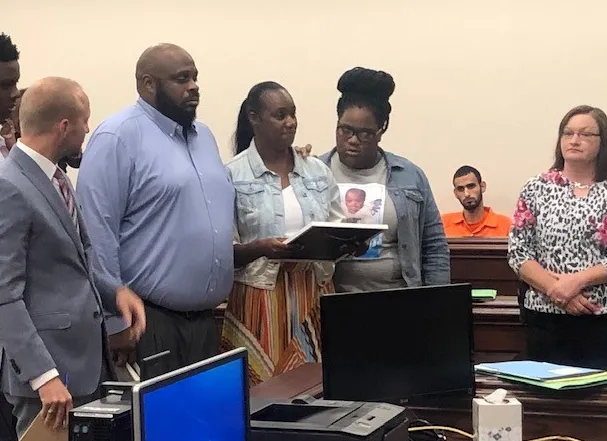
He was five months old.
He had soft cheeks and tiny fingers and a life that should have stretched decades longer.
He had a twin brother who started life beside him, who should have grown up beside him.
There is a particular cruelty in losing one twin.
Because you don’t just lose a child—you lose a mirror of what could have been.
Every milestone becomes doubled with absence.
A first birthday becomes the day you picture the candle that should have been blown out by two mouths, not one.
A first day of school becomes a vision of two backpacks, two sets of shoes, two small hands.
And every time Zachariah grows, Jeremiah’s absence grows too—right alongside him.
That is what people rarely understand about long justice delays.
They don’t just delay a verdict.
They stretch grief across years, forcing families to reopen the wound again and again—pretrial motions, hearings, continuances, mistrials, new prosecutors.
Every delay is a reminder: your child is still gone, and the world is still deciding how much that matters.
Which brings us back to the questions that won’t go away.
How does a five-month-old leave daycare with fatal injuries and no immediate call for help?
How does a homicide case with medical evidence end without accountability?
How does a family sit in a courtroom, listen to experts describe what happened to their baby, and then walk out with no verdict?
The law can be complicated.
But some truths are simple.
A baby cannot do this to himself.
A baby cannot speak to tell you what happened.
A baby depends entirely on adults.
So when a baby is catastrophically injured, the responsibility is not abstract.
It belongs to the people who were there.
It belongs to the people who were paid to protect him.
It belongs to the system that exists to hold abusers accountable.
And when the system fails, families become their own system.
They create rallies.
They organize scholarships.
They write books.
They speak Jeremiah’s name into the world until the world has no excuse to forget it.
Because forgetting would be the final injustice.
There is a moment every parent knows: the moment you hand your child to someone else.
A daycare worker.
A teacher.
A babysitter.
You do it because you have to—because you need to work, because you need to provide, because life demands it.
But that handoff is always an act of faith.
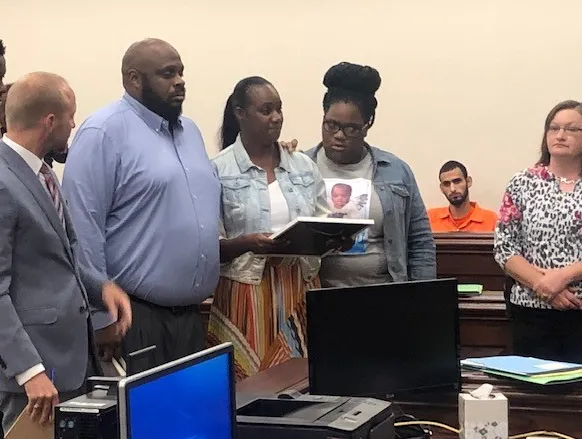
On February 12, 2019, Robert and Melissa Thompson made that handoff with faith.
And then, four days later, Jeremiah was gone.
The family’s fight continues because the story cannot end with a mistrial and a shrug.
Not for a baby.
Not for Jeremiah.
He mattered.
His life mattered.
And as long as his family keeps standing up—through grief, through exhaustion, through years of waiting—the world will keep hearing what it needs to hear:
A baby’s life is not disposable.
A daycare is not allowed to be dangerous.
And justice is not supposed to depend on who knows whom.
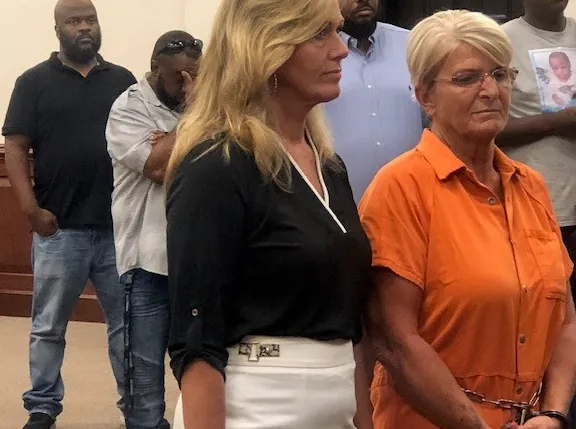
Jeremiah’s name deserves clarity.
It deserves accountability.
It deserves an ending that acknowledges the truth.
Until then, his family will keep doing what love demands after loss.
They will keep fighting.
They will keep remembering.
They will keep saying the name Jeremiah Eli Thompson—out loud—so the world cannot look away.
One in a Million — The Miracle of Baby Braxton James.2686
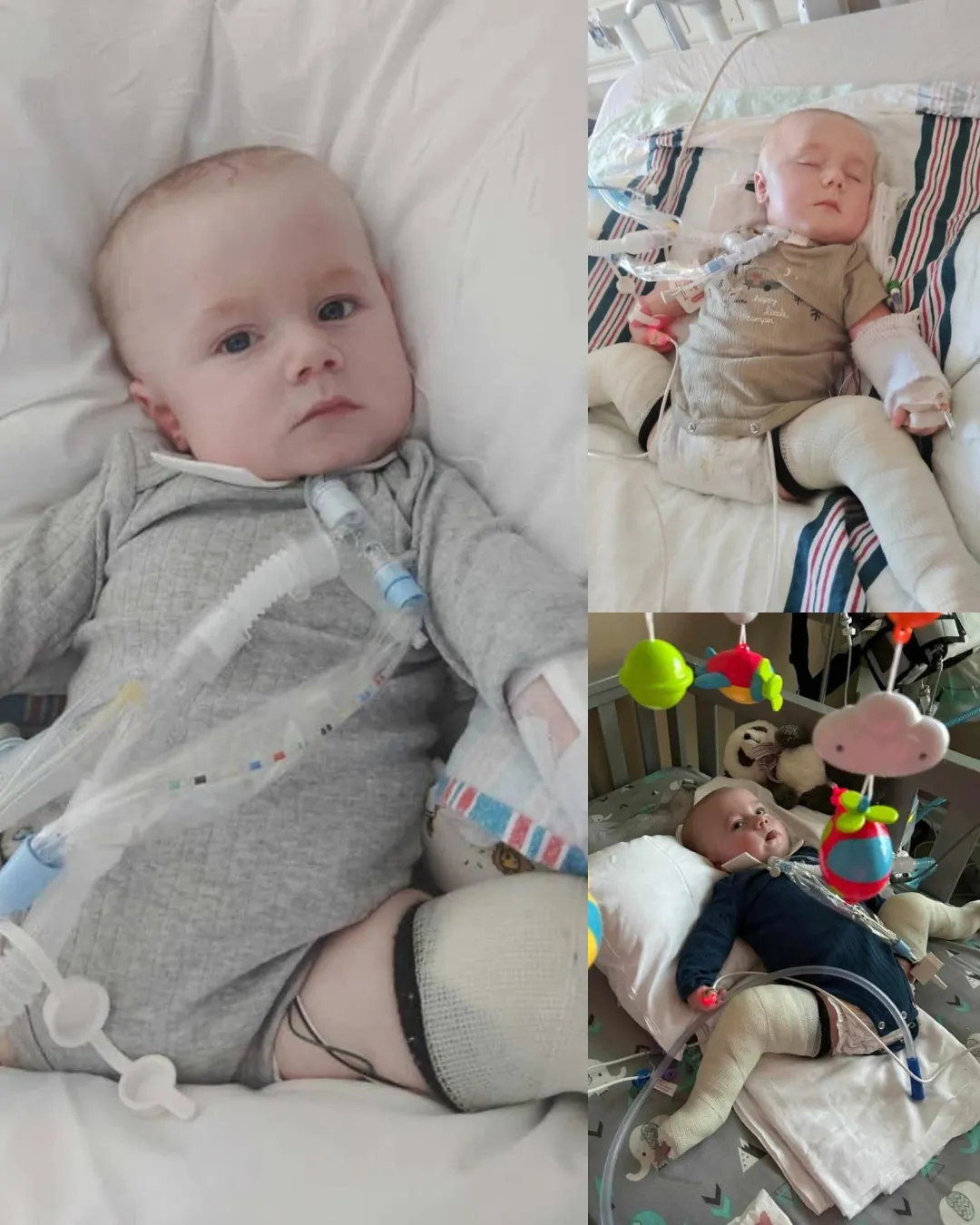
💙 Braxton’s Battle — The One-in-a-Million Baby With a Heart Full of Fight 💙
There are some babies who arrive in this world with light so strong it seems to spill from their tiny hands.
Little Braxton James is one of them.
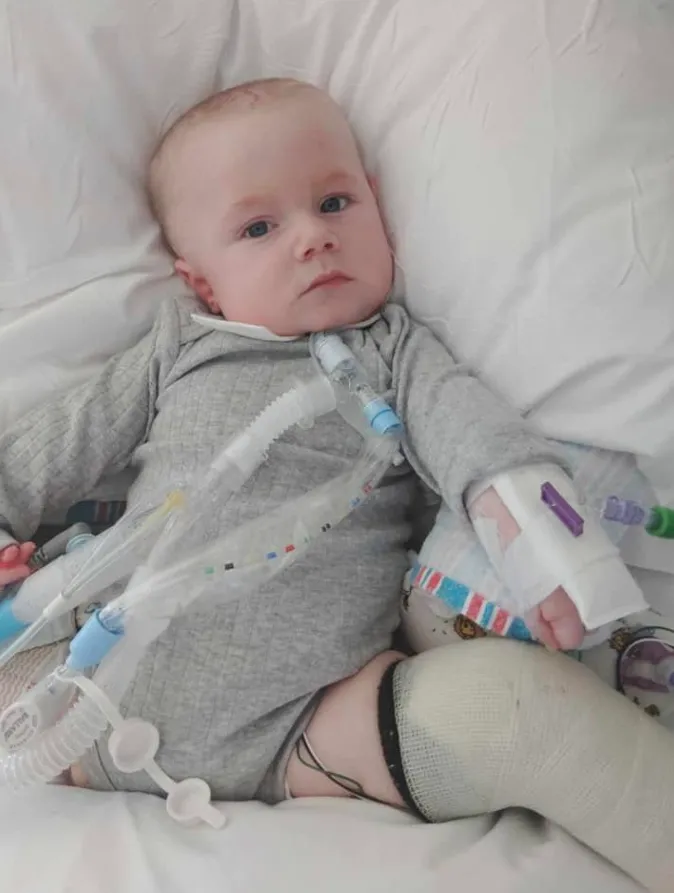
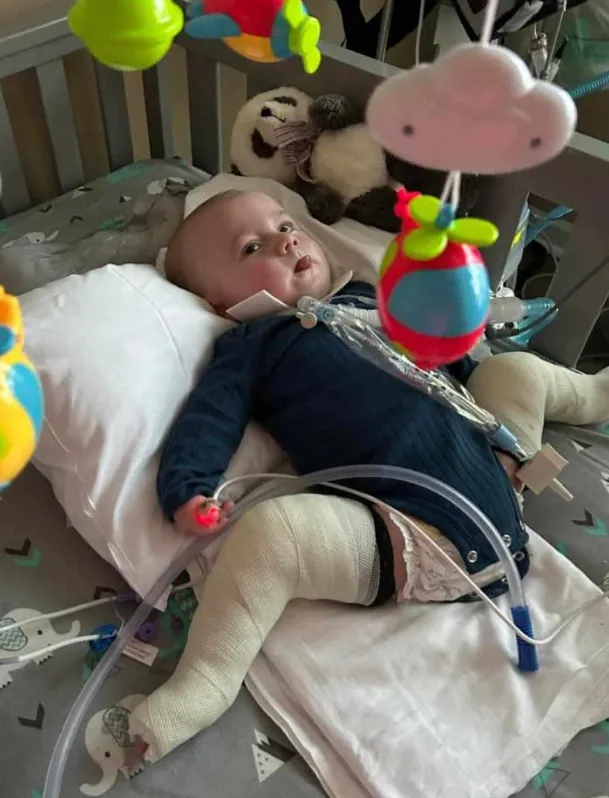
At just six months old, he has already faced more battles than most of us will in a lifetime.
But through it all — the wires, the tubes, the endless hospital days — he smiles.
He laughs.
And somehow, even in the hardest moments, he reminds everyone around him what courage looks like in its purest form.
💔 A One-in-a-Million Diagnosis
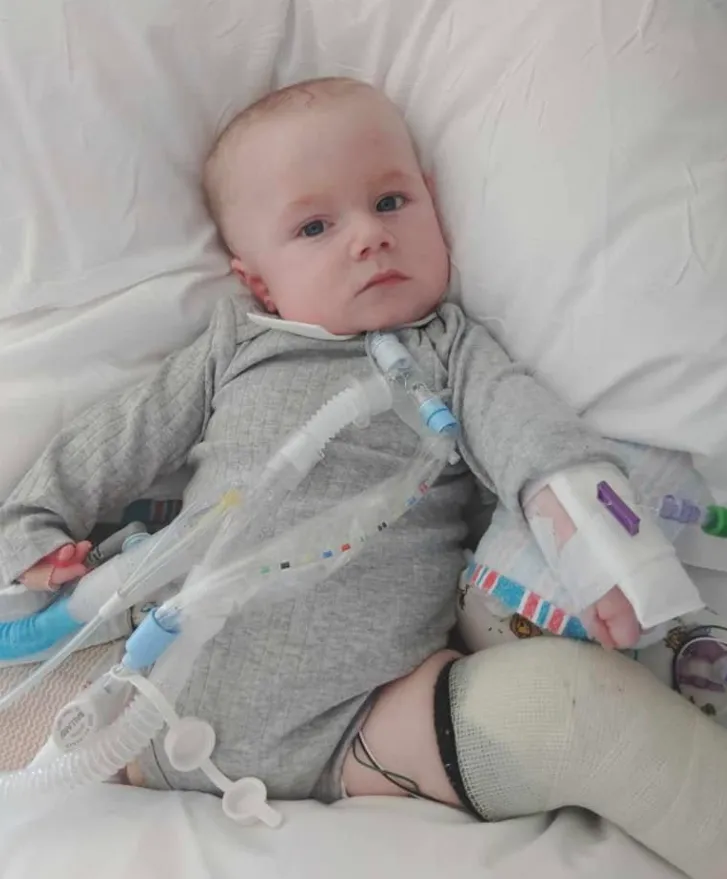
Braxton was born with a rare condition called Arthrogryposis Type 5D, a genetic disorder so uncommon that doctors call it “one in a million.”
It affects his joints, his muscles, and his ability to breathe.
For his parents, the diagnosis came like a wave they could barely stand against.
One moment, they were cradling their newborn son — tiny fingers, soft cheeks, that perfect baby smell — and the next, they were being told his body wouldn’t work the way other babies’ do.
The condition makes even simple things — breathing, moving, swallowing — an uphill climb.
His muscles are weak.
His joints are stiff.
And his lungs… his little lungs struggle every single day to do what most of us never think about: keep him alive.
In six short months, Braxton has coded four times.
Four times, his tiny heart has stopped.
Four times, his parents have stood helplessly by, watching a team of doctors and nurses fight to bring him back.
And four times, miraculously, they have.
Each time, his mother holds her breath until she hears the sound she prays for most — the soft, steady beep of his heart monitor returning to rhythm.
She calls it the sound of hope.
💙 The Long Days Inside the Hospital Walls
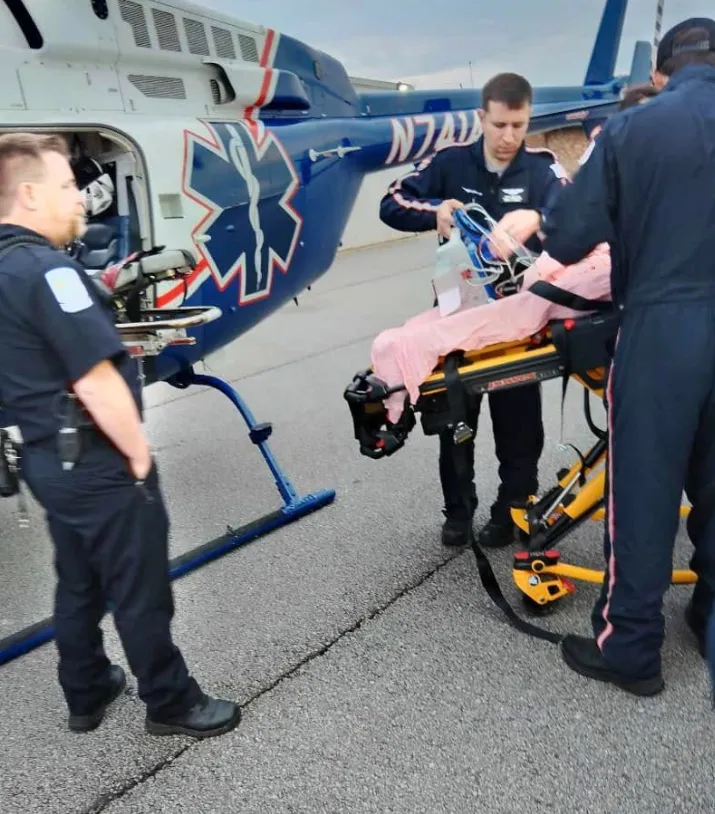
For months now, Children’s Healthcare of Atlanta has been their second home — though “home” hardly feels like the right word.
The family lives hour by hour, day by day, in a world filled with IV lines, monitors, and quiet prayers whispered in the dark.
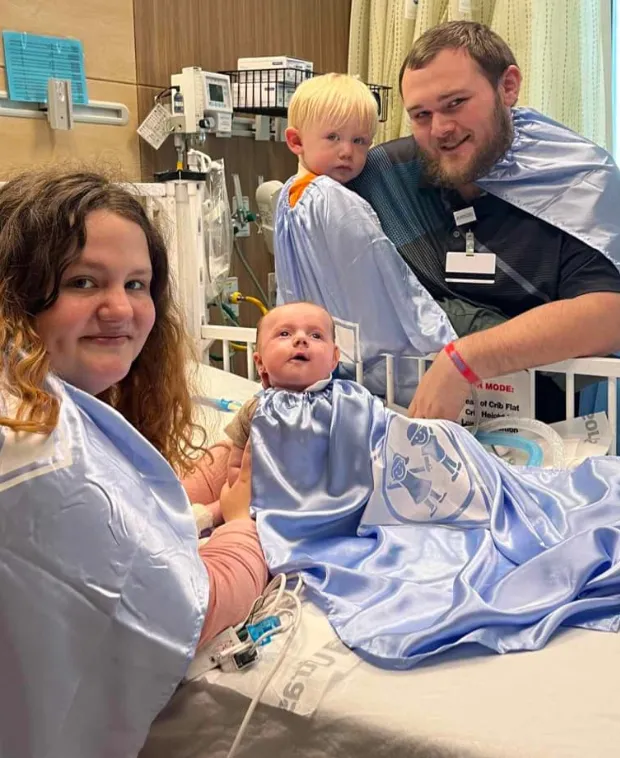
His parents take turns sleeping in a small recliner beside his bed.
They hold his hand when the alarms sound.
They sing lullabies over the rhythmic hum of machines.
And every morning, they wake up to the same question — what will today bring?
Some days, Braxton surprises everyone.
He opens his eyes, grins at his big brother, and coos softly like he’s telling them, I’m still here.
Other days, his oxygen levels drop suddenly, and the fear comes rushing back like a tide.
It’s a cycle of hope and heartbreak — and yet, they never stop showing up for him.
His big brother, barely old enough to understand what’s happening, has become his biggest cheerleader.
He draws pictures for Braxton’s room — hearts, stars, and stick-figure families holding hands.
He tells his baby brother stories about all the things they’ll do “when he gets better.”
And every time Braxton smiles, his brother beams like he just witnessed magic.
Because maybe he has.
💔 When Love Feels Heavy and Holy
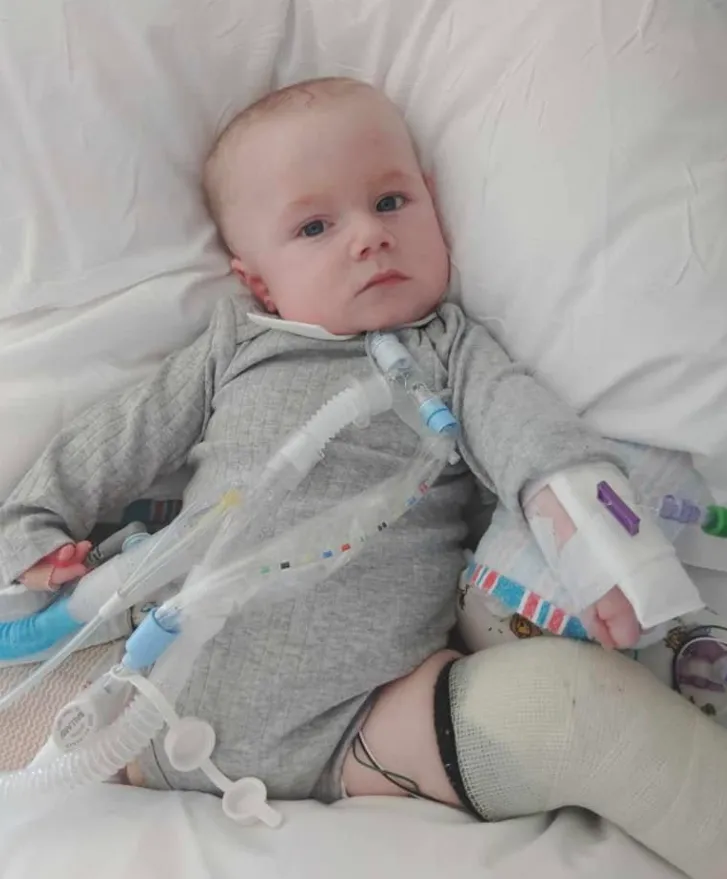
No parent should ever have to live in a hospital.
No child should ever have to fight this hard to simply breathe.
And yet, in those sterile halls, something sacred happens — a kind of love that’s both heavy and holy.
Braxton’s parents have learned to celebrate the smallest victories.
A good night’s sleep.
A stable oxygen reading.
A day without emergency alarms.
Moments that, to anyone else, might seem ordinary — but to them, are everything.
They’ve also learned that healing isn’t a straight line.
Some days bring hope.
Others bring setbacks.
Doctors have talked about the possibility of a lung transplant — a terrifying but life-saving step that could give Braxton the chance to grow up, to play, to dream.
For now, they’re waiting.
Watching.
Praying.
Every breath he takes feels like a fragile miracle.
Every heartbeat feels like a promise that he’s not done yet.
💙 The Family Behind the Fight
Behind every brave child, there’s a family quietly holding the world together.
Braxton’s parents, exhausted but unwavering, are his anchors.
They’ve spent months inside those hospital walls, unable to work, unable to go home, unable to live anything close to a “normal” life.
Their world has become a series of beeps and updates, smiles through tears, and long, sleepless nights spent waiting for good news.
But what keeps them going — what truly gives them strength — is love.
Love from friends who send meals or cards.
Love from nurses who check in long after their shifts end.
Love from strangers who read about Braxton and whisper his name in prayer.
And love from each other — a quiet, enduring kind that doesn’t fade under pressure but grows stronger with every trial.
His mom once said,
“It’s hard. It’s lonely. But every time I see him smile, I know we’re exactly where we’re supposed to be — fighting for him.”
🌿 One in a Million
That’s what the doctors call his condition.
But if you’ve met Braxton — even once — you’d know that the phrase means something more.
He’s one in a million because of his resilience.
Because of the way he fights through pain and still finds a way to laugh.
Because his spirit is far stronger than the body that holds it.
Every nurse who’s met him says the same thing:
“He lights up the room.”
And even on his hardest days, that light never really goes out.
💛 A Family That Still Believes
It’s easy to lose hope in a place like this — a place where uncertainty hangs in the air like fog.
But Braxton’s family refuses to let go of faith.
They believe in miracles because they’ve seen one every day for six months.
They believe in love because it’s what’s kept them standing when everything else fell apart.
And they believe in their son — their one-in-a-million baby — who keeps showing the world that strength doesn’t always look loud.
Sometimes, it looks like a quiet breath.
A soft smile.
A tiny heartbeat that refuses to stop.
🌈 For Braxton
Tonight, his parents will whisper to him the same words they’ve said since the beginning:
“You are our miracle. You are our fighter. You are our one in a million.”
And they’ll sit beside him — one hand on his chest, one hand holding each other — as the monitors beep softly in the dark.
They don’t know what tomorrow holds.
But they know this:
They’re not alone.
Because somewhere out there, people like you are thinking of Braxton.
Praying for him.
Believing in him.
So please — keep his name close to your heart.
Send his family your love.
Because if there’s one thing we’ve learned from this little boy, it’s that miracles happen when the world prays together.
💙 Braxton James — one in a million, in every possible way.