“The Night the City Fell Silent While a Child Screamed”.5957

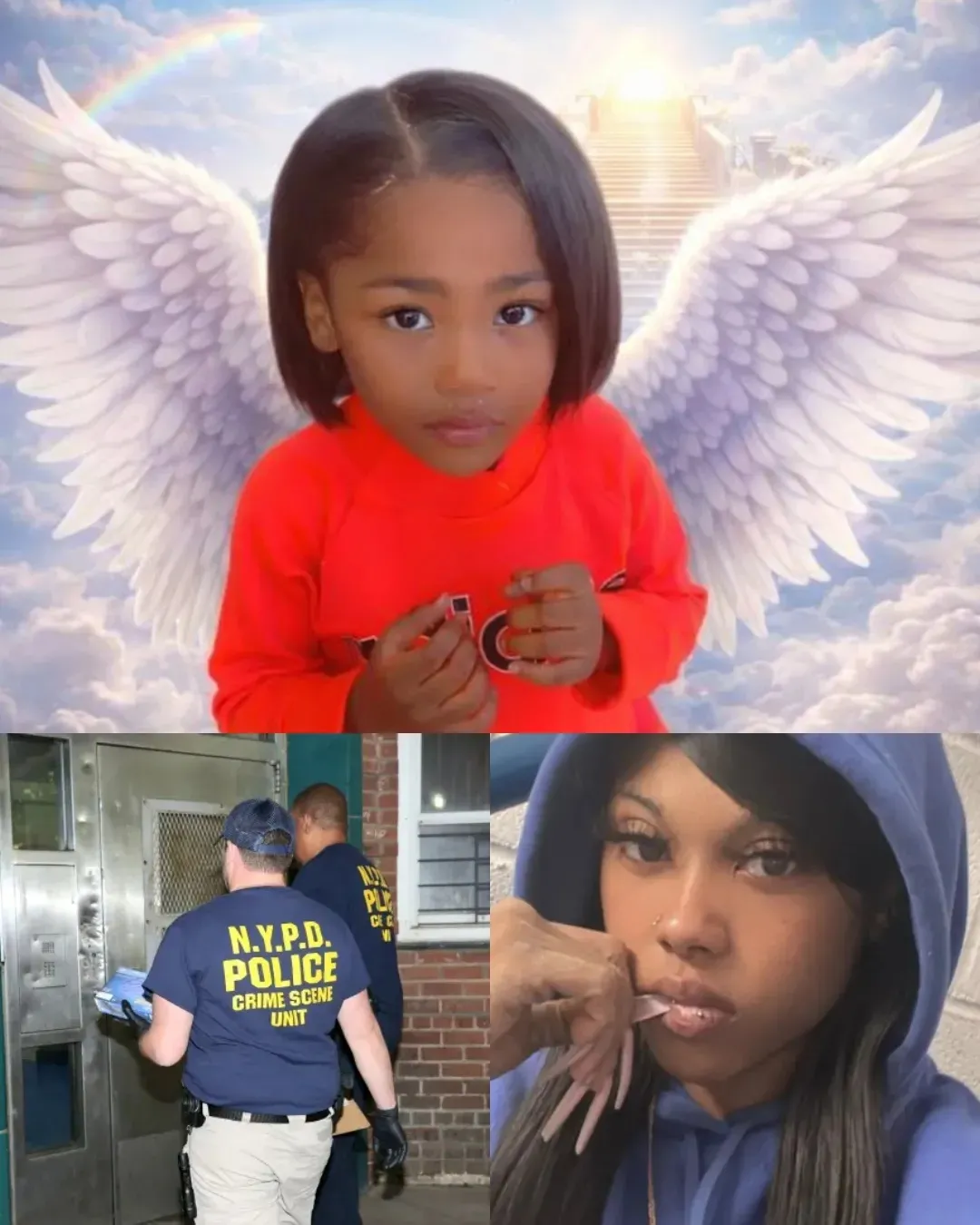

The city that never sleeps fell silent that early morning, a silence shattered only by screams that no neighbor could forget.
At approximately 4:00 a.m. on May 26, 2023, a small Bronx apartment became the scene of an unimaginable tragedy.
Inside, six-year-old Jalayah Eason struggled for her life, the faint echoes of her terror reaching beyond the walls of her home.
But outside, in the streets of her neighborhood, life carried on, unknowing, unaware—or perhaps aware and helpless.

Jalayah’s story is not just one of a little girl’s life cut brutally short.
It is also a story of systemic failures, overlooked warning signs, and the deep moral reckoning that arises when a community, and the systems that claim to protect it, fail a child.
Born into a life that should have been filled with playgrounds, laughter, and bedtime stories, Jalayah instead found herself trapped in a cycle of abuse and neglect.
According to prosecutors and court filings, Jalayah had endured weeks—perhaps months—of extreme mistreatment.
Her mother, Lynija Eason Kumar, was later charged with multiple crimes including second-degree murder and endangering the welfare of a child.

The abuse Jalayah suffered was severe, encompassing blunt-force trauma, malnourishment, and positional asphyxia, ultimately ending her young life far too soon.
The circumstances leading to her death are deeply unsettling.
Court documents reveal that Jalayah was repeatedly beaten with hard objects and, at times, hung by her wrists inside a closet.
These were not isolated incidents but part of a harrowing pattern of abuse that escalated in intensity and cruelty.
Her tiny body bore the marks of pain that no child should ever endure—bruises on her wrists, chest, and torso, all silent testaments to suffering witnessed by few and ignored by too many.
Neighbors recall hearing the screams that fateful night, cries that pierced the early morning hours with an urgency that begged for intervention.
Dennis Rivera, one of the residents in the building, described the sounds he heard around 4:00 a.m. with a mix of horror and lingering regret.

“I went outside because I feared something terrible was happening,” he said, speaking later to reporters.
“I should have called sooner. I should have done something.”
The tragedy does not end with Jalayah’s death.
Inside the apartment, police discovered her siblings—ages three and eight at the time—also showing signs of neglect and prior injuries.
The younger children, who had survived in the shadow of constant violence, were swiftly placed into protective custody.
Their removal from the home became a critical intervention, a belated attempt to prevent more tragedy.
Yet for Jalayah, no intervention came in time.
Jalayah’s father, Ronald Branch, faced his own uphill battle to secure recognition and custody of his children.
Court records indicate that he had to fight to establish paternity in order to bury his daughter and later obtained full custody of Jalayah’s older brother.

The fight was not just legal; it was deeply personal, a quest to reclaim a semblance of justice in a world that had failed his family.
The public reaction to Jalayah’s murder was immediate and visceral.
Her death sparked widespread outrage, prompting intense scrutiny of the New York City Administration for Children’s Services (ACS).
Investigations revealed that ACS had previously been aware of the household, having looked into reports of abuse and school absences related to Jalayah’s brother.
The case, however, had been closed months before Jalayah’s death, leaving her unprotected.
The question that reverberated through the city was simple yet profound: How many chances were missed before a six-year-old paid with her life?
How many warning signs went ignored?
And how many opportunities to intervene slipped through the cracks of a system meant to safeguard children?
As the legal process moves forward, Lynija Eason Kumar remains in custody, awaiting trial.

She has pleaded not guilty to all charges, including second-degree murder, first- and second-degree manslaughter, and multiple counts of endangering the welfare of a child.
The courtroom will become a place of confrontation, a space where evidence, testimony, and emotion will collide.
But for those who loved Jalayah, no trial can undo the profound loss they have suffered.
In telling Jalayah’s story, it is impossible to ignore the broader societal implications.
Her death shines a glaring light on the failures of systems designed to protect the most vulnerable.
Records show that interventions were attempted but ultimately insufficient.
Reports of abuse were filed, investigations were conducted, but the closure of prior cases and the absence of follow-up allowed danger to persist.

For Jalayah, these systemic lapses had fatal consequences.
Neighbors, too, are left with a haunting awareness of what they heard, what they witnessed, and what they failed to act upon.
The constant screaming, the pleading for help, the sounds that any adult would recognize as cries for life—these were impossible to ignore.
Yet fear, doubt, or perhaps a sense of helplessness delayed response.
The guilt and regret expressed by those who lived near Jalayah’s home are emblematic of a larger, societal failure to intervene when the signs of abuse are evident.
In communities across the nation, stories like Jalayah’s are tragically familiar.
Children suffer in silence, their pain unnoticed, their pleas unheard.

Yet each case also presents an opportunity for reflection, reform, and action.
Jalayah’s death calls for a renewed commitment to child welfare, not just in words but in systems, practices, and cultural consciousness.
It demands accountability, transparency, and vigilance.
Her siblings, now safe from immediate harm, carry the weight of these events with them.
Their healing process is ongoing, fraught with trauma, fear, and the challenges of rebuilding trust in adults and institutions meant to care for them.
Mental health professionals emphasize that interventions must extend beyond physical safety.

Emotional and psychological care is paramount, particularly when children have been exposed to repeated trauma.
The courtroom, once again, becomes central in this narrative—not as a place to undo tragedy, but to seek justice, accountability, and, ideally, lessons for the future.
The indictment of Jalayah’s mother signals the start of a legal reckoning, one that will examine the decisions, actions, and negligence that culminated in the death of a six-year-old.
The trial promises to bring to light the grim details of abuse, but it also provides a platform for systemic scrutiny.
Yet, for all the legal proceedings, the public outcry, and the media attention, the story of Jalayah Eason remains, at its core, a profoundly human one.
It is about a child who should have been safe.
A child who should have experienced the simple joys of childhood—school, play, birthday parties, bedtime stories whispered in loving voices.
A child whose existence, though brief, demanded protection, love, and care.
In reflecting on her life and death, communities are forced to ask uncomfortable questions:
What more could have been done?

How do we ensure that children like Jalayah are never again left vulnerable?
And how do we, as neighbors, families, and societies, act decisively when a child’s cries echo through the night?
Jalayah’s story is also a reminder that awareness alone is not enough.
Reports to authorities, neighborhood vigilance, and systemic protocols must be coupled with action.
Advocacy, community engagement, and responsive child welfare systems are essential in preventing such tragedies.
Every missed opportunity has real, irreversible consequences, as tragically illustrated in Jalayah’s case.

Her father, Ronald Branch, continues to fight—not only for justice for Jalayah but also for the well-being and safety of her surviving siblings.
His determination, while deeply personal, reflects a universal imperative: the protection of children is a responsibility that transcends family, neighborhood, and bureaucracy.
Each life lost to abuse underscores the urgency of vigilance, intervention, and reform.
As society processes the enormity of Jalayah’s death, her story becomes both a cautionary tale and a call to action.
It is a reminder that every scream, every bruise, every subtle sign of distress in a child’s life demands attention.
It is a reminder that childhood, fleeting and precious, is sacred and must be fiercely protected.
Ultimately, the tragedy of Jalayah Eason is a mirror held up to society, reflecting the costs of inaction and the consequences of systemic failure.
It is a reminder that while laws, procedures, and investigations are necessary, they are insufficient without humanity, vigilance, and courage.
The life of a six-year-old cannot be restored, but her story can ignite change.

Through awareness, advocacy, and reform, perhaps future children will not endure what Jalayah did.
Perhaps neighbors will act immediately.
Perhaps child welfare systems will not overlook signs of abuse.
Perhaps the cycles of neglect, fear, and inaction can be broken.
Jalayah Eason should be alive today.
Her laughter should still echo in her home.
Her presence should still fill the small joys of everyday life—school mornings, afternoon playdates, bedtime stories.
Instead, her story has become a testament to what is lost when protection fails and vigilance falters.
Her death demands remembrance, justice, and reform.

It demands that neighbors, authorities, and society as a whole examine where failures occurred and how they can be prevented in the future.
Jalayah’s life, brief though it was, holds lessons for all—lessons about responsibility, compassion, and the costs of silence.
The six-year-old girl who died while neighbors listened to her screams is not just a statistic.
She is a life that mattered.
A story that must be told.
And a reminder that every child, no matter their circumstances, deserves protection, care, and a chance to grow.
Her voice, tragically silenced, continues to call for justice—not only in her own case but for every child at risk.
Jalayah Eason’s story is a call to action, urging communities and systems to never let such horrors happen again.

Because a six-year-old’s life is too precious, too fragile, and too fleeting to be lost to neglect.
And because the echoes of her cries demand that change finally come.
Prayers for Axel: Hoping His Numbers Rise Soon.1315
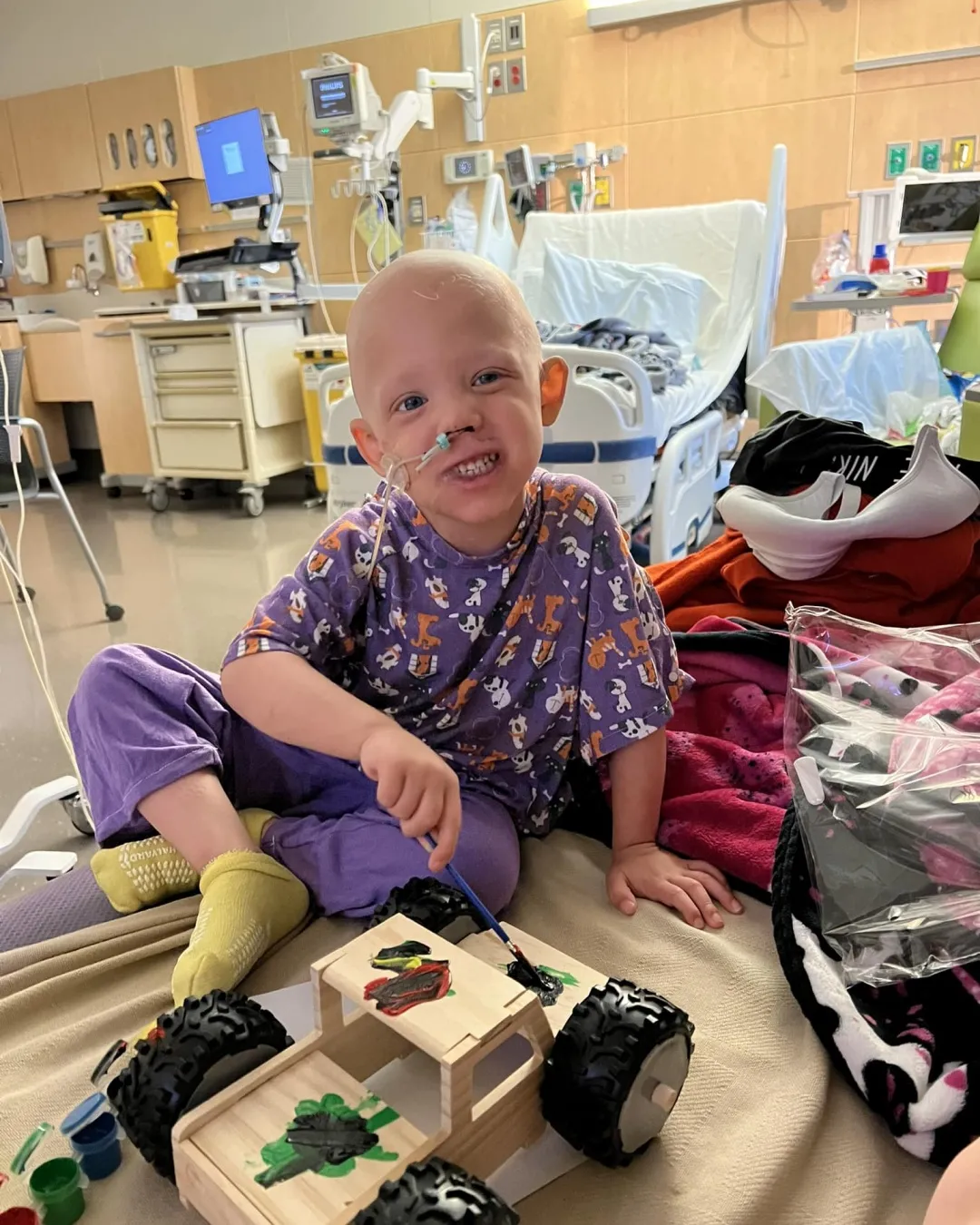
Axel’s Journey: A Brave Little Fighter in Need of Prayers
There are moments in life that test every ounce of strength, every drop of patience, and every measure of faith you thought you had
. For Axel and his family, this past week has been one of those moments.
Though his parents try to remain strong and hopeful, it has been a hard, exhausting week filled with worry, waiting, and whispered prayers for their brave little boy.
“Sorry I haven’t posted an update for awhile,” his mom wrote, her words carrying both the weight of exhaustion and the quiet determination of someone who refuses to give up. “Axel has had a tough week, and we are hoping his numbers will rise soon so he can start to feel better.”
Those words, simple yet heavy, capture the essence of what pediatric cancer families endure every single day.
Numbers—those tiny markers on lab reports that mean everything. White blood cell counts, platelets, hemoglobin—all measured in numbers, and yet behind them are sleepless nights, fragile hopes, and the health of a precious child.

For Axel, this week has been a waiting game, one that no parent ever wants to play. His little body has been working overtime, struggling after rounds of treatment that have left him weak, tired, and vulnerable.
Treatments designed to fight the disease also take a toll on the very body they are meant to save. His immune system has been stripped down, leaving him open to fevers, infections, and complications.
There were days when Axel barely wanted to get out of bed. His usual spark, his little smile, seemed dimmed by the fatigue that clung to him like a shadow.
His parents sat by his side, reading books, playing quiet games, or simply holding his hand—anything to remind him that he wasn’t alone in this battle.
The smallest victories—like a few bites of food, a laugh at a silly joke, or a short walk down the hallway—became reasons to celebrate, proof that their boy was still fighting.
But it hasn’t been easy. Nights have been restless, filled with the constant beeping of monitors, the careful eyes of nurses checking vitals, and the gnawing anxiety that comes from watching a child struggle to find comfort.

There is no manual for how to watch your child endure pain, no easy way to explain to a little boy why his body feels so tired, why his stomach hurts, why he can’t play outside like he used to.
His parents have had to become experts in medical terms, in reading lab charts, in deciphering the language of oncology.
Every morning begins with the same question: “What are his numbers today?” And every answer dictates their emotions—whether they feel a surge of hope or the sinking weight of disappointment.
This week, those numbers haven’t been what they hoped for. Too low, too slow to rise, too fragile to give Axel the strength he needs.
And yet, even in the hardest moments, Axel has shown courage. There are times when he musters the energy to smile at the nurses, to whisper “thank you,” or to giggle when his favorite toy car zooms across the blanket.
These small sparks remind his parents, and everyone around him, of the resilience children carry within them. They may be little, but their hearts are mighty.
Faith has been the anchor keeping this family grounded. Axel’s parents have leaned on prayer, asking for strength, for healing, and for comfort.
They’ve asked friends, relatives, and even strangers to lift up their son’s name in prayer, to create a chain of hope strong enough to carry them through the darkest nights. And they’ve felt it—the love, the support, the prayers that come from near and far.

It has been a lifeline in a week that has felt unbearably heavy.
As his mom watches over him, she whispers words of love: “You’re so strong, Axel. We are so proud of you. Keep fighting, sweetheart.” Those words are both a comfort to him and a reminder to herself—a mantra that keeps her going when her own strength feels spent.
The road ahead is still uncertain. Much depends on those numbers—on whether Axel’s counts rise, on whether his body can recover enough to handle the next steps in treatment.
The doctors reassure the family that this waiting period is part of the process, that healing takes time, that the body sometimes needs to pause before it can move forward. But for parents sitting by a hospital bed, time moves painfully slow.
This week has also reminded them of the importance of cherishing small joys. A warm blanket fresh from the dryer, a coloring book filled with Axel’s favorite superheroes, a video call with big brother at home, a short nap without pain—each of these moments has become a treasure.
When life is reduced to hospital walls and lab numbers, joy is found in the smallest, simplest of things.
And so, as they face another night of waiting, Axel’s family asks for continued prayers. Prayers that his numbers will begin to rise soon.
Prayers that his strength will return and that his little body will find comfort after such a grueling week. Prayers that his parents, weary but determined, will continue to find courage and peace in the midst of uncertainty.
Axel’s story is not just about illness. It is about love—fierce, unrelenting love. It is about faith—holding onto hope even when fear presses in. And it is about courage—the kind that shines brightest in the smallest of fighters.
To those who have followed his journey, please know your prayers matter. Every word spoken, every thought lifted, every message of support has carried Axel and his family through this storm.
They believe in the power of prayer, in the strength of community, and in the possibility of healing.
As Axel sleeps tonight, his monitors quietly beeping in the background, his parents sit close, watching his chest rise and fall, whispering their love.
They know tomorrow may bring more waiting, more challenges, but they also know that each day brings them closer to the moment his numbers rise and his strength returns.
Until then, they will keep fighting alongside him. They will keep believing in miracles. And they will keep asking for prayers—for comfort, for healing, and for the day when their brave boy can smile freely again, his body strong and his spirit unshaken.
? Stay strong, Axel. You are our brave little warrior.



The city that never sleeps fell silent that early morning, a silence shattered only by screams that no neighbor could forget.
At approximately 4:00 a.m. on May 26, 2023, a small Bronx apartment became the scene of an unimaginable tragedy.
Inside, six-year-old Jalayah Eason struggled for her life, the faint echoes of her terror reaching beyond the walls of her home.
But outside, in the streets of her neighborhood, life carried on, unknowing, unaware—or perhaps aware and helpless.
Jalayah’s story is not just one of a little girl’s life cut brutally short.
It is also a story of systemic failures, overlooked warning signs, and the deep moral reckoning that arises when a community, and the systems that claim to protect it, fail a child.
Born into a life that should have been filled with playgrounds, laughter, and bedtime stories, Jalayah instead found herself trapped in a cycle of abuse and neglect.
According to prosecutors and court filings, Jalayah had endured weeks—perhaps months—of extreme mistreatment.
Her mother, Lynija Eason Kumar, was later charged with multiple crimes including second-degree murder and endangering the welfare of a child.
The abuse Jalayah suffered was severe, encompassing blunt-force trauma, malnourishment, and positional asphyxia, ultimately ending her young life far too soon.
The circumstances leading to her death are deeply unsettling.
Court documents reveal that Jalayah was repeatedly beaten with hard objects and, at times, hung by her wrists inside a closet.
These were not isolated incidents but part of a harrowing pattern of abuse that escalated in intensity and cruelty.
Her tiny body bore the marks of pain that no child should ever endure—bruises on her wrists, chest, and torso, all silent testaments to suffering witnessed by few and ignored by too many.
Neighbors recall hearing the screams that fateful night, cries that pierced the early morning hours with an urgency that begged for intervention.
Dennis Rivera, one of the residents in the building, described the sounds he heard around 4:00 a.m. with a mix of horror and lingering regret.
“I went outside because I feared something terrible was happening,” he said, speaking later to reporters.
“I should have called sooner. I should have done something.”
The tragedy does not end with Jalayah’s death.
Inside the apartment, police discovered her siblings—ages three and eight at the time—also showing signs of neglect and prior injuries.
The younger children, who had survived in the shadow of constant violence, were swiftly placed into protective custody.
Their removal from the home became a critical intervention, a belated attempt to prevent more tragedy.
Yet for Jalayah, no intervention came in time.
Jalayah’s father, Ronald Branch, faced his own uphill battle to secure recognition and custody of his children.
Court records indicate that he had to fight to establish paternity in order to bury his daughter and later obtained full custody of Jalayah’s older brother.
The fight was not just legal; it was deeply personal, a quest to reclaim a semblance of justice in a world that had failed his family.
The public reaction to Jalayah’s murder was immediate and visceral.
Her death sparked widespread outrage, prompting intense scrutiny of the New York City Administration for Children’s Services (ACS).
Investigations revealed that ACS had previously been aware of the household, having looked into reports of abuse and school absences related to Jalayah’s brother.
The case, however, had been closed months before Jalayah’s death, leaving her unprotected.
The question that reverberated through the city was simple yet profound: How many chances were missed before a six-year-old paid with her life?
How many warning signs went ignored?
And how many opportunities to intervene slipped through the cracks of a system meant to safeguard children?
As the legal process moves forward, Lynija Eason Kumar remains in custody, awaiting trial.
She has pleaded not guilty to all charges, including second-degree murder, first- and second-degree manslaughter, and multiple counts of endangering the welfare of a child.
The courtroom will become a place of confrontation, a space where evidence, testimony, and emotion will collide.
But for those who loved Jalayah, no trial can undo the profound loss they have suffered.
In telling Jalayah’s story, it is impossible to ignore the broader societal implications.
Her death shines a glaring light on the failures of systems designed to protect the most vulnerable.
Records show that interventions were attempted but ultimately insufficient.
Reports of abuse were filed, investigations were conducted, but the closure of prior cases and the absence of follow-up allowed danger to persist.
For Jalayah, these systemic lapses had fatal consequences.
Neighbors, too, are left with a haunting awareness of what they heard, what they witnessed, and what they failed to act upon.
The constant screaming, the pleading for help, the sounds that any adult would recognize as cries for life—these were impossible to ignore.
Yet fear, doubt, or perhaps a sense of helplessness delayed response.
The guilt and regret expressed by those who lived near Jalayah’s home are emblematic of a larger, societal failure to intervene when the signs of abuse are evident.
In communities across the nation, stories like Jalayah’s are tragically familiar.
Children suffer in silence, their pain unnoticed, their pleas unheard.
Yet each case also presents an opportunity for reflection, reform, and action.
Jalayah’s death calls for a renewed commitment to child welfare, not just in words but in systems, practices, and cultural consciousness.
It demands accountability, transparency, and vigilance.
Her siblings, now safe from immediate harm, carry the weight of these events with them.
Their healing process is ongoing, fraught with trauma, fear, and the challenges of rebuilding trust in adults and institutions meant to care for them.
Mental health professionals emphasize that interventions must extend beyond physical safety.
Emotional and psychological care is paramount, particularly when children have been exposed to repeated trauma.
The courtroom, once again, becomes central in this narrative—not as a place to undo tragedy, but to seek justice, accountability, and, ideally, lessons for the future.
The indictment of Jalayah’s mother signals the start of a legal reckoning, one that will examine the decisions, actions, and negligence that culminated in the death of a six-year-old.
The trial promises to bring to light the grim details of abuse, but it also provides a platform for systemic scrutiny.
Yet, for all the legal proceedings, the public outcry, and the media attention, the story of Jalayah Eason remains, at its core, a profoundly human one.
It is about a child who should have been safe.
A child who should have experienced the simple joys of childhood—school, play, birthday parties, bedtime stories whispered in loving voices.
A child whose existence, though brief, demanded protection, love, and care.
In reflecting on her life and death, communities are forced to ask uncomfortable questions:
What more could have been done?
How do we ensure that children like Jalayah are never again left vulnerable?
And how do we, as neighbors, families, and societies, act decisively when a child’s cries echo through the night?
Jalayah’s story is also a reminder that awareness alone is not enough.
Reports to authorities, neighborhood vigilance, and systemic protocols must be coupled with action.
Advocacy, community engagement, and responsive child welfare systems are essential in preventing such tragedies.
Every missed opportunity has real, irreversible consequences, as tragically illustrated in Jalayah’s case.
Her father, Ronald Branch, continues to fight—not only for justice for Jalayah but also for the well-being and safety of her surviving siblings.
His determination, while deeply personal, reflects a universal imperative: the protection of children is a responsibility that transcends family, neighborhood, and bureaucracy.
Each life lost to abuse underscores the urgency of vigilance, intervention, and reform.
As society processes the enormity of Jalayah’s death, her story becomes both a cautionary tale and a call to action.
It is a reminder that every scream, every bruise, every subtle sign of distress in a child’s life demands attention.
It is a reminder that childhood, fleeting and precious, is sacred and must be fiercely protected.
Ultimately, the tragedy of Jalayah Eason is a mirror held up to society, reflecting the costs of inaction and the consequences of systemic failure.
It is a reminder that while laws, procedures, and investigations are necessary, they are insufficient without humanity, vigilance, and courage.
The life of a six-year-old cannot be restored, but her story can ignite change.
Through awareness, advocacy, and reform, perhaps future children will not endure what Jalayah did.
Perhaps neighbors will act immediately.
Perhaps child welfare systems will not overlook signs of abuse.
Perhaps the cycles of neglect, fear, and inaction can be broken.
Jalayah Eason should be alive today.
Her laughter should still echo in her home.
Her presence should still fill the small joys of everyday life—school mornings, afternoon playdates, bedtime stories.
Instead, her story has become a testament to what is lost when protection fails and vigilance falters.
Her death demands remembrance, justice, and reform.
It demands that neighbors, authorities, and society as a whole examine where failures occurred and how they can be prevented in the future.
Jalayah’s life, brief though it was, holds lessons for all—lessons about responsibility, compassion, and the costs of silence.
The six-year-old girl who died while neighbors listened to her screams is not just a statistic.
She is a life that mattered.
A story that must be told.
And a reminder that every child, no matter their circumstances, deserves protection, care, and a chance to grow.
Her voice, tragically silenced, continues to call for justice—not only in her own case but for every child at risk.
Jalayah Eason’s story is a call to action, urging communities and systems to never let such horrors happen again.
Because a six-year-old’s life is too precious, too fragile, and too fleeting to be lost to neglect.
And because the echoes of her cries demand that change finally come.
Prayers for Axel: Hoping His Numbers Rise Soon.1315
Axel’s Journey: A Brave Little Fighter in Need of Prayers
There are moments in life that test every ounce of strength, every drop of patience, and every measure of faith you thought you had
. For Axel and his family, this past week has been one of those moments.
Though his parents try to remain strong and hopeful, it has been a hard, exhausting week filled with worry, waiting, and whispered prayers for their brave little boy.
“Sorry I haven’t posted an update for awhile,” his mom wrote, her words carrying both the weight of exhaustion and the quiet determination of someone who refuses to give up. “Axel has had a tough week, and we are hoping his numbers will rise soon so he can start to feel better.”
Those words, simple yet heavy, capture the essence of what pediatric cancer families endure every single day.
Numbers—those tiny markers on lab reports that mean everything. White blood cell counts, platelets, hemoglobin—all measured in numbers, and yet behind them are sleepless nights, fragile hopes, and the health of a precious child.
For Axel, this week has been a waiting game, one that no parent ever wants to play. His little body has been working overtime, struggling after rounds of treatment that have left him weak, tired, and vulnerable.
Treatments designed to fight the disease also take a toll on the very body they are meant to save. His immune system has been stripped down, leaving him open to fevers, infections, and complications.
There were days when Axel barely wanted to get out of bed. His usual spark, his little smile, seemed dimmed by the fatigue that clung to him like a shadow.
His parents sat by his side, reading books, playing quiet games, or simply holding his hand—anything to remind him that he wasn’t alone in this battle.
The smallest victories—like a few bites of food, a laugh at a silly joke, or a short walk down the hallway—became reasons to celebrate, proof that their boy was still fighting.
But it hasn’t been easy. Nights have been restless, filled with the constant beeping of monitors, the careful eyes of nurses checking vitals, and the gnawing anxiety that comes from watching a child struggle to find comfort.
There is no manual for how to watch your child endure pain, no easy way to explain to a little boy why his body feels so tired, why his stomach hurts, why he can’t play outside like he used to.
His parents have had to become experts in medical terms, in reading lab charts, in deciphering the language of oncology.
Every morning begins with the same question: “What are his numbers today?” And every answer dictates their emotions—whether they feel a surge of hope or the sinking weight of disappointment.
This week, those numbers haven’t been what they hoped for. Too low, too slow to rise, too fragile to give Axel the strength he needs.
And yet, even in the hardest moments, Axel has shown courage. There are times when he musters the energy to smile at the nurses, to whisper “thank you,” or to giggle when his favorite toy car zooms across the blanket.
These small sparks remind his parents, and everyone around him, of the resilience children carry within them. They may be little, but their hearts are mighty.
Faith has been the anchor keeping this family grounded. Axel’s parents have leaned on prayer, asking for strength, for healing, and for comfort.
They’ve asked friends, relatives, and even strangers to lift up their son’s name in prayer, to create a chain of hope strong enough to carry them through the darkest nights. And they’ve felt it—the love, the support, the prayers that come from near and far.
It has been a lifeline in a week that has felt unbearably heavy.
As his mom watches over him, she whispers words of love: “You’re so strong, Axel. We are so proud of you. Keep fighting, sweetheart.” Those words are both a comfort to him and a reminder to herself—a mantra that keeps her going when her own strength feels spent.
The road ahead is still uncertain. Much depends on those numbers—on whether Axel’s counts rise, on whether his body can recover enough to handle the next steps in treatment.
The doctors reassure the family that this waiting period is part of the process, that healing takes time, that the body sometimes needs to pause before it can move forward. But for parents sitting by a hospital bed, time moves painfully slow.
This week has also reminded them of the importance of cherishing small joys. A warm blanket fresh from the dryer, a coloring book filled with Axel’s favorite superheroes, a video call with big brother at home, a short nap without pain—each of these moments has become a treasure.
When life is reduced to hospital walls and lab numbers, joy is found in the smallest, simplest of things.
And so, as they face another night of waiting, Axel’s family asks for continued prayers. Prayers that his numbers will begin to rise soon.
Prayers that his strength will return and that his little body will find comfort after such a grueling week. Prayers that his parents, weary but determined, will continue to find courage and peace in the midst of uncertainty.
Axel’s story is not just about illness. It is about love—fierce, unrelenting love. It is about faith—holding onto hope even when fear presses in. And it is about courage—the kind that shines brightest in the smallest of fighters.
To those who have followed his journey, please know your prayers matter. Every word spoken, every thought lifted, every message of support has carried Axel and his family through this storm.
They believe in the power of prayer, in the strength of community, and in the possibility of healing.
As Axel sleeps tonight, his monitors quietly beeping in the background, his parents sit close, watching his chest rise and fall, whispering their love.
They know tomorrow may bring more waiting, more challenges, but they also know that each day brings them closer to the moment his numbers rise and his strength returns.
Until then, they will keep fighting alongside him. They will keep believing in miracles. And they will keep asking for prayers—for comfort, for healing, and for the day when their brave boy can smile freely again, his body strong and his spirit unshaken.
? Stay strong, Axel. You are our brave little warrior.