Layla’s Last Race: A Little Girl Who Ran Toward the Light.2343

Layla Salazar was born to run.
She ran through life with the wild, unstoppable joy that only children truly understand — her hair flying, her laughter echoing through the fields, her feet barely touching the ground.
At eleven, she was a whirlwind of energy, kindness, and courage — a little girl who never walked when she could run, and who believed every sunrise was a new adventure.

Her family called her their sunshine.
She was a tomboy — always climbing trees, swimming in the river, and racing anyone who dared to challenge her.
When she wasn’t outdoors, she was dancing to TikTok videos, her moves playful and full of life.

On Mother’s Day, she even recorded a TikTok message wishing all moms a happy day — her bright smile lighting up the screen.
Layla loved the world, and the world seemed to love her back.

At Robb Elementary, she was a natural athlete.
During the school’s recent field day, she won first place in every race.
She couldn’t stop smiling as she held up her ribbons, her cheeks flushed with pride.

She talked nonstop about junior high — how she would join the track team, get her own locker, and decorate it with stickers and photos of her friends.
For Layla, life was a series of races she was always ready to run — toward dreams, toward laughter, toward everything that made her heart full.

Her grandparents adored her.
She often helped them around the house, patient and gentle, the kind of granddaughter who never forgot to say “I love you” before leaving.
To her parents, she was both joy and purpose — a bright spark that filled every corner of their lives.
Every plan, every tomorrow, somehow had Layla in it.

But then came May 24th, 2022.
The morning was bright and warm — the kind of day meant for laughter, for summer plans, for children running home with stories to tell.
Instead, it became a day that would break hearts around the world.

At 11:30 a.m., an 18-year-old gunman stormed into Robb Elementary.
He had already shot his grandmother before stealing her truck and driving to the school.
He crashed into a ditch, entered through a side door, and made his way into two adjoining classrooms filled with children and their teachers.
Then, he opened fire.

Inside those rooms, time stopped.
The laughter that had filled the hallways only moments before was replaced by chaos, fear, and heartbreak.
For over an hour, the world outside waited — parents screaming, praying, begging for news.
And when the silence finally came, nineteen children and two teachers were gone.
Layla was one of them.

The news shattered her family.
Her father, Vincent, still remembers every detail of that morning — her smile, her backpack swinging as she walked to school, her promise to race him again after dinner.
He would never get that chance.
He later shared that he still hears her voice sometimes — calling, laughing, living — as if her spirit refuses to be quiet.

Layla’s medals still hang by her window.
Her sneakers, worn and muddy from all those races, sit untouched near the door.
And her family keeps the ribbons she won — symbols of a girl who always ran ahead, always gave her all.
“She loved to run,” her father said softly. “She ran everywhere. I guess now she’s running in heaven.”

In the weeks that followed, the town of Uvalde was draped in grief.
The streets were lined with crosses, flowers, and photos of children who should have had a lifetime ahead of them.
Layla’s cross stood among them, decorated with her favorite colors — pink and turquoise — and a small drawing of a pair of running shoes with angel wings.

Her classmates remember her laughter.
Her teachers remember her determination — the way she’d grin before every race and say, “I’m going to win this one too.”
Her grandparents remember the way she hugged them tight.
And her parents remember everything — because forgetting is impossible.

She should have been getting ready for junior high, picking out her first locker decorations, running her next race.
Instead, her name joined nineteen others — children who were loved beyond measure, now forever young.

But Layla’s story isn’t only about tragedy.
It’s about motion, spirit, and the kind of light that even darkness cannot extinguish.

Every time her father hears laughter at the park, or sees kids racing each other, he smiles through tears — because somewhere, he knows Layla is still running.
Running without fear, without pain, toward the endless horizon.
And maybe that’s how we should remember her — not as a victim, but as a runner.

A girl who always moved forward, who filled the world with motion and joy.
A child who raced through life with everything she had — and when her race ended here, she simply kept going somewhere higher.
Rest in peace, Layla.
May the skies be your track, and may the angels cheer you on.
Keep Going, Even When It Hurts — A Mother’s Promise to Her Little Girl.2105
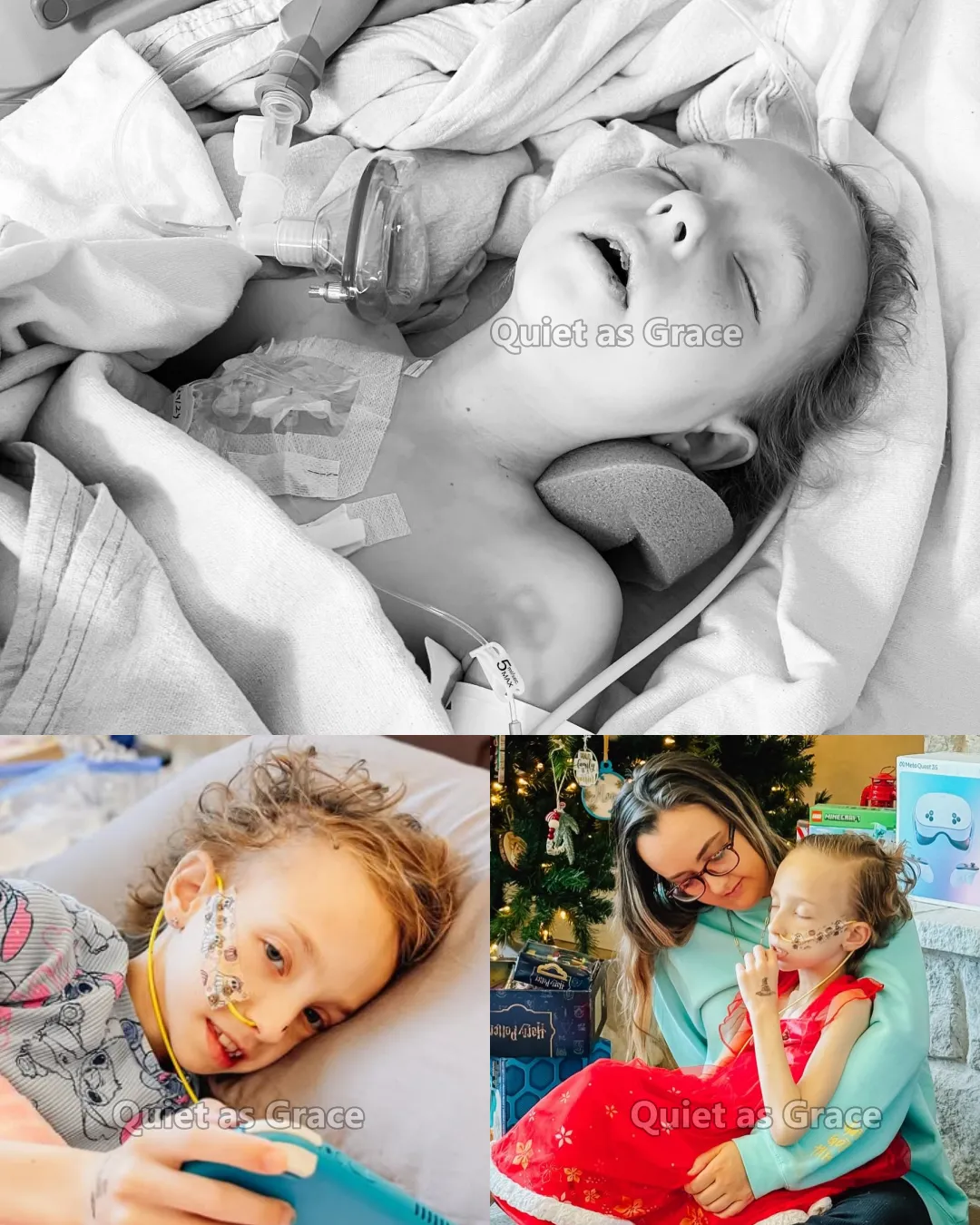
Brielle is downstairs taking a nap with Dad.
So I decided to sneak away for a second and play upstairs in the playroom.
It’s quiet here — the kind of quiet that lets you think.

And as I sit here among her toys, I just want to answer a few questions that people have asked, because I’ve always wanted to be a resource for others — for those looking for answers when maybe their team doesn’t have them.
But before I say anything else, I need to start with this: I’m not a doctor.

I don’t have a medical degree.
I studied marriage and family counseling.
This world — this world of hospitals, medications, protocols, and prayers — was never something I thought I’d know so intimately.

When Brielle was first diagnosed, I remember feeling like I had been dropped into a foreign country without a map.
Everything was new.
Every word the doctors spoke felt like another language.

And I wish — oh, how I wish — that I had known more back then.
If I had, maybe I would have taken different roads, or added different things, or understood earlier that healing doesn’t just happen in hospitals — sometimes it begins in the heart.

Now, all I want is to help.
Not to replace chemotherapy, radiation, or any of the treatments that modern medicine has to offer.
Those things are necessary.
They save lives every single day.

But I’ve learned that sometimes, healing also needs hope, and faith, and tiny acts of love repeated over and over again.
I want to share what has helped us — the little extras, the gentle things that have made a tremendous difference in our journey.
Because maybe, just maybe, they’ll help someone else too.

Two weeks ago — or maybe it’s been a little longer, I’ve lost track of time — we started noticing more pain again.
Brielle’s pain meds had to be increased.
We worked to get it under control, and eventually, we brought her dosage back down.

Her vitals are stable now.
She’s more tired than before, but we still have good, beautiful hours of wakefulness.
Hours when she sits on the couch with her little blanket, making crafts or writing tiny verses on colorful paper.

Sometimes she insists on showing me every single one.
“Look at this one, Mommy,” she’ll say, eyes shining with pride, her fingers smudged with marker ink.
Those moments — small, ordinary, yet sacred — are everything.

She doesn’t need oxygen all the time anymore.
Her heart rate hovers around a hundred — a little high for a resting child, but steady.
For us, that’s a victory.

Because every breath, every heartbeat, every smile counts.
We remember the Brielle from a month ago — the one who could walk across the living room without help, who giggled endlessly at “Full House” reruns.
That Brielle is different from the Brielle we see now.

But she’s still here.
Still fighting.
Still radiating a quiet, stubborn joy that fills our home.

We’re just soaking in every single second we get with her.
Every tiny smile.
Every whisper of “I love you, Mommy.”

Our nights are different now.
Brielle has become a night owl — maybe she takes after me.
During the day, the pain meds make her sleepy, so she naps.

But by nightfall, she’s wide awake.
She’ll look at me with those big brown eyes and say, “I’m ready to watch Full House.”
And so we do.

We stay up late, talking, laughing, sometimes crying, holding hands under the soft glow of the lamp.
I don’t mind the sleeplessness.
Those hours are our treasure.
They’re the quiet spaces where I see her spirit — bright and unbreakable — shining through the pain.

Then we sleep in the next morning, the sunlight spilling across her bed, her stuffed animals tucked around her like an army of little guardians.
That’s our rhythm now.
It’s not perfect.
But it’s ours.

About two weeks ago, when Brielle’s pain began to worsen, I made a decision that broke me.
I stopped what we called “The Miracle Protocol.”

It’s something we share on our main page — a set of natural supplements, teas, and nutrients that we believe have supported her body alongside medical treatments.
For months, it had been part of our daily routine.
But when her pain grew sharper, I began to question everything.

Maybe, I thought, I was doing too much.
Maybe it was time to stop.
Maybe it was time to just… let go.

For four days, I paused the protocol.
I continued her pain meds, her nausea meds — those have never stopped — but I put everything else away.
And during those four days, I felt like my heart had been hollowed out.

Every prayer felt heavy.
Every breath felt uncertain.
I remember kneeling beside my bed one night, the room quiet except for the hum of her oxygen machine downstairs.

I closed my eyes and whispered, “Father, I need an answer.
Please tell me what to do. If I’m supposed to stop, let me know.
Please make it clear — bold — because I don’t trust myself to give up.”
Because I know who I am.

I’m the kind of mom who keeps going.
Who researches late into the night.
Who refuses to stop until every door has been knocked on, every stone turned.

I needed something undeniable.
A sign.
A feeling.
Anything.
And then, in that stillness, I didn’t hear a voice — not really — but I felt something.

A warmth, a whisper in my soul that said, simply, “Keep going.”
Two words.
But they wrapped around me like light.
Keep going.

Maybe it was just for me.
Maybe it was Heaven reminding me that hope isn’t foolish — it’s holy.
I opened my eyes and wiped my tears.
And I said out loud, “Okay. I’ll keep going.”

The next morning, I mixed up the protocol again.
A sixty-milliliter syringe of blended nutrients.
A pot of tea steeped with herbs I can now name by heart.

The gentle hum of the breast milk pump that provides the extra nourishment she still tolerates.
Every step felt sacred.
Every action, a prayer in motion.

And as I handed Brielle the little syringe, she looked at me, smiled faintly, and said, “Thank you, Mommy.”
That was all I needed.
I’ll keep doing this.
As long as I have breath.
As long as she’s here.

Because I believe — with everything in me — that the things we’re doing, the things we’re praying, the things people are sending us from all over the world, are working together in ways we can’t yet understand.
Maybe this isn’t about curing.

Maybe it’s about caring.
Maybe it’s about giving her every ounce of love, time, and comfort that I can.

So that one day, when she smiles down from Heaven, she’ll say, “You did it, Mom. You gave me the best you could.”
And I’ll know that’s true.
That’s what keeps me going.

Not science alone.
Not hope alone.
But love — relentless, radiant, unwavering love.