A Second Chance That Became a Nightmare: The Tragic Truth Behind Baby Finley’s Return Home

He entered the world in silence, wrapped in the soft weight of hope that only a newborn can bring.
For a moment, everyone who held him believed the future had shifted, that light had found its way into a home long shadowed by fear, instability, and the unpredictable storm of two troubled young parents.
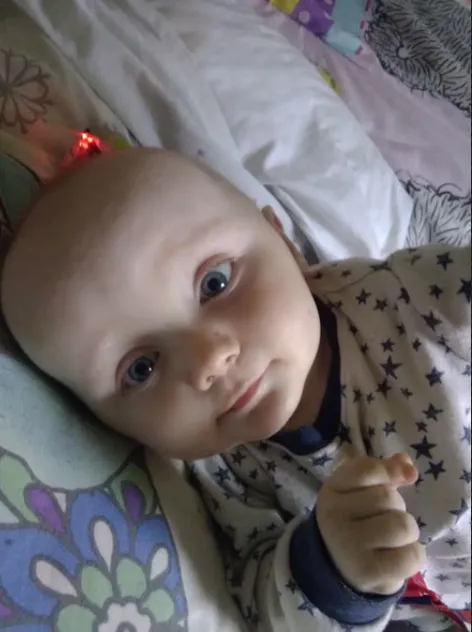
They named him Finley — a small name, gentle and bright, meant for a boy who should have grown up laughing, toddling across warm carpets, and reaching for the hands meant to love and protect him.
Instead, his life became a quiet tragedy whispered behind closed doors.
Weeks before his first Christmas, the world that should have sheltered him became the very place where his cries went unheard and his pain went unseen.
And by Christmas morning, ten months after he was born, he was gone.
His story — of hope, betrayal, systemic failure, and unimaginable cruelty — would shake a nation.
I. BEFORE THE DARKNESS
For the first nine months of his life, Finley was safe.
He lived in a foster home where warmth filled the spaces his parents could not.
Social workers had intervened even before he was born, concerned about the unstable dynamics surrounding his young parents, Stephen Boden and Shannon Marsden.
Both were still barely adults.
Both carried the weight of addiction, volatility, and the kind of emotional wounds that often bleed into the next generation.
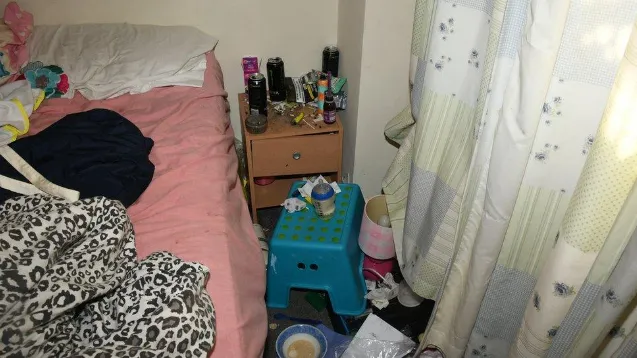
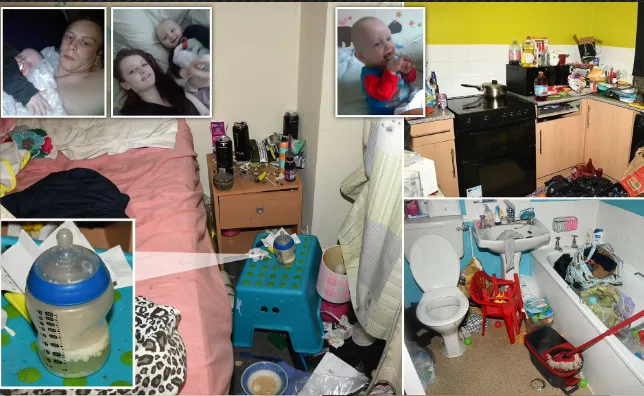
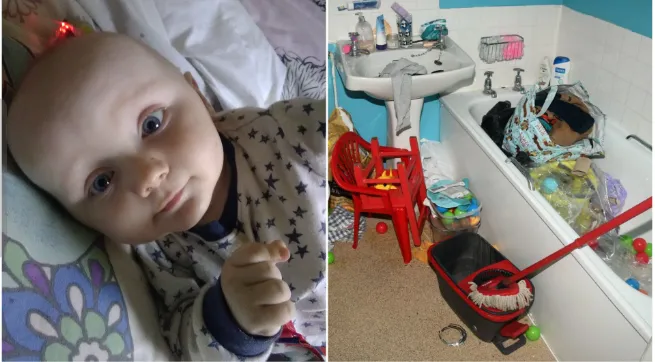
Their home was chaotic, cluttered, and soaked in the lingering smell of cannabis.
Authorities worried about violence.
They worried about drug use.
They worried that the couple, despite their youth, had already learned how to deceive the world around them.
And so, when Finley was born, he was immediately placed in care.
There — in that temporary home — he thrived.
He smiled.
He gained weight.
He slept peacefully.
He was loved.
His foster family described him as “happy, safe, and content,” unaware that their time with him would be the only peace he would ever know.
II. THE DECISION THAT CHANGED EVERYTHING
As months passed, Boden and Marsden told social workers they were changing.
They cleaned the house.
They promised to quit drugs.
They attended meetings, smiled through appointments, and said all the right things.
They painted a picture — bright enough to convince a system overwhelmed by high caseloads and stretched budgets.
Then came the family court hearing.
It was during the Covid lockdown.
The hearing was held over the phone.
Documents revealed that social workers had recommended a gradual four-month transition before Finley returned to his parents.
But Boden and Marsden pushed for faster reunification.
The magistrates agreed.
The eight-week transition was approved.
Social workers noted that the parents did not “pose such a risk” that their baby should remain out of their care.
And so, little by little, Finley’s world shifted.
He left the home where he had known nothing but love.
He returned to two people who had convinced the system that they were ready — but who, behind closed doors, were spiraling back into violence, addiction, and deception.
III. THE HOUSE OF FEAR
The moment Finley fully returned, the mask slipped.
Cannabis became a daily ritual for his parents again.
Their tempers flared.
Their home fell into filth once more.
Finley — only ten months old — became trapped in a place where no one could hear him cry.
Neighbours later said they hardly ever heard a sound from the baby.
And that silence, they would learn, was not peace — but fear.
Derby Crown Court would later describe what happened during those final 39 days as “significant, substantial and repeated acts of severe violence.”
Finley’s body eventually revealed the truth.
Bruises everywhere.
Two burn marks.
Fifty-seven fractures — injuries usually seen in victims of high-impact falls.
His pelvis had been broken in two places.
Experts believed he had been kicked or stamped on.
The injuries caused him unimaginable pain.
But the worst part?
“Once the injuries had been inflicted, his daily experience was one of pain, distress, and suffering,” the judge said.
No one took him to a doctor.
No one called for help.
As he lay dying, his parents smoked cannabis in the same home.
In a text message to a drug dealer just 48 hours before Finley died, Boden wrote:
“I want to bounce him off the walls.”
Those were the words of the man who should have protected him.
IV. CHRISTMAS DAY
It was early morning on 25 December 2020.
Christmas lights flickered weakly across the cluttered living room.
Outside, the world was quiet — wrapped in winter’s soft stillness.
Inside the Boden-Marsden home, the silence was different.
It was the silence of a baby who could no longer cry.
At 2:27 a.m., a 999 call was made.
Finley was unresponsive.
Paramedics arrived to find the ten-month-old cold, severely injured, and fighting the last battle of his short life.
They rushed him to the hospital.
Doctors tried.
They fought.
But his injuries were too overwhelming.
At 3:45 a.m., on Christmas morning — the day meant for light and joy — baby Finley was pronounced dead.
Snow was falling outside the hospital windows.
Inside, a tiny boy who never had a chance took his final breath.

V. THE AFTERMATH
At the hospital, just hours after his death, Boden turned to Marsden and said:
“I’m going to sell his pushchair on eBay.”
He later claimed it was a joke meant to “lighten the mood.”
But nothing could lighten the horror of what investigators soon uncovered.
Detective Inspector Paul Bullock described Finley’s injuries as:
“Among the worst I’ve seen in my 27-year career.”
When the jury returned guilty verdicts, even the judge — Mrs. Justice Tipples — became visibly emotional.
She thanked the jury and excused them from future service for life.
Jurors cried.
Reporters cried.
Members of the public cried.
But the two people who should have cried the hardest — Finley’s parents — remained silent.
Cold.
Unmoved.
VI. THE SENTENCING
On Friday, in a quiet courtroom heavy with grief, Justice Tipples delivered her words:
Life imprisonment.
29 years for Boden.
27 years for Marsden.
She said:
“You inflicted unimaginable cruelty.
Once the injuries were inflicted, Finley’s daily experience was pain and suffering.
Neither of you sought medical help.
Neither of you has shown any remorse.”
Her voice broke as she spoke of what Finley endured.
And still, in the dock, Boden and Marsden sat blankly.
But elsewhere — in living rooms across the country, in the hearts of those who had followed the case — something shifted.
People began asking:
How could this have happened?
How did a baby on social services’ radar end up dying in such horrific circumstances?
Who failed him — and how do we stop this from ever happening again?
VII. QUESTIONS THAT WILL HAUNT A NATION
The serious case review began almost immediately.
Questions piled up like unanswered prayers.
Why were the drug tests removed from the court order?
Why was the transition rushed from four months to eight weeks?
Were social services overwhelmed?
Did the pandemic stretch the system too thin?
Did the young couple manipulate the professionals assigned to protect Finley?
Toby Perkins, MP for Chesterfield, spoke publicly:
He said underfunding had left social workers with unmanageable caseloads.
He warned that more children could “slip through the net.”
His words echoed the silent truth:
Finley didn’t just slip through the net.
He fell through a system full of holes.
VIII. THE LEGACY OF A LITTLE BOY
Finley cannot speak for himself.
But his story has become a plea whispered across the country:
Protect the vulnerable.
Listen to the quiet babies.
Fund social services properly.
Question decisions made too quickly.
Never assume a child is safe just because a parent says they have changed.
His life was short.
But his story — heartbreaking, unbearable, necessary — continues to echo.
In courtrooms.
In council offices.
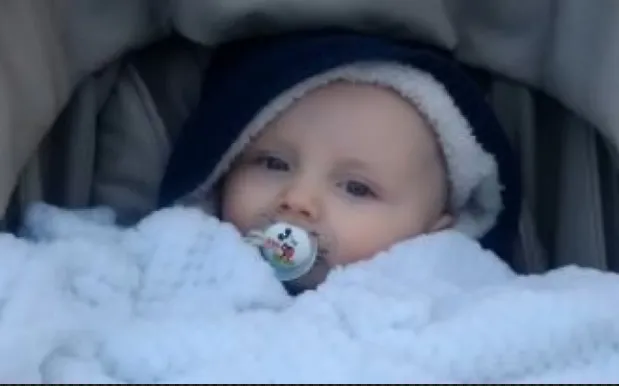
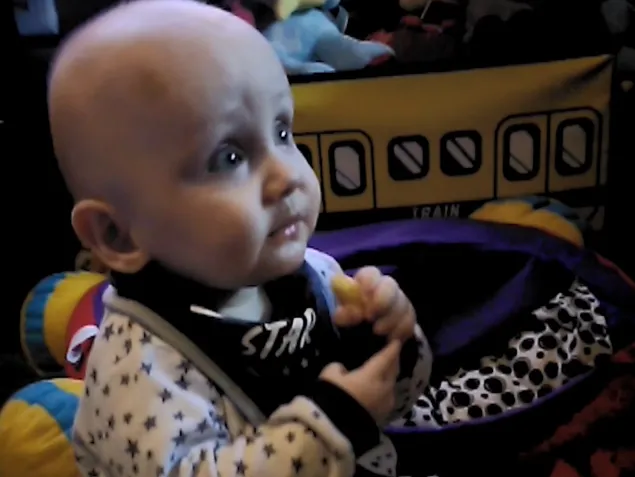
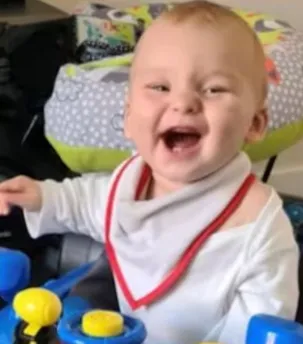
In the hearts of those who will never forget the photo of a smiling, bright-eyed baby who deserved so much more than the world gave him.
Christmas Day will forever carry his name.
A reminder that behind the twinkling lights, some homes hide unimaginable darkness.
And a reminder that the smallest victims must never be ignored.
The Baby No One Wanted… Now a Miracle of Love.650

It was a quiet Sunday morning when I first heard about Mateo’s story—a newborn who had been abandoned, but who would become a living testament to hope, love, and faith.
Shelby Rowe has loved babies her entire life. For 17 years, she has cared for the tiniest and most fragile newborns in the NICU, seeing them as Gifts of God, fighting for every breath. Shelby and her husband, Stuart, already had three daughters, Layne, Addie, and Caroline. Their home was full of life, love, and laughter. But nothing could have prepared them for Mateo.

On September 8th, 2022, a woman rushed into a small hospital, fearing a miscarriage. Within minutes, a baby was born at just 23 weeks, weighing only 1 pound and 4 ounces. The staff thought the infant hadn’t survived, wrapping him up while attending to his mother in critical condition. But then—a cry pierced the room. The newborn was alive. Mateo, as he would later be named, was a true Gift of God.

Transferred to a larger hospital, Mateo was admitted to the NICU, fighting for his life. His mother had already disappeared, leaving Mateo to face the world alone. Shelby remembers the tiny sparkle in his eyes even as he battled for every breath. “We weren’t sure he’d make it through the night,” she said. “But there was something special about him.”

Mateo’s early months were filled with struggles: severe cerebral palsy, epilepsy, vision challenges, constant oxygen, and G-tube feeding. Despite the medical hurdles, he showed resilience beyond his size. When he reached six months, plans were made to place him in a foster home. Little did anyone know, his future would take a different, miraculous turn.
On his first birthday, Mateo suffered a severe seizure and was hospitalized again. Shelby visited him in the PICU and was heartbroken. That Labor Day weekend, a social worker asked Shelby and Stuart a question that would change all their lives: “How about if you take him?”

It was a leap of faith. The Rowes opened their hearts, and soon Mateo moved in after 376 consecutive days in the hospital. His presence transformed the household. Every challenge—his fragile respiratory system, seizures, and mobility limitations—was met with patience, love, and determination. Shelby recalls, “He was the happiest baby ever when he came to live with us. He inspired us.”

Over time, Mateo became part of the Rowe family officially. On December 30th, 2024, they adopted him. A child once unwanted became the center of a loving family, filling their home with hope, joy, and purpose. While he may never speak, his endless smile communicates love in ways words cannot.

Shelby reflects, “God has ordained his life. Mateo’s purpose will someday be fulfilled.” And indeed, Mateo has already fulfilled so much—he has inspired those around him, reminding everyone that every life, no matter how fragile, has meaning.

When I asked about his name, Shelby smiled: “Mateo is a Biblical name. It means ‘Gift of God.’” And in that moment, it felt like the perfect truth.
A baby once abandoned had found his family, his home, and his destiny. Mateo’s journey reminds us that miracles can come in the smallest, most unexpected packages.