The Heartbreaking Story of De’Markus: A Toddler Lost Due to Preventable Medical Errors.

In the quiet town of Gainesville, Florida, the Page family’s world shattered on a cold March morning.
Two-year-old De’Markus Jeremiah Page, a bright-eyed boy with a heart full of curiosity, had been battling persistent vomiting, diarrhea, and poor oral intake.
He was a child with special needs, requiring extra attention and care, yet his spirit remained unbroken.
On March 1, 2024, after a series of concerning symptoms, De’Markus was admitted to AdventHealth Ocala Hospital.
Doctors diagnosed him with a viral illness and critically low potassium levels, a dangerous imbalance that demanded urgent attention.
Immediate IV therapy was initiated, and plans were made to transfer him to Shands Hospital at the University of Florida, a facility known for higher-level pediatric care.

The family trusted the hospital to provide the vigilance and expertise their little boy desperately needed.
But over the next 36 hours, their hope turned into a nightmare.
Instead of being placed in an intensive care unit, De’Markus was admitted to a general pediatric ward.
Despite his dangerously low electrolyte levels and complex medical condition, the hospital did not implement the critical care protocols required for monitoring such a fragile patient.
Fluid and electrolyte checks, along with 24-hour intake and output measurements, were not ordered or executed.
By March 3, 2024, a series of medical errors compounded the crisis.
De’Markus received a tenfold overdose of oral potassium phosphate alongside other unmonitored potassium routes.
These mistakes caused his blood potassium levels to spike to fatal levels.

Without proper lab surveillance or continuous monitoring, no one realized the severity of the situation until it was too late.
The boy’s heart went into cardiac arrest.
Yet because De’Markus was not on cardiac monitoring and lacked critical care supervision, the arrest went unnoticed for crucial minutes.
When staff finally intervened, over twenty minutes had passed.
Attempts to intubate him and protect his airway were unsuccessful, hampered by inadequate training and faulty equipment.
The overdose-induced cardiac arrest was technically reversible, but the prolonged delay resulted in devastating oxygen deprivation.
By the time intervention succeeded, De’Markus had suffered catastrophic brain injury.
He was ultimately declared brain dead and passed away in his mother Dominique Page’s arms.

Every mother’s worst fear had come true.
Dominique recalled the moment with anguish that words can barely contain: waking each day, reaching out for her son, only to find an empty room, a silent echo of the life that once was.
“He didn’t have to die. We trusted them with his life,” Dominique said.
The tragedy has raised critical concerns about patient safety and the treatment of children with special needs in hospital settings.
The lawsuit filed by the Page family claims that Shands Hospital failed to meet federal and accreditation standards for pediatric resuscitation and documentation.
Legal representatives, including Jordan Dulcie from Searcy Denney Scarola Barnhart & Shipley, vowed to hold the hospital fully accountable.
“No parent should endure this. What this family has endured was completely preventable,” Dulcie stated.
The story of De’Markus is a heartbreaking reminder of how fragile life can be and how important timely, attentive medical care is for vulnerable children.

Each moment of neglect, each lapse in monitoring, transformed a reversible medical condition into a tragedy that will haunt a family forever.
The Pages hope that by sharing their son’s story, other parents and healthcare professionals will become aware of the grave consequences of medical oversight.
They hope no other child suffers due to preventable errors, and that hospitals uphold the standards of care every child deserves.
Friends, neighbors, and the community have rallied around the family, mourning the loss of a child who was full of life and potential.
The image of De’Markus, small hands clutched by his mother, remains seared into their hearts, a symbol of love, hope, and loss.
Every day, Dominique wakes with the weight of what could have been, haunted by the knowledge that her son’s death was avoidable.
The Pages’ journey through grief, anger, and advocacy is ongoing.

They have committed to speaking out about pediatric safety and accountability, hoping that their loss will spark meaningful change.
Through their sorrow, they channel a message to hospitals, caregivers, and policymakers: vigilance saves lives.
Children with complex medical needs require constant attention, precise monitoring, and staff trained to act swiftly in emergencies.
Every child deserves a chance at life, and every parent deserves assurance that their child is protected.
De’Markus’ life, though brief, leaves an enduring lesson about the importance of healthcare accountability.
The Pages honor his memory by fighting to prevent such tragedies in the future, ensuring that his story resonates far beyond the walls of Shands Hospital.

In the quiet moments, when the world seems still, Dominique holds the memory of her son tightly.
She remembers his laughter, his bright eyes, his small hands, and the joy he brought into her life.
Though the grief is immeasurable, the determination to protect other children grows stronger each day.
The Pages’ advocacy underscores a vital truth: in medicine, mistakes are not just statistics; they are lives altered, families broken, and hearts shattered.

By sharing the story of De’Markus Jeremiah Page, the family seeks not only justice but awareness, education, and reform.
May his story serve as a beacon, urging the medical community to prioritize vigilance, compassion, and accountability for every child entrusted to their care.
De’Markus may have left this world, but his memory, and the urgent call for change he inspires, will endure.
A Little Girl Who Wasn’t Supposed to Survive Her First Birthday but Kept Defying Fate.1894
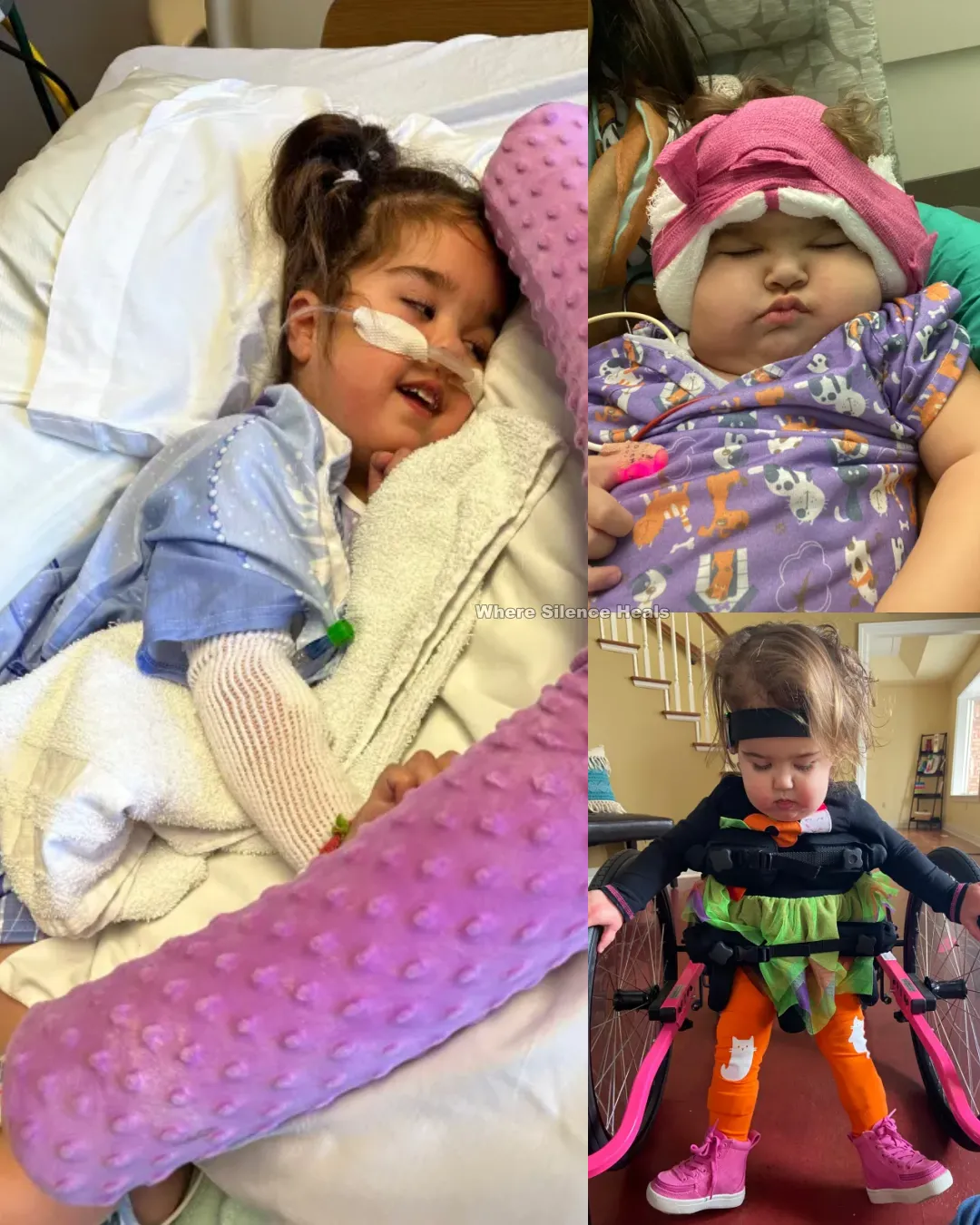
Gwendolyn Clouse’s parents weren’t sure if she would survive past her first birthday.
When she was just a baby, Gwendolyn was diagnosed with a rare disease, peroxisomal biogenesis disorder – Zellweger spectrum disorder (PBD-ZSD), which affects the body’s metabolism.
PBD-ZSD is a multi-symptom condition that affects nearly every organ of the body, and it is considered fatal.
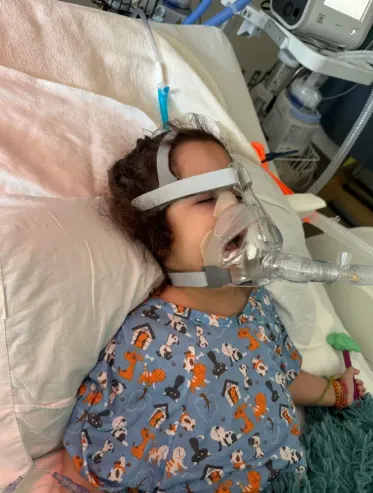
Despite the prognosis, Gwendolyn, now seven years old, has beaten the odds, overcoming countless health challenges with the help of her care team at the University of Iowa Health Care Stead Family Children’s Hospital.
“Every single day we have her is just an absolute miracle,” her mother, Natalie, says softly.
For Natalie and her husband, Phillip, the journey began with confusion.
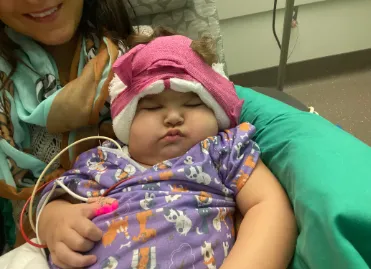
There weren’t any initial signs that their baby girl would have health problems.
Natalie recalls her pregnancy as “picture-perfect.”
Gwendolyn was born full-term, yet her first days of life were not easy.
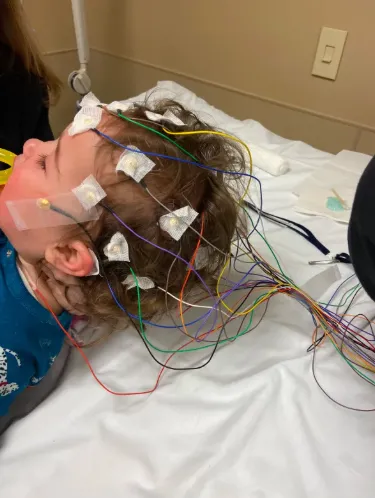
She spent five weeks in the neonatal intensive care unit because of difficulty eating, trouble breathing, and an abnormally large soft spot on her skull.
“They knew something was not quite normal, but they didn’t know what it was,” Natalie remembers.
The pediatrician recommended transferring her to Stead Family Children’s Hospital, a place where answers might be found.
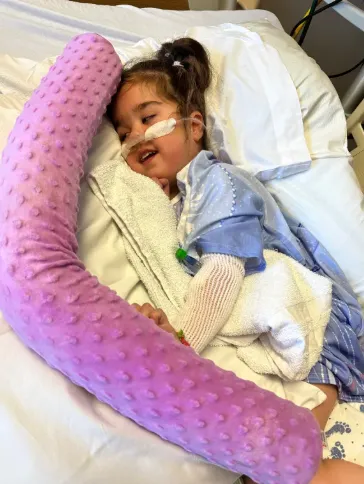
But to Natalie, looking at her daughter, she seemed absolutely perfect.
It was almost impossible to believe something could be so wrong.
At three months old, Gwendolyn was admitted to the hospital for a variety of tests.
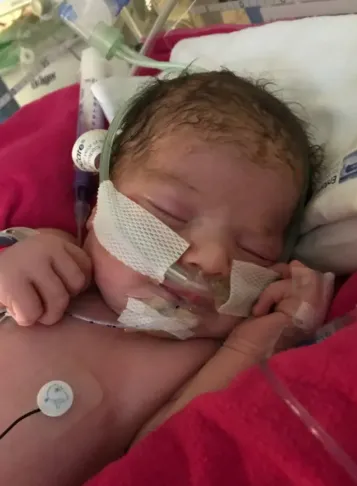
The doctors only discovered that her eyes weren’t working properly.
Other tests were inconclusive, and after ten days, she was discharged.
But only a few days later, Natalie received a phone call that would change everything.
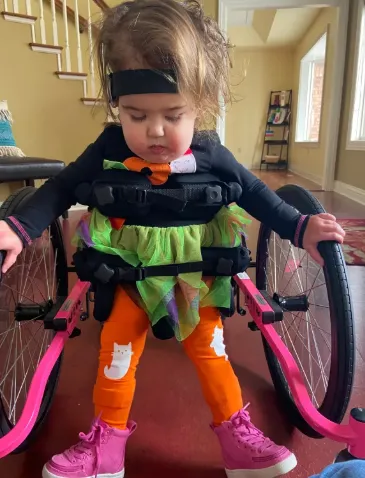
The hospital asked her to meet with a genetics specialist.
Desperate for clarity, Natalie asked for the diagnosis over the phone.
The words on the other end shook her entire world.
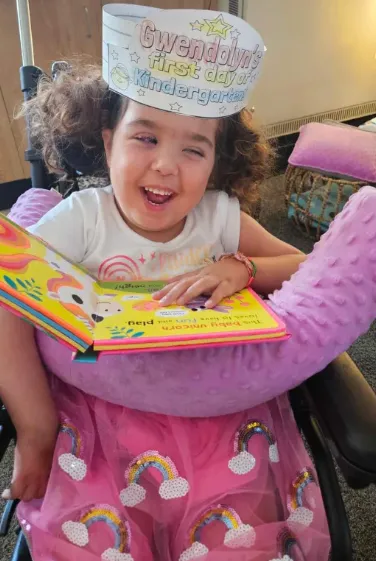
“Your daughter has a metabolic disorder.”
Natalie thought, We can handle that.
She asked, “How do we treat it?”

The voice on the line answered, “There is no treatment.”
Natalie’s heart dropped.
She asked, “Is my baby going to die?”
The reply was calm but devastating: “It’s a terminal condition.”
Tears blurred her vision as she held her daughter close.
She could not comprehend how her perfect little girl was fighting something so cruel.
Gwendolyn had Zellweger Spectrum Disorder, a fatal condition in which the body’s peroxisomes do not function.
Since every cell depends on peroxisomes, every organ system was affected.
Most infants with this condition never survive past their first year.
But Gwendolyn was different.
Step by step, she kept finding a way to live.
Further tests showed her liver was failing, and she was diagnosed with stage IV liver disease.
Hearing loss followed, and at eighteen months, she received her first hearing aids.
When that was no longer enough, she was given bilateral cochlear implants.
In 2020, seizures began to shake her small body.
Medications did little to help, and the side effects were brutal.
Her care team, refusing to give up, tried a new approach — combining medication with a ketogenic diet.
The seizures stopped.
Natalie remembers the neurologist doing a little “happy dance” when he heard the news.
Hope had returned.
Over time, Gwendolyn began using a feeding tube, which became “the biggest blessing,” allowing her to get nutrition safely.
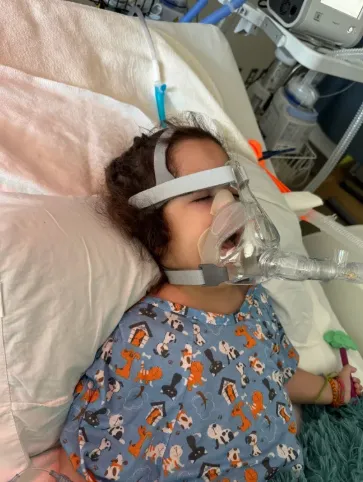
She also needed a ventilator to support her breathing.
“That machine alone has kept her out of the hospital probably thirty times,” Natalie says gratefully.
Her condition remained complicated — slow internal bleeds, liver disease, kidney concerns.
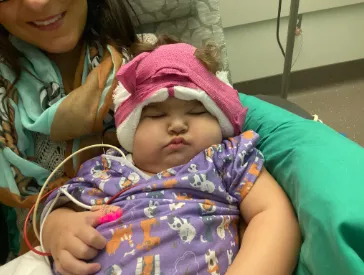
A team of specialists worked together to keep her stable.
And through it all, palliative care became a source of comfort, ensuring that Gwendolyn was not just surviving but truly living.
“She loves school,” Natalie says with a smile.
“It’s her favorite place in the entire universe.”
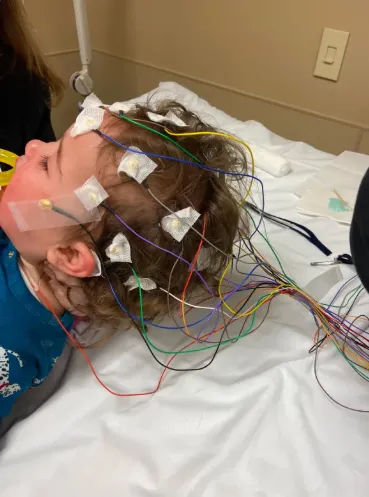
Using her tactile board, Gwendolyn communicates in ways that show her bright spirit.
Every morning begins with her mother’s words: “Good morning, Gwendolyn Iris. Mommy loves you.”
Her face lights up each time.
Now her three-year-old brother joins in, repeating the phrase to his sister with pride.
“She adores him, and he thinks she’s the best,” Natalie shares.
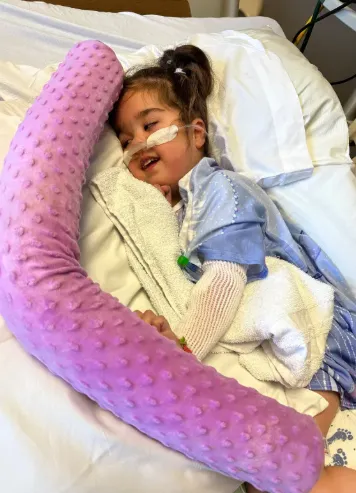
Despite her fragile health, Gwendolyn enjoys the simplest joys.
She loves summer days at the pool.
She loves snuggles on the couch.
She loves the blast of cool air from the Sam’s Club walk-in freezer, which makes her giggle uncontrollably.
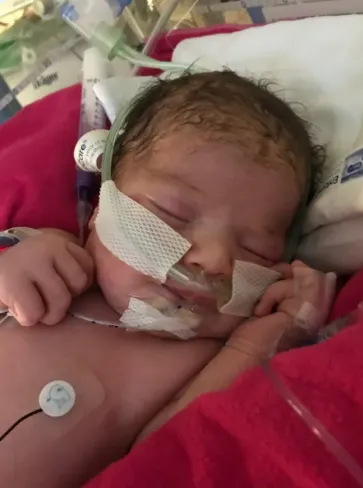
“I don’t know that there’s much she doesn’t love,” Natalie says.
“She’s so happy and so sweet. Everyone who meets her falls in love with her.”
In August 2025, Gwendolyn lived a dream moment.
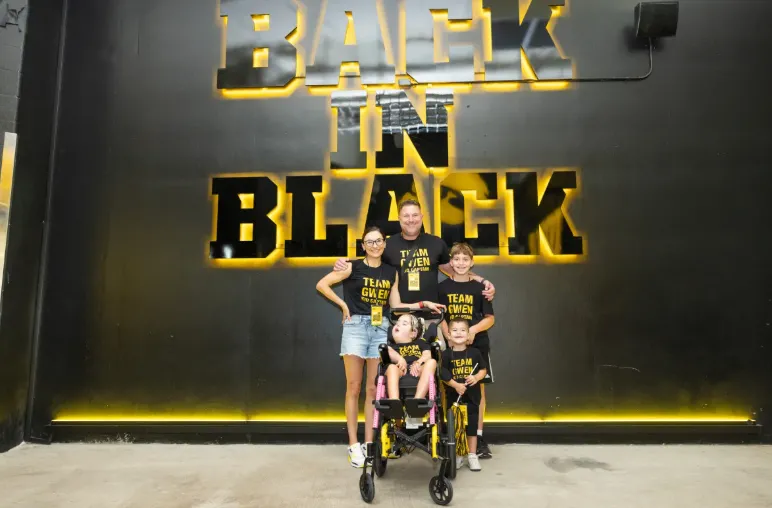
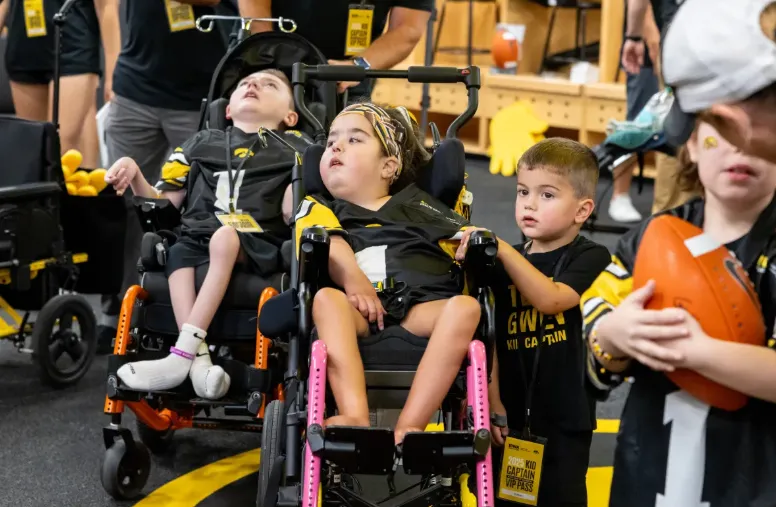
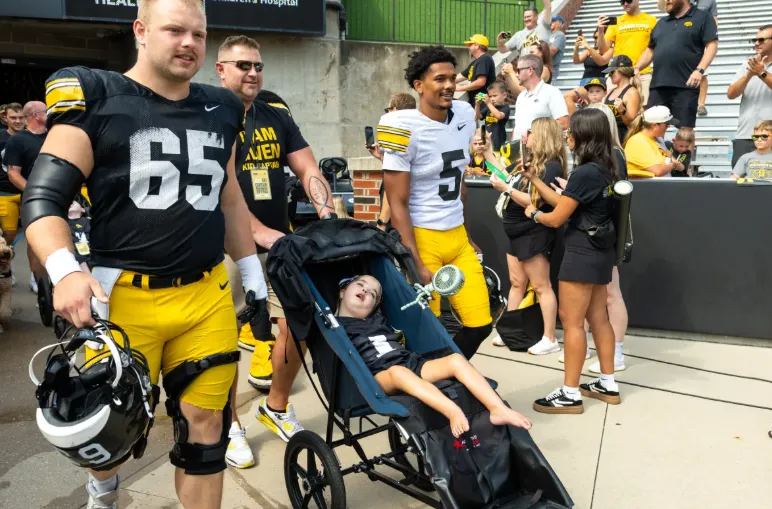
During the Iowa Hawkeye football team’s annual Kids Day, she walked out of the tunnel with the players, hand in hand.
She collected autographs, laughed with athletes, and became part of their tradition called The Swarm.
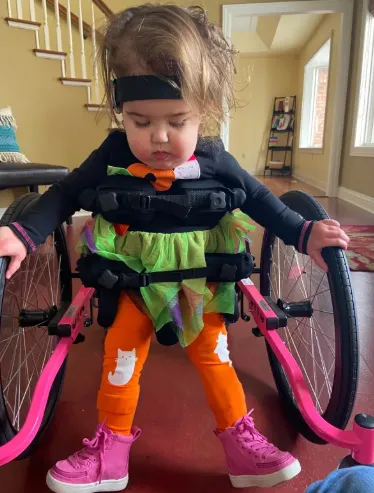
It was a moment of belonging, a symbol of unity and strength.
For her parents, it was proof that their daughter was not just surviving but creating unforgettable memories.
Against every odd, Gwendolyn continues to shine.
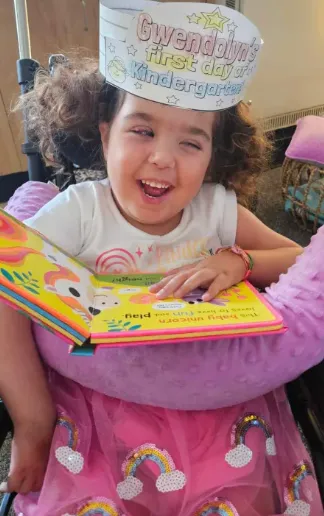
Her life may be fragile, but her joy is fierce.
Her story is a reminder that love, care, and determination can turn even the darkest prognosis into a life full of light.