When a Playground Became a Crime Scene: Two 12-Year-Olds, One Stabbing.5832

The afternoon should have been ordinary.
Just another winter day slipping quietly toward evening, the kind where kids gather at a neighborhood playground to burn off energy, argue over games, and forget—at least for a little while—about everything waiting for them at home.
Instead, it became the kind of day that changes lives forever.
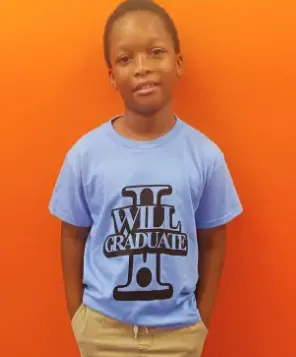
At a playground inside Betsy Head Park, two boys—both only twelve years old—crossed a line that cannot be erased.
One of them, Khayell Dupree, would leave the park fighting for his life.
The other would leave in handcuffs.
According to police, the attacker was just 12 years old himself, charged as a juvenile with attempted murder after allegedly stabbing Khayell in the chest during what investigators believe was an ongoing neighborhood dispute.
A “beef,” as it was described—one word trying and failing to explain how children ended up with a knife between them.
For Khayell’s mother, Karerja Rerd, the word makes no sense.
Standing outside her building, just blocks from the playground, her voice carried disbelief more than anger.
“From what I know, allegedly, he had an issue with one of the kids in the neighborhood,” she said.
“I don’t know how it started. I don’t know how we got to that point.”
What she does know is what came next.
The knife.
The blood.
The sirens.
The phone calls that no parent should ever receive.
Police say the stabbing happened quickly.
One moment, children were gathered in the park.
The next, Khayell was on the ground, wounded in the chest, his life draining away while bystanders screamed for help.
Officers rushed to the scene and arrested the alleged attacker there.
A knife was recovered.
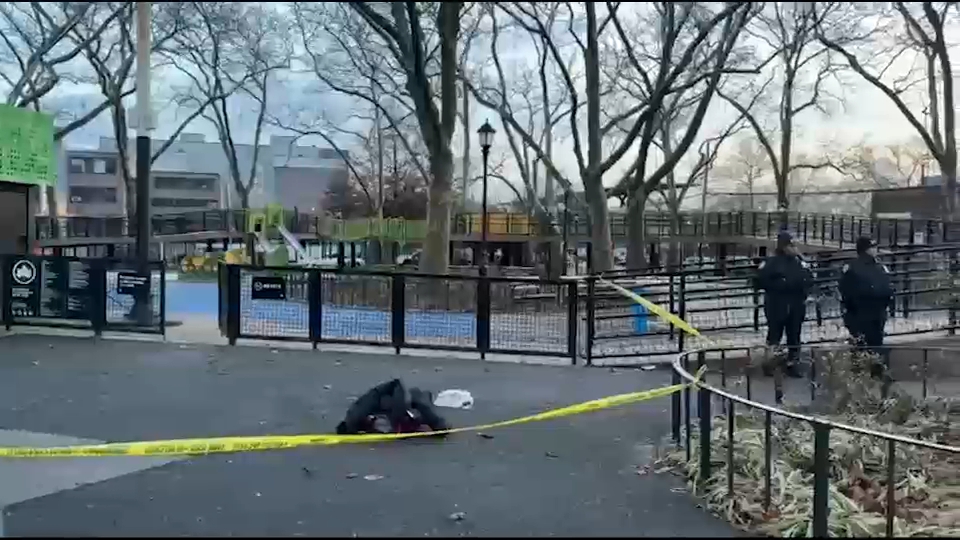
The playground—meant for laughter, scraped knees, and after-school freedom—was transformed into a crime scene, littered with blood-stained clothing and stunned silence.
Khayell was rushed to the hospital in critical condition.
Later, he would be transferred to a Queens facility that specializes in pediatric cardiovascular care—because the injuries were that severe.
Because a knife had punctured his left lung.
Because it had reached his heart.

“They had to cut from his collarbone down past his stomach to close his heart,” his mother said quietly.
“Then he started filling with fluid in his lungs.”
Her twelve-year-old son—still a child, still supposed to be worrying about homework and video games—was suddenly surrounded by machines.
Tubes.
Monitors.
Tools doing the work his body could not yet do on its own.
“So my baby is hooked up to tools all throughout his body,” she said.
Even as she spoke, she made it clear she had not left his side.
“When I still talk to him, I still touch him, I still kiss him,” she said.
“Just gently. On his hand.”
Doctors listed Khayell as critical but stable.
Those words offer hope—but they also carry fear.
Because “stable” does not mean safe.
And “critical” means every hour still matters.
To those who know him, Khayell is not a headline or a statistic.
He is quirky.
Goofy.
Funny.
A kid who laughs easily and smiles often.
“He’s happy all the time,” his mom said.
He loves Roblox.
He loves games.
He loves being a kid.
At home, he has a special bond with his five-year-old autistic sister, a relationship his mother describes as loving and gentle.
He also has three older brothers—15, 16, and 18—who now face the terrifying reality of possibly losing their little brother.
“My baby’s not one of them kids you gotta worry about,” Rerd said.
“He’s not one of them. I love him. That’s my baby.”
Her grief, however, is not limited to her own child.

In the middle of her pain, she acknowledges another truth that sits just as heavy.
“But those other kids—other people’s babies—that’s what they did,” she said.
“And now I almost lost my son, but they messed up their lives too.”
“Somebody else’s mother got to deal with their child being incarcerated.”
The alleged attacker now faces a serious felony charge and will be processed through Family Court, as required for juveniles.
He is twelve years old.
Barely old enough to fully understand the permanence of what he is accused of doing.
Barely old enough to legally ride certain amusement park rides.
Yet now old enough to be charged with attempted murder.
Whether he attended the nearby Mott Hall Bridges Academy—the same school as Khayell—remains unclear.
Investigators are still working to piece together what led to the violence.
What words were exchanged.
What grudges were carried.
What moments could have changed the outcome.
For Khayell’s mother, the questions are unbearable.
“Whatever issue they had, it was never that serious,” she said.
“It was never that bad.”
Her voice cracked as she spoke about what children are supposed to be doing at that age.
“You’re supposed to be playing Roblox,” she said.
“You’re supposed to go to VR and Nintendo and do fun stuff.”
“Christmas is coming up.”
Then she said something that cut deeper than any police report ever could.
“This is not Roblox.”
“You don’t get to do over.”
“You don’t get an extra life.”
“This is not Minecraft. You don’t have 10,000 hearts.”
“No. It don’t work like that.”
“This is real life.”
“When things happen, they happen.”

“And it’s real.”
“And it has real effects on you and the people around you.”
Her words echo far beyond one playground.
Because this stabbing did not happen in isolation.
Just two hours earlier, in a separate incident miles away, two more boys—ages 13 and 15—were stabbed during a fight outside the Seneca Avenue M train station in Queens.
One was stabbed in the chest.
The other in the back.
Both survived.
Both were taken to hospitals with non-life-threatening injuries.

A group of teens fled that scene and had not been caught by the following day.
Different locations.
Different faces.
The same pattern.
Children carrying knives.
Arguments escalating beyond control.
Moments of anger turning into lifelong consequences.
Back in Brownsville, the park has returned to quiet.
The swings hang still.
The ground looks ordinary again.
But nothing about it is ordinary anymore.
For Khayell’s family, every beep of a hospital monitor is a reminder of how close they came to losing him.
For the family of the accused boy, there is a different kind of devastation—one filled with shame, fear, and the haunting question of how a child ended up holding a knife.
And for the community, there is a growing sense of alarm.
Because when twelve-year-olds are stabbing twelve-year-olds, something is deeply broken.
Something that cannot be fixed with arrests alone.
Something that demands attention before another playground becomes another crime scene.
As of now, Khayell remains hospitalized, surrounded by machines, medicine, and the steady presence of a mother who refuses to let go.
She talks to him.
Touches his hand.
Kisses him gently.
And waits.
For healing.
For answers.
For a future that, just days ago, she never imagined would be uncertain.
This is not a game.
There are no extra lives.
And the cost of learning that lesson is far too high—especially when the ones paying it are still children.
When Hope Hurts: Sasha’s Unyielding Battle with Cancer.1583
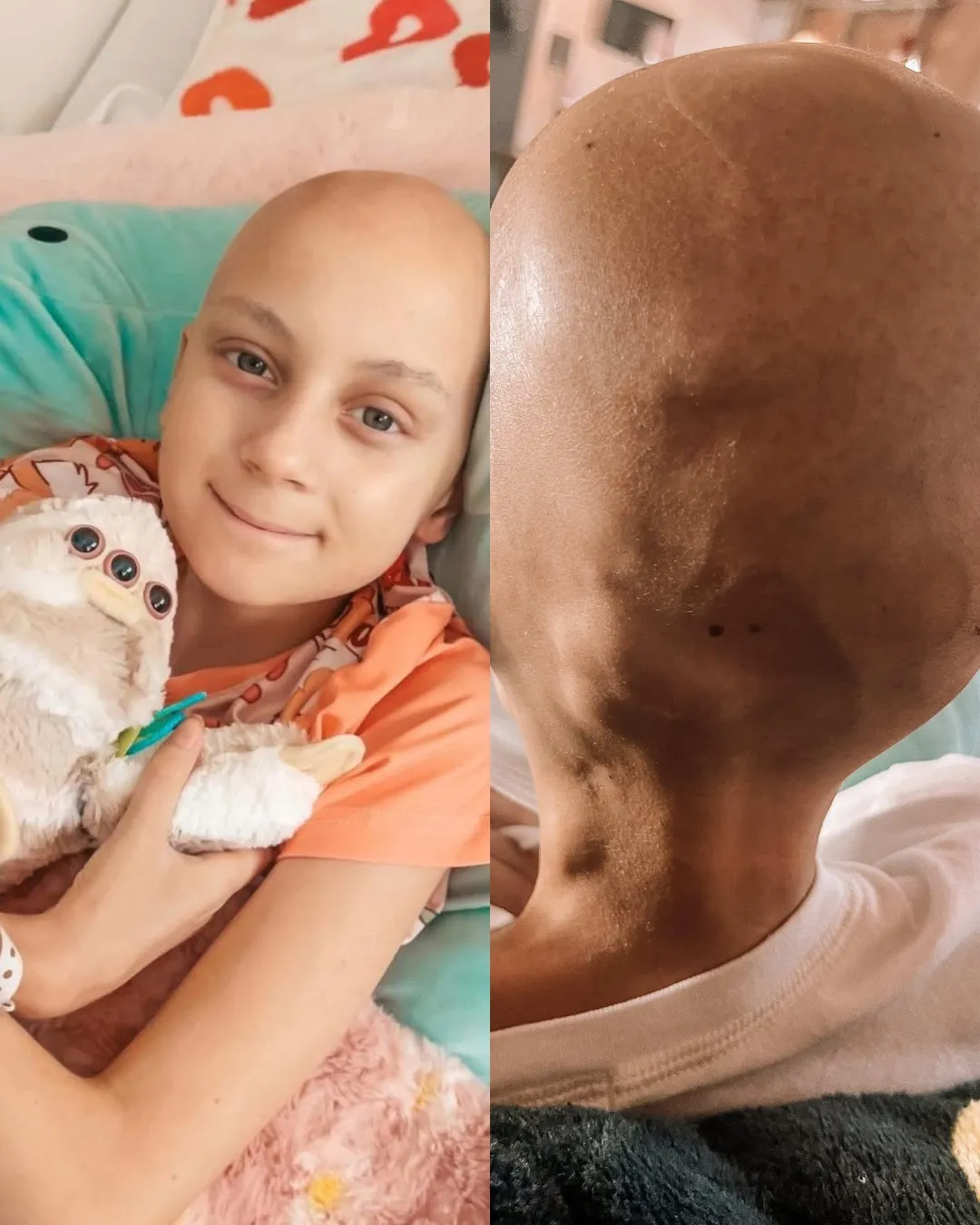
Sasha is a beautiful child, not just because of her soft smile and gentle eyes, but because of the strength, endurance, and light that shine from within her. For more than three years, she has been in a fight that no child should ever have to face.
Ewing’s Sarcoma — a rare and aggressive bone cancer — came into her life like a storm, tearing through her childhood and forcing her to walk a road paved with pain, fear, and endless hospital visits. Treatments that were supposed to give her back her life instead became a cycle of hope and heartbreak. Chemotherapy. Radiation. Surgery. Every protocol brought the promise of progress, but time and again, the cancer would return.
Still, Sasha never stopped smiling. She never stopped hoping. Even as her body grew weaker, her spirit only grew stronger. She inspired not just her family, but everyone who heard her story.

Now 13 years old, Sasha was given an opportunity that felt like a miracle — a trial immunotherapy, one that had already shown incredible results in Europe. There, three other children had received this treatment. All three responded, and all three remained cancer free. For Sasha’s parents, it felt like a door opening where all others had closed. Sasha would be the very first child in the United States with Ewing’s Sarcoma to undergo this particular trial.
Her mother shared the reality of what lay ahead:
“This was not an easy path. It is, in truth, one of the most excruciating roads a child could walk. Sasha went into this therapy very weak, with more than 40% cancer DNA in her blood. The cancer had spread to her marrow, her bones, her lungs, and her lymph nodes. We told her that this regimen would bring unimaginable pain, and that there was a very real chance it would not work.”
But Sasha’s answer was simple, brave, and heartbreaking all at once:
“I don’t care about the pain. If this can maybe help, please let me.”
Those words carried the weight of a warrior’s soul. She was not asking for comfort, not asking for ease. She was asking for a chance — a chance at life, a chance at healing, a chance to fight.
And so, anchored in faith and hope, her family moved forward. They clung to each other, leaned on the prayers and encouragement of their community, and watched as Sasha endured the trial. Each day was filled with uncertainty. Each night was filled with whispered prayers. Her parents stood by her side, holding her hand, their hearts breaking with every wince of pain, but also filled with pride at her courage.
The therapy regimen was brutal. It stripped her body of what little strength it had left. But Sasha did not falter. She held her ground, endured the unimaginable, and walked through fire with the kind of bravery that humbles even the strongest of adults.
When the therapy was completed, there was a fragile, trembling hope that maybe, just maybe, this would be the breakthrough. Her family allowed themselves to imagine a different future — one where Sasha could be free from tubes, hospital beds, and endless tests. One where she could be a teenager again, laughing with friends, dreaming about tomorrow.

But then came the update no parent should ever have to give.
Her mother’s words were raw, stripped bare of everything but grief:
“Oh my heart… one week after therapy and it’s back. So many nodules. I ache to my core. Oh my baby.” ?
It was as if the world collapsed all over again. The cruel reality of childhood cancer had struck once more, tearing away the fragile hope they had held so tightly.
And yet, even in the face of this devastation, Sasha remains what she has always been: a light. Her family, though aching, continues to believe in the power of love, prayer, and community. They know that while cancer has stolen so much, it cannot take away Sasha’s courage. It cannot erase the love she has given and the lives she has touched.
For those who know Sasha, she is not just a patient. She is a hero. She is a girl who, when given the chance to choose comfort or pain, chose pain — not because she wanted it, but because she wanted the possibility of life. She is a girl who has walked through more suffering than most adults will ever know, yet still finds ways to shine.
And now, it is our turn to be her strength.
Her family asks us all to surround Sasha with love, prayers, and positive energy. They ask for courage when theirs runs low, for comfort when the nights are long, and for infinite hope when despair tries to steal it away.
Because Sasha deserves more than cancer has given her. She deserves to know she is not alone.
So today, let us stand with her. Let us send her every ounce of faith, every whispered prayer, every thought of love and healing we can offer. Let us remind her and her family that the world sees her, honors her, and is fighting with her.
You are AMAZING, Sasha. You are so LOVED, beautiful girl. You are our HERO. ♥️
And though cancer has tried to write her story, Sasha has already written her own: one of resilience, courage, and love that cannot be broken.