Max’s Journey: A Story of Resilience, Hope, and Heart Defects 3390c

Introduction
In October 2021, Angela and her family were thrilled to welcome their son Max into the world after a long and challenging labor. The joy of bringing their newborn home was quickly overshadowed by a growing concern. Max was feeding well and seemed healthy at first, but a comment from his grandmother about his breathing prompted Angela to seek advice from the professionals. Little did they know, this simple observation would set in motion a journey that would change their lives forever. This is the story of Max’s unexpected diagnosis, his journey through heart surgery, and the strength and resilience that have carried him and his family through it all.
A Newborn’s Struggle
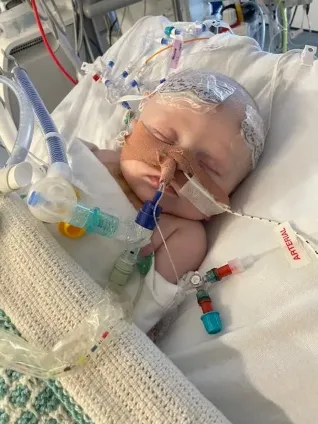
Max was born on October 3, 2021, a day that should have marked the beginning of a joyful journey for the new family. However, things took a subtle turn when Max’s
breathing became a topic of concern. Angela and her partner didn’t initially think much of it, as Max appeared healthy and was feeding well. But when Max’s Granny commented on the baby’s labored breathing, it planted the seed of worry in Angela’s mind. At about three to four weeks old, Angela and her partner decided to bring up their concerns with their
health visitor, who immediately acted on it, contacting the GP for further evaluation.
The GP, after conducting some basic checks, wasn’t overly concerned but decided to send Max for further tests, just to be sure. The family initially thought it might be a mild illness like pneumonia, but
the doctors’ reactions during the final heart scan were the first signs that something was seriously wrong.
The Diagnosis
The moment Angela saw the concerned look on the doctor’s face during the heart scan, she knew things weren’t as simple as they had hoped. The news was delivered quickly and bluntly. Max had a
large ventricular septal defect (VSD), a condition where there is a hole between the two lower chambers of the heart. The doctor explained that Max would need open-heart surgery
as soon as possible to repair the hole and ensure he could live a healthy life. This was a terrifying moment for Angela and her partner. The dream of bringing home a healthy baby had suddenly been replaced with the stark reality of heart surgery.
Waiting and Preparing
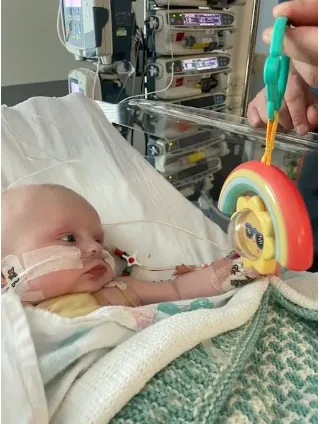
After the diagnosis, the family spent months in a state of uncertainty. Max’s surgery was initially scheduled but was repeatedly canceled due to various reasons, adding to the emotional stress. Despite numerous trips to the hospital and a sense of urgency building, Angela and her partner had to wait. The cancellations only intensified the anxiety that came with knowing their baby’s heart needed urgent repair.
Finally, in January 2022, the family was given a new admission date, and the long wait was over. But the day of Max’s surgery was one of the hardest days of their lives. Angela recalls the deep sense of fear and helplessness they felt when the doctors took Max away for surgery. It felt like an eternity as they anxiously awaited updates. As the hours passed, their worst fears began to creep in.
The Complications
When they finally received the call that Max’s surgery had been completed, they were relieved to hear that it had gone ahead. However, their relief was short-lived. Upon arriving at Max’s bedside, they were informed of a complication during the surgery. Max’s
heart orientation was unusual, and when the doctors attempted to patch the hole in his heart, an artery was accidentally damaged. This prompted a series of emergency actions, with calls to other surgeons and medical staff to stabilize Max.
Max’s heart was now in serious trouble. Due to the damaged artery, his left ventricle had become enlarged, and doctors decided to reopen his chest to help alleviate the pressure. The situation was dire, but the medical team worked tirelessly to save him. Angela remembers the overwhelming emotions she felt watching her son hooked up to numerous machines, with his chest open, fighting for his life. The doctors reassured her that they were doing everything they could, but it was still an incredibly difficult time.
Recovery in the PICU
Max spent the next ten days in the Pediatric Intensive Care Unit (PICU), where he faced several setbacks. Twice, he experienced a peri-arrest, a moment when his heart temporarily stopped beating. It was a harrowing experience for his family, and they were told to prepare for the worst. Max was placed on
ECMO (extracorporeal membrane oxygenation), a machine that helps oxygenate the blood when the heart is unable to do so on its own. The family held on to the hope that Max would pull through.
Max’s recovery was slow but steady. After the swelling in his heart subsided, his chest was closed, and he was moved to a cardiology ward where he spent another three weeks
recovering. During this time, the family watched their son struggle but also saw glimpses of the strong little boy they knew. Slowly, Max began to show signs of improvement, gaining strength each day. His
heart function improved, and his body started to heal.
Home at Last
After weeks of waiting and worrying, Max was finally ready to be discharged. Two and a half months
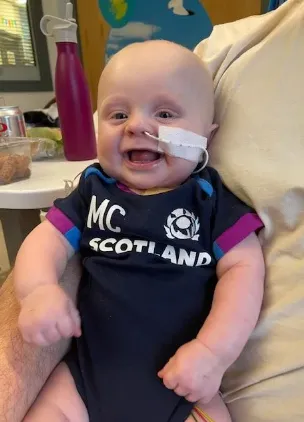
after the surgery, Max was strong enough to leave the hospital and go home with his family. Although he still had some ongoing challenges, such as taking medication to support his heart function, Max was now an active, energetic little boy. Angela describes him as “the most active, energetic, and ravenous boy you could meet,” and their joy at seeing him thriving was palpable.
Max’s story is a testament to the incredible strength and resilience of children born with heart defects. Despite the challenges he faced in the early months of his life, Max has shown remarkable progress. His journey isn’t over yet, and he will continue to need regular heart check-ups and medication, but the family is overjoyed at how far he’s come.
A Grateful Family
Angela is incredibly thankful for the medical professionals who saved Max’s life. She feels immense gratitude toward the surgeons and doctors who helped him, as well as the support staff who provided comfort and guidance during some of the darkest moments. She credits the early detection of Max’s heart defect as the key factor in his survival. Had it not been for the sonographer who detected the heart issue during the 20-week scan, Max’s condition might not have been diagnosed in time.
Advocacy for Early Detection
The importance of early detection in congenital heart defects cannot be overstated, and Angela is passionate about raising awareness of this issue. If Max’s condition had not been discovered at the 20-week scan, the outcome could have been drastically different. Early intervention is critical for babies with heart defects, and Angela advocates for more widespread use of pulse oximetry testing for newborns. This simple, non-invasive test measures the oxygen levels in a baby’s blood and can help detect heart defects before they become life-threatening.
A Message of Hope
For parents who are just starting their journey with a heart warrior, Angela offers this message: “Stay hopeful, trust your instincts, and never give up on your child. The medical professionals are amazing, but your love and strength as a parent can make all the difference.”
Max’s journey is far from over, but every day is a blessing. He is growing stronger, and his family is grateful for every milestone he reaches. His story is a reminder that even in the face of overwhelming odds, miracles do happen.
Max is a heart warrior, and his journey is one of survival, hope, and love. With the right care, support, and early detection, children like Max can thrive, and their families can find joy in every moment.
Arlie’s Lifesaving Smile: How a Four-Year-Old Beat the Odds and Inspired a Movement 2185c
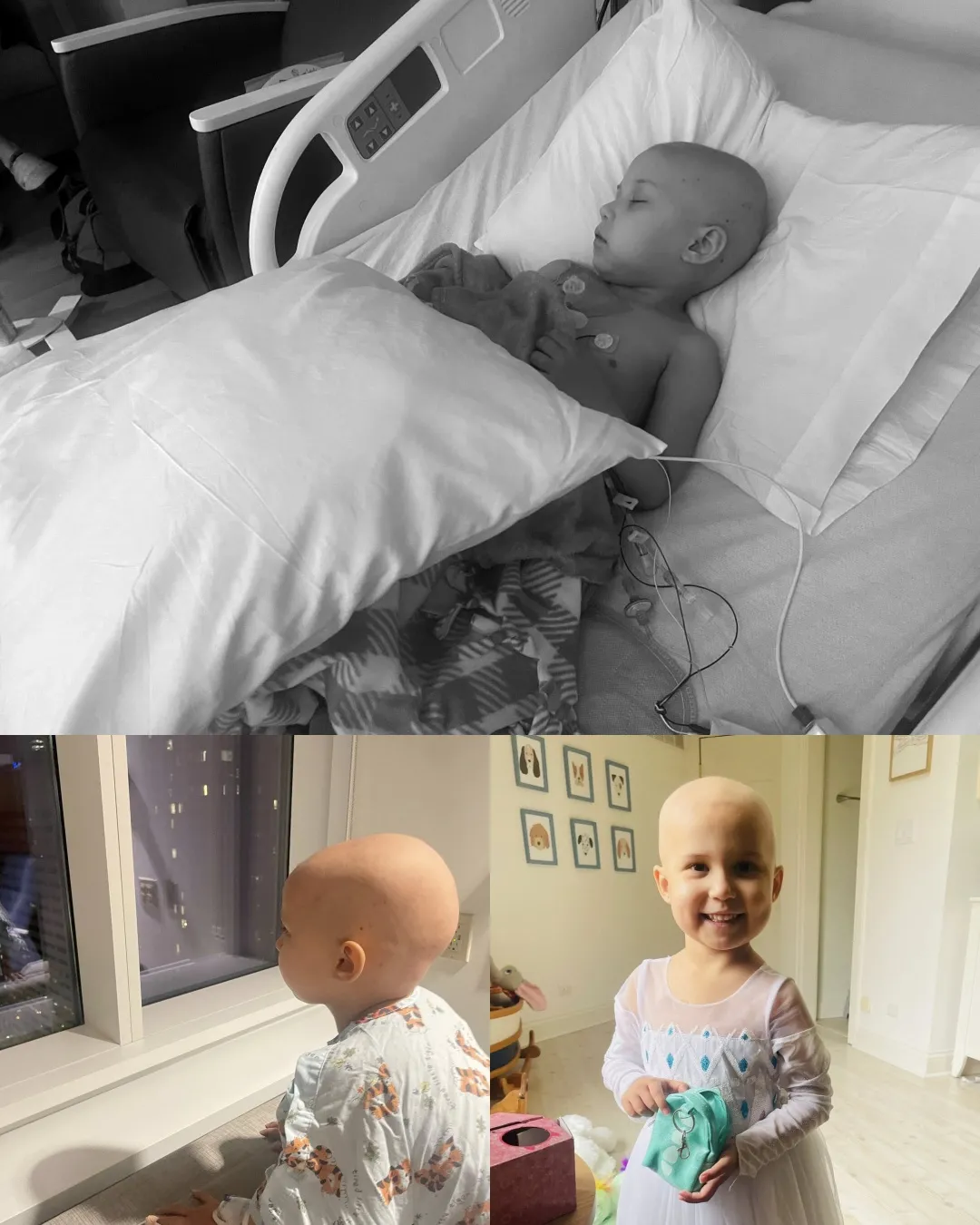
Arlie was just like any other four-year-old, full of laughter, imagination, and boundless energy. A few weeks ago, she was twirling in her Elsa dress, spinning in circles and giggling as though the world were hers alone. Even in the midst of chemotherapy, she tried to hold onto the simple joys of childhood — the spark of dress-up, the thrill of a game, the comfort of laughter shared with family.
Her parents watched her with pride and worry. Each day was a delicate balance between celebrating her bravery and fearing the fragility of her tiny body. Yet, nothing could prepare them for the storm that was about to hit.
It started innocuously enough. A small tummy ache, one they assumed was a passing discomfort, perhaps the result of medicine or fatigue. But within hours, the pain escalated. Arlie screamed, her cries piercing the hospital halls, and her parents felt a chilling fear take root. Emergency tests were rushed, machines beeped in urgent rhythm, and doctors moved quickly, their faces solemn.
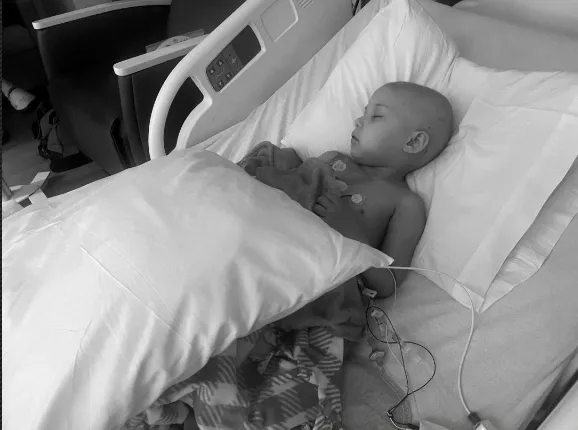
The diagnosis was devastating. Severe liver damage. Her liver, already compromised from chemotherapy and prior treatments, was failing rapidly. Doctors delivered the grim news: she had only a 20% chance of survival. Her parents were told bluntly that the odds of losing her were far greater than the odds of saving her. The words hung in the air, heavy and suffocating, a cruel contrast to the innocent giggles of a little girl who simply wanted to be a child.
For 22 grueling days, Arlie fought like the warrior she was. Her tiny body endured transfusions, endless doses of medicine, and countless sleepless nights. Nurses and doctors marveled at her resilience, noting how she refused to surrender despite the pain and the uncertainty. Her parents stayed by her side, alternating between hope and despair, praying for every heartbeat, every sigh, every breath that she could take on her own.
Those days were a blur of hospital walls, medical equipment, and the quiet moments of tenderness that only a parent can offer. Every smile Arlie gave, even when it was faint or forced, became a victory. Every small sign of improvement — a steady heartbeat, a slight rise in liver function, a calm nap — became a reason to believe that life might continue for her.
And slowly, against all odds, Arlie began to improve. Her liver started to recover, her strength returned, and her spark of life, which had flickered dangerously, grew brighter. Her parents, exhausted but elated, watched their daughter smile again. Her laughter returned, and with it, the magic of childhood — the twirls in her Elsa dress, the squeals of delight, the joy of playing as if nothing had happened.
One of Arlie’s favorite moments now comes when she sees the hospital elf — a whimsical figure who donates blood and helps children like her. She knows, even at four years old, the power of blood donations. She understands that kindness from strangers — people willing to give a part of themselves — saved her life. It’s a lesson in compassion and courage that she will carry forever.
Inspired by her experience, Arlie’s family decided to transform their pain into purpose. They created Arlie’s Lifesavers Blood Drive, a campaign designed to raise awareness about the importance of blood donations for children battling critical illnesses. Through this initiative, families like theirs can find hope, and lives like Arlie’s can be saved. Every donation represents a chance for another child to see tomorrow, to twirl in a dress, to laugh without fear.
The story of Arlie is a stark reminder of the fragility and resilience of life. It highlights the unseen battles that children face every day — battles that may not be visible but are fought with incredible courage. Her journey from a small tummy ache to a life-threatening liver condition, and finally to recovery, showcases the delicate balance between medical intervention, parental love, and the extraordinary determination of a young child.
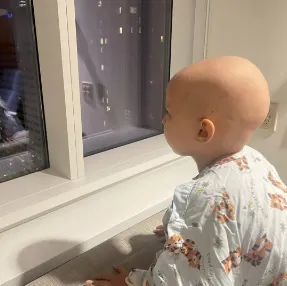
Arlie’s parents have become advocates, speaking openly about the critical need for blood donations. They emphasize that for children like Arlie, a single pint of blood can mean the difference between life and death. Each donor becomes a silent hero, part of a network of care and compassion that sustains families during their darkest hours.
Through Arlie’s story, communities are learning not only about the importance of blood donation but also about hope, resilience, and the transformative power of human kindness. While Arlie’s journey has been harrowing, it has also inspired others to act, to give, and to believe that small acts of generosity can have life-altering consequences.
Today, Arlie continues to thrive. She plays, laughs, and embraces the ordinary joys of childhood with an awareness that few children possess. Her experiences have made her both strong and empathetic, a living testament to the impact of love, medicine, and community support. She knows that the blood donations she received saved her life, and through Arlie’s Lifesavers, she now helps teach others that their actions can do the same for someone else.
Her journey, though beginning in fear and uncertainty, has become a story of hope and inspiration. It reminds families that even in the darkest moments, courage can emerge, miracles can occur, and children can teach the world profound lessons about bravery and resilience.
Arlie’s story is far from over. As she grows, she will continue to face challenges, but her foundation — a life saved through care, love, and community — ensures that she will face the future with the same determination she displayed in those 22 days of intense struggle. Her smile, her laughter, and her joy are not only a celebration of her survival but also a beacon of hope for other children in hospitals across the world.
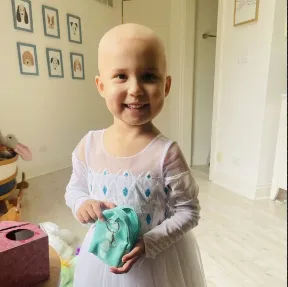
Through every obstacle, Arlie demonstrates that life, even when precarious, is precious. Her journey encourages all of us to act with compassion, to give when we can, and to recognize that even the smallest hands can inspire the greatest changes. By supporting initiatives like Arlie’s Lifesavers Blood Drive, each of us has the power to give another child a tomorrow filled with laughter, life, and hope.
At just four years old, Arlie knows something many adults forget: that every act of kindness, every donation, every moment of care can save a life. She has learned it firsthand, and now she teaches the world that hope can be tangible, that bravery is not measured by age, and that even the tiniest heart can illuminate the darkest days.