“A Child of Light Lost at the Festival of Light: Remembering 10-Year-Old Matilda”.5686

The news broke with a cruelty that words struggle to contain, spreading across Sydney and far beyond, leaving hearts heavy and minds reeling as people tried to understand how a child’s laughter could be silenced so suddenly.
According to reports, this is Matilda, a 10-year-old girl whose life was taken in a shooting at Bondi Beach, a place usually defined by sunlight, waves, and family memories, not by fear and loss.
Yesterday was meant to be a day of celebration, a moment for families to gather and mark the first day of Hanukkah together, honoring a tradition rooted in light, resilience, and hope.
Matilda had gone to the beach with her family for that very reason, drawn by the promise of togetherness, music, and the simple joy of standing beside loved ones as candles were lit against the darkening sky.
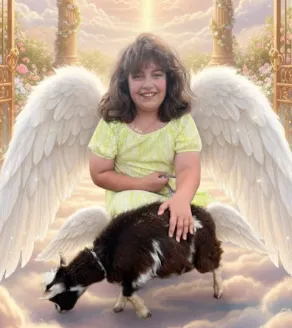
For her parents, it was meant to be one of those ordinary, precious family moments that quietly become memories, the kind you look back on years later with a smile.
But according to authorities, the celebration was shattered when gunfire erupted, turning a peaceful gathering into a scene of chaos and terror in a matter of seconds.
Witnesses describe panic spreading through the crowd as people tried to protect their children, shield loved ones, and escape a danger no one had expected.
In the midst of that confusion, Matilda was struck.
She was rushed to the hospital with horrific injuries, doctors fighting desperately to save a young life that should have had decades ahead of it.
Despite their efforts, she did not survive.
Fourteen other people were also killed in the attack, according to reports, a staggering number that has left an entire city grappling with grief and disbelief.

Authorities have said the attackers were targeting Jewish celebrations on the beach, a fact that has deepened the sense of shock and outrage felt by many.
For Matilda’s family, the scale of the tragedy means nothing compared to the single, unbearable truth that their child is gone.
Friends and relatives have described her as a bright, joyful, and spirited child, someone whose presence seemed to light up a room without effort.
They say she laughed easily, asked curious questions, and carried a warmth that made people feel at ease.
At ten years old, Matilda was still discovering the world, still forming dreams she would never get the chance to follow.
Her life was not defined by fear or hatred, but by innocence, curiosity, and the simple happiness of being a child.
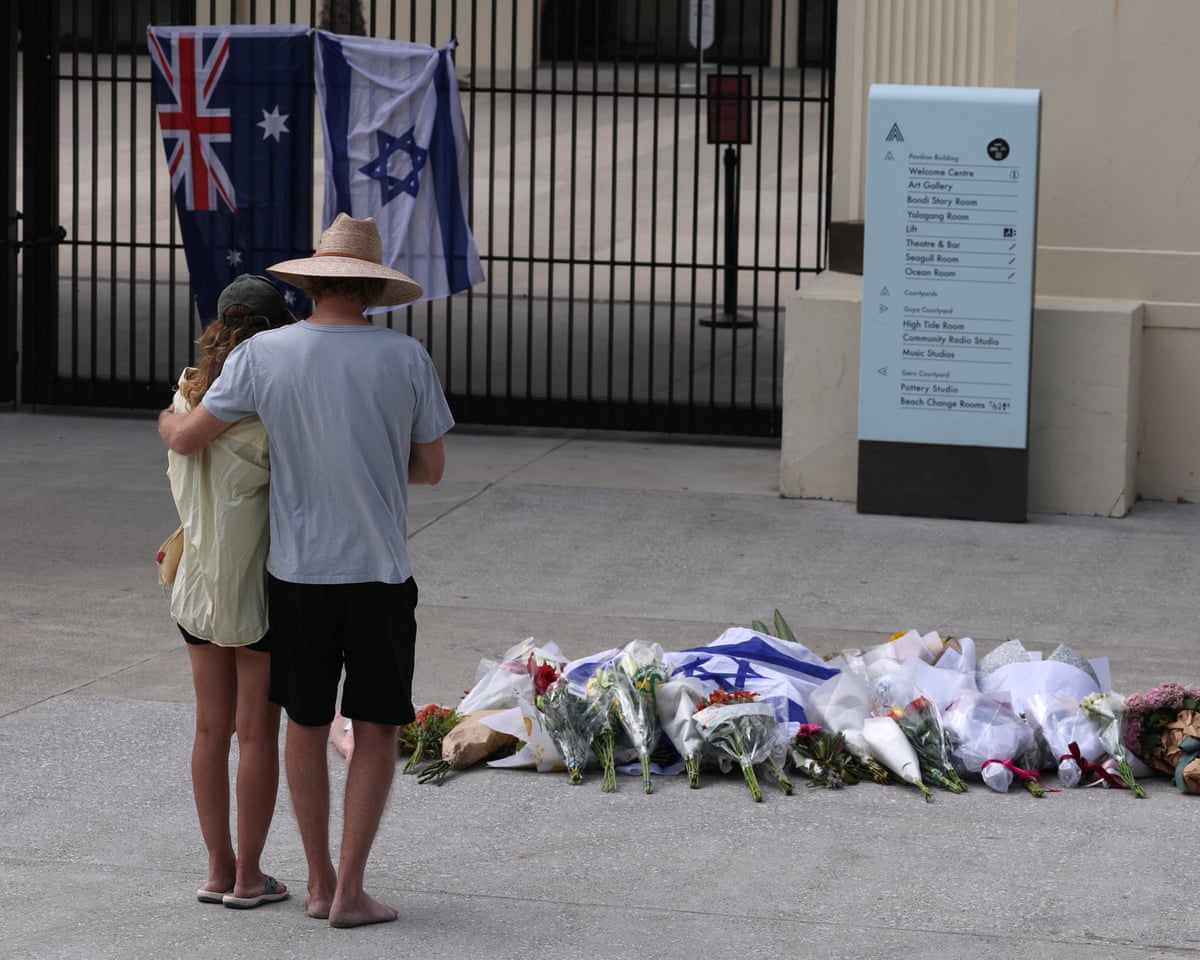
The image of her attending a celebration of light, only to be taken by violence, has become almost too painful for many to comprehend.
Across Sydney, people have begun leaving flowers, candles, and handwritten notes, small gestures meant to express grief that feels far too large for words.
Parents have held their children a little tighter, struck by the terrifying realization that even moments meant for joy can be stolen without warning.
For the Jewish community, the pain is layered, combining the grief of lives lost with the shock of an attack on a sacred celebration.
Leaders and community members have spoken of fear, anger, and sorrow, but also of a determination not to let hatred define their identity or extinguish their traditions.
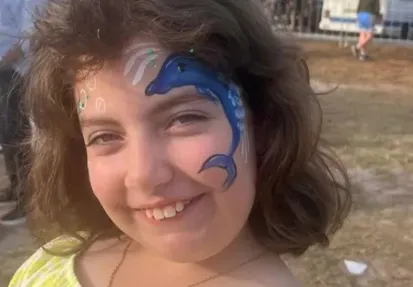
Hanukkah is a festival that remembers survival against overwhelming odds, the miracle of light enduring in darkness.
In the wake of this tragedy, that symbolism feels both painfully relevant and heartbreakingly tested.
Matilda’s death has become a symbol of everything that was lost in those moments, not just a single life, but the promise of what that life could have been.
She will never grow older, never reach milestones her parents once imagined, never look back on childhood memories of Bondi Beach.
Her family is now left with memories instead of futures, photographs instead of plans, and a grief that will reshape their lives forever.
Strangers, too, have mourned her, moved by the simple unfairness of a child dying in an act of violence she could never have understood.
Social media has filled with messages of sorrow, anger, and solidarity, many ending with the same words, repeated again and again as if saying them might help make sense of the loss.
Rest in peace, Matilda.
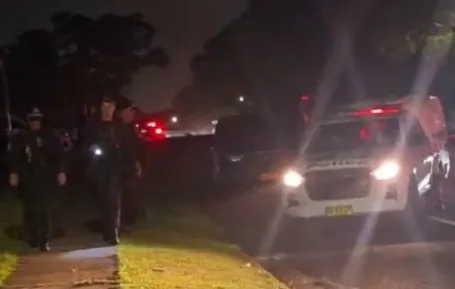
It is a phrase that feels painfully small compared to the weight of what has been taken.
Yet it carries a quiet promise, that her name will not be forgotten, that her story will be told, and that her life, however brief, mattered.
As investigations continue and questions remain unanswered, the focus for many has turned to remembrance.
To remembering Matilda not for the way she died, but for the joy she brought while she lived.
To remembering that behind every headline and statistic is a child who was loved beyond measure.
And to remembering that the cost of violence is not abstract, but heartbreakingly personal.
In the days ahead, Sydney will continue to grieve, to search for meaning, and to try to heal.
But for one family, healing will never mean forgetting.
Matilda’s light, described by those who knew her as bright and joyful, now lives on only in memory.
May she rest in peace, and may the world never stop mourning the loss of a child who should still be here.
When the Ice Fell Silent — Remembering Angela Yang and Sean Kay.2831
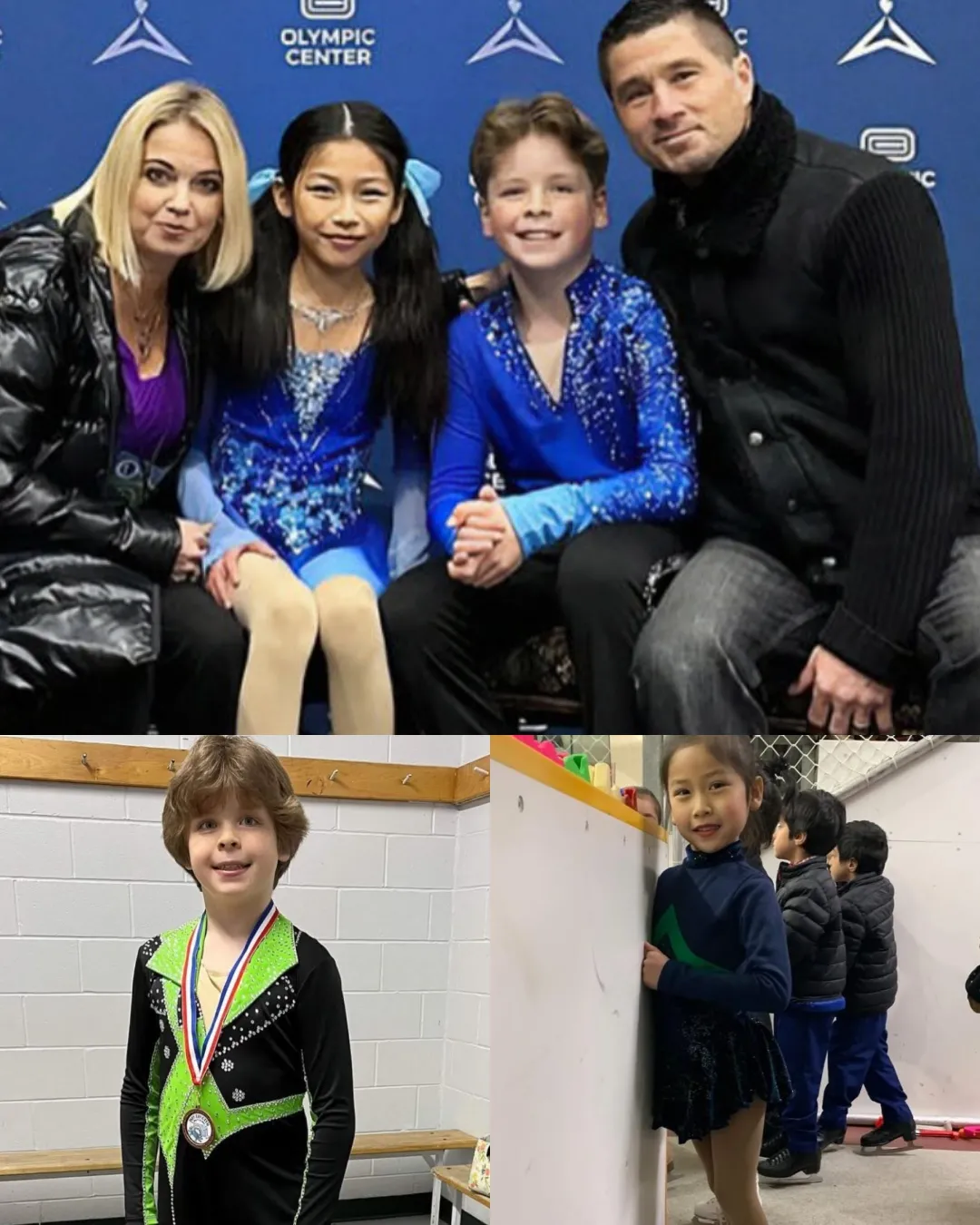
There are moments in time that freeze the world — moments that steal the air from your lungs and make everything else seem impossibly still.
January 29, 2025, was one of those moments.
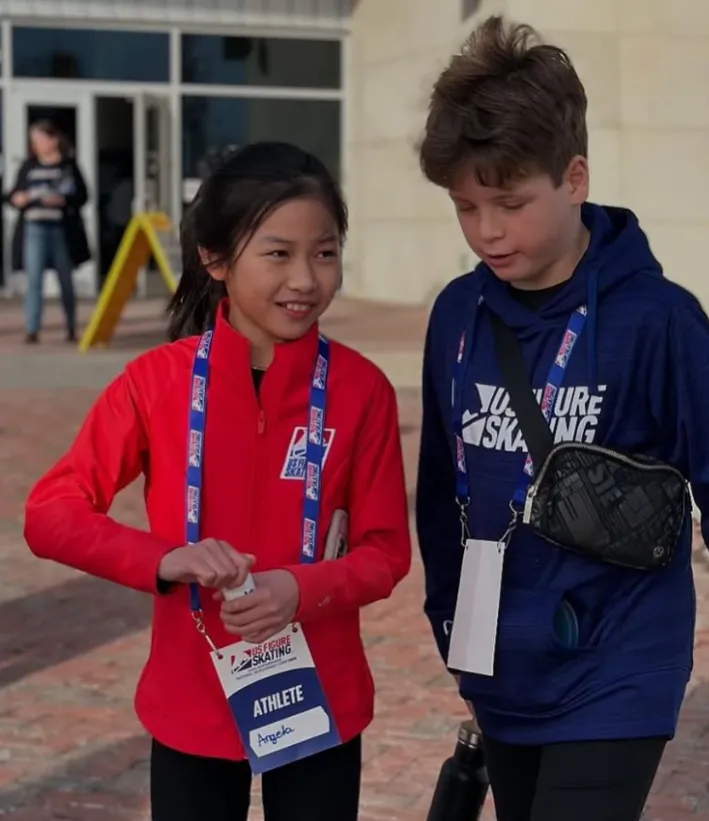
That morning began like any other for the families of Angela Yang and Sean Kay, two 11-year-old prodigies whose dreams shimmered as brightly as the ice beneath their skates. They were bound for another competition, another chance to glide toward the future they’d worked so hard to build.
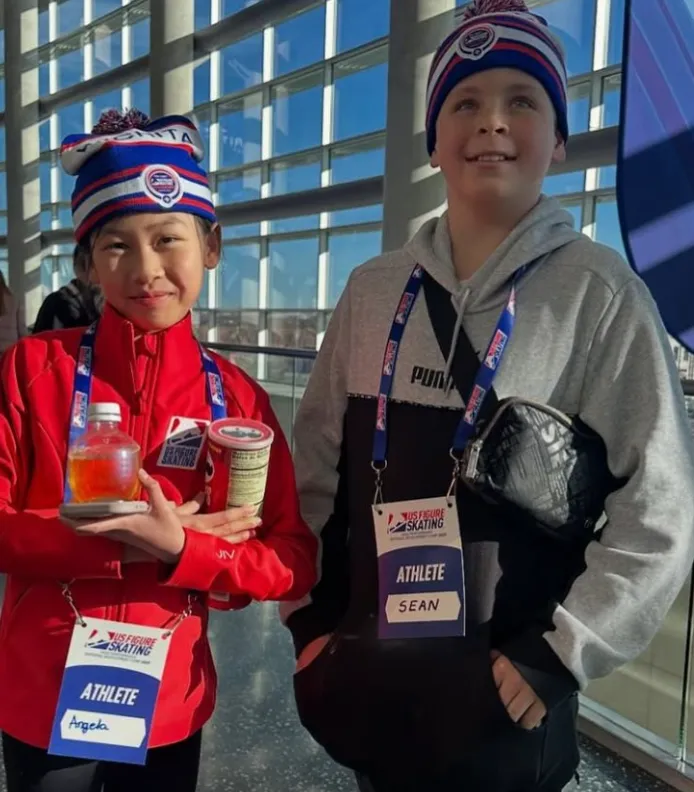
But before the day could unfold, tragedy struck.
AA Flight 5342, carrying Angela, Sean, and several others, collided midair with a helicopter. The crash left no survivors.
In an instant, two young stars — whose grace and determination had already begun to reshape the world of figure skating — were gone.
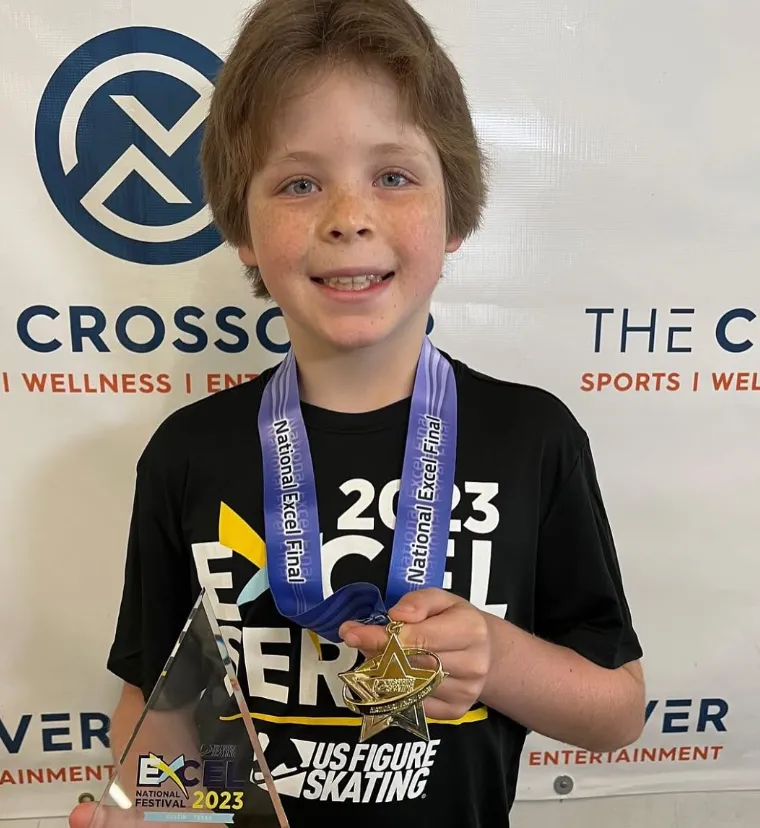
Angela and Sean were not ordinary children.
They were artists in motion, capable of transforming cold ice into poetry.
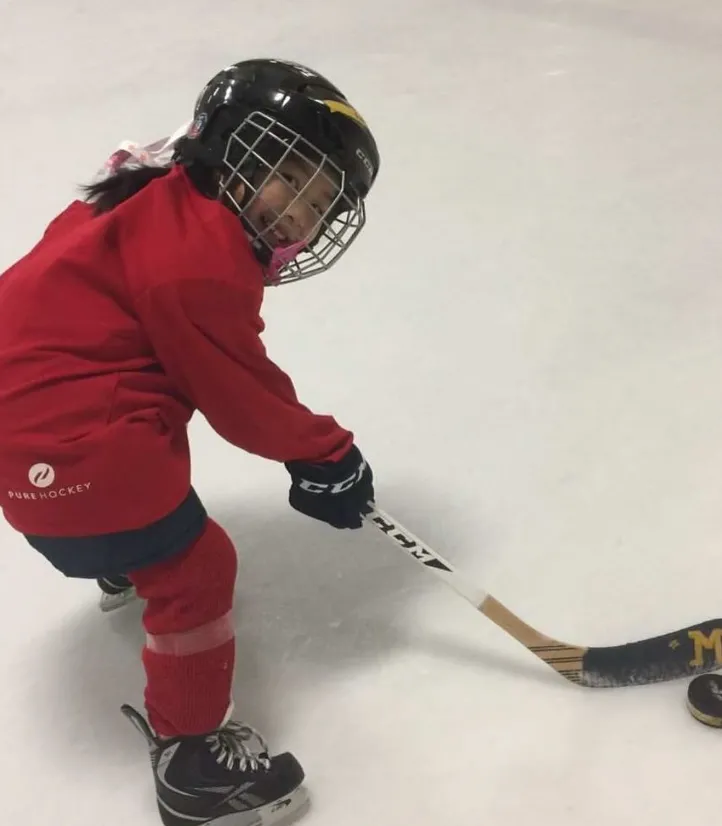
Angela, with her delicate precision and fearless heart, moved as though the music lived inside her bones. Her jumps seemed to defy gravity, and her spins carried a joy that made the audience forget to breathe. She was small, quiet, and endlessly focused — a perfectionist who practiced long after the rink lights dimmed.
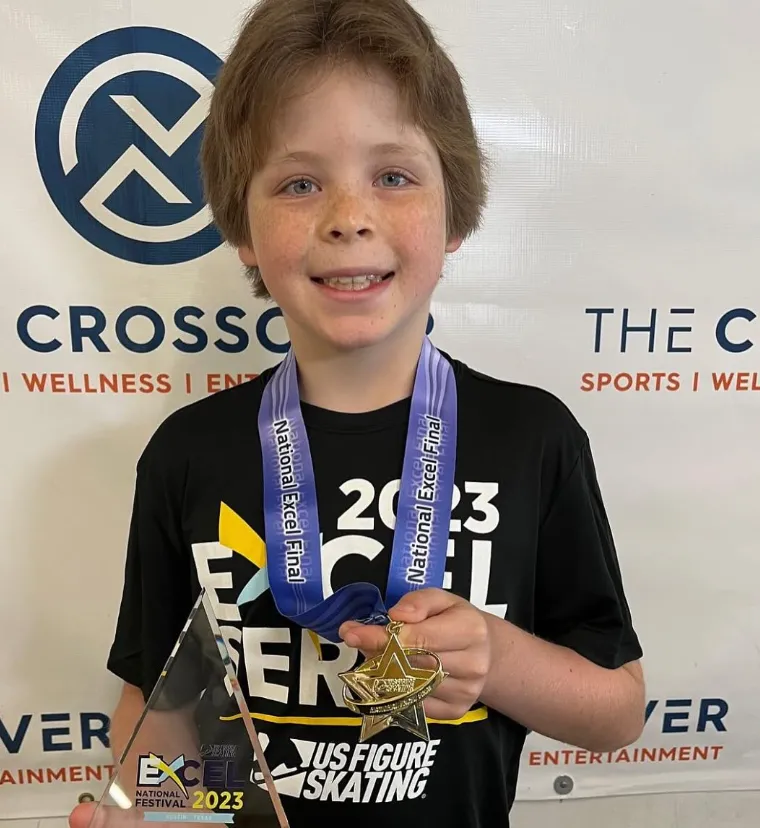
Sean, in contrast, skated like a storyteller. There was rhythm in his every stride, a kind of effortless confidence that drew applause wherever he went. He was the second of four children, a boy who had followed in his sister’s footsteps but soon blazed his own path. Coaches called him “a natural,” a skater who didn’t just perform — he connected.
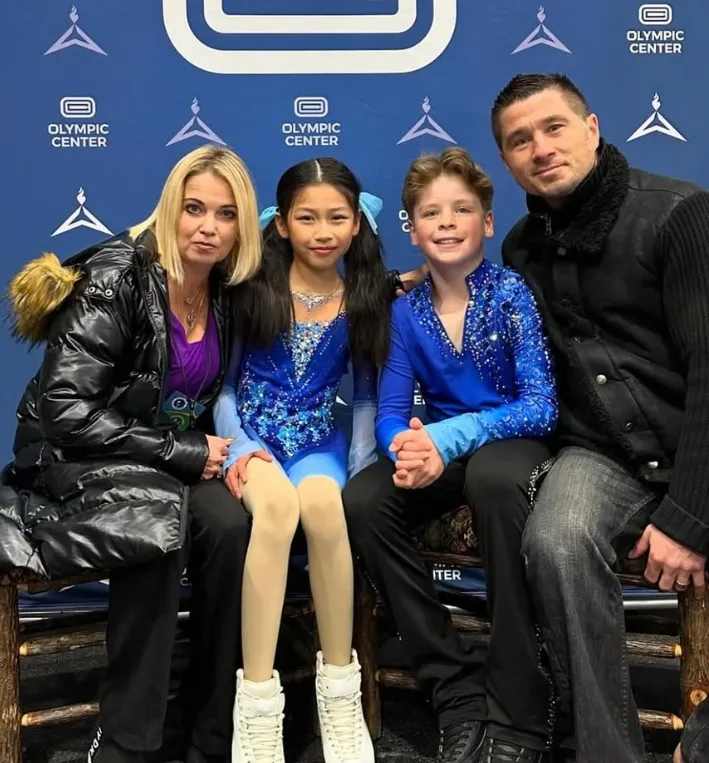
The two met through the University of Delaware Figure Skating Club, a place where many young talents began their journey toward greatness.
At first, they were solo competitors — fierce, focused, and independent.
But when a coach suggested they try pairs skating together, something extraordinary happened.
They fit.
Not just in skill, but in spirit.
Their first performance as a duo stunned the crowd. The balance between them — his strength, her grace — created a harmony that felt fated. Judges described their presence as “beyond their years,” and spectators were often moved to tears by the sincerity of their connection.
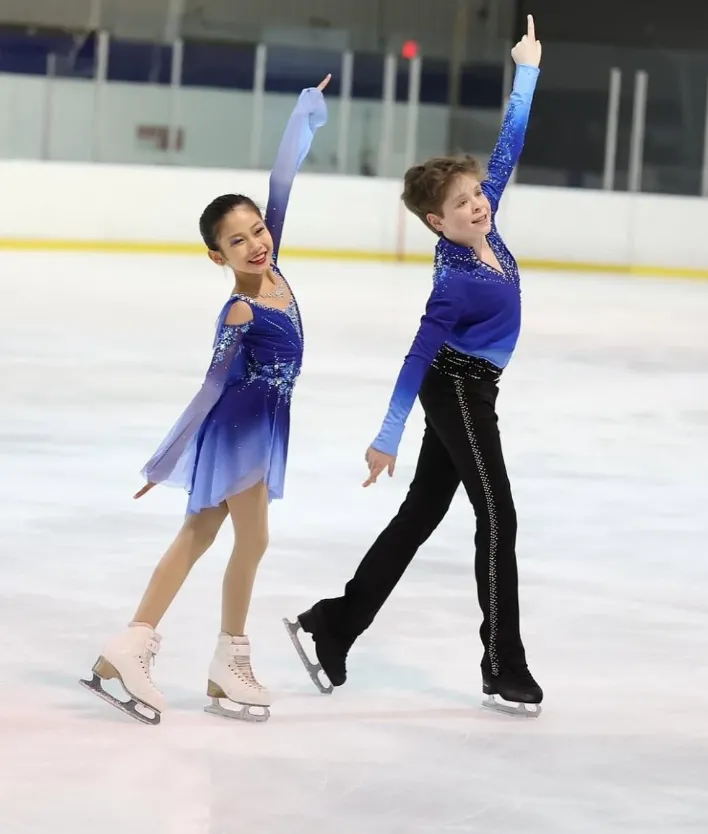
In Plano, Texas, at the 2025 Midwestern Sectional Singles & U.S. Ice Dance, Angela and Sean swept multiple categories, earning first-place finishes and the admiration of the skating world. Their routines were clean, elegant, and full of emotion — the kind of performances that made even seasoned professionals stop and watch.
Everyone agreed: the future of American figure skating had arrived.
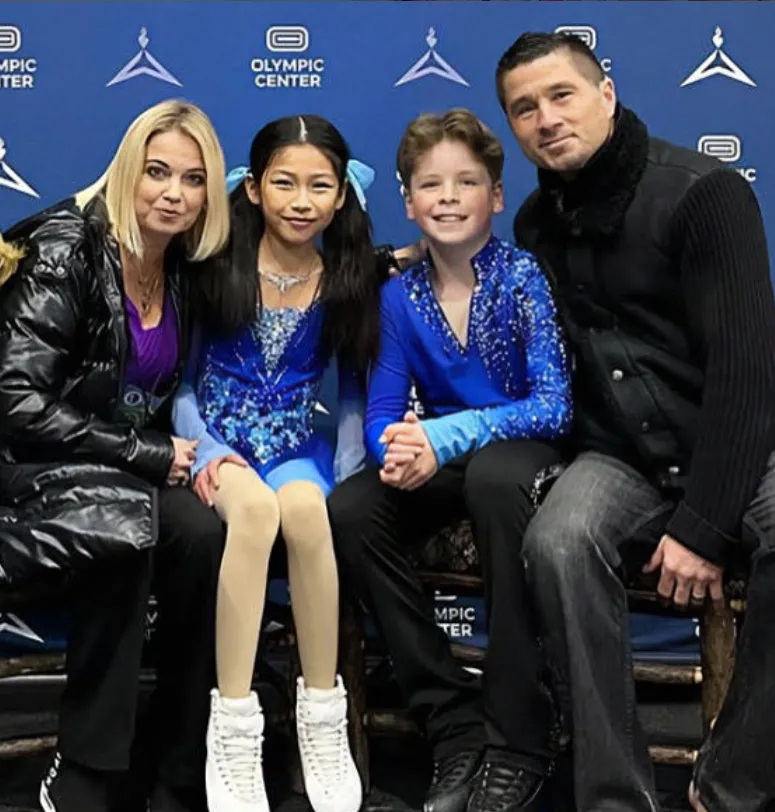
Behind Angela’s success stood her parents — especially her mother, Lily Yang, who had moved heaven and earth to nurture her daughter’s dream.
The family relocated from their hometown to Delaware so Angela could train at one of the best skating centers in the country. Lily homeschooled her daughter, managing lessons between training sessions and competitions. The sacrifices were immense — time, money, and endless miles on the road — but none of it felt too much for a dream so pure.
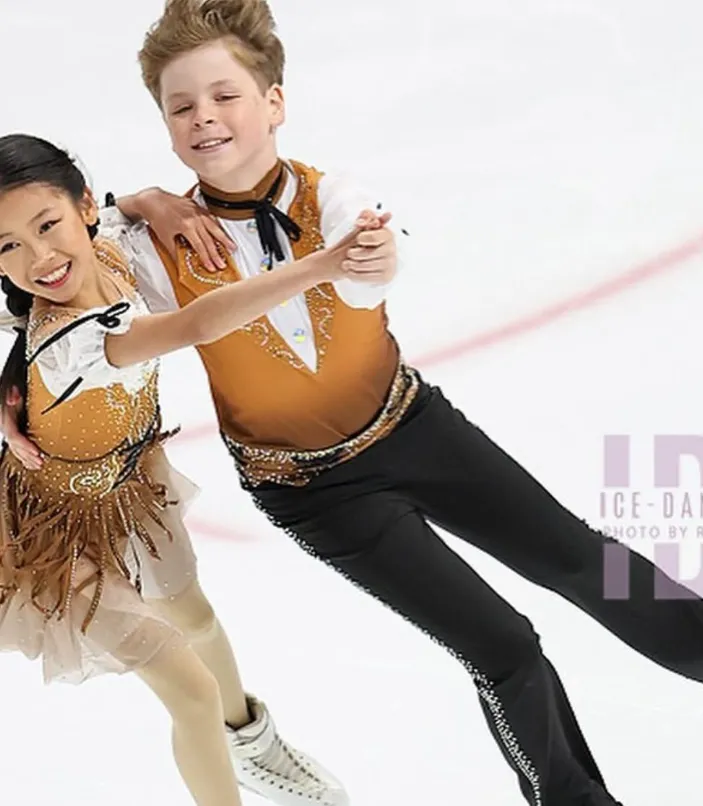
Sean’s family story was just as full of devotion.
He was inspired by his older sister, who skated competitively before him. Watching her glide across the ice lit something in him — a desire to fly. Soon, he was spending every spare moment at the rink, his parents cheering from the stands, juggling schedules for four children to make sure each one could chase their own passions.
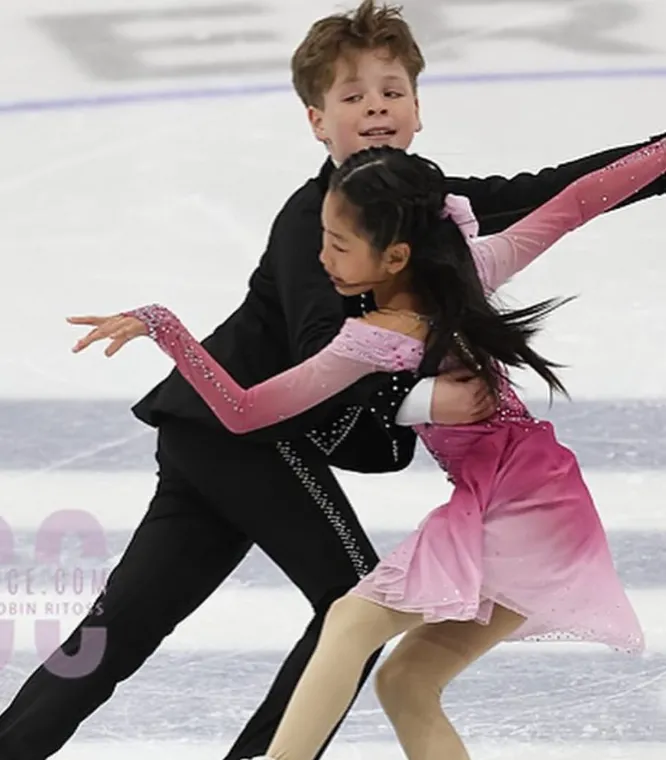
Their coaches often spoke about how mature Angela and Sean were — two children with an old soul’s discipline and a child’s heart. They worked harder than most adults ever would, supporting each other through long training hours and sore muscles. Angela would laugh when Sean tripped; Sean would clap when Angela landed a jump she’d been chasing for weeks.
They brought out the best in each other.
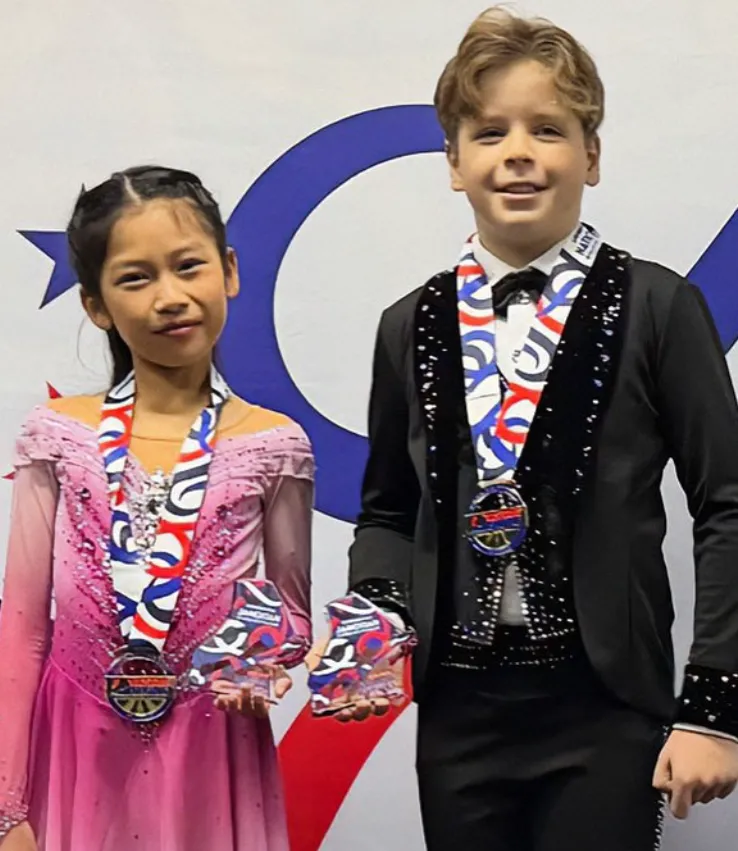
When news of the crash spread, the skating community fell silent.
Ice rinks across the country held moments of reflection before practice. Coaches gathered their students, many of them the same age as Angela and Sean, to talk about grief — a word no one that young should have to understand.
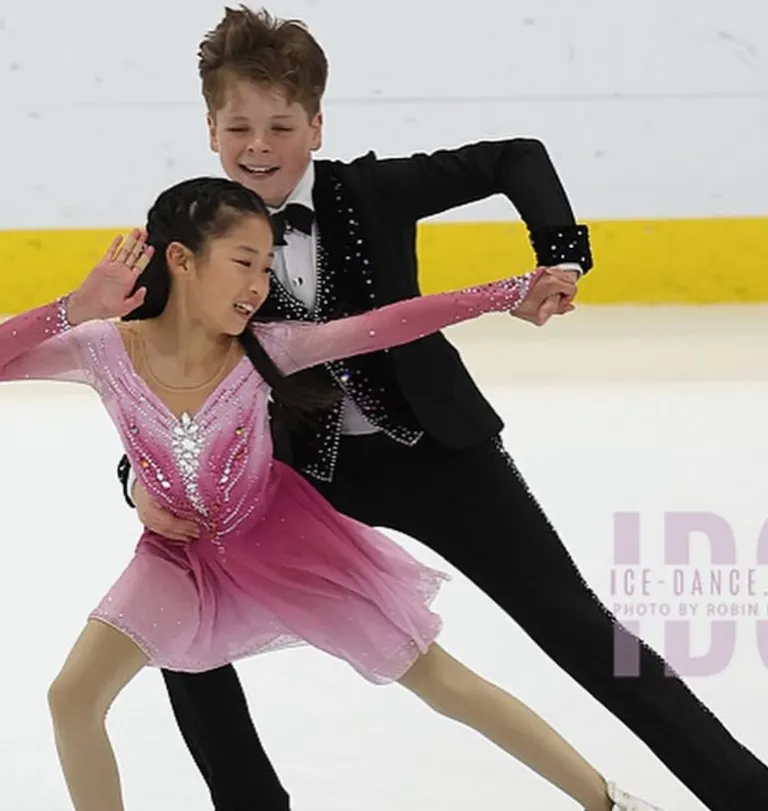
Tributes poured in from across the nation. Fellow skaters posted photos, remembering their laughter in locker rooms, the way they practiced hand-in-hand, the way they never seemed to stop smiling. Some shared videos of their final performance together — a routine filled with elegance, trust, and pure joy. Watching it now feels almost unbearable — like witnessing a promise that never got to be fulfilled.
At the University of Delaware Ice Arena, their skates were placed side by side beneath a single spotlight. Two pairs of blades, silver and silent. Above them, a banner read:
“Forever Our Stars.”
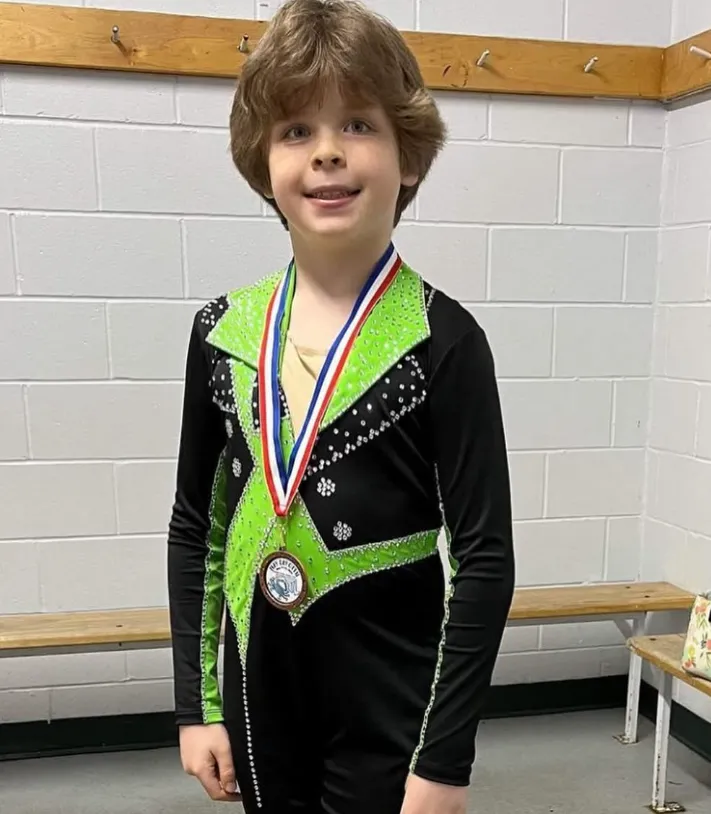
Angela’s coach, tearful during a memorial service, said, “She had the rare kind of determination that made the impossible look effortless. She wasn’t just skating to win — she was skating to express love.”
Sean’s father added softly, “He used to say the ice was the only place he felt truly free. I like to think he’s skating now — somewhere without limits.”
Their story is one of dreams interrupted — but not erased.
Because even though their time on this earth was heartbreakingly short, their impact endures in every young skater who dares to believe.
Every child who steps onto the ice with trembling feet, every coach who whispers, “You can do it,” every parent who sits in cold arenas at dawn — they carry Angela and Sean’s legacy forward.
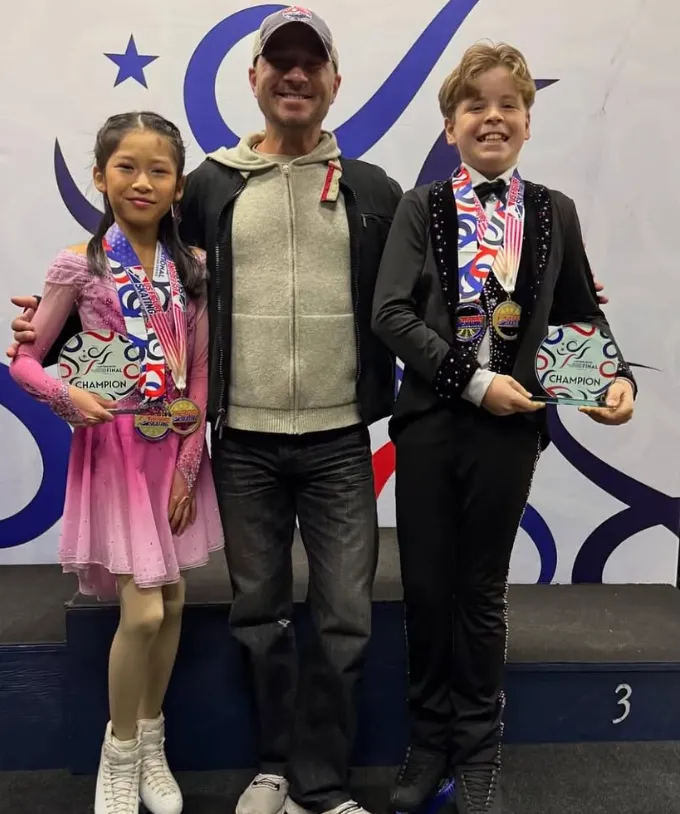
They remind us that greatness isn’t just about medals or trophies.
It’s about courage.
About showing up, giving everything, and sharing your light while you can.
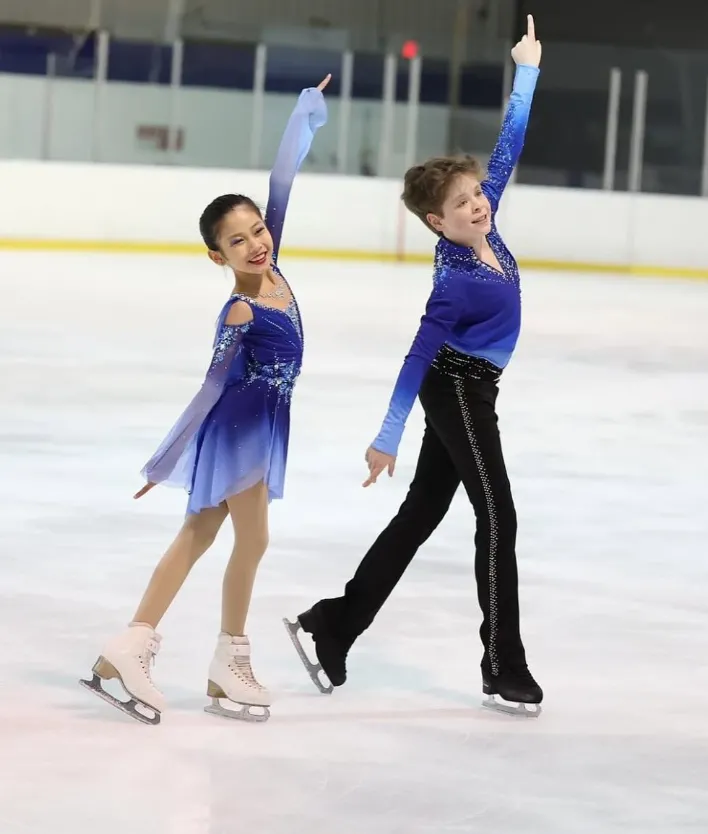
Angela and Sean did all of that and more.
They gave the world beauty — not just through perfect performances, but through the friendship, laughter, and love they shared.
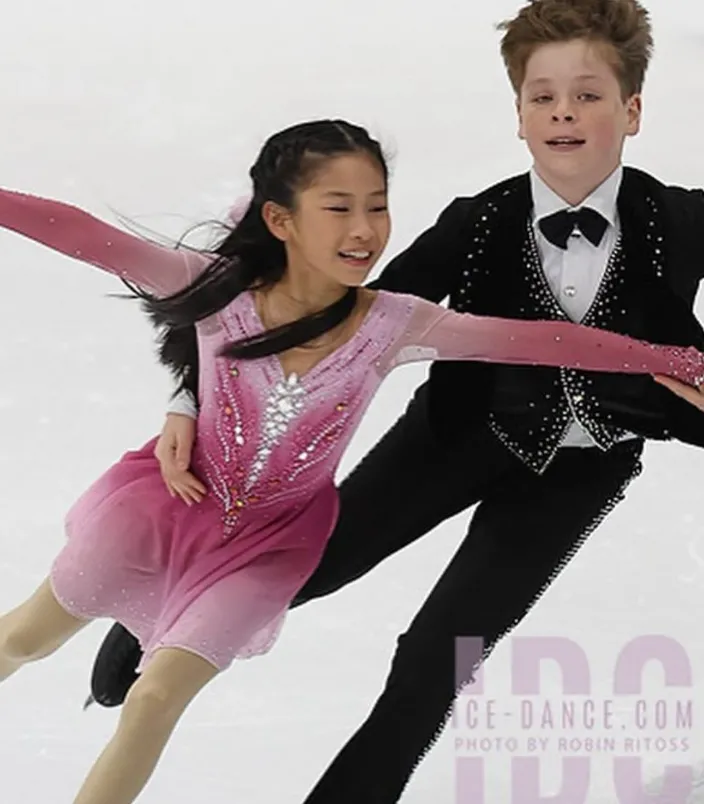
Now, when the rink falls quiet at the end of a long day, some say you can almost hear the faint scratch of blades across ice — the echo of two children gliding hand in hand, still dancing somewhere just beyond sight.
And maybe that’s where they are now.
In a place where the ice never melts, where the music never ends, where two young souls skate freely beneath an endless sky.
Angela Yang and Sean Kay — forever eleven, forever champions, forever a duet of light. ⛸️??