The Sonographer Wouldn’t Move On: The Heart Anomaly So Severe It Required Two Surgeries Before William Was Even A Week Old 3367c

The surprise of the second pregnancy, arriving so soon after their daughter Louise’s first birthday, quickly blossomed into quiet joy. After the initial shock subsided, Emma and her husband settled into the familiar rhythm of expectation, eagerly anticipating the 12-week scan, which confirmed everything was proceeding perfectly. The only startling detail was the predicted due date, falling just four days before Louise’s second birthday—a scheduling anomaly they simply laughed off.
They moved past the gender debate early on, agreeing that health was the only true priority. Whether their new baby would be a girl, allowing them to pass down Louise’s clothes, or a boy, giving them an excuse to shop, it would be a win-win.
Then came the 20-week scan, the moment every parent anticipates as a routine, celebratory check-in. It never crossed Emma’s mind that this appointment, meant to provide comfort and clear images, would turn into the beginning of a relentless medical ordeal.
As the sonographer glided the wand across Emma’s abdomen, the early checks were textbook. The brain, the spine, the limbs—all forming precisely as they should. The heartbeat was strong and beautiful, a reassuring rhythmic drum in the quiet room.
But then, the sonographer arrived at the heart.
The wand lingered. The screen zoomed in. The beautiful, rhythmic sound was there, but something was visually off. The professional, neutral façade of the technician began to subtly crack. She initially dismissed the issue, blaming the baby’s position, and moved on to other measurements, promising to circle back.
She did. But the baby boy was indeed being a “little monkey,” refusing to cooperate. The sonographer tried every trick: getting Emma to stand up, walk around, and reposition herself, all in the desperate hope of snagging a clear view. Nothing worked.
The technician’s silence, the subtle tightening of her jaw, spoke volumes that her professional voice could not. Emma’s gut instinct screamed: something is terribly wrong.
The inevitable request came: they were asked to take a seat outside while the scan was discussed with a colleague. Just before the jelly was wiped away, Emma’s husband, caught in the sudden focus on distress, managed to ask the one question they hadn’t previously prioritized: the gender. They were told they were expecting a boy. Yet, the news, which should have sparked excitement, landed flat, overshadowed by the palpable dread.
The final confirmation of disaster arrived when they were ushered into a quiet, designated room and informed that a midwife would be joining them shortly. Nurses do not send worried parents to quiet rooms for good news.
The midwife delivered the clinical verdict: their baby boy had been booked for an urgent fetal cardiac scan at a major children’s heart specialist hospital. They clung desperately to the hope that the first sonographer had been right—that the baby was simply awkward, that the position was masking a healthy heart.
The hope was extinguished at the specialist appointment.
Their son had Transposition of the Great Arteries (TGA).
The name meant nothing to them, but the tone of the specialist conveyed everything. TGA is a critical congenital heart defect where the two main arteries leaving the heart—the aorta and the pulmonary artery—are switched, or transposed. Essentially, the body’s plumbing system is connected backward, sending oxygen-poor blood to the body and recycling oxygen-rich blood back to the lungs. Without immediate intervention at birth, the condition is fatal.
They were told he would need a balloon septostomy almost immediately after birth, a palliative procedure to allow the blood to mix, buying him critical time before the main event: a massive “Arterial Switch Operation” that would likely follow within a week or two.
Driving home, they were numb, adrift in a sea of overwhelming questions: Why us? What did we do wrong? The logical answer—nothing—provided little solace.
The crushing reality of the diagnosis was deep, but one detail hit Emma particularly hard, bringing her to tears: the likelihood that their newborn son would be hospitalized and fighting for his life on their daughter Louise’s second birthday. It was a perfect storm of emotional burdens.
The remainder of the pregnancy was heavy, the TGA diagnosis hanging like a shroud over every milestone. The only anchor was the fetal cardiac team, who provided meticulous, regular scans, constantly monitoring William’s fragile stability.
As the due date neared, the birth plan became purely strategic. Emma chose a C-section, viewing it as the safest, most controlled entry into a world where every second counted. Her focus was entirely on her son. “I didn’t care about myself,” she recalled. That little boy, safe inside her, was heading toward the biggest fight of his life, and she needed every resource ready on arrival.
William entered the world at 11:36 AM via C-section, and the reality was instantaneous and heartbreaking. There were no post-birth cuddles. They were denied the intimate, gentle moments reserved for healthy newborns.
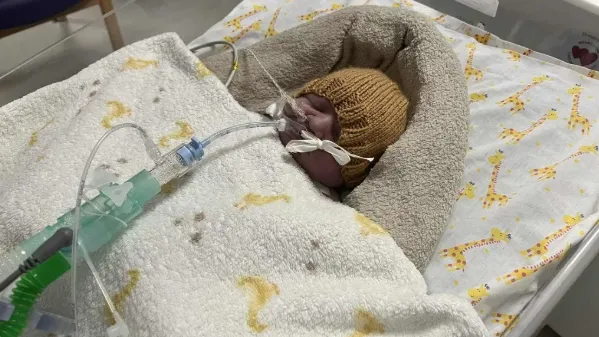
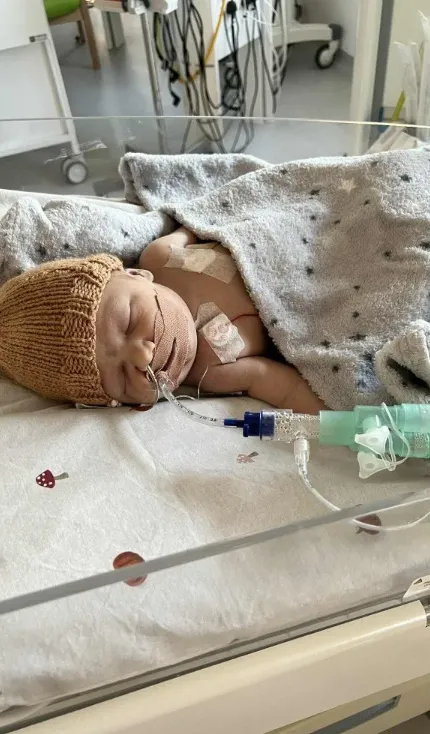
He cried, which was a blessing they had been told might not happen, but he was markedly purple, rapidly hooked up to a ventilator and monitors. Emma saw him briefly in recovery, touching his tiny, wired hand before he was rushed to the Pediatric Cardiac Intensive Care Unit (PCICU). She didn’t see him again until after 9:00 PM that night.
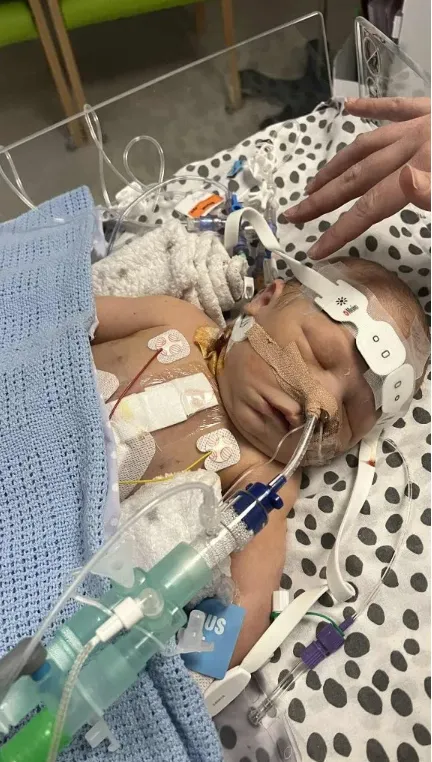
The sight of him was devastating. Despite the mental preparation, the reality of seeing their tiny, small son submerged in a world of tubes, monitors, and wires was an “out-of-body experience”—a reality too harsh to fully process.
That same evening, he underwent the first life-saving intervention: the balloon septostomy. It was a success. The procedure created a hole between the upper chambers of the heart, finally allowing his blood to mix properly. The immediate visual change was their first victory: the deep, worrisome purple began to fade, replaced by a much healthier pink. William had passed his first hurdle.
The subsequent days in the PCICU dragged on. Emma and her husband sat beside his bedside, desperately wanting to fulfill the simple duties of new parenthood but feeling utterly helpless, able only to offer love and presence.
Then came the day of the main event: the Arterial Switch Operation. William was only six days old. The surgery, though anticipated, felt surreal and premature for a child so small.
It became the longest, most anxious day of their lives. That morning, they sat with him, trying to rationalize the situation, reminding themselves that William, thankfully, was oblivious to the ordeal ahead. They kissed him goodbye as he was wheeled away, and time froze. They returned home, just twenty minutes away, attempting to rest, clinging to the innocence of their daughter, Louise, whose simple understanding of her brother’s “poorly heart” provided a strange grounding comfort.
The news of the successful surgery was a profound relief. But seeing William afterward was another shock. He was puffier due to the fluids, covered in even more wires and medication, with tape obscuring his face. The key, however, was that he was alive. The recovery had begun.
The journey home was not a straight line. Ten days post-switch, a complication emerged: a silent cry. The baby, who had fought so hard to live, couldn’t voice his distress properly. He was diagnosed with left vocal cord palsy, likely caused by nerve damage during the complex operation. This complication deemed his swallow unsafe, necessitating NG tube feeding. On top of this, he picked up an infection that required a course of antibiotics.
The hospital stay stretched long past the initial estimates, burdened by one challenge after another. But William, the tiny fighter, responded well to every hurdle. Finally, on January 31st, weeks after his sister’s birthday had passed, they were able to bring William home for good.
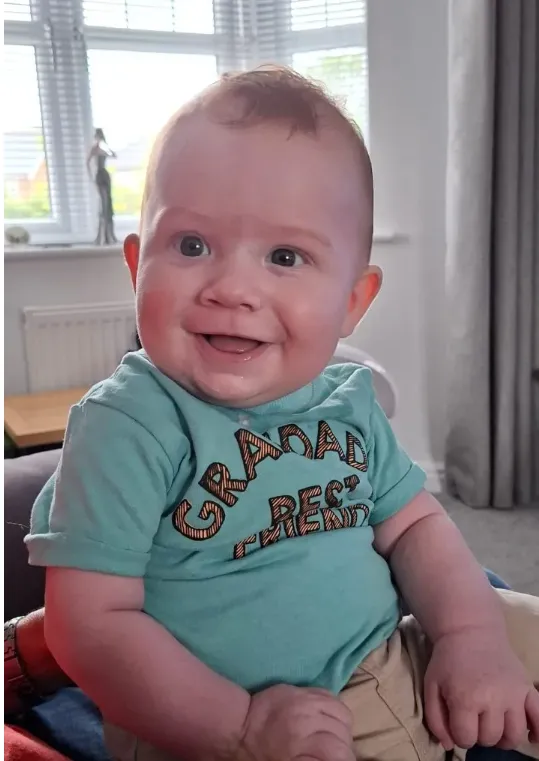
Now, six months on, William is thriving. He recently had an excellent six-month cardiac review and won’t need to be seen again until he turns one. In a final, defiant act of independence, he ripped out his NG tube and, following an all-clear from the medical team, is now feeding tube–free and beginning solids.
Despite the monumental trauma of his first weeks, William is a happy, smiling little boy, known for causing trouble and pulling his sister’s hair. Reading the stories of other “heart families” brought Emma immense strength during the darkest days. It showed her that survival, and joy, were possible.
They hope that by sharing William’s story—the silence, the two life-saving surgeries, the complications, and the final, sweet triumph—they can shine a light of comfort and strength for others now walking the same terrifying path.
Nuala’s Courage: A Tiny Warrior’s Triumph Over Cancer 1965c
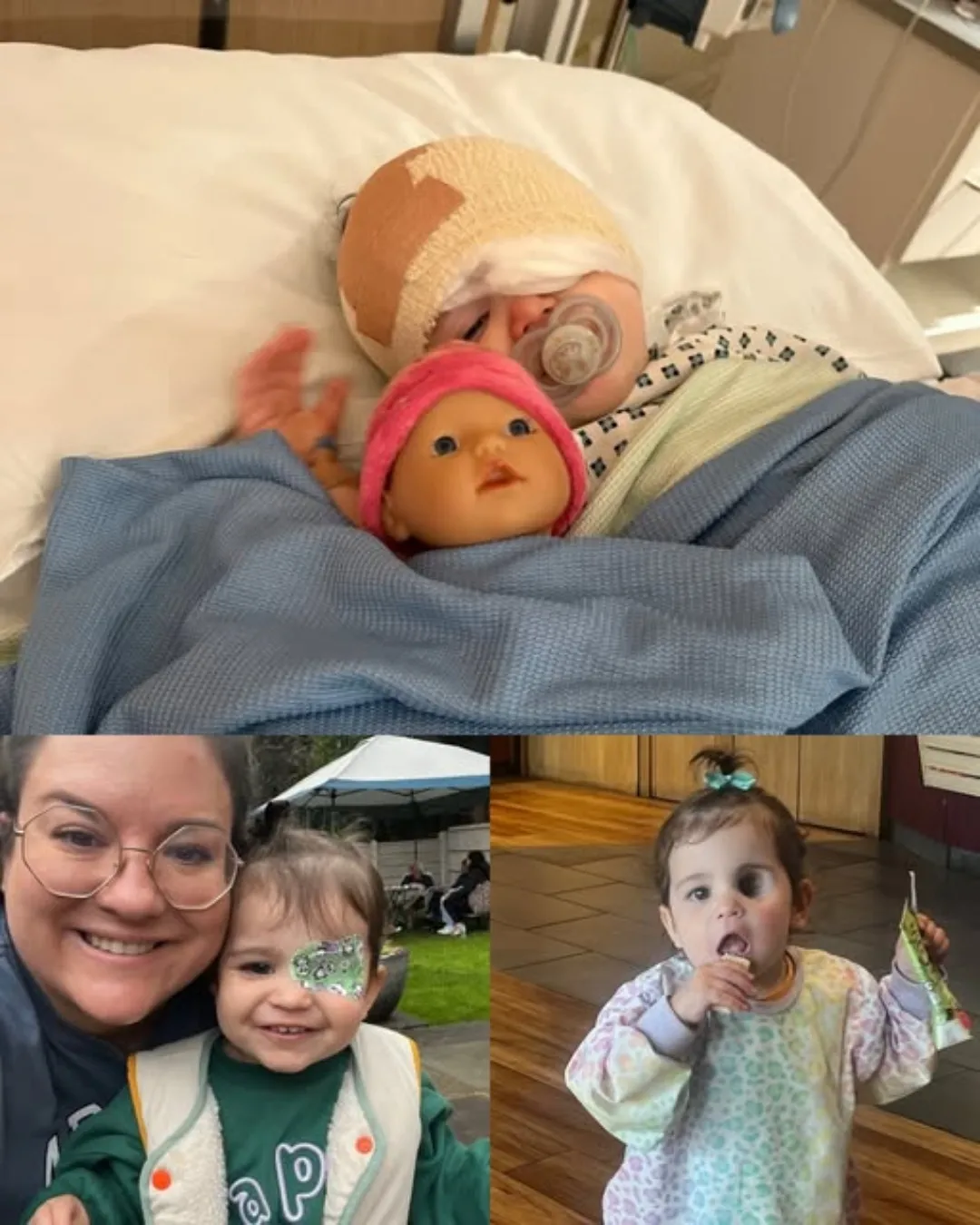
When Nuala was just nine months old, her parents noticed something that immediately set off alarms — a red, swollen eye that refused to heal. At first, they thought it might be a common infection, something temporary that would fade with medication or time. But as the days passed and the swelling persisted, a shadow of fear began to creep into their hearts. Their daughter, so small and fragile, was clearly in distress. The innocence of her baby months was interrupted by a looming, terrifying uncertainty.
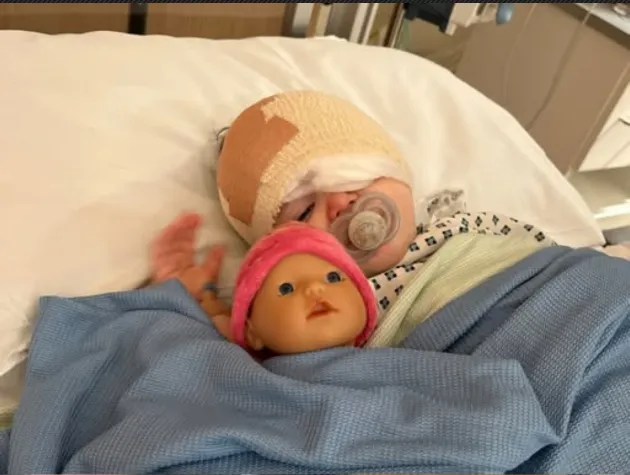
A series of tests revealed the unimaginable: Nuala had a rare and aggressive cancer growing behind her eye. The diagnosis was overwhelming. Her parents sat in the sterile hospital room, hearts pounding, hands clutching each other, trying to grasp the gravity of the situation. The doctors explained the only way to save Nuala’s life — the complete removal of her eye.
For any parent, the thought of sacrificing a part of your child’s body is excruciating. The decision weighed heavily on them. Could they endure the heartbreak of knowing their little girl would never see the world the same way again? Could they accept the loss of something so precious if it meant preserving her life? It was a decision no parent should ever have to make, yet here they were, forced to choose between loss and survival.
Sleepless nights followed, filled with prayers and tears. They sat at Nuala’s bedside, rocking her gently, whispering words of comfort, and asking God for guidance. Every moment felt like a lifetime, every breath filled with a mix of hope and dread. They clung to the belief that Nuala was stronger than the disease threatening her, that she could survive this impossible trial.
Finally, the day of surgery arrived. The medical team worked meticulously, their hands guided by experience and compassion. Nuala was anesthetized, tiny and fragile on the operating table, while her parents waited in agonizing silence. Hours seemed like days. The minutes ticked by with excruciating slowness, each one testing the strength of their hope.
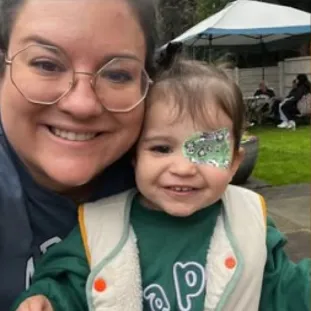
When the surgeon emerged and said, “We got it all,” relief washed over them like a tidal wave. Tears streamed freely down their faces as they clutched each other, their emotions a mix of fear, exhaustion, and overwhelming gratitude. Their daughter was alive. The cancer had been removed. Nuala’s life, fragile as it was, had been saved. The price was steep, yes — a part of her body had been lost — but the miracle was undeniable: she had a future.
The following weeks were a time of recovery and adjustment. Nuala’s parents held her close, soothing her through the pain and discomfort of post-operative healing. They watched her adapt with incredible resilience, marveling at her courage even at such a tender age. Every tiny milestone — a giggle, a grasp of a toy, a look of curiosity — was celebrated as a victory, a testament to her unyielding spirit.
A month after her surgery, the news came that would lift the family’s hearts even higher: Nuala was declared cancer-free. The diagnosis that had haunted their dreams was no longer a threat. The joy that erupted in their home was profound. Their daughter, once so small and vulnerable, had triumphed over a foe that seemed insurmountable. The relief, the laughter, and the smiles that followed were the kind that can only come from witnessing a miracle firsthand.
Nuala’s story is not only one of survival but also one of inspiration. Her journey reminds us of the power of resilience, the strength of the human spirit, and the miracles that can happen when courage meets opportunity. Despite her young age, she faced one of life’s harshest battles with a bravery that humbled even her parents. Her ability to endure pain, to trust in the hands of surgeons, and to heal both physically and emotionally is extraordinary.
Today, Nuala’s days are filled with laughter, play, and discovery. She explores her surroundings with curiosity and joy, her parents by her side, guiding her and cherishing each moment. The red, swollen eye that once caused so much fear is a memory now, a reminder of the battle she fought and won. She interacts with toys, siblings, and friends, and her laughter echoes through the home, a sound that had been temporarily silenced by fear and illness.
Her journey also illustrates the profound bond between parents and child. The sleepless nights, the whispered prayers, the heart-wrenching decisions — all of it was endured with love as the anchor. Nuala’s parents never wavered in their commitment to her survival, and their unwavering support played a crucial role in her recovery. Their story demonstrates that while medical expertise is vital, the emotional strength of a family can be equally powerful in the healing process.
Nuala’s triumph is a beacon of hope for families facing similar challenges. It shows that even the youngest and most vulnerable can survive tremendous adversity with the right care, courage, and support. Her journey offers a message of faith, resilience, and determination: that life, even when threatened, can prevail against the odds.
Every day now is a celebration of her life, her personality, and her recovery. Simple moments — reaching for a toy, playing peek-a-boo, or giggling at her favorite song — carry immense weight, representing the fragility and strength of life intertwined. Each smile is a reminder of the obstacles she has overcome and the bright future that lies ahead.
The story of Nuala is more than just a narrative of illness and treatment; it is a testament to human spirit, family devotion, and the miracles that can happen when hope never dies. Her survival is proof that even the smallest among us can endure enormous challenges and emerge stronger, teaching everyone around her lessons about courage, perseverance, and the profound impact of love.
Today, Nuala’s parents are advocates and voices for other families navigating pediatric cancer. They share her story not for attention, but to inspire, to inform, and to provide hope. They emphasize the importance of early detection, medical vigilance, and emotional support, reminding us that every action — every moment of care, every procedure, every decision — can alter the course of a child’s life.
Nuala’s laughter now fills the rooms of her home. The family cherishes each day, celebrating her victories, no matter how small, and embracing the normalcy that was once threatened by illness. She has returned to the life that every child deserves — full of play, exploration, and joy — a life that seemed uncertain only months before.
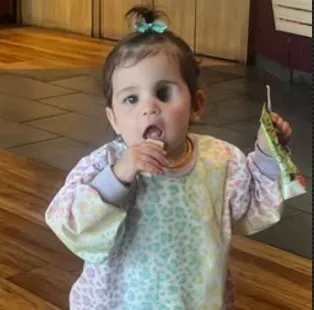
Her journey is a reminder to the world that courage can come in the smallest packages and that miracles, though rare, are possible. Nuala’s story encourages families to never give up, to fight tirelessly, and to hold onto hope, even when the odds appear insurmountable.
She may be tiny, but her impact is monumental. Through her struggle and survival, Nuala teaches us all about resilience, the power of love, and the unbreakable bond between parent and child. Her story continues to inspire and remind us that every life, no matter how small, has immense worth and potential.
Nuala’s victory is a testament to hope realized, to the strength of a family united, and to the extraordinary courage of a child who faced a formidable challenge and emerged victorious. She is living proof that miracles can happen, and that love, courage, and faith can overcome even the darkest of times.