Love, Illness, and a Terrible Silence: What Really Happened as This Mother Pushed Her Son for Hours

He was only three years old.
A little boy with warm brown eyes, a tiny laugh that danced in the air, and a life that should have stretched wide open before him.
But on the quiet morning of May 22, in a small park in La Plata, Maryland, little Ji’Aire Donnell Lee was found lifeless in a playground swing—his mother gently pushing him back and forth as if time had stopped.
To onlookers, it was a scene so heartbreaking, so unreal, that even first responders hesitated for a moment before accepting it was not a dream but a devastating truth.

Ji’Aire had died after two days in that swing.
Two days of rain, cold, and silence.
Two days during which his mother, 24-year-old Romechia Simms, remained by his side, disconnected from the world, lost in a mental storm that no one could see from the outside.
The Chief Medical Examiner ruled the cause of death as dehydration and hypothermia.
There was no sign of violence, no bruises, no struggle.
Just a child who slipped away slowly while the person he loved most was trapped in a mind that had fractured.
To the outside world, it looked like horror.
To mental-health experts, it looked like something even more terrifying—untreated maternal psychosis.

Michael O’Hara, a clinical psychologist with decades of experience, looked at the case and spoke a truth many did not want to hear.
“In a case like this,” he said, “I’m sure if they look carefully, they’ll see this mother had serious psychiatric issues and was probably not functioning well at all.”
He had no connection to the family, had never met Romechia—but he had seen this pattern before.
A parent lost inside an invisible illness.
A child caught in the crossfire of a mind collapsing under its own weight.
The tragedy sparked outrage, confusion, anger, heartbreak.
And questions—so many questions.
Should the mother be charged?
Who failed her?
Who failed the child?
Could this have been prevented?

But behind the headlines, behind the shock, was a deeper story—one of poverty, homelessness, a collapsing support system, and a young mother trying to hold her life together while her own mind betrayed her.
The Days Before the Park
Ji’Aire’s family had been struggling for months.
Homelessness had pushed them from place to place, sometimes staying with friends, sometimes in shelters, sometimes nowhere stable at all.
On top of that were Romechia’s mental-health battles—diagnoses whispered but never treated long enough, moments of clarity followed by moments of frightening confusion.

Loved ones reported that she had experienced episodes before.
Dark periods.
Breaks from reality.
Moments where she wasn’t quite herself.
But like many struggling families, they tried to push forward.
They tried to stay hopeful.
They tried to believe things would get better.
No one, not even her closest relatives, imagined that her untreated illness would lead to something so unthinkable.

The Morning at the Playground
The park was quiet that morning, wrapped in a soft gray mist.
A neighbor saw the mother pushing the child gently, continuously, her clothes damp from the rain the night before.
Something seemed off.
Something felt wrong.
After hours, the neighbor finally called the police.
“When officers arrived,” the sheriff’s office later reported, “they found the child deceased in the swing and the mother pushing him.”
She did not run.
She did not fight.
She simply kept pushing—as though the movement was the only thing tethering her to a world slipping rapidly from her grasp.
When officers approached her, she seemed confused.
Lost.
Detached.
She was immediately taken to a hospital for psychiatric evaluation.

A Family in Pain
While the public reacted in shock, one voice cut through the confusion—Romechia’s mother, Vontasha Simms.
“I don’t believe at any time she did anything wrong to my grandson,” she said softly, her voice shaking with grief and exhaustion.
“I feel that somehow, at the park, she fell into some type of mental episode or psychosis.”
She insisted her daughter loved her son deeply.
That she would never hurt him intentionally.
That love was never the issue—illness was.
She believed the combination of the cold weather, the rain, the child already having a chest cold, and her daughter’s mental break created a tragic and deadly storm.
A storm no one saw coming.
A storm that left behind a hole in the family that will never be filled.

A Mind Lost to Psychosis
Dr. O’Hara’s assessment echoed what the family already feared.
“This was maternal mental illness,” he said.
“Something very severe.
She almost certainly had an enduring break with reality.”
He explained that this was not postpartum depression.
Not postpartum psychosis.
That term only applies within a year after childbirth.
This was something different—likely a severe untreated psychiatric disorder that had spiraled.

People imagine psychosis as violent, dramatic, obvious.
But often, it is quiet.
Soft.
Invisible.
A mother may still speak.
Still smile.
Still move through the world.
But inside, her perception unravels.
Time becomes strange.
Reality becomes blurry.
Thoughts lose their grounding.

For some, hours can feel like minutes.
For others, minutes can feel like days.
And in Romechia’s case, two days may have felt like a single continuous moment—her mind trapped, unable to understand that her child was slipping away.
The Legal Question
Should she face charges?
Should she be punished?
Should she go to prison?
The State’s Attorney’s office said a grand jury would decide.
They acknowledged the complexity, the heartbreak, and the need for careful review.
They waited for the full autopsy.
They consulted mental-health experts.
They studied witness statements.

But behind every legal document was a portrait of a mother who had not been stable, who had not been supported, who had not been treated adequately.
A system had failed her.
And in doing so, it failed her child.
A Love Story, Not a Crime Story
It is easy to paint tragedies in black and white.
A villain.
A victim.
A clear line between right and wrong.
But this story is not black and white.
It is gray and aching.
It is layered with poverty, illness, fear, and desperation.
It is about a boy who deserved life.
And a mother who deserved help long before her mind broke.

There is no evidence she wanted to harm him.
No sign she acted out of anger or cruelty.
Nothing to suggest malice.
Only a mother spiraling.
Only a child caught in the collapse.
Only a family shattered by a tragic consequence of untreated mental illness.

The Aftermath
Across Maryland, across the country, the story sparked conversations about mental health—especially maternal mental health.
How many mothers struggle quietly?
How many cry alone at night?
How many hide their symptoms out of fear of losing their children?
How many fall through the cracks?
Homelessness only magnifies the danger.
It erases safety nets.
It isolates families.
It pushes mothers into the shadows where their illnesses grow in silence.
For Ji’Aire, that silence proved fatal.

For Romechia, it became a prison she may never escape.
But for society, it became a wake-up call—a reminder that mental illness does not always look like what we imagine.
That a mother can love her child fiercely and still be too unwell to protect him.
That tragedy often blooms in places where empathy and resources are missing.
A Grandmother’s Final Words
When asked what she wanted the world to know, Vontasha Simms said only this:
“My daughter loved her baby.
She would never hurt him.
She needed help… and she didn’t get it.”

And in those words, the entire tragedy becomes painfully clear.
Little Ji’Aire needed warmth, safety, and stability.
His mother needed treatment, support, and healing.
Neither received what they needed.
And now the world mourns a child lost too soon and a mother lost inside her own mind.
Their story is not simply about death.
It is about what happens when illness goes unseen.
When suffering is ignored.
When systems fail the most vulnerable.
It is a call for compassion.
A plea for awareness.
And a reminder that behind every tragedy is a human being who needed help long before it was too late.
Through the Pain and the Tears, Axel Still Finds a Way to Say “I Love You”.1573
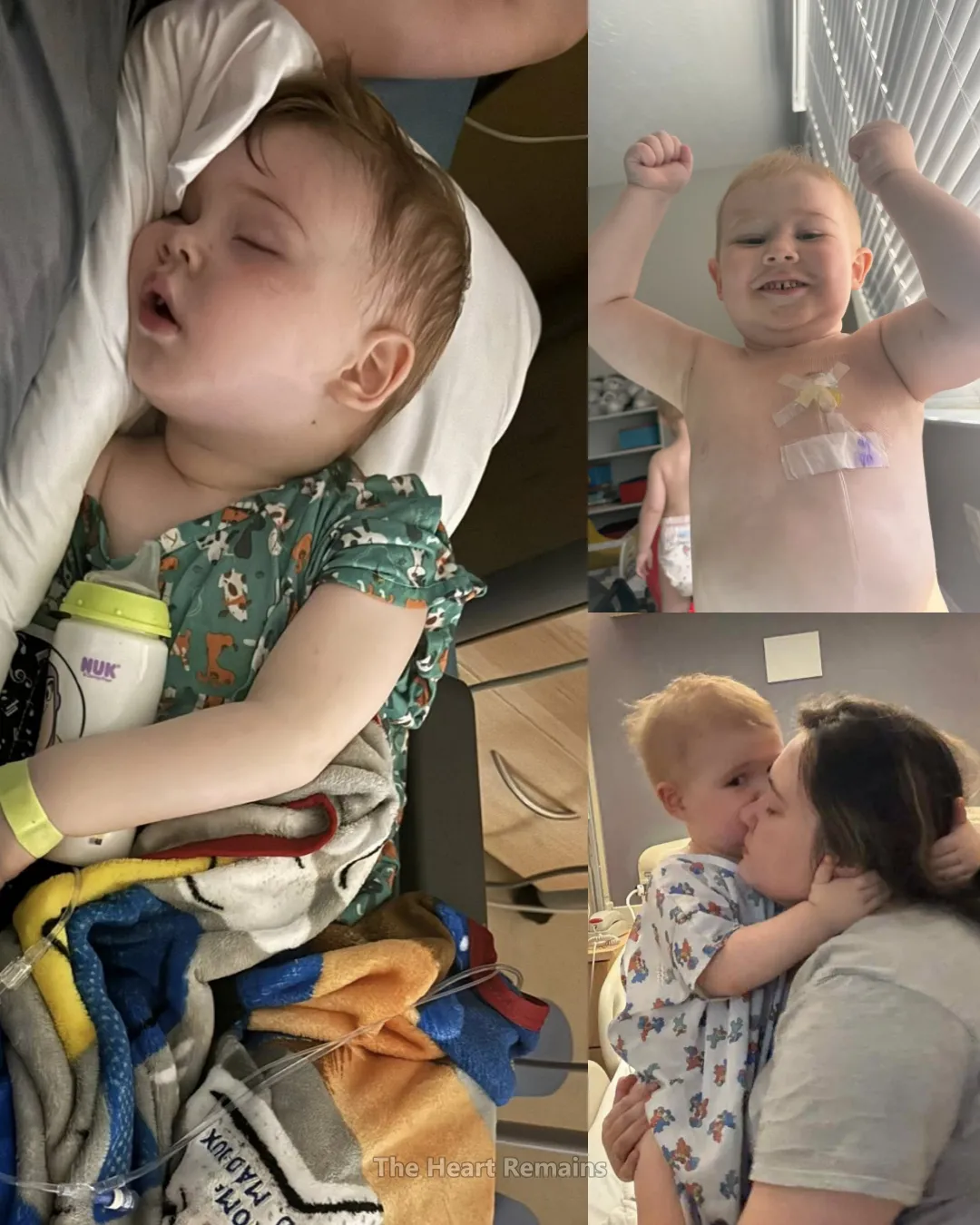
Axel finally got out of the hospital on Thursday.
Thank goodness.
His ANC was at 220 when we left—still low, still neutropenic, but not so critical that he had to remain admitted.

His pain had also eased somewhat, and for that I am endlessly grateful.
For the first time in days, I felt a breath of relief, like maybe, just maybe, he is back on the right track again.
But while his body seems to be improving, my heart has felt heavier than ever this past week.

The emotional toll has been immense.
Maybe it’s because of the temporary decline in his condition, those days when I sat helplessly beside him as he cried, screamed, and shook from pain.
Two full days.

All I could do was hold him close, whisper that I was there, and wait for the pain medication to finally bring him some relief.
There are so many pieces of this experience that are hard to process.
I could talk about them for days and still not find the right words.

At the hospital, I cried constantly.
Even after we left, the tears continued to come.
I even cried this morning, unable to stop the waves of grief that seem to crash over me again and again.

Last week, it felt like I was drowning in sorrow.
I kept asking myself questions I’ll never have the answers to.
I kept wishing, with everything inside me, that Axel didn’t have to go through this.

That my boys could just have a normal childhood—filled with playgrounds, toys, giggles, and bedtime stories instead of IVs, chemo, and monitors.
Axel himself has started to voice things that break my heart in new ways.
Out of the blue, he’ll begin crying and say he wants to go home.

Not just to the temporary places we’ve stayed, but to our permanent home in Eastern Kentucky.
The place where his memories live.
The place that means safety and love to him.

This caught both me and Bailey off guard, because we’ve avoided talking about “home” around him for exactly this reason.
We didn’t want to stir up those feelings.
But at his age, what can you say when he cries for home?

There are no explanations that he could possibly understand.
So I did the only thing I could—I cried with him.
And I whispered back, “Mommy does too.”

One night in the hospital, close to midnight, I had a moment I’ll never forget.
I was crying quietly while Axel was nearly asleep.
It had been the first time that entire day that Bailey and I even sat up to eat something.

Suddenly, Axel sat up too, and I could tell he noticed the tears still wet on my face.
He reached out, grabbed my cheeks in his tiny hands, and pulled my face toward him.
Then, he kissed me.

And in his sweet little voice he said, “Oh, Mommy, I love you.”
Afterward, he laughed, as if kissing me was the funniest thing in the world.
And just like that, my tears turned into a smile.

I’ll never forget that moment, and I’m thankful to Bailey for capturing it on camera.
It was proof that even in the darkest nights, light can break through.
Still, my heart has been heavy with all the “what ifs.”

What if things don’t get better?
What if the pain returns?
What if we can’t win this fight?

I find myself praying harder than ever, begging God that His plan includes victory for our sweet boy.
I tell God over and over again that I will always need my babies more than they will ever need me.
On the hardest days, when I feel like I can’t carry the weight anymore, I remind myself that God chose me to be Axel and Bennett’s mother.

And maybe—just maybe—He chose me for this exact reason.
To be strong enough to hold them through this storm.
To be their safe place when everything else feels unsafe.

I cling to the hope that this story will one day be a testimony—not just for us, but for others too.
Because throughout Axel’s journey, I have seen signs of God again and again.
And those signs, as small as they sometimes are, are enough to remind me that hope is alive.

That light still shines, even here.
As always, I want to thank every single one of you who has walked alongside us through this journey.
We could not do this without Axel’s Angels.
Your prayers, your kindness, your messages, your generosity—it leaves us speechless.

We are eternally grateful.
Please continue to pray.
Pray for Axel, that this week will be gentler on his body.

Pray for Bennett, who doesn’t understand why we have to be away from him whenever Axel is in the hospital.
Pray for me, that I might find a little more emotional strength to keep going.
And pray for Bailey, who has carried so much while always putting us first.

So many times this week he’s given me the space to cry, even while he has been hurting too.
He is selfless, always asking, “What can I do to help?”
We are so incredibly blessed to have him.

Through all of this pain, all of this uncertainty, I know one thing for sure.
We are not alone.
And with your prayers, with God’s grace, we will keep holding on to the hope that this battle can be won.