Lois’ Journey: Overcoming the Odds of a Rare Heart Defect 3373c

In the early moments of Lois’ life, her mother, Amy, had no reason to suspect that anything was wrong. It was supposed to be a joyous beginning—after a textbook pregnancy and an uneventful birth, Lois was welcomed into the world on a spring day in March 2024. Yet, as the hours passed, Amy noticed something alarming: her newborn daughter’s skin was tinged purple and mottled. Her oxygen levels were dangerously low, and thus began Lois’ extraordinary medical journey—one that would forever alter Amy’s understanding of the importance of early heart defect detection.
The First Signs: A Mother’s Instinct
Lois’ birth was uncomplicated, and everything seemed normal at first. Amy remembers feeling overjoyed at the arrival of her fourth child. She had previously experienced three healthy pregnancies and deliveries, so Lois’ birth felt like another ordinary moment in the family’s life. But within hours, Amy observed something unusual. Lois’ skin color was off, and her oxygen levels were concerningly low—only 89%.
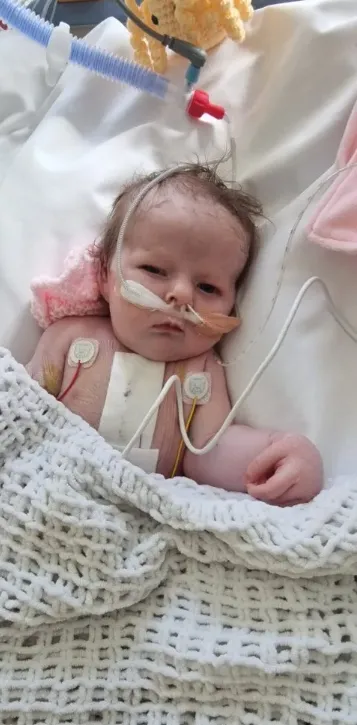
Despite the initial concerns, the medical team seemed unfazed, and Lois was transferred to special care for observation. The following days brought more tests and scans, with doctors puzzled over the cause of her oxygen desaturation. Lois underwent an echocardiogram, and although the results were sent to a nearby specialist hospital, the verdict was a surprising one—”All good,” they said.
However, Lois’ condition did not improve as expected. On day four, her SATs dropped drastically, prompting an emergency transfer to a nearby level-two care facility. Upon arrival, a new consultant performed another echocardiogram and immediately suspected something was wrong. Within hours, Lois was in the hands of a team of cardiologists, who quickly confirmed the severity of her condition. The diagnosis was a heart defect—specifically,
hemitruncus arteriosus (HA)—a rare and complex congenital condition that would require urgent intervention.
A Life in the Balance
As Lois was rushed to a specialist hospital, Amy and her husband were informed that Lois was dangerously close to death. Her heart defect had gone undetected until this point, and the sudden drop in her oxygen levels indicated that her duct, which had kept her alive since birth, was closing. Without immediate treatment, Lois would not survive. As Amy recounts, her emotions were a whirlwind of confusion, fear, and shock. The gravity of the situation was overwhelming.
By the time Lois arrived at the specialist hospital, she was intubated and on the verge of collapse. The doctors and nurses worked tirelessly, preparing the ECMO machine in case her heart failed entirely. For Amy and her family, the only thing keeping Lois alive was the fact that her duct was still open, temporarily mixing the blood and ensuring some level of oxygenation. However, the clock was ticking, and time was running out.
On Easter Sunday, after hours of tests and scans, the family finally received the diagnosis: Hemitruancus arteriosus, a rare congenital heart defect. Lois’ condition was grave, but surgery was possible. Unfortunately, she was still too weak for immediate intervention, and she needed to stabilize before the surgeons could operate.
The First Surgery: A Glimmer of Hope
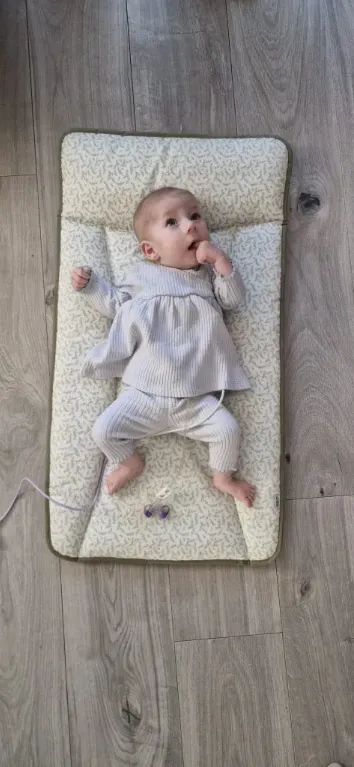
After nearly two weeks of fighting for her life, Lois was finally ready for surgery on April 12th. The doctors, expecting a complicated recovery given Lois’ condition, were pleasantly surprised by how well she responded. Known as a “little drama queen” by the medical team due to her challenging early days, Lois defied expectations with her resilience and strength. Her first surgery to repair the heart defect went well, and Amy and her husband dared to hope that they might be out of the woods.
However, during this time, Lois’ doctors also received genetic testing results that revealed an additional complication: Lois had been diagnosed with DiGeorge Syndrome, or 22q deletion syndrome. This genetic condition would present new challenges for Lois’ health moving forward, including developmental delays, low muscle tone, and feeding difficulties.
The Struggle Continues: Open Heart Surgery, Round Two
Lois’ recovery was far from straightforward. In mid-May, despite the initial success of her surgery, Lois experienced a setback. She began to need higher-flow oxygen again, and her doctors were perplexed by her ongoing respiratory difficulties. A heart CT scan revealed a serious issue: Lois’ pulmonary artery, responsible for carrying blood to the lungs, was much narrower than previously detected. The narrowed artery was not providing enough blood flow to her lungs, requiring another round of open-heart surgery.
On May 23rd, Lois underwent her second open-heart surgery. For Amy and her husband, this was another devastating blow. Their baby girl, who had already faced so much, was now being taken back to the operating room once again. The uncertainty was agonizing, but they knew they had no other choice. Lois’ heart had to be repaired, and the risk of further complications was too great to ignore.
The Road to Recovery: Surviving Against All Odds
The surgery was long and difficult, but Lois emerged from it with a fighting spirit. Her second surgery went successfully, and she began to stabilize. It was an emotional moment for Amy and her husband, as they realized just how much their daughter had been through—and just how strong she was. While Lois’ heart was now classified as “fixed,” her recovery was far from over. Due to her DiGeorge Syndrome, Lois faced additional complications, including feeding issues and developmental delays.
Lois was transferred to the Pediatric Intensive Care Unit (PICU), where her care team continued to monitor her closely. It was in PICU that Lois’ true strength became evident. Despite the many medical challenges she faced, Lois responded to her parents’ voices, opening her eyes and even showing small signs of recognition. Amy recalls the small, beautiful moments during the darkest days, like when Lois would twitch her toes in response to being tickled. These tiny signs of life were a reminder that, against all odds, Lois was fighting to survive.
A New Chapter: Growing and Thriving
By early August, Lois was transferred back to their local hospital, and by September 16th, just before her six-month birthday, Amy and her family received the most wonderful news—Lois was ready to go home. It was a moment of triumph, one that was bittersweet with the knowledge that their journey was far from over. Amy reflects on how their story could have been so different if Lois’ heart defect had been detected earlier, potentially preventing many of the complications and giving Lois a better chance at a healthier start in life.
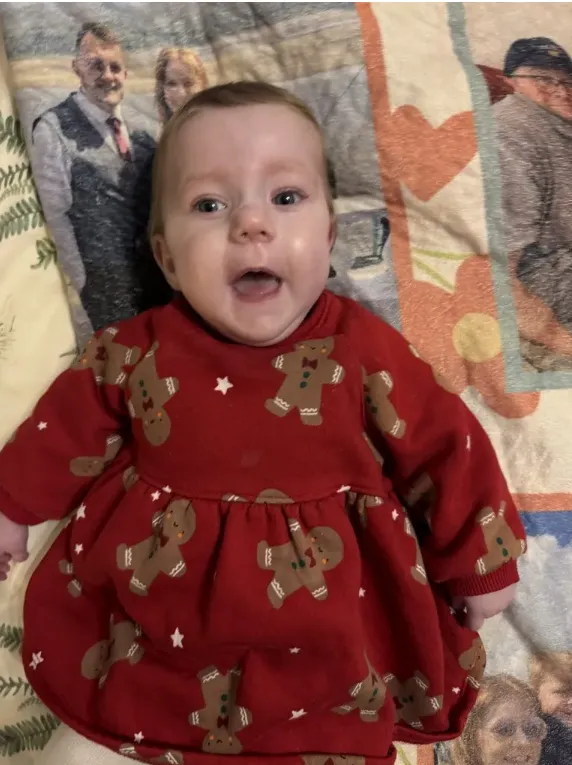
Lois’ first few months at home were filled with love and care. Despite her challenges, she thrived at home with her family. Lois is now nearly a year old, and her progress has been nothing short of a miracle. She is cheeky, happy, and filled with joy. She loves playing with her big brother, enjoys cuddles, and is a bubbly, loving little girl who has brought so much happiness into their lives.
While Lois will continue to face medical challenges due to her condition and 22q deletion syndrome, her parents remain hopeful. She is under regular monitoring, and although she still faces feeding issues and developmental delays, her family is overjoyed by her progress. Lois is a true miracle, and her survival story has become an inspiration to others.
The Power of Early Detection and Awareness
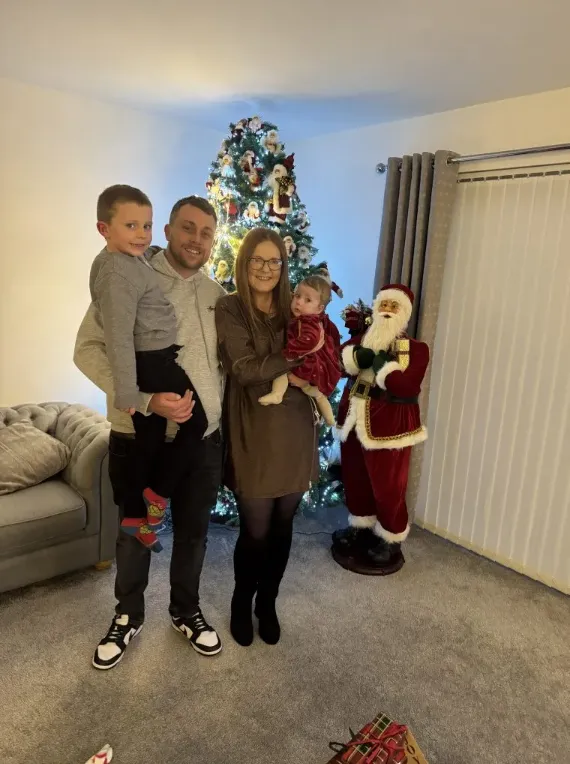
Amy and her family have become strong advocates for early heart defect detection, supporting organizations like Tiny Tickers that work to raise awareness and help with early diagnosis of congenital heart defects. Amy firmly believes that had Lois’ condition been detected earlier, their entire experience could have been drastically different—less traumatic and with a better outcome for Lois.
As Lois approaches her first birthday, Amy reflects on the rollercoaster journey they’ve had. It’s been filled with emotional highs and lows, and the medical challenges haven’t been easy, but the family is grateful for every moment. They are blessed to have Lois with them, watching her grow and develop every single day.
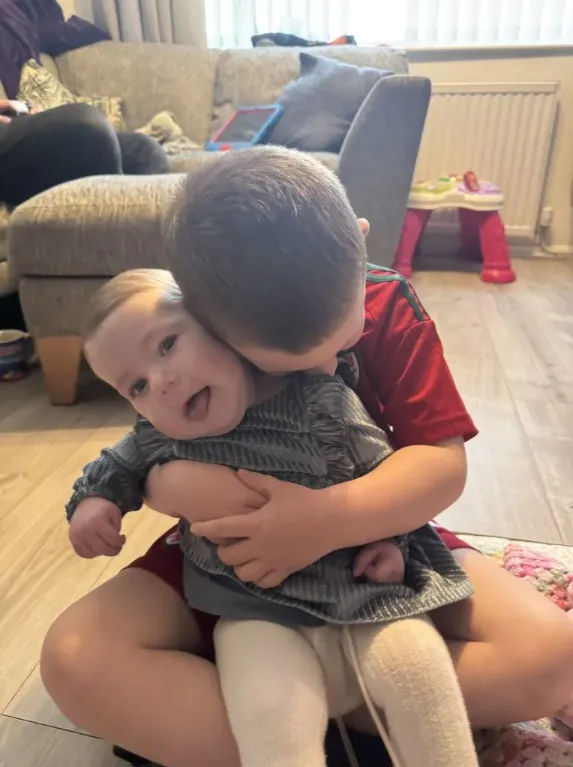
Their story is one of resilience, love, and hope—a reminder that even in the darkest times, there is always a glimmer of light. Lois is not just a survivor; she is a fighter, and her journey is far from over. With the love and support of her family, Lois will continue to thrive, and her story will inspire many more to believe in the power of perseverance and early detection.
The Little Warrior: How Six-Year-Old Mavryck and His Sister Are Fighting a Rare Brain Disease Together 1948c
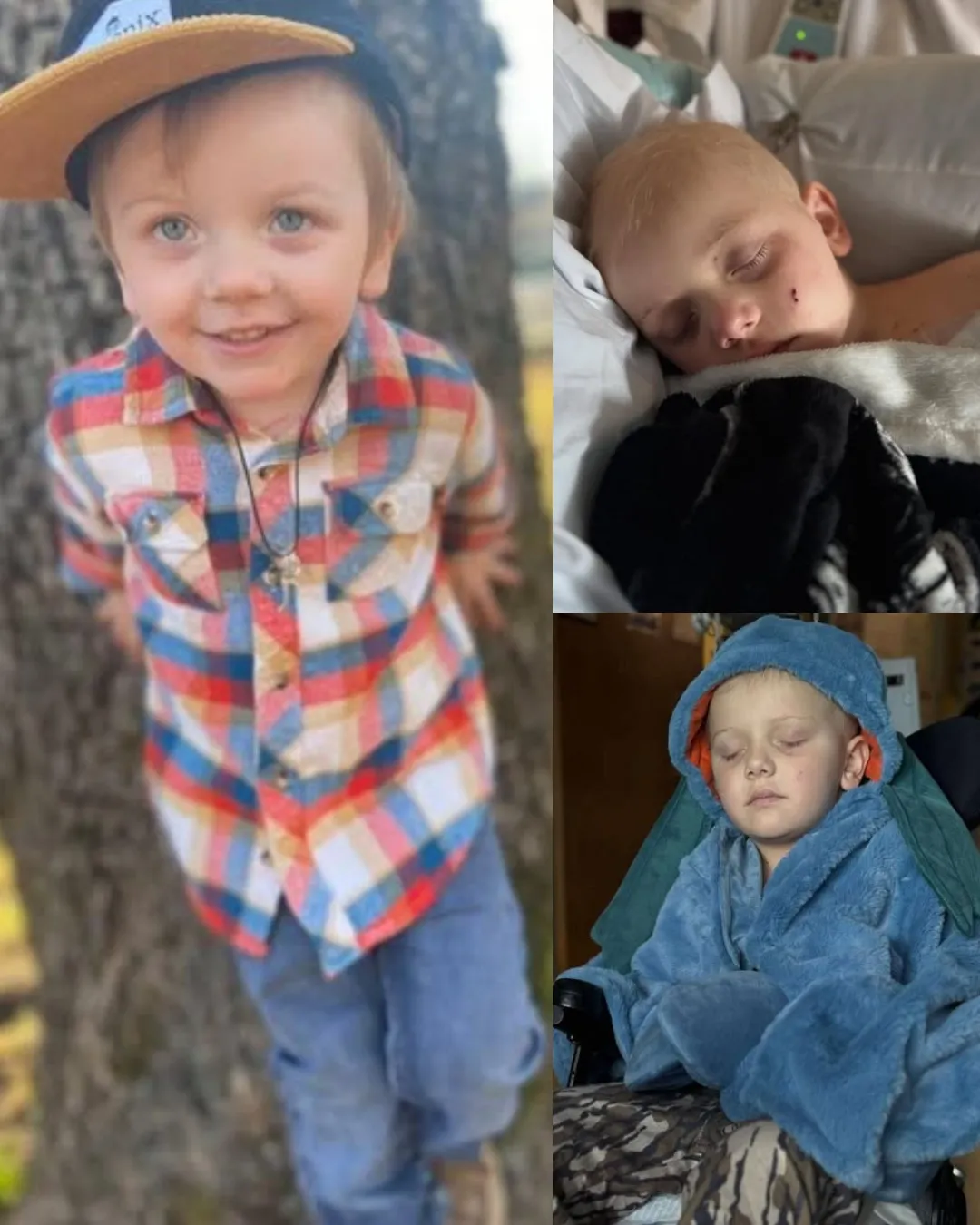
Behind those big, curious eyes and the kind of smile that could light up a room, six-year-old Mavryck is waging a battle no child should ever have to face. His story, though filled with heartbreak, has become one of extraordinary courage, unshakable faith, and the power of love between siblings that transcends fear itself.
This summer, Mav’s parents received the kind of news that changes everything. Their joyful, energetic boy — who loved climbing trees, playing superheroes, and racing his sister around the backyard — was diagnosed with cerebral adrenoleukodystrophy (cALD), a rare and devastating genetic disorder that attacks the brain’s myelin sheath, the protective layer around nerves. Without it, the brain’s ability to send signals breaks down, slowly stealing a child’s ability to speak, move, see, and eventually, survive.

For Mav’s parents, the diagnosis was a cruel twist of fate — one moment their son was laughing and learning, and the next, they were told he could lose everything that made him the bright, spirited little boy they knew. The days that followed were filled with tests, hospital visits, and sleepless nights spent scouring medical journals for hope. But amid the despair, one word kept them going: faith.
Cerebral adrenoleukodystrophy, or cALD, is extraordinarily rare. Most children who develop it are boys, and most families have never heard of it until the moment they’re told their child has it. There is no cure — only treatments that might slow its relentless progression. For Mav, one option offered a fragile glimmer of hope: a bone marrow transplant.
That procedure, though risky, had the potential to stop the disease before it could cause irreversible damage. And in a turn of grace that felt nothing short of miraculous, Mav’s perfect donor match was found not in a registry, but right at home — in his eight-year-old sister, VeraLee.
VeraLee was young, but when her parents explained what was happening to her little brother, she didn’t hesitate. “I want to help Mav,” she said simply. Those six words changed everything.
At Arkansas Children’s Hospital, history was made when Mav became the first patient ever to receive a bone marrow transplant for cerebral adrenoleukodystrophy. For the medical team, it was a pioneering moment in medicine. For Mav’s family, it was a leap of faith — a prayer in motion.

The process was grueling. For weeks, Mav underwent conditioning treatments designed to prepare his body to accept his sister’s cells. There were days when the pain was too much, when nausea and exhaustion overtook his small body. Yet, every time he opened his eyes, his sister was there — sometimes waving through the glass of the isolation room, sometimes holding a handmade sign that said “Mav Strong.”
When the day of the transplant came, the family gathered in prayer. As the donor stem cells entered Mav’s bloodstream, his parents watched with tears in their eyes, knowing those tiny, invisible cells carried both the gift of life and the hope of a future. “It was like watching a miracle happen right in front of us,” his mother said.
For VeraLee, it wasn’t about being a hero — it was about being a sister. “I just wanted to make Mav better,” she said quietly. And somehow, through all the fear and uncertainty, she did.
The weeks following the transplant were a blur of waiting, testing, and praying. Every improvement — every word, every small squeeze of his parents’ hands — felt monumental. “We see signs of God everywhere,” Mav’s father said. “In every smile, every laugh, every moment that he fights a little harder. We know we’re not alone in this.”
Faith has become their foundation. The family prays together every night, thanking God for the progress Mav has made and asking for strength to face the next challenge. They know the road ahead is long. Bone marrow transplants are only the beginning — a fragile chance to halt the disease before it can destroy more of the brain. Mav still faces months of therapy, medication, and close monitoring. But the love surrounding him has become an armor stronger than any illness.
Doctors at Arkansas Children’s Hospital say Mav’s case could pave the way for future treatments, bringing hope to other families facing cALD. It’s not just a medical milestone; it’s a testament to what courage, love, and science can achieve when they meet faith. “He’s teaching us all,” one nurse said, “that miracles can look like small victories — a stable scan, a stronger heartbeat, a smile that returns after a hard day.”
As for Mav’s parents, their days are filled with both exhaustion and gratitude. The hospital has become a second home, the beeping of machines a constant soundtrack to their lives. But when Mav laughs, the sound cuts through all of it — a melody of life, resilience, and grace. His mother describes it best: “When he smiles, we see God working.”
Little VeraLee continues to be her brother’s biggest cheerleader. She brings him drawings, sings songs to him, and talks about the day they’ll play outside together again. Her strength, too, has inspired everyone around her. The hospital staff calls her “the bravest big sister in Arkansas,” a title she wears with quiet pride.
The Enzor family’s journey (as they’ve come to be known by friends and supporters online) has united people across the country. Strangers have sent prayers, messages, and even care packages, creating a circle of support that spans miles and hearts. Their social media updates often end with three words that have become their rallying cry: Faith Over Fear.
Mav’s story is more than just a medical narrative — it’s a living example of what it means to fight with everything you have, to love without limits, and to believe when the odds seem impossible. For every parent who has ever sat by a hospital bed, praying for strength, Mav’s journey offers a glimmer of hope — proof that even in the darkest moments, light can break through.

Each day that Mav opens his eyes, each moment he holds his sister’s hand, is a victory. His parents say they’ve learned to measure life not in months or milestones, but in moments of grace — a laugh, a word, a prayer answered in the smallest of ways.
As Mav continues his recovery, the family remains grounded in faith and gratitude. They know that whatever comes next, they will face it together — hand in hand, heart to heart, guided by a belief that love can heal in ways science cannot yet explain.
For those who’ve followed their journey, the message is simple: never underestimate the power of prayer, family, and courage. Because sometimes, miracles don’t come as thunderbolts from the sky. Sometimes, they come as a little boy’s smile — and a sister’s love strong enough to save him.
So tonight, wherever you are, take a moment to whisper a prayer for Mavryck. Pray for healing, for strength, and for the day this brave little boy rings his victory bell — a sound that will echo far beyond hospital walls, carrying hope to every family still waiting for their own miracle.
? Keep fighting, little warrior. We’re all cheering for you.