Nine Days to Live: The Newborn Who Suffered More Than Most Do in a Lifetime.5556

Some stories enter the world quietly, wrapped in softness, wrapped in innocence, wrapped in the fragile hope that new life always brings.
And then there are stories that rip the breath from your lungs — stories so incomprehensibly cruel that they make you question how such darkness can exist on the same earth where children are supposed to be protected, cherished, and loved.
This is one of those stories.
A story not of accident but of brutality.
Not of tragedy but of preventable horror.
A story about a baby who lived only nine days — nine impossible, unthinkable days — before violence took everything from her.
Her name was I’ijayah Johnson.
Nine days old.
A heartbeat still new to the world.
A body so small it could fit into the palms of two gentle hands.
A life that should have been swaddled in warmth and lullabies, not burns, broken bones, trembling, and pain.

But on May 4, 2024, at 1:15 p.m., police were called to the Children’s Hospital of the King’s Daughters in Norfolk, Virginia.
A suspected child abuse case, they were told.
A baby girl, unresponsive.
A baby girl with visible injuries.
A baby girl with wounds no newborn should ever have to survive — and wounds she did
not survive.
Doctors tried.
They fought for her tiny, fragile life with everything they had, but the injuries were too extensive, too violent, too overwhelming.
And just nine days after she entered the world, I’ijayah was pronounced dead.
The medical examiner ruled her death a homicide two days later.
A homicide — for a newborn.
A homicide — for someone who never had a chance to speak, to cry out, to ask for help, to run, to hide, to understand why the world hurt so much so soon.
And then came the words that chilled investigators, reporters, and an entire community:
Her mother, Z’ibreyea S. Parker, described the baby’s injuries — injuries that included burns, fractures, and signs of violent shaking — as
“not all that serious.”
A sentence so hollow, so detached, so disturbingly dismissive that it seemed to echo the entire pattern of neglect and cruelty surrounding little I’ijayah’s short existence.

According to court records, Parker, 24, pleaded guilty to child abuse with serious injury.
Her murder charge was dropped as part of the plea deal — a decision that left many wondering how anyone responsible for the suffering of a 9-day-old child could walk away from a murder charge.
Earlier in the month, the baby’s father, Hilary Johnson II, 22, pleaded guilty to second-degree murder.
But the legal labels, the charges, the plea agreements — none of them capture the reality of what this newborn endured.
Local station WTKR revealed the horrific details from court documents, details that will haunt anyone who reads them:
Severe burns on both feet.
Splash burns across parts of her tiny body.
Broken ribs.
A broken clavicle.
Head bruising.
Signs consistent with shaking.
Multiple injuries.
Multiple forms of trauma.
Multiple acts of violence inflicted on a body not even two weeks old.
And still, Parker told authorities these injuries were “not all that serious.”
The cruelty in those words is as heavy as the violence that caused them.
Investigators learned that the family had been homeless, living in a tent beneath a highway.
A newborn.
A vulnerable baby girl.
Living under a bridge in a tent with two adults who could not — or would not — keep her safe.
A place where cold, hunger, instability, and fear loom like shadows.
A place where a baby should never have been brought home.
But there had been warnings.
There had been signs.
There had been someone trying to speak up before it was too late.

I’ijayah’s grandfather, Hilary Johnson Sr., said he had raised concerns long before the tragedy.
He said he had warned the hospital about the couple’s inability to care for the newborn.
He said he feared for her safety — desperately, repeatedly, clearly.
“I said I feared for the girl’s life,” he told reporters.
“What in the world else am I supposed to do? Now, I’ve got to bury my granddaughter because nobody listened.”
Nobody listened.
Those two words hang heavy in the air.
Two words that have appeared in countless child death cases across the country.
Two words representing the failure of systems meant to protect the innocent.
Two words representing the cries that never reached the right ears — or were dismissed when they did.
Hospitals, social workers, emergency services — all have procedures designed to identify potential abuse.
And yet, in this case, somehow, the warnings were not enough.
Somehow, a newborn left a hospital and lived only nine days before dying from horrific violence.
Sentara Norfolk General Hospital later stated that it follows all procedures regarding suspected child abuse or neglect.
But for I’ijayah, whatever procedures existed were not enough.
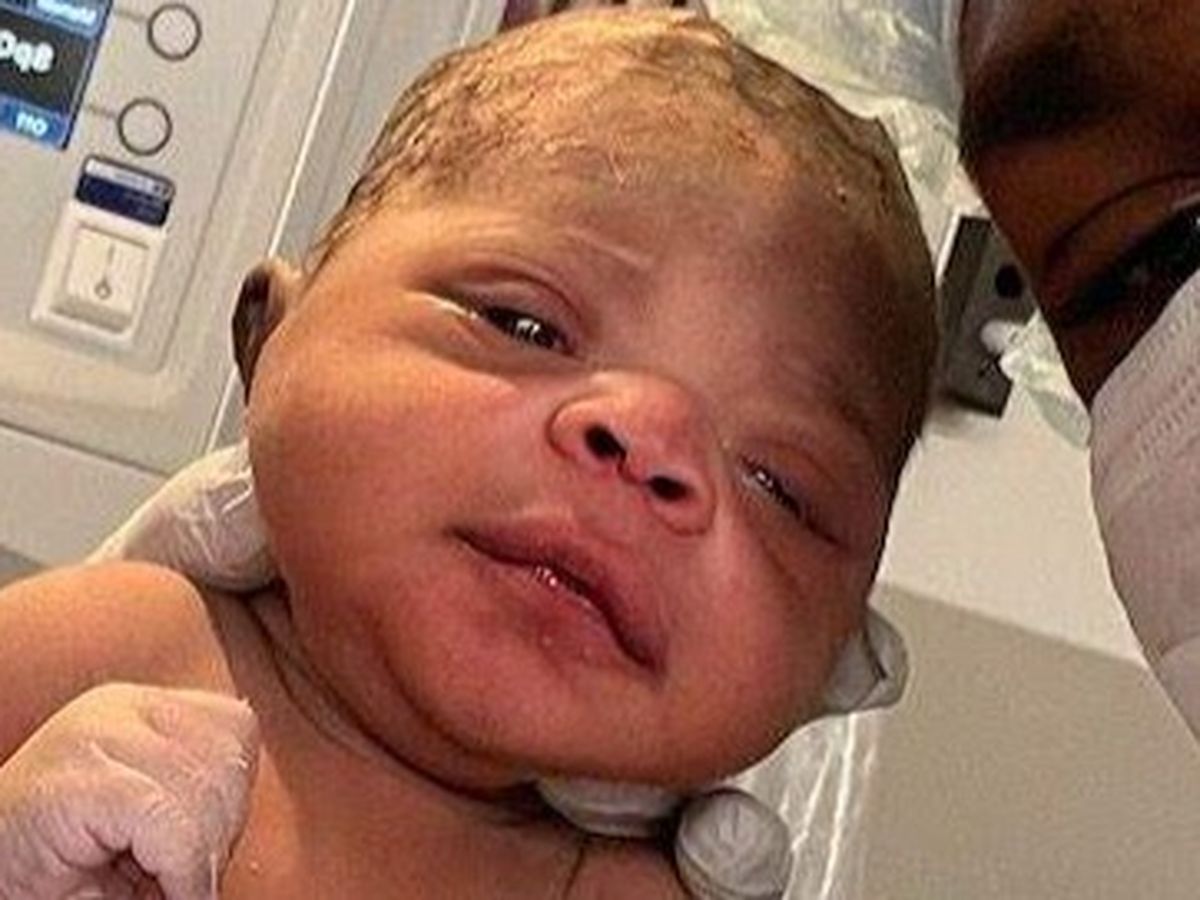
There are questions now — painful, urgent questions.
Could her life have been saved if someone had intervened sooner?
If homelessness had been treated as the emergency it was?
If the concerns voiced by her grandfather had been taken more seriously?
If someone — anyone — had looked closely enough to see danger instead of dismissing warning signs?
We will never know the answers.
And that is its own tragedy.
Because this is not just a story about individual choices.
It is a story about a system that failed a newborn who could not cry loudly enough to save herself.
It is a story about how the first days of a child’s life — days that should be filled with gentle care and warmth — were instead filled with pain, burns, fractures, and fear.

What does it say about a world where a 9-day-old baby dies from violence?
What does it say about the people who allowed it to happen?
What does it say about the voices that were ignored?
And what does it say about the future babies whose lives depend on the system learning — truly learning — from this loss?
I’ijayah never had the chance to grow, to smile, to take her first steps, to celebrate her first birthday, to call out for help.
Her entire life was held in the brief, fragile space between birth and death.
Her name should have been spoken at a baby shower, not at a court hearing.
Her footprints should have been saved in a baby book, not in an autopsy report.
Her cries should have been soothed, not silenced by violence.

She deserved more.
So much more.
And the world failed her.
Nine days.
Nine days were all she had.
But her story must last far longer, because ignoring it would mean allowing it to happen again.
And we cannot — must not — let another baby die because no one listened.
Defying the Impossible: A Child’s Journey of Hope.1844
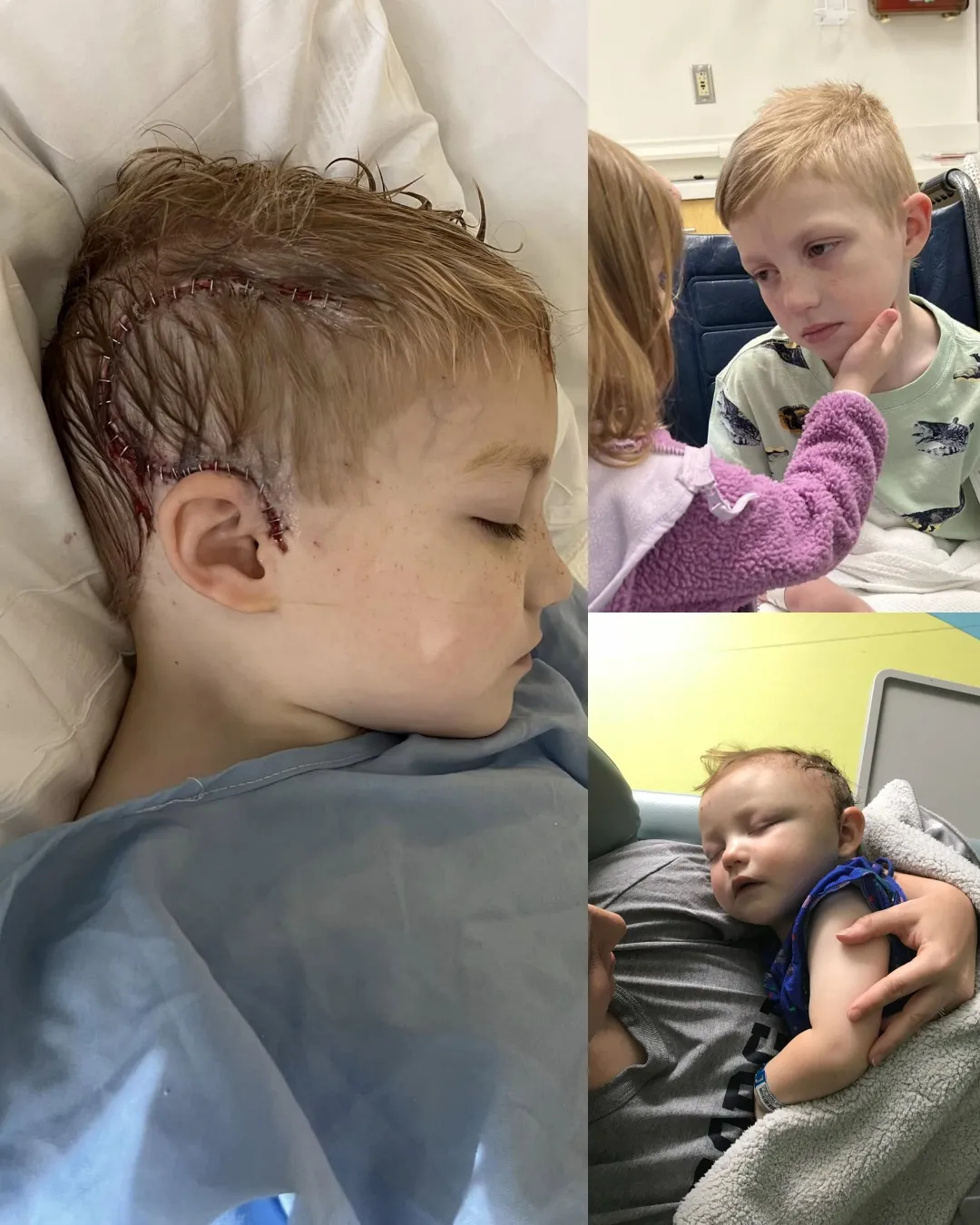
Doctors once spoke only limits over his life.
They said his tumor could never be cured.
They said every treatment was only “buying time.”
They said he would never walk again, never read a book on his own, never see the world clearly through eyes blurred by disease and side effects.
They painted a future that felt less like a life and more like a slow fading away—a map filled with disability, decline, and loss.
But his family refused to accept that story.

From the very beginning, they chose a different language.
They spoke life when others spoke despair.
They prayed for miracles when experts offered statistics.
They believed in healing when the medical charts screamed otherwise.
And slowly, almost imperceptibly at first, hope began to rewrite the pages of his story.

At first, it was the tiniest of victories.
A flicker of movement in his legs when he was told he would never walk.
A word spoken clearly after months of silence.
A book page turned with small, determined fingers when no one thought he would have the strength or focus to read again.
Each moment might have looked insignificant to outsiders.
But to his family, they were holy ground—signs that God had not abandoned them, signs that the boy they loved was still fighting, still rising, still proving that hope was stronger than fear.

The doctors were baffled.
They had said “impossible,” but here he was, inch by inch, proving possibility.
They had said “he will not,” but day after day he whispered “I can.”
They had set boundaries around his future, but he kept crossing them, one shaky but determined step at a time.

His family’s belief did not erase the pain.
There were still nights filled with fevers and tears.
There were still days of exhaustion, when his body seemed too fragile to keep going.
There were still test results that shook them, appointments that brought fear rushing back like a flood.
But through every setback, his parents, his siblings, his grandparents—they all kept speaking life.
They whispered prayers over his sleeping form.
They sang songs of faith when the silence of the hospital grew too heavy.
They reminded him that he was not defined by a diagnosis, not limited by a prognosis, not bound by the words “never” or “impossible.”

And something remarkable happened.
His life began to shine not in spite of the struggle, but because of it.
Every smile became a declaration of victory.
Every laugh was a reminder that joy is possible even in the darkest places.
Every step, every word, every breath carried more weight, more meaning, more wonder than anyone could have imagined.

The community around them began to notice too.
Neighbors, teachers, nurses, and strangers who followed his journey online were drawn into the story.
They saw a boy who was supposed to lose, but kept winning.
They saw a family who should have been crushed by despair, but kept rising in hope.
And in that, they found courage for their own battles.
His story became more than just his own—it became a beacon.

There is something sacred about watching a child defy odds.
It humbles you.
It reminds you how fragile and precious life is.
It strips away all the noise, leaving only the purest truth: love is stronger than fear, and hope can outlast even the harshest words spoken over a life.
The boy still has scars.
Scars from surgeries, from needles, from days when the pain felt endless.
But those scars tell a story of survival.
They speak not of weakness, but of strength.
They are proof that he has walked through fire and is still standing.
Today, his journey is far from over.
The tumor still lingers in shadows, reminding everyone that the fight is ongoing.
Doctors still monitor him closely, caution heavy in their voices.
But the boy does not live by their words.
He lives by faith.
He lives by the love that surrounds him.
He lives by the unshakable truth that miracles, no matter how small, are still miracles.
He walks—something he was never supposed to do.
He reads—something doctors said was beyond him.
He sees more clearly than anyone believed he ever would.
And in doing so, he teaches every person who meets him that the human spirit, fueled by love and faith, is limitless.
His parents often say, “We chose not to repeat the words spoken over him. We chose instead to speak life. And life answered.”
Those words carry power.
Because they are true not just for this boy, but for anyone standing at the edge of despair.
When the world says “no,” faith whispers “yes.”
When the future looks broken, love holds the pieces together.
When fear screams loudly, hope speaks softly—but with a strength that echoes forever.

One day, this boy will look back on his childhood and understand that his life was never small, never hopeless, never defined by the limits others tried to place on him.
He will see himself as his family always saw him—brave, strong, beloved, and chosen for a story far greater than anyone imagined.

And maybe that is the greatest miracle of all.
Not just that he walks when he wasn’t supposed to.
Not just that he reads when he wasn’t supposed to.
Not just that he smiles, laughs, and lives with a light that cannot be dimmed.
But that his story has become a living testimony to the power of hope.
That his life, fragile yet fierce, has already touched countless others.
That every breath he takes is a reminder that limits do not define us—love does.

Tonight, as his parents tuck him into bed, they whisper the same words they have said since the beginning:
“You are not your diagnosis. You are not your prognosis. You are a miracle, and we believe in you.”
And in the quiet of that moment, as his small voice whispers back “I believe too,” the truth becomes undeniable:
This is not just a story of illness.
It is a story of victory.
It is a story of faith.
It is a story of life, spoken into existence against all odds.