He Was 15. And He Was Killed in Broad Daylight.5939

In the middle of an ordinary weekday afternoon, the city kept moving.
Buses passed, footsteps echoed, and conversations overlapped in familiar rhythms.
No one expects violence to arrive at 1:00 p.m.
On December 9, in Islington, a teenage boy’s life ended suddenly and brutally.
Adam Henry was just 15 years old.
By the time the sirens cut through the street, it was already too late.
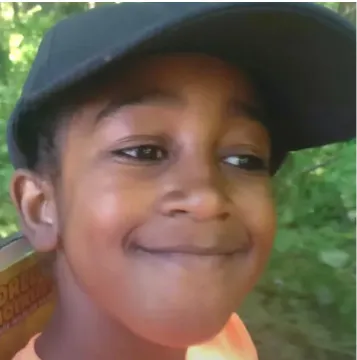
News of Adam’s death rippled through London with a familiar but no less devastating weight.
Another child lost.
Another family shattered.
Police say Adam was stabbed in what investigators later described as a “senseless” act of violence.
The word feels thin when placed against the reality of a child dying in daylight.
Some losses defy language.
London Ambulance Service rushed Adam to the hospital.
Doctors fought to save him.
But the injuries were fatal.
By evening, confirmation came.
A 15-year-old boy had died.
A family’s world had collapsed.
For those who loved Adam, time fractured that afternoon.
There was life before the phone call.
And life after, forever changed.
Details emerged slowly, carefully.
The Metropolitan Police began piecing together what happened.
Street by street, minute by minute.
On December 15, six days after Adam’s death, a development arrived.
A 20-year-old man named Tsidi Winion was charged with murder.
He was also charged with possession of an offensive weapon.
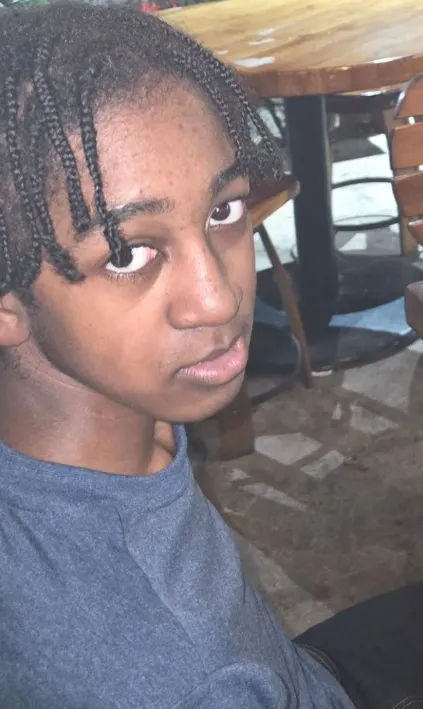
Winion was remanded in custody.
The court date ahead carried the heavy promise of justice, but no relief.
Nothing could undo what had already happened.
Still, police knew the investigation was not over.
Another suspect remained at large.
And for Adam’s family, waiting became another form of pain.
Days passed.
Then weeks.
Each sunrise carried hope and dread in equal measure.

On December 26, after a two-week manhunt, police located a second suspect.
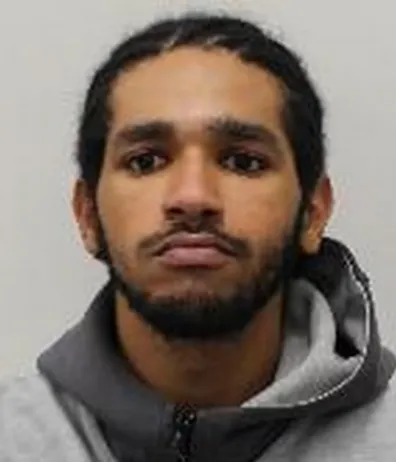
Twenty-two-year-old Abdel Derdour was arrested at a property in northwest London.
The search was over, but the grief was not.
Two days later, on December 28, Derdour was formally charged with murder.
He was scheduled to appear at Highbury Corner Magistrates’ Court on December 29.
Another step forward, heavy and somber.
As part of the same operation, officers arrested a 39-year-old man, Daniel Williams.
He was charged with fraud, theft, dangerous driving, and taking a vehicle without the owner’s consent.
His charges, though serious, were separate from Adam’s killing.

Three additional individuals — two men and one woman — were also arrested.
Police later confirmed they were released on bail.
The investigation continued to widen.
Behind every update was a family still in shock.
Adam’s loved ones were placed under the care of specialist officers.
Support, however skilled, cannot fill an empty chair.
Adam was not a headline to them.
He was a son, a relative, a friend.
A boy with routines, jokes, and a future.

At fifteen, life is still unfolding.
School days blur together, friendships feel permanent, and adulthood feels distant.
Adam never reached that distance.
In Islington, people paused at the site of the stabbing.
Flowers appeared.
Candles flickered against the cold.
Each flame represented something unfinished.
A birthday that would not come.
Dreams that would never be spoken aloud.

Knife crime has long haunted London’s streets.
Each case feels both familiar and uniquely unbearable.
Because the victims keep getting younger.
Detective Chief Inspector Allam Bhangoo addressed the public with measured resolve.
“Our thoughts remain with Adam’s loved ones throughout this unimaginably difficult time,” he said.
Words offered carefully, knowing they could never be enough.
“There is no place for senseless acts of violence on our streets,” he continued.
“And those responsible for such crimes should be brought to justice.”
A promise, spoken aloud, into a grieving city.

For Adam’s family, justice is not closure.
It is only a line drawn between right and wrong.
The absence remains unchanged.
In classrooms across the borough, students struggled to focus.
Some knew Adam.
Others simply knew he was one of them.
Teachers lowered their voices.
Parents hugged their children longer that night.
Fear and sorrow moved quietly through homes.
A teenager dying at midday strips away illusions.
It reminds a city how fragile safety can be.
How quickly ordinary moments turn fatal.
Community leaders renewed calls for intervention.
For prevention.
For change that goes beyond mourning.
But change moves slowly.
Grief arrives fast.
And Adam’s name joined a list no city wants to keep.
His story is now tied to court dates and charges.
But it should also be tied to remembrance.
To the life he lived before violence took it.
Fifteen years is not enough time.
It is barely the beginning.
And yet, it was all Adam was given.
As the legal process continues, the family waits.
Not for answers — those may never fully come.
But for accountability.
In the meantime, the city remembers.
Through candles, silence, and shared resolve.
Through the refusal to let Adam become just another statistic.
Violence may have taken his life.
But it does not get to take his name.
Adam Henry mattered.
And in the spaces between headlines and courtrooms, that truth endures.
From a Rope to Loving Arms: Marco’s Journey of Survival.5933
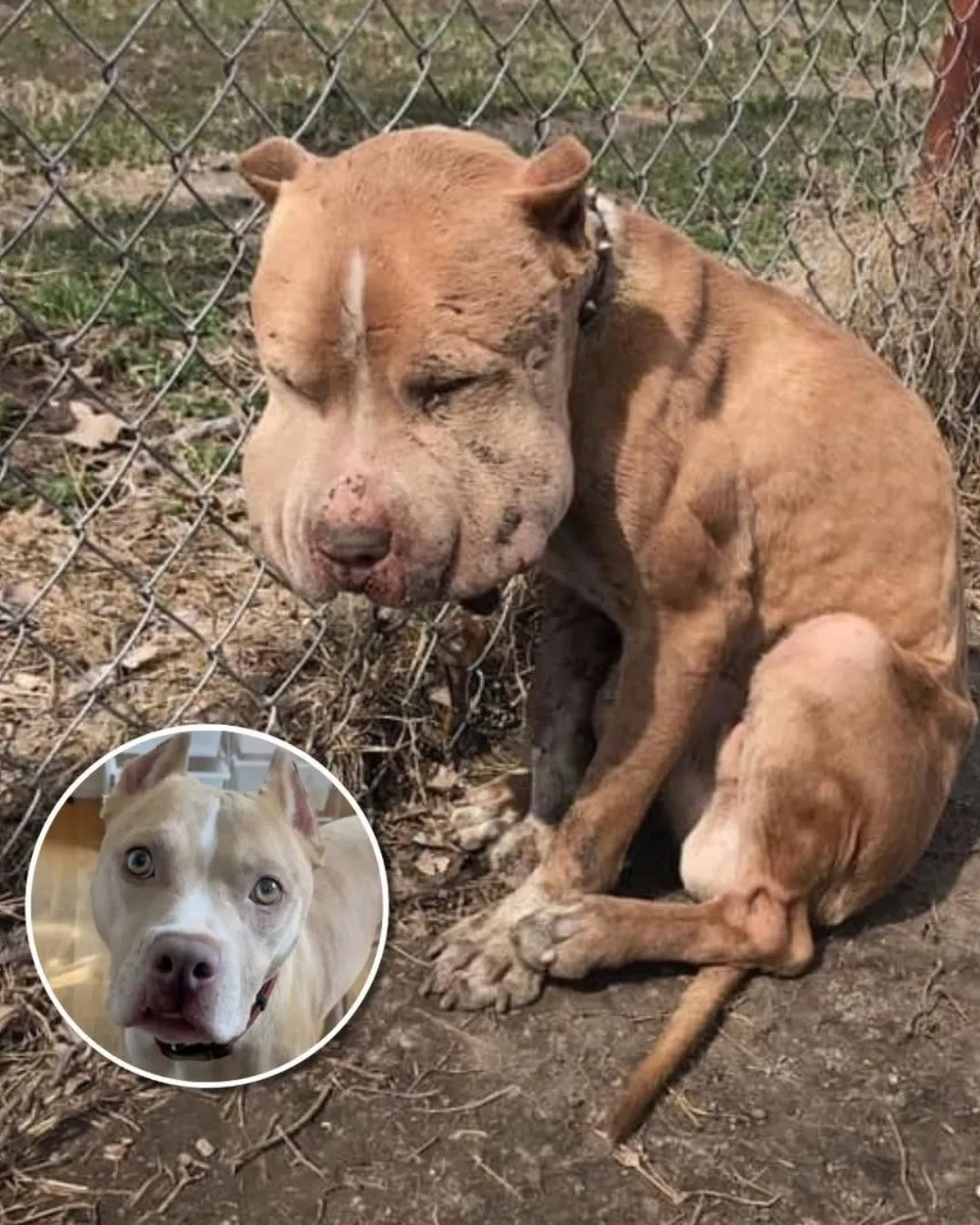
In the spring of 2019, the call came in quietly, the way most tragedies do.
A wounded dog had been reported, tied to a fence somewhere in St. Louis, left out in the open.
The volunteers at Stray Rescue of St. Louis felt that familiar tightening in their chests as they gathered their gear and headed out.
They had no idea what they were about to see.
When they arrived, the world seemed to stop for a moment.
What was tied to that fence barely resembled a dog at all.
His body was still, his breathing shallow, his eyes dulled by pain and exhaustion.
His face was swollen to nearly five times its normal size.
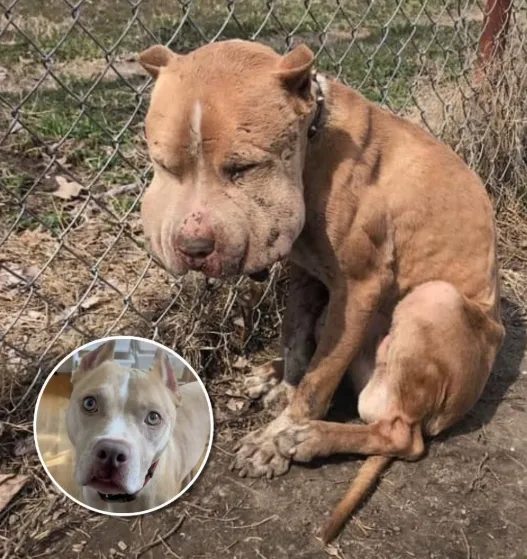
The sun beat down on him mercilessly.
Open wounds covered his body, untreated, inflamed, and infected.
Flies hovered close, drawn to suffering that had gone unnoticed for days.
He had been waiting.
The volunteers moved quickly, but gently.
They spoke to him softly, even though they weren’t sure he could hear them.
Somewhere beneath the swelling and infection, there was still a soul listening.
They would later name him Marco.
Marco had been tied there for days.
No food.
No water.
No mercy.
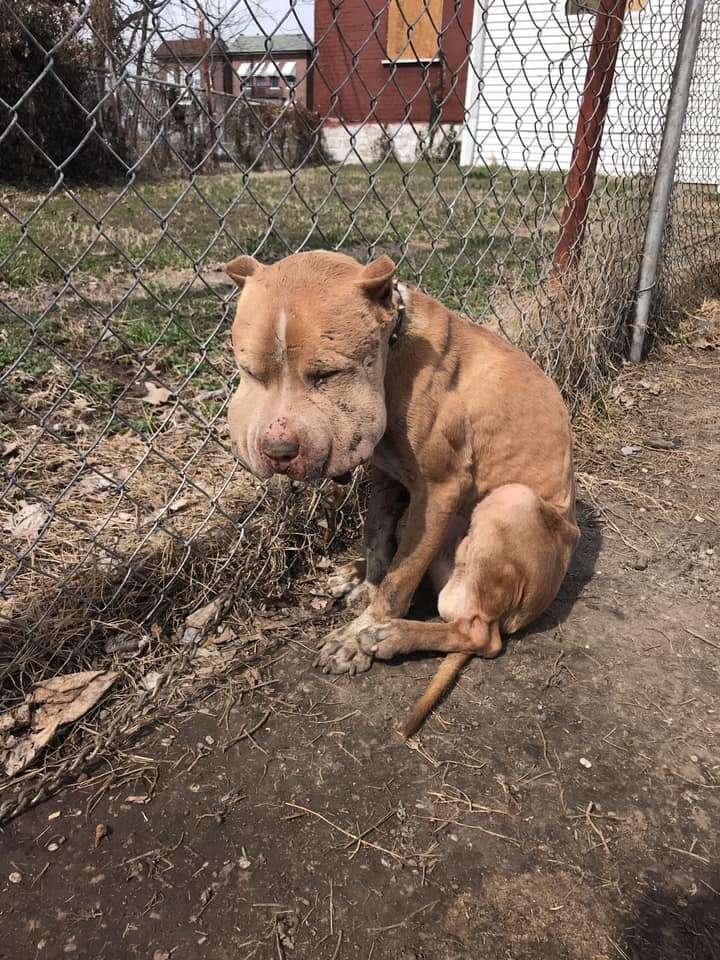
When the rescue team approached, his tail tried to move.
His body wanted to respond, to show gratitude, but the pain was too much.
Still, his eyes followed them, pleading without words.
He wanted to live.
As they cut the rope from the fence, Marco collapsed into their arms.
He didn’t resist.
He didn’t growl or flinch.
He trusted them instantly.
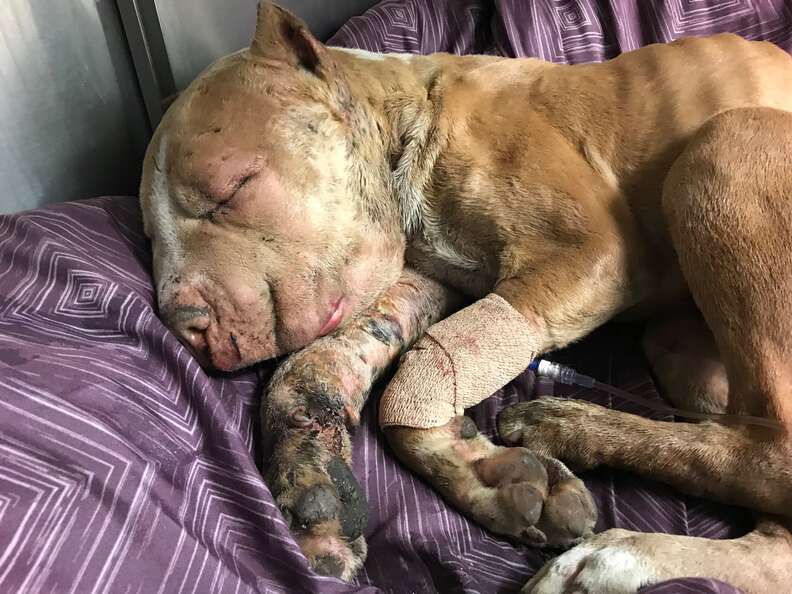
They rushed him straight to the Stray Rescue animal hospital.
The drive felt endless, every bump in the road another test of Marco’s will to survive.
Hands stayed on him the entire way, whispering promises they hoped they could keep.
“Hang on,” they told him.
At the clinic, the reality of his condition became painfully clear.
Marco’s entire body was riddled with infection.
He was septic, his organs fighting a battle they were close to losing.
He was dying.
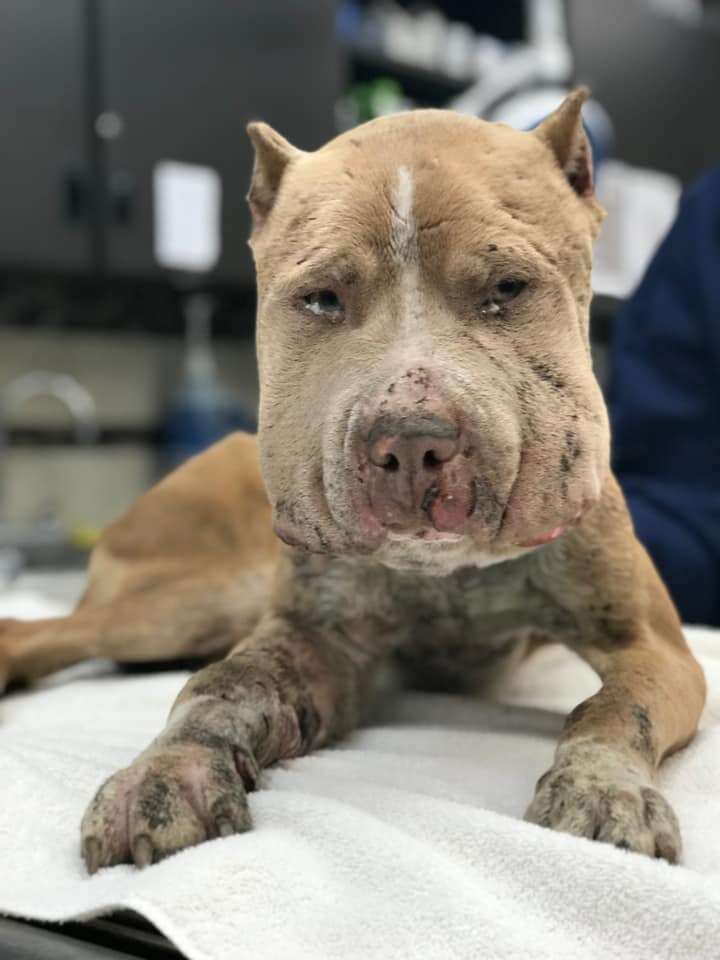
IV lines were placed.
Antibiotics flowed steadily into his fragile body.
Blood work confirmed what everyone feared — he was hanging on by a thread.
But he didn’t give up.
Days turned into weeks.
Weeks stretched into months.
Marco lived in that clinic, surrounded by machines, medication, and constant care.
He became part of the rhythm there.
Staff members learned his expressions.
Volunteers memorized the way his ears shifted when he heard a familiar voice.
Despite everything that had been done to him, he leaned into human touch.
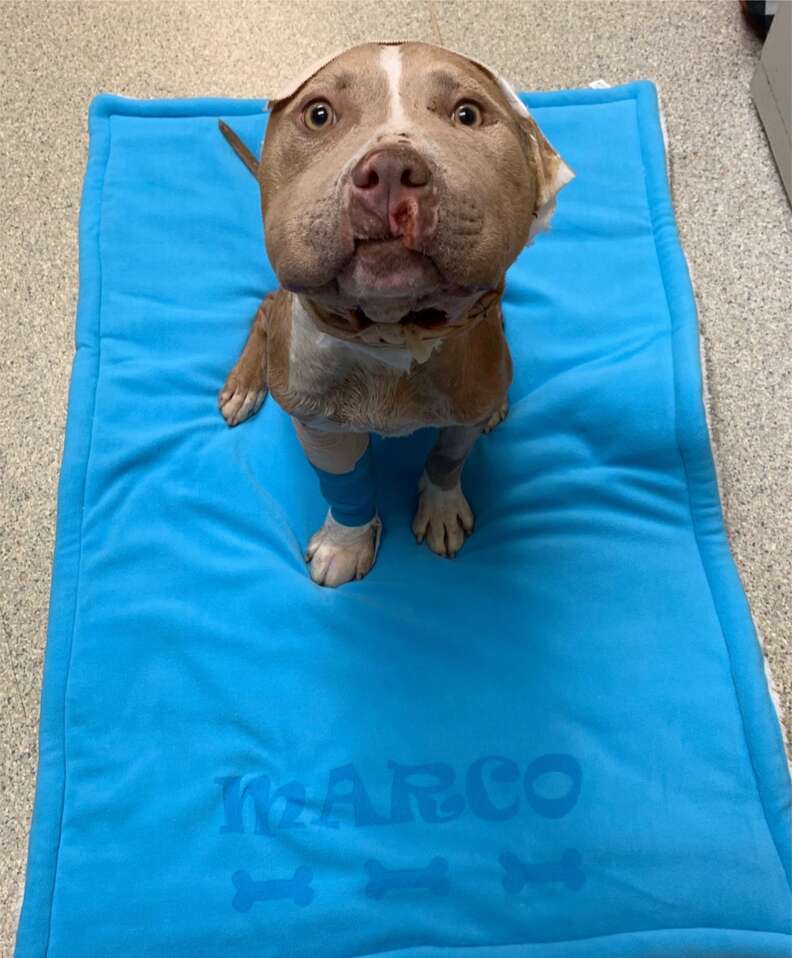
That was the part that broke them.
There was evidence suggesting Marco had been used in dog fighting.
The scars, the placement of wounds, the severity of injuries all pointed to cruelty inflicted on purpose.
Someone had taught him pain, and then abandoned him when he was no longer useful.
Yet Marco still loved.
When nurses came into the room, he wagged what strength he had.
When volunteers sat beside him, he pressed his swollen face into their hands.
He did not recoil.
He did not hate.
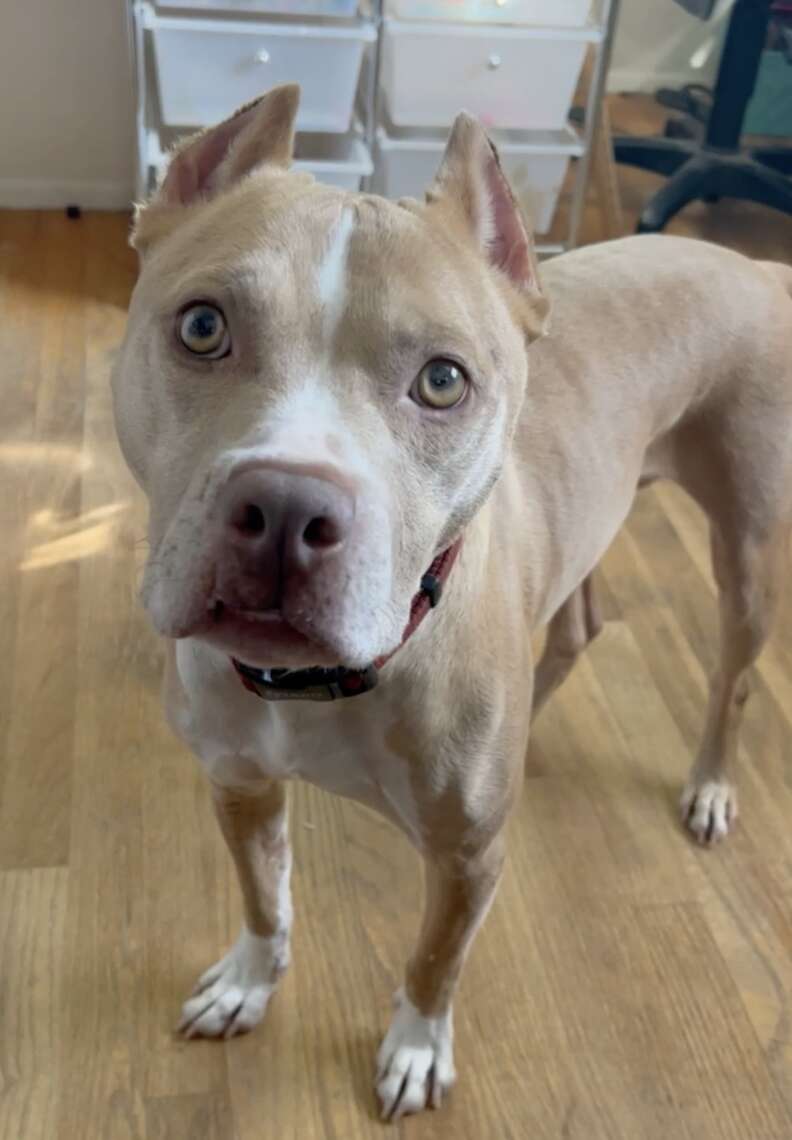
Slowly, almost imperceptibly at first, the swelling began to go down.
The infection started to respond to treatment.
Marco’s body, exhausted but determined, began to heal.
Hope crept back in.
As the weeks passed, something remarkable happened.
Beneath the damage, Marco’s true face began to emerge.
His eyes became clearer, brighter, alive.
He was beautiful.
Staff members watched in awe as his personality surfaced.
He was gentle.
He was affectionate.
He was endlessly forgiving.
Months after arriving at the clinic barely alive, Marco was declared stable.
He no longer needed constant IV support.
He could walk, eat, and rest without machines humming beside him.
He had survived.
The day Marco left the clinic was emotional.
Everyone who had cared for him lined up to say goodbye.
There were tears, hugs, and whispered wishes for a future he had earned.
That future began in foster care.
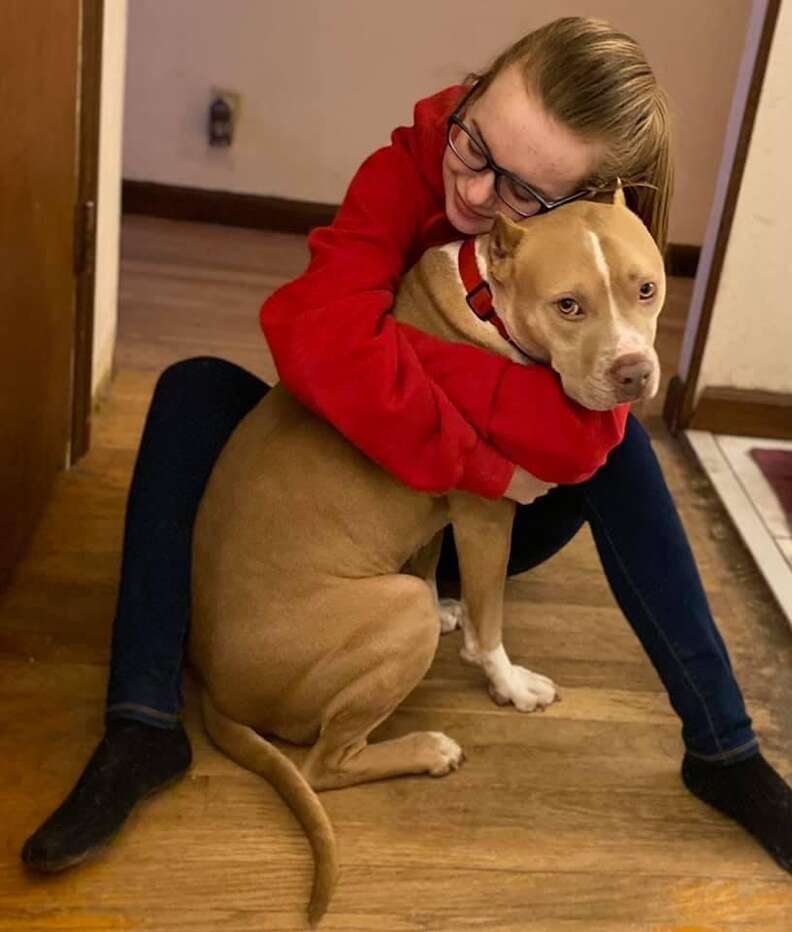
Katie became Marco’s foster mom.
She welcomed him into her home knowing his past, knowing his scars, knowing the responsibility.
What she didn’t know was how quickly he would become family.
He claimed her heart immediately.
Marco settled into home life as if he had always belonged there.
He learned routines, discovered toys, and explored comfort with curiosity.
The trauma of his past did not define his present.
He chose joy.
It didn’t take long for Katie to realize she couldn’t let him go.
Fostering turned into forever.
Marco was officially home.
And he knew it.
Today, Marco lives a life filled with safety and love.
He steals blankets before bedtime like it’s his job.
He monitors the neighborhood from his favorite bay window.
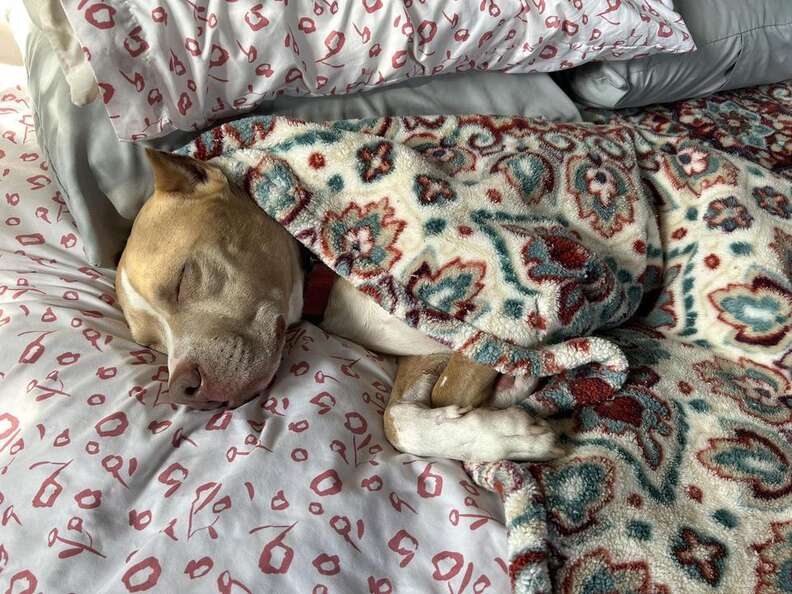
He takes his role seriously.
He is silly and sweet.
Smart and protective.
Confident in a way that only comes from knowing you are finally safe.
He is spoiled — proudly so.
The dog who once sat tied to a fence, swollen beyond recognition, now sleeps on soft beds.
The dog who waited days in the sun now waits for treats in the kitchen.
The dog who survived unimaginable cruelty now trusts without hesitation.
Marco chose healing.
His story is not just one of rescue.
It is a story of resilience.
A reminder that even the most broken souls can still believe in goodness.
He never forgot how to love.

Stray Rescue of St. Louis didn’t just save a dog that day.
They protected a spirit that refused to die.
They gave Marco the chance to become who he was always meant to be.
And he took it.
Marco’s past no longer defines him.
His scars tell a story, but they do not own it.
His life now is full, warm, and safe.
Exactly as it should be.
From a fence to a family.
From suffering to safety.
From silence to joy.
Marco made it home.