A Deputy Dead, a Family Broken, and a Trial Delayed.5948

The call was supposed to be routine.
Another domestic disturbance.
Another moment where calm, presence, and procedure might prevent something worse.
On January 13, 2023, that is what brought Riverside County sheriff’s Deputy Darnell Calhoun to a quiet home on Hilldale Lane in Lake Elsinore.
He arrived expecting to help.
Instead, he walked into an ambush.
The night did not announce what was coming.
There were no sirens screaming danger before he stepped out of his patrol vehicle.
Within seconds of arriving, gunfire erupted.

Prosecutors say Jesse Ceazar Navarro, then 45 years old, was waiting.
Not confused.
Not disoriented.
But hidden.
According to the state, Navarro fired from behind a truck door, using it as cover.
The first shots struck Deputy Calhoun almost immediately.
The encounter was over almost as soon as it began.
But the violence did not stop there.
Prosecutors allege Navarro continued firing as Calhoun tried to escape, chasing the wounded deputy in his own vehicle.
Bullets followed him down the street.
A desperate attempt to survive met with relentless force.

Deputy Calhoun was rushed to the hospital.
Doctors fought to save him.
But the wounds were fatal.
He was only 30 years old.
A husband.
A father to young sons who would grow up knowing their father through photographs, stories, and medals.
For the Riverside County Sheriff’s Department, the loss cut deep.
For his family, the world shattered.
For the community, the idea of safety fractured.
In the days that followed, attention turned to the man accused of killing him.
Jesse Ceazar Navarro was arrested and charged with capital murder.
The charges included special circumstances: killing a peace officer and lying in wait.
If convicted, Navarro could face the death penalty.
But before a jury can even consider guilt or innocence, another question must be answered.
Is he mentally competent to stand trial?

That question now sits at the center of a courtroom, months before a murder trial can begin.
Because prosecutors say Navarro is pretending.
And they say they can prove it.
According to the district attorney’s office, Navarro began acting mentally impaired after his arrest.
He allegedly appeared confused.
Unresponsive.
Incapable of understanding the legal process.
The defense argues his behavior is genuine.
That he suffers from cognitive impairment.
That bullet fragments in his head have caused brain damage.
But prosecutors say this is an act.
A performance designed to delay justice — or avoid it entirely.
Deputy District Attorney Marcus Garrett did not mince words before the jury.
“He is trying to manipulate the justice system,” Garrett said.
“This is an act.”

The state’s case hinges on evidence that Navarro understands exactly what he is doing.
And exactly what he is facing.
Central to that claim is a recorded jail call.
A conversation prosecutors say reveals far more than Navarro intended.
In that call, Navarro allegedly told his wife,
“Everything is going according to our plan.”
To prosecutors, those words speak volumes.
They argue the statement shows awareness, strategy, and intent.
Not confusion.
Not incompetence.
But calculation.
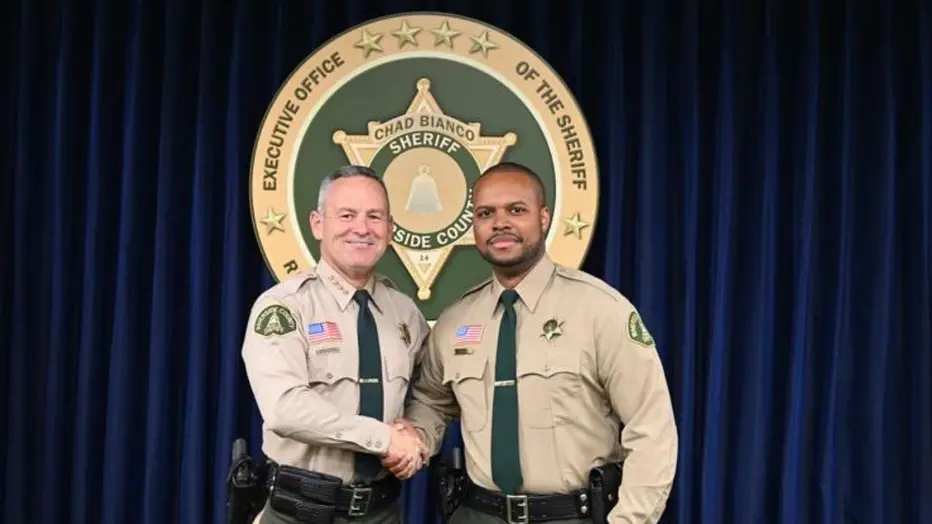
The jury listened as the recording played.
A quiet call.
A simple sentence.
But its implications were heavy.
If Navarro is planning, coordinating, and discussing strategy, prosecutors argue, then he understands the process.
And if he understands the process, he is competent.
A forensic psychologist testified for the prosecution.
After evaluating Navarro, the expert concluded he is mentally competent to stand trial.
That he can understand the charges against him.
That he can assist in his own defense.
Prosecutors also pointed to medical imaging.
A brain scan conducted at the University of California, Irvine reportedly showed no significant loss of brain function caused by bullet fragments.
No evidence of the impairment the defense claims.
To the state, the conclusion is clear.
Navarro is not broken.
He is pretending.

The defense disputes that interpretation.
They argue Navarro’s behavior is consistent with genuine impairment.
That appearances can be misleading.
That the brain is complex and damage is not always obvious.
But for Deputy Calhoun’s family, the debate feels distant from the core truth.
Their son and husband is gone.
Shot while doing his job.
The courtroom discussions about competence unfold against a backdrop of grief.
Because every delay means more waiting.
More time before accountability.
Deputy Calhoun’s death was not random, prosecutors say.
It was intentional.
Calculated.
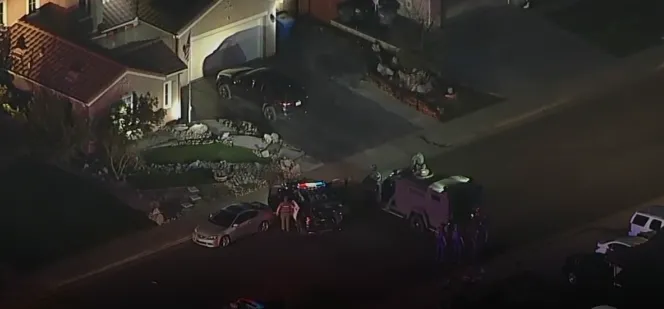
They allege Navarro knew law enforcement was coming.
That he positioned himself.
That he waited.
“Lying in wait” is not just a legal phrase in this case.
It is a description of how the state says the crime unfolded.
An ambush designed to kill.
For law enforcement officers across California, the case resonates deeply.
Domestic-violence calls are among the most dangerous.
They are unpredictable.
Emotionally charged.
Often deceptive in their calm.
Deputy Calhoun answered that call anyway.
As he had done countless times before.
Because that was his job.
His death sparked vigils across the region.
Badges draped in black.
Candles lit in silence.
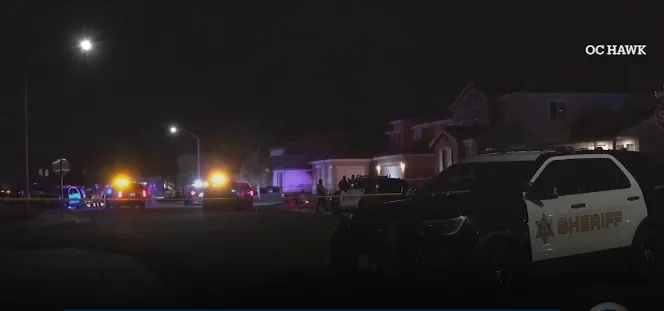
Colleagues remember him as dedicated and kind.
A deputy who took pride in protecting others.
A man who talked about his family often.
Now, his name is spoken in courtrooms rather than roll calls.
His legacy carried by those who still wear the uniform.
And by children who will grow up knowing their father died a hero.
The competence trial may seem procedural, but its outcome is critical.
If Navarro is found incompetent, the murder trial is delayed indefinitely.
If he is found competent, the case moves forward.
And with it, the possibility of a death sentence.
Capital cases move slowly by design.
The stakes are final.
The consequences irreversible.
But prosecutors argue that delay cannot become a strategy.
That pretending cannot become a shield.
That justice must not be manipulated.
Judge and jury now face a narrow but weighty task.
Not to decide guilt.
Not yet.
Only to decide whether the man accused understands what is happening around him.
Outside the courthouse, life continues.
Families go to work.
Children go to school.
But for Deputy Calhoun’s family, time remains frozen at the moment the knock came.
The moment their lives changed forever.
The moment a routine call turned fatal.
For the community, the case raises hard questions.
About violence.
About accountability.
About the thin line officers walk every day.
And for the justice system, it is a test.
Of truth versus performance.
Of evidence versus appearance.
If prosecutors are right, this is not incompetence.
It is deception.
A calculated attempt to escape the ultimate consequence.
If they are wrong, the cost of proceeding could be profound.
Justice demands certainty.
Not assumption.
The jury will decide.
Quietly.
Carefully.
And only then will the case move forward — toward a trial that will revisit the night Deputy Darnell Calhoun was killed.
Toward a courtroom where his life, his service, and his death will be laid bare.
Toward answers his family has waited for since that January night.
For now, the question remains unresolved.
Is Jesse Ceazar Navarro pretending?
Or is he truly incapable?
What is certain is this:
A deputy is dead.
A family is grieving.
And justice is watching closely.
Because no matter the outcome of this hearing, the truth of what happened on Hilldale Lane will not be forgotten.
Seven Days with an Open Chest — and the Boy Who Survived.1835
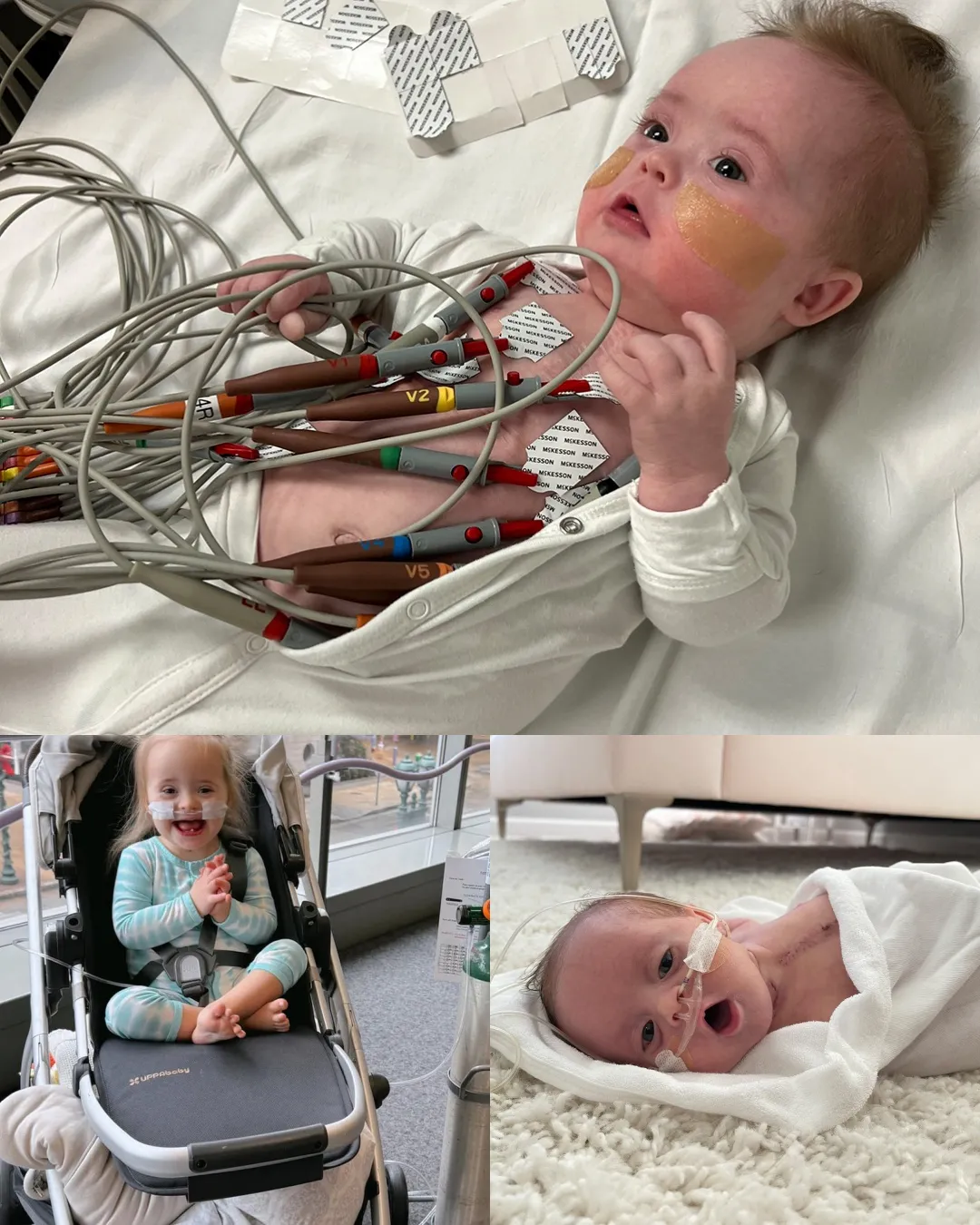
Ollie is three years old now.
To look at him — a curious boy with bright eyes and a spirit that seems too big for his small frame — you might think he has lived a carefree childhood. But the truth is, his first three years have been marked by battles most adults could hardly imagine.
From the very beginning, Ollie’s story has been one of resilience, faith, and the relentless determination of both a little boy and the family who loves him.

A Fragile Beginning
When Ollie entered the world, joy quickly gave way to fear. Doctors diagnosed him with a congenital heart defect, and it became clear that his life would not follow the ordinary rhythm of newborn milestones.
At just a few days old, while most babies are wrapped tightly in blankets and rocked to sleep in their mothers’ arms, Ollie was wheeled into an operating room. The procedure ahead was daunting: open-heart surgery.
The operation lasted 11 grueling hours. Surgeons worked tirelessly to mend what nature had left broken, their hands shaping a future for a child who had barely begun to live.
When the surgery ended, Ollie’s fight was far from over. For more than seven days, his chest remained open. Each day was a gamble, each breath a prayer, each moment a testament to the fragility and resilience of life.
Against all odds, he survived.

A Fighter From the Start
That first battle revealed something extraordinary about Ollie. He was not just a fragile baby struggling to survive; he was a fighter. Nurses and doctors marveled at his strength. His parents clung to hope, often saying that their son seemed to have been born with a warrior’s spirit.
But survival did not mean the end of hardship. In the months that followed, Ollie endured countless hospital visits, tests, and procedures. His early life was not filled with playgrounds and first steps, but with IV lines, beeping monitors, and the sterile smell of hospital rooms.
For many families, such a diagnosis can be overwhelming. But for Ollie’s family, giving up was never an option. They poured every ounce of love and faith into him, standing by his side through every setback, every sleepless night, and every uncertain tomorrow.

Milestones Measured Differently
As Ollie grew, his milestones looked different than those of other children. Where parents typically celebrate first words and first steps, Ollie’s family celebrated smaller, harder-won victories: a day without complications, a successful medication adjustment, a week without a hospital stay.
Each moment mattered.
For Ollie, even the simple act of sitting up or learning to walk came with its own hurdles. His heart condition meant that his body tired more easily, that growth came more slowly, and that life was always lived with an undercurrent of caution.
And yet, despite it all, his joy was contagious. His laugh filled hospital rooms. His smile lifted weary spirits. Nurses often commented that Ollie seemed to give back more strength than he received — a boy whose light outshone the shadows of his condition.

The Family’s Journey
Behind Ollie stands a family forever changed by his journey. His parents have learned to navigate medical terminology, treatment plans, and the rollercoaster of emotions that come with having a child with a serious health condition.
They’ve learned to be advocates, pushing for answers, asking hard questions, and fighting for the best care possible. They’ve also learned to live in the moment — to treasure each day, because nothing is promised.
Their love for Ollie is fierce, unyielding, and unconditional. And it is that love, combined with Ollie’s own will to live, that has carried them through the darkest of nights.
Living With Uncertainty
Congenital heart defects are not something that simply disappear. For Ollie, the future will likely hold more surgeries, more procedures, and more challenges. His condition is a lifelong battle, one that will demand continued vigilance and care.
But if the past three years have shown anything, it is that Ollie is no ordinary child. He has faced the unimaginable and emerged stronger each time.
His parents often say, “He teaches us more than we could ever teach him.”
Indeed, Ollie has taught everyone around him about courage, about resilience, and about the power of hope.
A Symbol of Strength
Now, at three years old, Ollie’s story is far from over. But already, he stands as a symbol of what it means to fight for life. His journey has touched not only his family, but also doctors, nurses, friends, and strangers who have followed his story.
For many, he represents the truth that even in the most fragile of circumstances, there is strength to be found. That even in the smallest of bodies, there can be a willpower mighty enough to defy the odds.
Looking Ahead
Ollie’s parents know the road ahead will not be easy. But they no longer measure life in years or milestones. They measure it in moments: a shared laugh, a quiet cuddle, a smile that lights up the room.
Those are the miracles they hold onto.
For Ollie, the future may hold more battles. But with every challenge, he has shown that he will not face it alone. His family, his medical team, and the countless people who root for him will always be at his side.
And for now, he continues to grow, to learn, to laugh, and to live — a little boy with a big heart, both fragile and fierce.
Conclusion
Ollie’s journey is one of survival, resilience, and love. From his first days of life in the operating room to his third birthday, he has proven that he is more than a diagnosis. He is a fighter, a light, and a reminder that life — even when fragile — is worth every battle.
At just three years old, Ollie has already written a story of hope that inspires everyone who hears it.
Because sometimes, the smallest hearts carry the greatest strength.