“Kidnapped in the Night: The Capital Murder Trial of Cash Gernon”.5465





Jonah’s Brave Fight: From a 9cm Tumour to Life Beyond Chemotherapy.1595
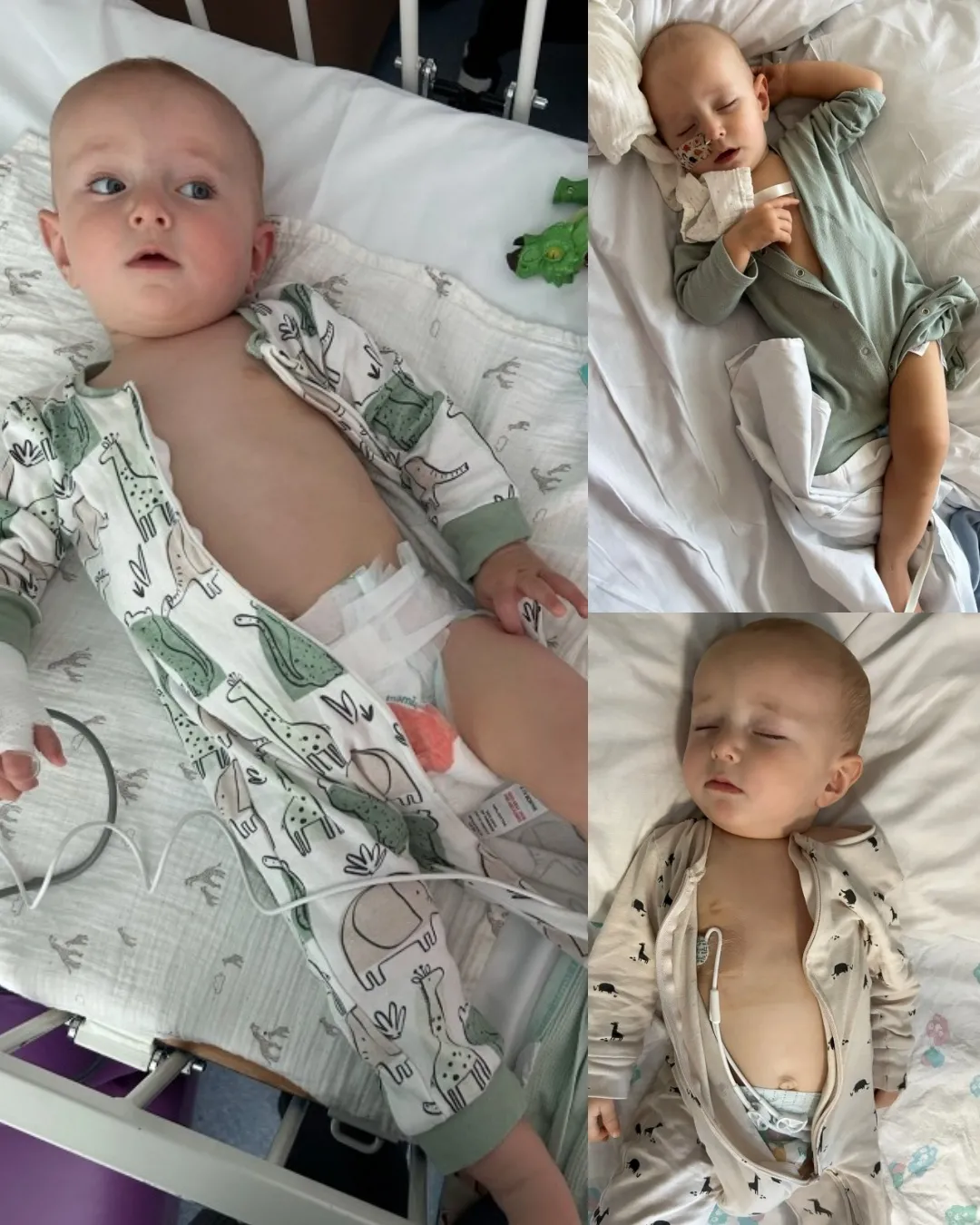
At just nine months old, when most babies are learning to crawl, babble, and explore the world around them, Jonah’s life took a turn no parent ever imagines.
In June 2023, doctors discovered a large tumour growing in Jonah’s spine. Measuring 9 centimeters, it pressed dangerously against vital areas, stealing comfort and threatening his fragile body. Tests revealed the diagnosis: Intermediate Risk Neuroblastoma.
The words crashed over his parents like a wave, leaving them stunned. Neuroblastoma — a rare and aggressive childhood cancer — had invaded their baby boy’s spine. And because of its size and location, surgery was not possible.
As if the tumour itself wasn’t enough, it had already caused kyphosis, a spinal deformity. His tiny body was forever changed by something that should never have touched him.
But Jonah was not alone. His parents stood beside him, and soon, so did a dedicated team of doctors determined to fight the cancer on his behalf.

The Chemotherapy Journey
Between July and December 2023, Jonah endured six cycles of chemotherapy. The names of the drugs — Carboplatin, Etoposide, Doxorubicin, Vincristine, Cyclophosphamide — became part of his family’s vocabulary, words they had never wanted to know but clung to with desperate hope.
For months, Jonah’s life revolved around hospital visits, treatments, and recovery. The sessions were exhausting, often leaving him sick and weak. His parents watched helplessly as the chemo drained him, yet each time he rallied, his resilience shining through.
Slowly, the treatment began to work. Scans showed the tumour shrinking. It could not be removed, but it was no longer active. That word — non-active — felt like a lifeline. For the first time since diagnosis, Jonah’s family could breathe.
Milestones and Relief
By April 2024, Jonah had reached a huge milestone: his Hickman line, which had been his constant companion throughout treatment, was finally removed. The moment symbolized freedom — no more daily line care, no more fear of infection each time he played or moved.
For Jonah’s family, the removal was more than medical. It was emotional. It was a sign that their little boy had made it through some of the hardest days.
Jonah turned two years old soon after, and every giggle, every step, every playful moment carried a weight of gratitude.

Life After Treatment
But the end of chemotherapy did not mean the end of Jonah’s journey. Childhood cancer leaves a shadow long after treatment stops.
Jonah continues to have MRI scans every four months, each one checking to ensure the tumour has not grown or reactivated. His parents hold their breath before every result, a ritual that blends fear with fragile hope.
Every four months, Jonah also undergoes urine tests to check his hormone levels, ensuring his body is functioning as it should after such aggressive treatments. And because the tumour caused spinal damage, he also has regular X-rays to monitor his kyphosis. The spinal curve is a constant reminder of what cancer has taken, but also of what Jonah has survived.
The Bravery of a Child
Despite all of this, Jonah is thriving. His courage at such a young age is nothing short of inspiring. He doesn’t yet understand the complexity of what he has faced, but he shows his bravery in quieter ways — in the way he smiles after appointments, in the way he plays despite scars, in the way he radiates joy even after countless hospital visits.
For his parents, every moment with him is a gift. The cancer journey has forever changed their perspective on life. Milestones that other families might take for granted — a birthday, a first day at nursery, a trip to the park — are celebrated with overwhelming gratitude.
The Emotional Weight
His family shares openly that while Jonah is doing well, the trauma of the past year lingers. Cancer does not end with treatment. The fear, the memories, the constant checkups — they remain. His parents live with the reality that their child’s future health will always require vigilance.
But alongside the fear is pride. Pride in Jonah’s resilience, pride in his ability to endure more in two years of life than many face in a lifetime, and pride in the way he continues to shine despite everything.

Why We Go Gold
Jonah’s story is one of thousands, yet each is unique and deeply personal. As part of the Go Gold campaign for Childhood Cancer Awareness Month, we share his journey not just to honor him but to highlight the resilience of children everywhere who face cancer.
Going Gold is about shining a light on the realities of childhood cancer — the hospital stays, the transfusions, the scans, the scars, the milestones celebrated in hospital wards instead of playgrounds. It is about raising awareness, supporting families, and ensuring that children like Jonah are never forgotten in the fight for better treatments and brighter futures.
Looking Forward
Jonah’s future still carries uncertainty. He will continue to be closely monitored for years to come. His spine will need ongoing care. And each scan will be a moment of holding breath, of waiting for the words that determine whether the path remains clear.
But his family dares to hope now. Hope for school days, for birthdays, for ordinary family life untouched by hospital corridors. Hope that the word “non-active” becomes permanent.

A Warrior Named Jonah
At just two years old, Jonah has already shown the world what true bravery looks like. His story is not only about cancer but about resilience, joy, and the love of a family that refused to give up.
We honour Jonah — his strength, his courage, his laughter — and every child like him. ?
Because childhood should never be about fighting cancer. But when it is, children like Jonah show us what it means to be a warrior.
✨ Go Gold for Jonah. Go Gold for every child.