Seventeen Lives, One Road: The Night a Graduation Trip Turned Into Tragedy.5800

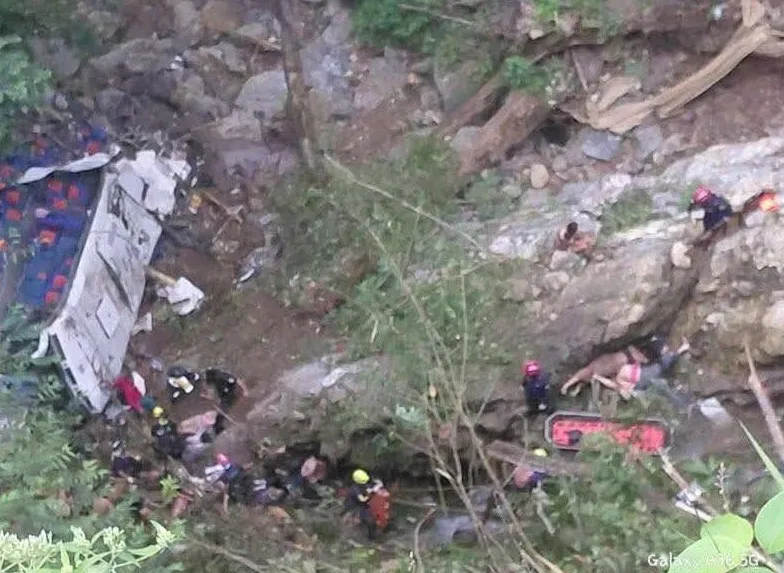
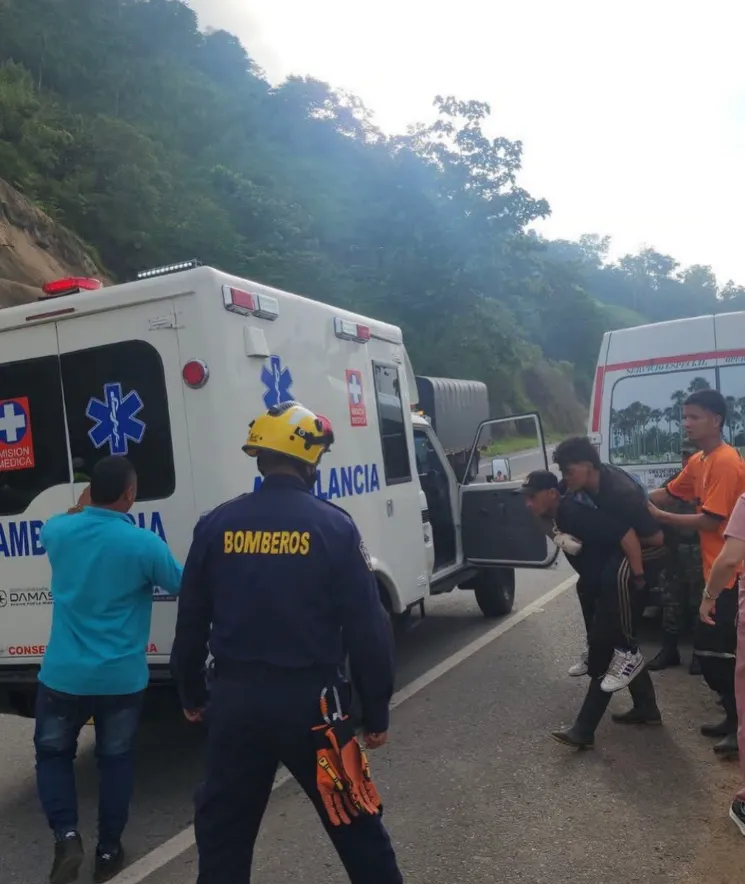
On December 14, 2025, the kind of trip that was supposed to end with sleepy laughter and sunburned stories ended with sirens and silence on a mountain road in Remedios, Antioquia.
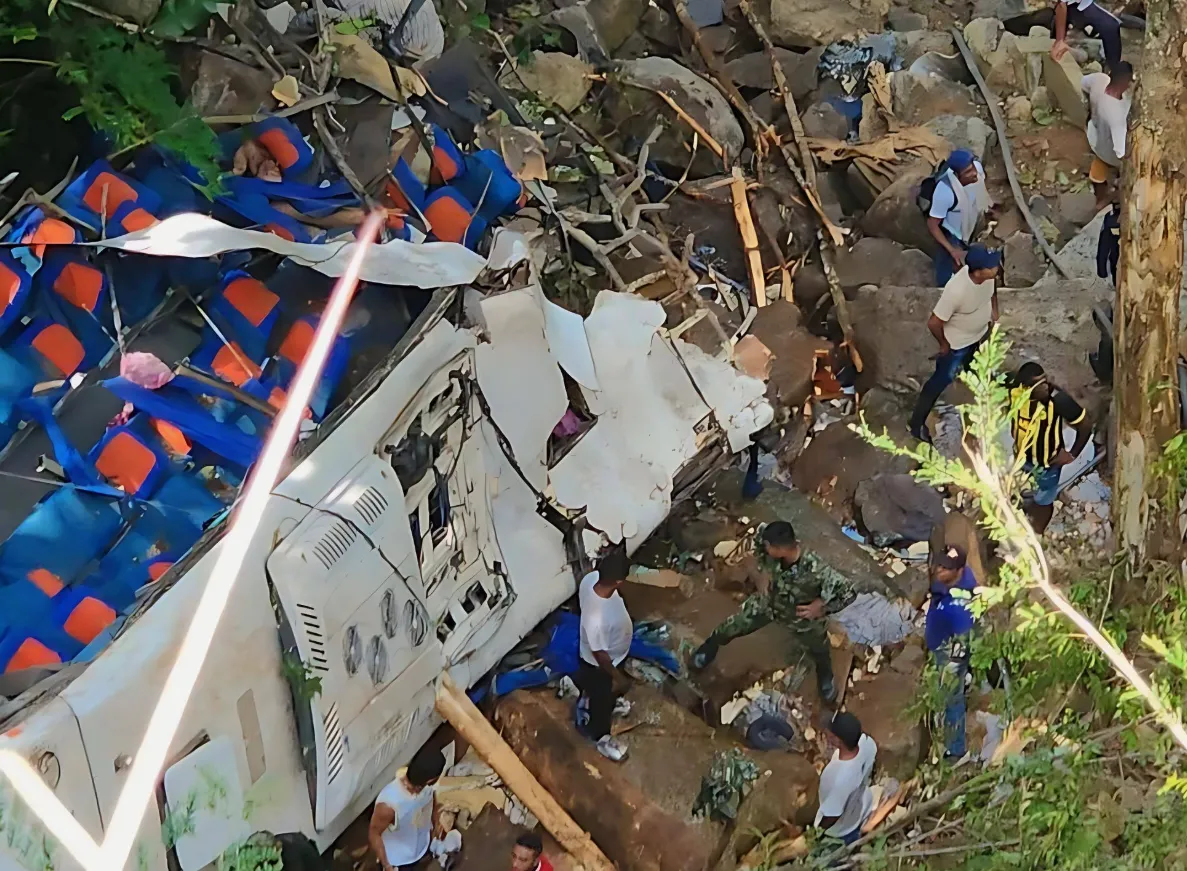
A bus carrying students returning from a graduation celebration on Colombia’s Caribbean coast overturned and plunged off the road, and in the space of one violent moment, a whole community’s “after this” disappeared.
Sixteen young people were killed.
The driver was killed too, bringing the total number of deaths to seventeen.

Twenty other passengers survived with injuries, and even that word—survived—felt complicated, because surviving a crash like that is not a clean ending, it is a long road that begins with shock and continues with memory.
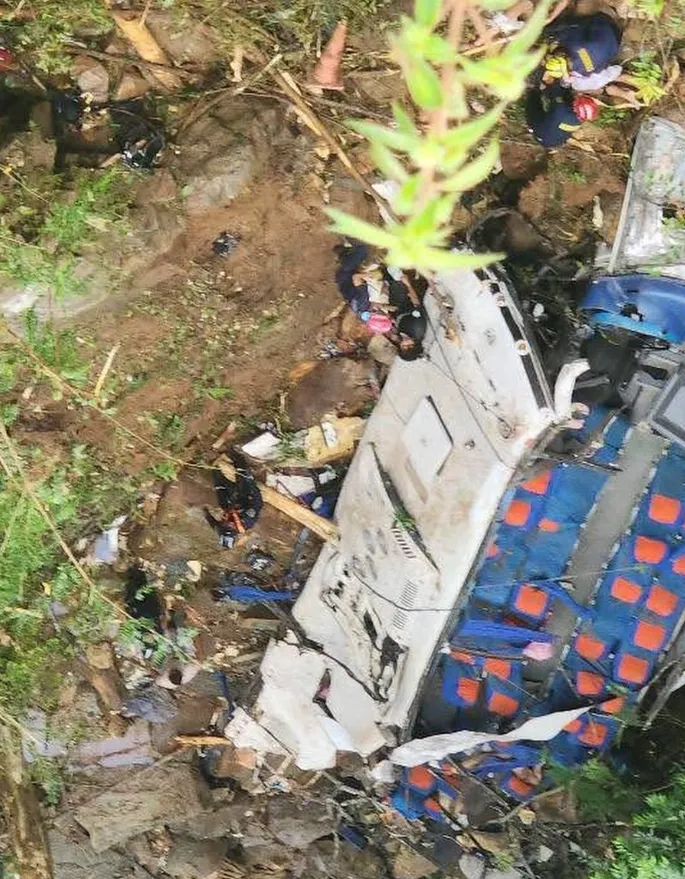
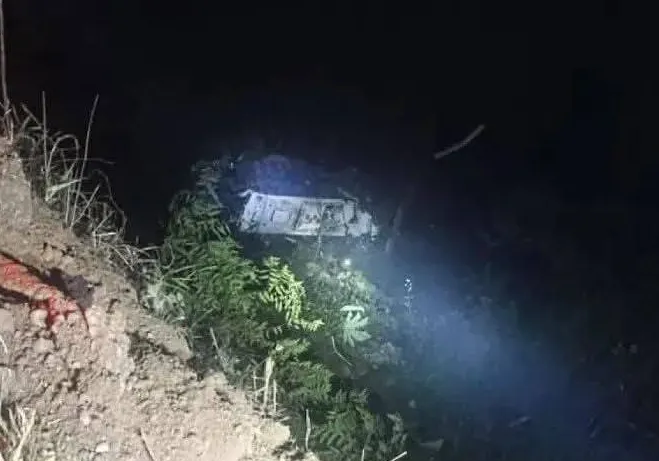
Reporting placed the crash around the early morning hours, near the El Chispero sector on the road connecting Remedios and Zaragoza, and described the bus rolling roughly 80 meters down a ravine, a detail that is both clinical and unbearable when you try to imagine what it means for the people inside.
The bus had been returning from Tolú in the department of Sucre, where the students had gone to celebrate graduation, a last bright chapter written together before everyone scattered into different versions of adulthood.
And the cruelest part of tragedies like this is not only the violence of the moment, but the way the moment reaches backward to rewrite what came before it.
Because when people hear “graduation trip,” they picture joy so easily.
They picture beach photos, hair still damp, faces lit by the small thrill of being young and almost-free.
They picture inside jokes shared in the back rows, earbuds passed between friends, the kind of laughter that comes out louder when you know tomorrow is waiting and you aren’t afraid of it yet.
They picture a return ride that is long but safe, the kind of long that turns into napping, into soft conversations, into that drifting state where the bus feels like a moving room carrying everyone home.
No one pictures a ravine.
No one packs a bag thinking they will not unpack it again.
No one takes a final group photo thinking it might become the last one.
But on that road in Antioquia, “going home” became something else, something that broke the meaning of ordinary words.
Among the young lives lost was Susana Arango.
Susana was only sixteen years old, which is an age that doesn’t feel like a number as much as it feels like a sunrise, because sixteen is still full of beginnings that haven’t even learned how to be afraid.
Sixteen is the age of plans you can hold in both hands, light and fragile, and still believe the world will make room for them.
Sixteen is the age where your future feels wide enough to run in.

Sixteen is the age where your dreams are not yet worn down by disappointment, because you haven’t lived long enough to collect too many reasons to stop believing.
Susana’s life, by every description shared in the wake of the crash, was filled with that kind of fresh hope, the hope that doesn’t sound dramatic, the hope that simply shows up in the way you talk about next year, and the year after that, and the person you’re going to become.
She stood at the threshold of new beginnings alongside classmates who were also standing there, also balanced on the edge of a new chapter, also unaware of how quickly life can change the subject.
And that is what makes a tragedy like this feel so sharp.
Because it wasn’t only Susana who was lost.
It was the Susana she was going to be.
It was the Susana who would have laughed at her own awkward first job, who would have rolled her eyes at old photos and then held them close anyway.
It was the Susana who would have discovered what she loved, and what she refused, and what she could survive.
It was the Susana who would have grown older and learned how to carry her own heart carefully.
Instead, her name became part of a list that no family should ever have to hear.
In the hours after the crash, life in places connected to those students changed shape.
Morning routines stopped halfway through.
Phones were clutched too tightly.
People refreshed the same pages again and again, chasing updates that never felt like enough, because no update can tell you what you actually need to know, which is whether your child is alive.
In a crisis, time becomes cruel in a very particular way.
Minutes stretch out until they feel like an entire day, and then suddenly, when the truth arrives, everything moves too fast, and you can’t catch your breath as the details pile up.

The mind tries to bargain.
Maybe it was the wrong bus.
Maybe the numbers are exaggerated.
Maybe there is a mistake in the list.
Maybe the injured include the one you love, and maybe “injured” is still a door that leads back to them.
But then confirmations come.
And the bargaining collapses.
And the world becomes a place where you must learn to live with a hole that has no bottom.
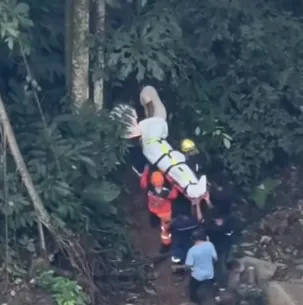
Reports described how survivors and emergency responders moved through darkness and distance, how the injured were taken to hospitals, how investigations began, because after the first wave of shock, the world always tries to understand cause, even though cause can’t undo consequence.

Some coverage mentioned a possible “microsleep” as a factor being considered, a brief lapse in consciousness that can happen behind the wheel, but even when you put a word to it, it still feels impossible that something so small could produce something so enormous.
People want a reason because reason is a rope, and grief feels like falling.
Families want a reason because without one, tragedy feels random, and randomness is terrifying.
Communities want a reason because if they can name the danger, they can believe they can prevent it next time, and prevention is the only comfort that sometimes makes sense.
But in the first days after the crash, reason was not what filled the air.
Names did.
Faces did.
Photographs did.
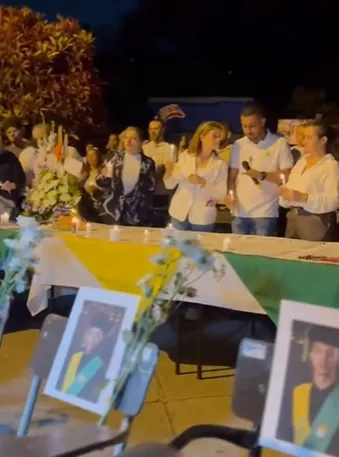
In Bello, where reporting identified many of the students as connected to the Liceo Antioqueño, grief took the shape of vigils and candles and desks that suddenly looked like shrines, because a school is where a community stores its young future, and when that future is taken, the building itself seems to mourn.
Candlelight is such a small thing.
A flame is fragile.
A breath can disturb it.
And yet people gather with candles anyway, because when grief is too big, the body reaches for something it can hold.
A candle is something you can carry in your hand when your heart feels too heavy to carry in your chest.
A candle is a way of saying, “We are here,” when words break in your mouth.
A candle is a way of refusing to let the dark be the only thing that shows up.
In moments like that, a community becomes a single body.
People stand shoulder to shoulder, even if they don’t know one another well, because tragedy rearranges strangers into family.
Someone cries openly, and someone else offers a hand, because it is impossible to keep your hands to yourself when you see that kind of pain.
Someone reads names aloud, and each name lands like a bell.
Each name is a life, not a number, not an abstract “victim,” but someone who had a favorite song, someone who had an unfinished conversation, someone who had a place at a table that will now remain empty.
Susana’s name would have been spoken with that same careful reverence.
And the people who loved her would have felt the sound of it differently than anyone else, because when the name belongs to your child, your friend, your classmate, it doesn’t just enter your ears, it hits your entire body.
If Susana had been like most sixteen-year-olds, she probably believed adulthood was going to begin in a dramatic way, with a big moment, a big decision, a big leap.
But adulthood often begins in quieter steps.
It begins with applications and forms and schedules and small responsibilities that accumulate until you realize you are no longer a kid.
It begins with new habits and new freedoms and the first time you look around and understand that your life is now yours to build.
And graduation is the symbolic doorway to all of that.
That is why graduation trips feel so important.
They are not only fun.
They are a ritual.
They are a last exhale of childhood, a last “we” before life becomes “me” more often than not.
That is what those students thought they were doing.
They thought they were collecting a memory to carry into the next phase, a bright thread they could pull later when life became hard.
Instead, the memory became a wound.
And for the injured survivors, that wound will speak in different ways.
For some, it will be physical pain that shows up at random times, long after the bruises fade, long after the casts come off.
For others, it will be the way they wake in the night, heart racing, because the mind is replaying what it can’t file away.
For others, it will be survivor’s guilt, that relentless question that arrives with no mercy: “Why not me.”
And for many, it will be the simplest, most brutal truth of trauma, which is that you can go on living and still feel like part of you stayed in that ravine.
In the aftermath, officials spoke, as they always do, because leadership is expected to offer language when ordinary people have none.
Statements of condolence arrived, and they were sincere, and still they could not reach the place where the pain was living.
Because condolence is a bridge made of words, and sometimes the river of grief is too wide.
But words still matter.
They matter because they are a form of witness.
They matter because they tell the families, “We saw this, and we will not pretend it didn’t happen.”
They matter because the opposite of grief is not happiness, the opposite of grief is indifference, and these families deserved anything but indifference.
And Susana deserved anything but being forgotten.
That is the real fear after a tragedy like this.
Not just that someone died, but that the world will move on too quickly.
That the headlines will change.
That the algorithm will refresh.
That other news will arrive and push your pain down the feed.
Meanwhile, you will still be waking up in a house that feels wrong.
You will still be reaching for a phone to text your child before remembering there is no one to answer.
You will still be hearing laughter in your head and then realizing the room is quiet.
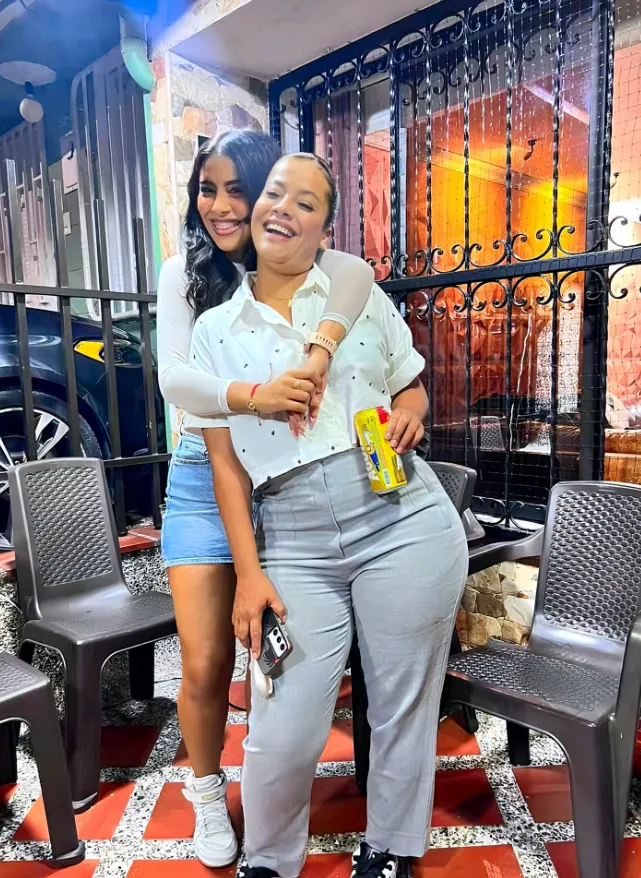
You will still be staring at the same backpack, the same shoes, the same small objects that suddenly look like relics.
In grief, ordinary objects become sacred.
A hair tie becomes unbearable.
A notebook becomes a treasure.
A half-used perfume bottle becomes proof that someone was here, that they were real, that they took up space and breathed air and belonged to this world.
Susana’s family will have objects like that.
And every object will be both comfort and torment, because it will contain her presence and also her absence.
When people say, “She will be remembered for her youth and her promise,” they are trying to say something very specific.
They are trying to say that Susana was more than the moment she was taken.
They are trying to say that her life, though short, held light.
They are trying to say that she mattered, and that her presence changed other people’s lives in small ways that still count.
A smile that made someone’s hard day softer.
A conversation that made someone feel less alone.
A friendship that helped someone survive school, survive teenage years, survive becoming themselves.
And if you were one of the people who knew Susana, you would have your own version of that light.
You would have a moment that belonged only to the two of you, a memory that now feels like a fragile glass you must carry carefully.
Because memories are all you get when someone is gone.
And yet memories are also what keep them with you.
In the days after December 14, 2025, the people in Antioquia did what humans have always done after tragedy.

They gathered.
They lit candles.
They shared photos.
They told stories.
They said names again and again, not because repetition makes it hurt less, but because repetition makes it real, and reality is the only place where love can still meet the person who is gone.
They also asked questions, because questions are what we do when the world stops making sense.
They asked about safety.
They asked about oversight.
They asked about why a joyful trip became a funeral.
And under every question was the same hidden prayer: “Please, let this never happen again.”
But even if the world answers those questions someday, the families will still have to carry what cannot be fixed.
They will have to learn how to move through birthdays that don’t feel like birthdays.
They will have to learn how to sit through holidays that now contain a missing chair.
They will have to learn how to hear songs that used to make them smile, and now make them cry in the car with the windows up.

They will have to learn how to live in a world that kept turning when their world stopped.
And in that long, uneven process of grief, Susana’s name will become a kind of compass.
It will point toward what mattered.
It will point toward love.
It will point toward the truth that a life does not need to be long to be meaningful.
It will point toward the promise she carried, the promise that now has to be carried by the people who remain.
Because when a young person dies, the community inherits a responsibility.
The responsibility to remember them as more than a tragedy.
The responsibility to speak their name with gentleness.
The responsibility to let their story soften hearts instead of hardening them.
The responsibility to protect other young lives with the seriousness they deserve.
Susana Arango was sixteen.
She was at the threshold of new beginnings.
And even though her time was brief, the imprint she left on the people who loved her will not be brief at all.
Because love has a strange endurance.

It survives the unbearable.
It persists after the last goodbye.
It shows up in the quiet moments when grief is not dramatic, but constant, like weather.
It shows up when someone says, “Do you remember Susana,” and the room grows still, and for a moment, she is there again, not in pain, not in tragedy, but in memory, in light, in the part of her life that the accident cannot take away.
December 14, 2025 will remain a date that hurts to read.
But Susana’s name will remain, too.
And as long as her name is spoken with love, she will not vanish into statistics.
She will stay where she has always belonged.
In the hearts of her family.
In the stories of her friends.
In the memory of a community that will never forget the class that didn’t come home.
Saying Goodbye to Christina, Three Days Before Christmas.5819

We’re saying goodbye to Christina this morning.
Three days before Christmas.
Three days before her three-year-old son will wake up with that uncontrollable, breathless excitement only toddlers know, tearing into wrapping paper, shouting about toys, believing without question that magic is real.
Christina won’t be there to see Constantine jump for joy.
And that truth still feels impossible to hold.
I keep trying to understand it, and I can’t.

I feel too many emotions all at once—sadness so deep it feels physical, anger that flares without warning, confusion that circles back on itself no matter how many times I replay the facts. Six days ago, Christina returned to her Hoover home after an early morning jog, her body warm from movement, her lungs full of cold air, her mind likely already moving through the quiet checklist of the day ahead.
Minutes later, her life was gone.
She was the victim of a murder-suicide.
Those words sit heavy and wrong. They don’t fit the woman I knew. They don’t fit the life she lived. They don’t explain how something so senseless could erase someone so full of light.
I keep thinking about how unfair it all is.
How cruel.

How unnecessary.
Christina Chambers packed more life into thirty-eight years than most people manage in a lifetime.
She was the kind of person who didn’t just exist—she lived, intentionally and wholeheartedly. She loved running, not just as exercise, but as a celebration of what her body could do. She loved competition, the discipline, the challenge, the quiet pride that comes from pushing past limits. Running wasn’t just a hobby; it was part of who she was—early mornings, steady breaths, miles that cleared her mind and strengthened her spirit.
She loved her parents deeply, with a gratitude that never felt obligatory. She loved her four siblings in that layered way only siblings can—equal parts loyalty, laughter, shared history, and unconditional support. Family wasn’t something she talked about; it was something she showed up for, again and again.
And above all, she loved her son.

Constantine was her heart walking around outside her body. Every choice she made, every plan she formed, every prayer she whispered carried his name inside it. She spoke of him with joy and humility, as if motherhood wasn’t something she owned but something she had been entrusted with.
She loved baking pecan pies and Christmas sugar cookies with her mother, flour on the counters, laughter in the kitchen, traditions passed down through hands that had done this many times before. She loved the quiet joy of simple moments—the kind that don’t make headlines but build a life.
She loved life.
And she loved her Lord.
Christina Chambers lived a godly life in a way that never demanded attention. She never asked people to pray for her. Instead, she asked who she could pray for. In a world where so many seek affirmation, she sought service. Where others looked inward, she looked outward. Her faith wasn’t loud, but it was steady, sincere, and deeply lived.
I keep thinking about that.

About how rare it is.
About how easy it is to say we want to live like that—and how hard it is to actually do it.
Through the years, I’ve wondered if we should do more to Be Like Christina.
Not in grand gestures or public declarations, but in the quiet, daily choices that define who we are when no one is watching.
Don’t judge, but rather love.
Not the easy kind of love—the kind that feels natural—but the kind that takes patience, humility, and restraint. The kind that listens before speaking. The kind that leaves room for grace.

Be not spiteful, but kind.
Even when kindness costs something. Even when bitterness would feel justified. Christina had a way of choosing kindness without making it look performative. She didn’t weaponize goodness. She simply lived it.
Find a way to make others find the light.
She did that effortlessly. Not by preaching, but by example. By being someone whose presence felt safe, whose words felt thoughtful, whose actions reflected genuine care. People felt seen around her. Valued. Encouraged.
Yesterday, I visited Christina’s family during the visitation.
There is no adequate word for what I saw.
They are broken.
Not just grieving, but shattered by the kind of loss that doesn’t follow logic or fairness. The kind that leaves you asking questions no one can answer. A daughter. A sister. A mother. Taken in a way that defies understanding.
And yet—even in their brokenness—there was something else present.
Love.
Stories shared softly. Tears mixed with memories. A collective effort to hold one another upright when standing felt impossible. Grief was everywhere, but so was the unmistakable imprint of the woman they loved.
Christina’s life had shaped them.
And now, her absence does too.

I believe—truly believe—that if we all strive to Be Like Christina, we will comfort this family in ways words alone never can. We will honor her not just by remembering her, but by living differently because of her.
If we choose compassion over criticism.
If we choose kindness over cruelty.
If we choose to pray for others before asking for ourselves.
Then something good can still grow from this tragedy.
I think of Constantine.
Three years old.

Too young to understand why his mother won’t be there on Christmas morning. Too young to grasp the permanence of loss. Too young to know how deeply he was loved, how fiercely she dreamed for his future.
But one day, he will know.
He will hear stories.
He will see photos.
He will learn about a mother who ran hard, loved deeply, baked joy into holidays, and lived her faith with quiet strength. He will learn that her life mattered—that it still matters.
And maybe, in time, he will carry her light forward in ways none of us can yet imagine.

As we say goodbye to Christina today, I pray that the young woman with the word “Christ” in her name is resting at the side of Jesus. I pray that she knows how profoundly she was loved here, and how enduring her impact will be.
And as we move into the New Year—tender, shaken, uncertain—I pray that we remember her not only with sorrow, but with intention.
May we speak more gently.
May we judge less and love more.
May we look for ways to serve instead of be served.
May we ask, as Christina always did, Who can I pray for?
And may we all strive, every day, in small and meaningful ways, to Be Like Christina.