The Apartment That Went Quiet, While a Four-Year-Old Slowly Starved in the Middle of New York City.5880

The apartment sat in the middle of a city that never stops moving.
Sirens passed outside, trains rumbled underground, people hurried past on sidewalks just feet away.
Inside, a four-year-old boy was starving.

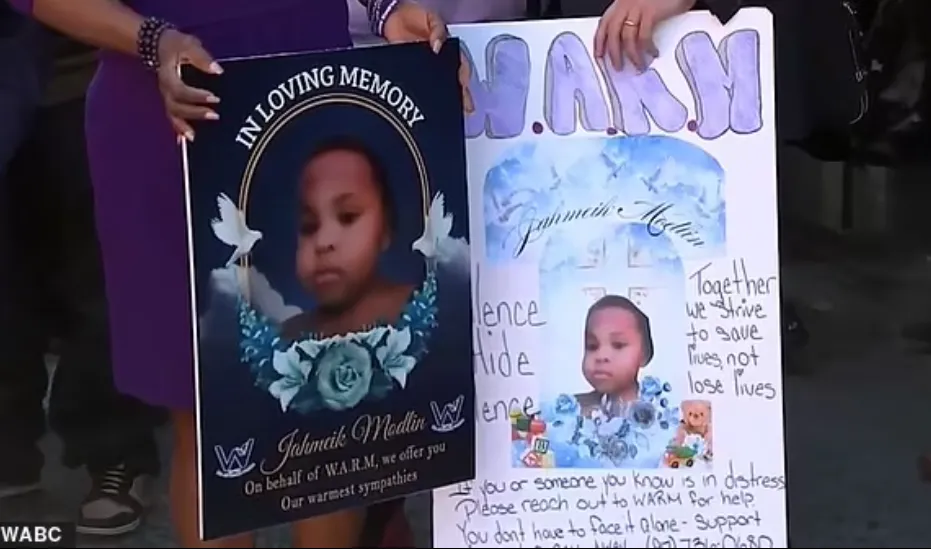
His name was Jah’Meik Modlin.
He lived in New York City, surrounded by millions of people, yet functionally invisible.
By the time anyone realized something was wrong, it was already too late.
On a night in mid-October, a call came in to 911.
At approximately 7:42 p.m., a father told the dispatcher his child was “non-responsive.”
The words were flat, stripped of urgency, as if describing a device instead of a life.
Emergency responders arrived at the apartment shortly afterward.
What they found inside was not just medical distress, but prolonged neglect made visible.
The conditions told a story long before anyone spoke.
Jah’Meik was rushed to the hospital.
Doctors quickly realized they were not dealing with sudden illness.
They were looking at the end result of starvation.
His body told the truth his life had been denied.
He had almost no body fat.
At four years old, he weighed approximately nineteen pounds.
Nineteen pounds is a number that belongs to infants.
Not to children who should be running, climbing, and asking endless questions.
Not to a boy who had already lived four years.
Doctors observed signs of severe malnutrition, dehydration, and prolonged starvation.
This was not a missed meal or a bad week.
This was systematic deprivation.
Jah’Meik died shortly after arriving at the hospital.
He did not die suddenly.
He died slowly.
The apartment he came from was later described as covered in feces.
Not messy, not cluttered, but contaminated.
An environment unfit for any human, let alone children.
Jah’Meik was not the only child living there.
Three siblings, ages five, six, and seven, were also inside the apartment.
They too showed signs of abuse and starvation.
Prosecutors would later say the children were isolated.
Not locked away by walls alone, but by neglect that cut them off from help.
They were starving together.
The parents were identified as Nytavia Ragsdale, twenty-six, and Laron Modlin, twenty-five.
Young adults by age, but legally and morally responsible for four children.
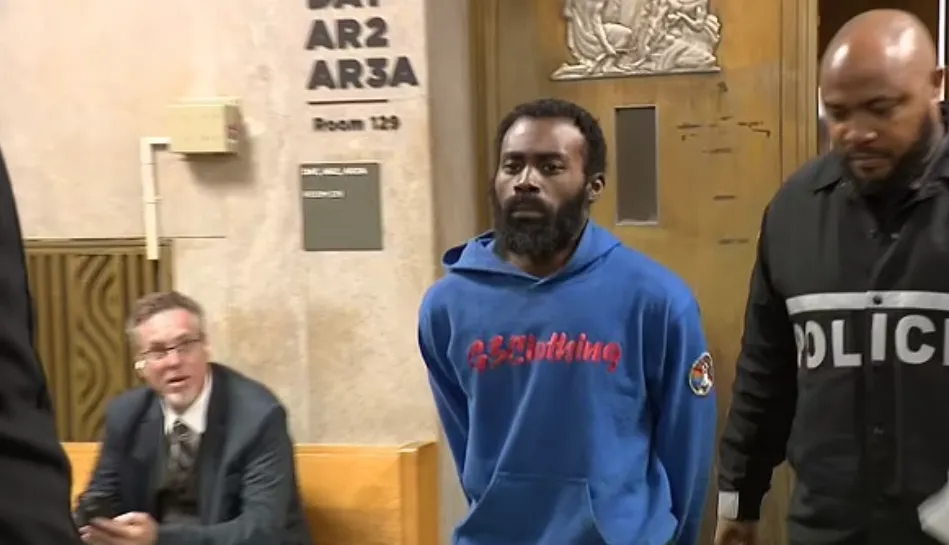
They were arrested days after Jah’Meik’s death.
On Wednesday, an indictment was announced.
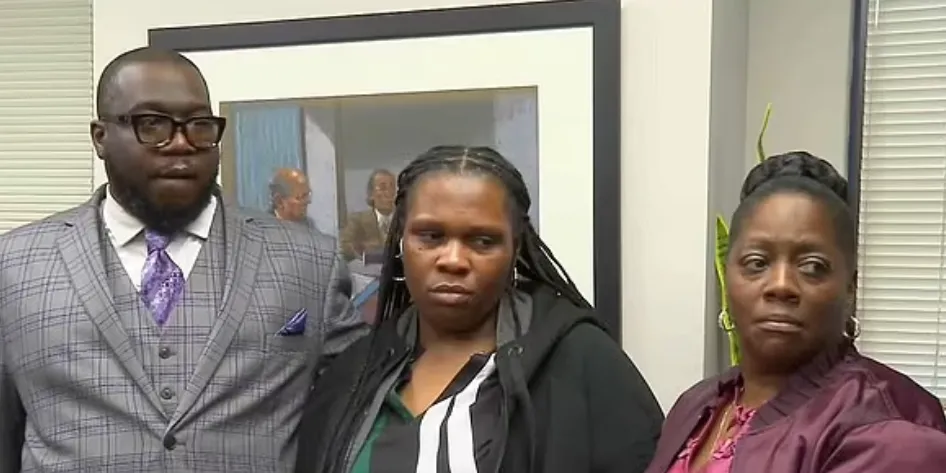
Manhattan District Attorney Alvin Bragg stood before the city with measured words.
The charges were second-degree murder.
“The death of Jah’Meik Modlin, an innocent four-year-old child, is a tragedy that has scarred this city,” Bragg said.
He described a slow and painful death.
One that happened in isolation, in the heart of Harlem.
A child starving in one of the most densely populated neighborhoods in America.
That contradiction alone unsettled the city.
Proximity did not equal protection.
Prosecutors alleged extreme physical neglect.
Persistent abuse.
Depraved indifference to human life.
These are not words chosen lightly.
They reflect behavior that goes beyond failure.
They describe disregard.
Starvation does not happen overnight.
It happens meal by meal, decision by decision.
It requires time.
Time during which someone notices ribs protruding.
Time during which weakness becomes normal.
Time during which hunger cries fade into silence.

At four years old, Jah’Meik depended on adults for everything.
Food, water, safety, medical care.
He had no alternative.
Investigators believe his parents watched his condition worsen.
They did not seek help.
They did not intervene.
Meanwhile, the city outside continued its rhythm.
Buses ran on schedule.
Neighbors lived their lives feet away.
This case raised painful questions.
How does a child starve to death in New York City.
How does no one notice.

The truth is uncomfortable.
Neglect often hides behind closed doors.
And children do not know how to ask strangers for help.
The other children survived.
They were removed from the apartment and placed into care.
Their recovery will take time.
Starvation leaves marks that are not only physical.
It reshapes how the body understands food.
It reshapes how the mind understands trust.

Jah’Meik’s name is now part of court records.
Part of press releases.
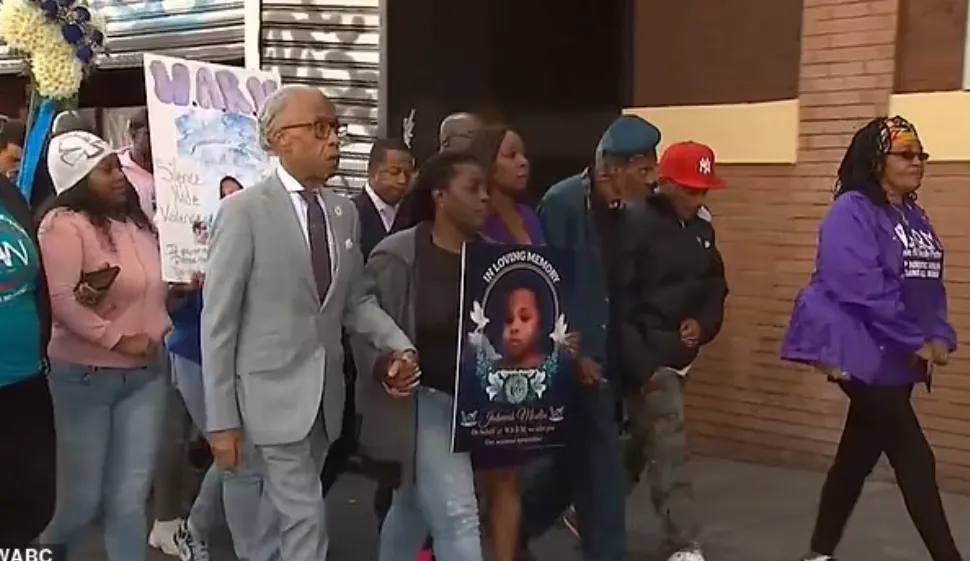
Part of the city’s conscience.
The indictment does not bring him back.
It does not restore what was taken.
It only acknowledges what happened.
Second-degree murder carries heavy consequences.
But no sentence can measure a childhood lost.
No punishment balances four years of suffering.
The apartment has likely been cleaned by now.
The feces removed.
The doors opened again.
But the story remains.
A child starved in plain sight.
A city forced to look inward.
Jah’Meik Modlin should be remembered for more than how he died.
He was a child who deserved care.
And he did not receive it.
First Flight, New Beginning: A Tiny Soul’s Journey.590

He peeked over the seat, his little nose twitching, eyes wide and alert, as if trying to make sense of a world that had suddenly become bigger, louder, and stranger. A tiny paw rested lightly on my arm, seeking reassurance, connection. A little nervous, a little curious—but mostly, brimming with love. It was his first flight. The hum of engines, the pressurized cabin, the sea of unfamiliar faces and noises—it would have been overwhelming for anyone. But there he was, trusting. Trusting that everything would be okay, trusting that he wasn’t alone.
I could feel his heartbeat through the fur, steady but fast, a rhythm of excitement and apprehension intertwined. He didn’t know exactly where we were going, didn’t understand the mechanics of flight or the logistics of a journey that humans made dozens of times a year. What he did understand was simpler, purer: the presence of someone who cared, someone holding his paw, guiding him forward.

Maybe he was leaving behind a life that had been rough, full of uncertainty, hardship, or loss. Maybe he had spent days, weeks, or even months in a world that had not been kind. Maybe he had been passed from hand to hand, waiting for a moment like this—a moment of calm, of safety, of love. And now, here he was, on a plane, looking up at me with eyes that seemed to say, I’m ready.
Through the small window, sunlight spilled into the cabin, casting golden streaks across his soft fur. I watched as he leaned slightly forward, trying to peek out, trying to understand what was happening, trying to trust this new experience. There was fear in his gaze, yes, but also something more powerful: hope. Hope that the world could be different, that the next step could bring joy, companionship, and a place to call home.
As the plane began its ascent, I felt a shift. That look he gave me—nervous, tender, wide-eyed—was no longer just fear. It was the look of change. Of possibility. Of a beautiful new beginning. Every little wiggle of his paw against mine, every soft nudge of his head, every trusting blink spoke volumes. It was a silent acknowledgment that this flight wasn’t just about miles traveled, it was about leaving the past behind and stepping into a future that promised love, care, and belonging.
I smiled at him, and he returned it in the only way he could—through his gaze, so full of trust, so full of life. I realized then that this was more than a journey from one place to another. This was the start of everything: the start of healing, the start of companionship, the start of a story that would be filled with belly rubs, cozy blankets, quiet nights, and endless afternoons of shared joy.
By the time the seatbelt signs flicked off and the plane leveled out, he had settled a little, leaning against me, his warmth a reminder that he had chosen to believe, to hope, to trust. And as I held his paw a little tighter, I understood: some flights don’t just carry passengers—they carry beginnings. And this little soul, full of courage, love, and hope, was soaring straight into a life that had been waiting just for him.