4Thirteen Heartbeats from Heaven: The Tragic End of Millena Brandão.3950

The camera loved her.
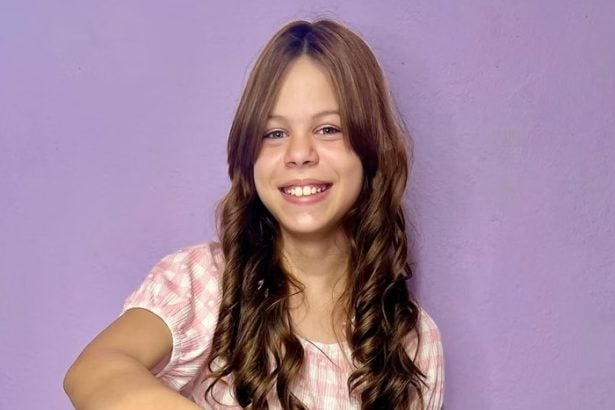
Whenever the lens found Millena Brandão, it captured more than just a face — it captured light.
At only eleven years old, she already carried the confidence of a star, the poise of a seasoned actress, and a spark that made people stop and look.
Born in Brazil with big dreams and a smile that could disarm anyone, Millena was the kind of child who made everyone believe she was destined for something extraordinary. She didn’t just play roles — she lived them. From school plays to television studios, her energy was infectious, her presence magnetic.
But just as her young career began to blossom, life — in one cruel, unfathomable twist — wrote her final script.
A Star in the Making
Millena’s journey began in 2020, when she was only six years old. While most children her age were still learning to tie their shoes and read bedtime stories, Millena was already posing in front of cameras with a natural ease that amazed photographers. Her radiant personality and effortless beauty quickly caught attention, and modeling offers began pouring in.
By 2023, her talent had taken her from photo shoots to television screens. She appeared in popular SBT productions like A Infância de Romeu e Julieta and A Caverna Encantada
— beloved Brazilian series that showcased her charm and acting range.
Each performance was a revelation. Directors described her as “focused beyond her years,” while co-stars called her “the little sunshine” on set.
Then came the biggest leap of all — a role in Netflix’s hit series Sintonia. For many child actors, that’s the kind of moment that defines a lifetime. But for Millena, it was only the beginning.
Fans adored her. Brands sought her. Parents saw in her a role model — humble, kind, grounded despite success. On social media, she shared glimpses of her life: playful videos, behind-the-scenes smiles, loving snapshots with her parents and younger brother. She wasn’t just building a career; she was building a legacy.
And then, in late April 2025, the story took a sudden, devastating turn.

The First Signs
It began like so many childhood illnesses — quietly, almost unnoticeably.
A headache here. A bit of fatigue there. But within days, the symptoms became impossible to ignore.
Millena started experiencing severe headaches, pain in her legs, nausea, and drowsiness that made her sleep for long hours. She stopped eating, fainted repeatedly, and complained that “everything hurt.”
Her parents, frightened but hopeful, took her to a local clinic. The doctors there examined her briefly and concluded she had dengue fever, a common illness in Brazil. They didn’t order blood work or imaging — no tests to confirm the diagnosis, no scans to rule out anything more serious.
They sent her home.
As the days passed, her condition worsened. Her mother would later describe those nights as “a living nightmare,” watching her daughter fade in front of her eyes — weaker, paler, less responsive with every passing hour.
When they returned to the clinic again, desperate for answers, the response was almost identical: more medication for dengue, more reassurance, no tests.
Millena was slipping away, and no one could explain why.
The Breaking Point
By April 30, everything changed.
Her parents rushed her to Hospital Geral de Grajaú, one of São Paulo’s major public hospitals, as her body began to fail. Within minutes of arriving, she suffered her
first cardiac arrest. Doctors managed to revive her, but her pulse was weak.
Then came another.
And another.
In total, 13 cardiac arrests in a matter of days. Her small body fought harder than anyone could have imagined, clinging to life even as her organs began to shut down.
“She was a warrior,” one nurse later said. “Every time we thought it was over, her heart would start again. She just didn’t want to let go.”
But no amount of fight could overcome what no one understood.
A CT scan finally provided a clue — a 5-centimeter mass in her brain. It was large, dangerous, and growing. But the cause remained a mystery.
Was it a tumor
?
A clot?
An infection?
Doctors couldn’t say for sure.
They discovered a urinary tract infection, but no dengue. The earlier diagnosis — and the days lost treating it — now loomed like a shadow over the case.
By the time the truth began to emerge, it was already too late.

Thirteen Heartbeats Between Life and Death
In the hospital’s intensive care unit, time became meaningless. Machines hummed and beeped. Nurses whispered. Parents prayed.
Each of those thirteen cardiac arrests marked another desperate attempt to bring her back, another flash of hope followed by heartbreak.
Millena never regained consciousness.
Her parents, exhausted and shattered, spent those final hours at her bedside — holding her hand, stroking her hair, whispering words of love she could no longer hear.
On May 2, doctors declared her brain-dead.
The machines kept her alive, but the child who had once filled rooms with laughter was gone.
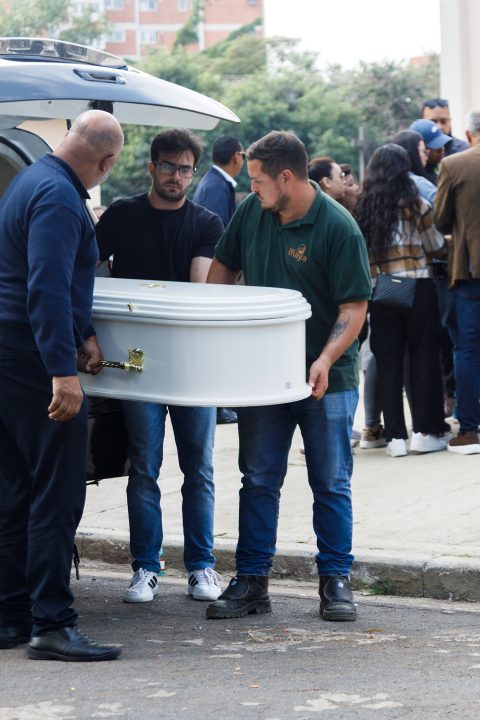
Faced with the most impossible decision a parent can make, they chose mercy over prolonging her suffering. They withdrew life support.
And in that quiet hospital room, the curtain fell on a life that had only just begun.
The Questions That Remain
The tragedy of Millena Brandão’s death didn’t end with her passing.
In fact, it was only the beginning of a larger reckoning.
How could a healthy, vibrant eleven-year-old go from filming a Netflix series to dying within two weeks?
Why were no lab tests or scans done during her first two clinic visits?
Could earlier intervention have saved her life?
These questions now hang heavy over São Paulo’s medical community and the Ministry of Health, as investigations into possible medical negligence continue.
The public reaction was swift and emotional. On social media, fans flooded her pages with tributes and outrage. “How could they send her home twice?” one user wrote. “She deserved better.”
Her story has become a symbol — not just of lost youth, but of the cracks within a healthcare system that often overlooks the vulnerable.
As of this writing, authorities have yet to release a definitive conclusion about what caused the brain mass. Some speculate it may have been an undiagnosed tumor, while others point to inflammation from an infection. But no answer will ever be enough. Not for her parents. Not for the millions who watched her shine.
The Legacy She Left Behind
In the weeks following her death, Brazil mourned collectively.
Television networks aired tributes. Cast members from Sintonia posted emotional messages.
SBT released a statement calling Millena “a radiant soul whose talent and warmth touched everyone she met.”
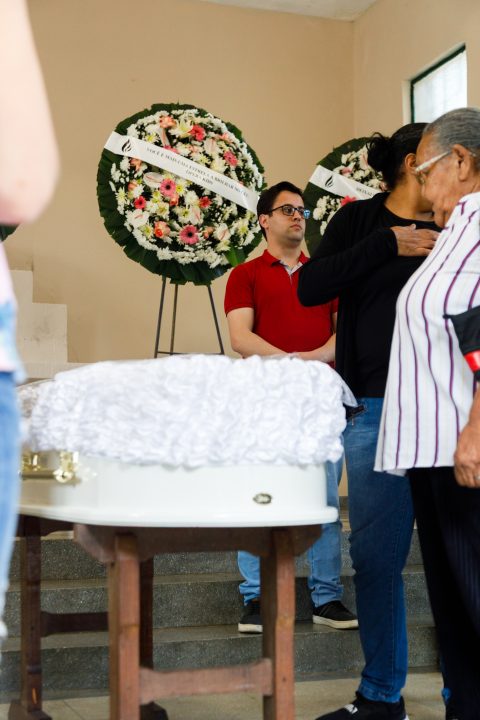
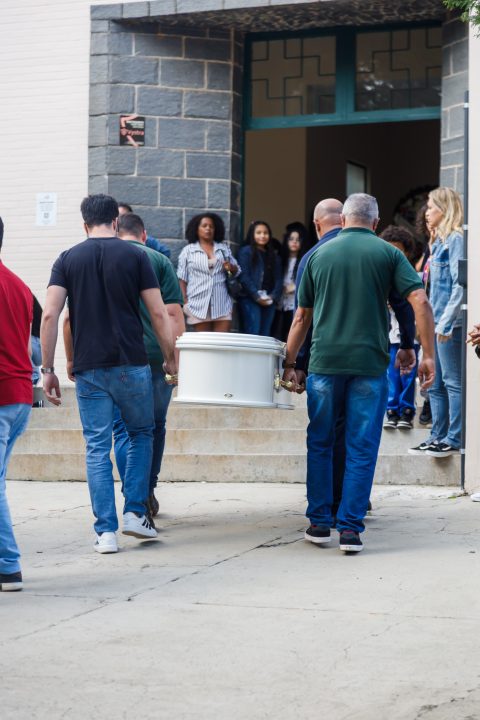
At her funeral, friends from the film industry gathered among her schoolmates — a surreal mingling of two worlds that had defined her short life. The line of mourners stretched down the street. Some carried flowers. Others carried photos. Everyone carried grief.
But even amid the sorrow, there was something else — something stronger.
Love.
A love that refused to fade, even as her physical presence was gone.
Her parents have since announced the creation of the Millena Brandão Foundation, dedicated to raising awareness about pediatric neurological illnesses and improving diagnostic standards in Brazil’s public hospitals. Their goal is simple but powerful: to make sure no other child slips through the cracks.
“Millena’s story will save lives,” her mother said softly. “That’s how she’ll keep shining.”
/i.s3.glbimg.com/v1/AUTH_b0f0e84207c948ab8b8777be5a6a4395/internal_photos/bs/2025/u/x/DDzvyLRDG3F8Ba9RQfcw/millena-brandaoq21.jpg)
Beyond the Lights
Today, if you scroll through her old social media posts, it’s hard not to feel the ache of what was lost.
There she is — twirling in a pink dress, hugging her dog, practicing her lines with that same sparkle in her eyes.
The captions are filled with emojis, dreams, and the pure joy of being eleven.
Her followers — now numbering in the hundreds of thousands — still leave comments daily.
“Your light never fades.”
“You’ll always be our little star.”
“Shine in heaven, Millena.”
For them, and for all who knew her, she is not gone. She has simply stepped onto another stage — one far beyond cameras and scripts, one where no pain can reach her.
The Girl Who Wouldn’t Stop Shining
In a way, Millena’s story is both tragedy and testament.
It’s the tragedy of a world that sometimes fails to see danger until it’s too late — and the testament of a girl whose light proved stronger than darkness.
The unanswered questions may linger for years, but one truth remains unshakable: Millena Brandão lived a life of purpose.
She brought joy, laughter, and inspiration to millions. She reminded people that art, innocence, and courage can coexist even in a child’s heart.
And perhaps, somewhere above the noise and sorrow, she is still performing — still smiling that radiant smile, still reminding us to live brightly, love deeply, and never take a single heartbeat for granted.
Because for those who loved her, the show will never truly end.
It just continues — in memory, in purpose, in every child she inspires next.
Saying Goodbye to Christina, Three Days Before Christmas.5819


