She Asked to Be Heard — Instead, the Internet Watched Her Die.5743

The story of Riziki Ilenre did not begin with tragedy, but it ended in a way that has shaken countless people who witnessed it unfold in real time.
Known to many as “Rizzi,” she was a young woman who showed up online the same way millions of others do every day, searching for connection, conversation, and a sense of belonging in a digital world that promises community but often delivers cruelty.
On December 12, that search ended in the most devastating way imaginable.

Police in Montgomery, Alabama are now investigating the death of Riziki Ilenre, who took her own life while on a TikTok livestream, a moment that no one who saw it will ever forget.
What happened did not occur in isolation.
In the days following her death, multiple videos surfaced showing Rizzi being bullied by other creators, some of whom reportedly told her to take her own life, words that linger online long after they are spoken.
These were not private messages hidden in the shadows.
They were public.
They were visible.

They were allowed to spread in front of audiences who watched, commented, laughed, or scrolled past without intervening.
Before her final moments, Rizzi appeared on a livestream panel with members of what is known as the “messytok” community, a corner of social media often driven by conflict, callouts, and performative outrage.
What should have been a conversation instead became a stage where pressure, humiliation, and emotional exhaustion collided.
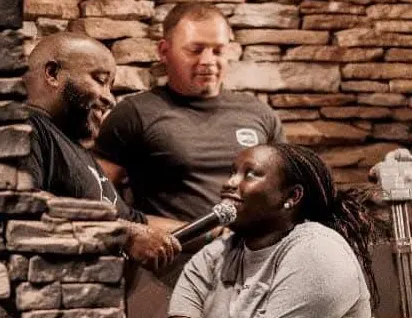
As the livestream continued, Rizzi named the individuals she said had been bullying her, calling them out not in anger, but in desperation, as if hoping that being heard might finally bring relief.
Those names now echo with a weight they were never meant to carry.
Because shortly after, the livestream took a turn that no content warning could prepare anyone for.
The digital space that had surrounded her suddenly became silent, frozen in shock, unable to undo what had just happened.
For many viewers, the trauma did not end when the livestream did.
It followed them into their feeds, their thoughts, their sleep.
And for Rizzi’s loved ones, it became a permanent wound that no apology, no deleted video, and no investigation can fully heal.
What makes this tragedy even harder to process is what happened after.
Videos began circulating of creators mocking and joking about her death, treating it as content rather than a loss, as if a human life were nothing more than a trending topic.
Some went even further, reportedly meeting with a man Rizzi had previously accused of assault, turning her pain into spectacle and controversy rather than reflection and accountability.
For those who witnessed this behavior, the response was not just sadness, but deep discomfort.
Because it raised a haunting question.
How did cruelty become entertainment.
How did empathy become optional.

And how did so many people feel comfortable contributing to a culture that pushes someone closer to the edge, then laughs when they fall.
Social media often claims to give everyone a voice.
But voices can be weaponized.
Algorithms can amplify harm.
And when accountability disappears, the consequences become devastatingly real.
Rizzi’s death is not just a personal tragedy.
It is a mirror held up to the darkest corners of online culture, where bullying is excused as “drama,” harassment is dismissed as “clout,” and real human suffering is reduced to engagement metrics.
Behind every screen is a person.
Behind every username is a life with history, pain, hope, and breaking points that outsiders rarely see.
Those who knew Rizzi describe someone who was sensitive, expressive, and deeply affected by how others treated her, even when she tried to appear strong.
Like many people battling quiet storms, she carried far more than she ever showed.
And like many others, she was fighting battles that were invisible to the audience watching her in real time.
It is easy, after the fact, to ask what could have been done differently.

Who should have stepped in.
Who should have spoken up.
Who should have stopped recording and started caring.
But those questions arrive too late for Rizzi.
What remains now is responsibility.

Responsibility for platforms to take online harassment seriously.
Responsibility for creators to understand the weight of their words.
Responsibility for viewers to remember that silence can be a form of participation.
And responsibility for all of us to recognize when “content” crosses the line into cruelty.
This case is still under investigation.
Authorities are working to understand the full circumstances surrounding Rizzi’s death.
But no investigation can measure the emotional toll of being bullied in front of an audience, nor can it quantify the damage caused when people are encouraged to harm themselves.
For those struggling in silence, Rizzi’s story is a painful reminder that words matter, even when spoken through a screen.
That jokes can wound.
That bullying does not end when the livestream shuts off.
And that survival often depends on someone choosing kindness at the right moment.
My heart goes out to anyone battling quiet storms, unseen by the people around them.
What unfolded online in the days surrounding Rizzi’s death was disturbing, heartbreaking, and should never have been allowed to happen.
A young woman lost her life.
A family lost a daughter.
And the internet lost an opportunity to be human.
May Riziki “Rizzi” Ilenre rest in peace.
And may her story force us to look more closely at how we treat one another, especially when we think no one is watching.
Saying Goodbye to Christina, Three Days Before Christmas.5819

We’re saying goodbye to Christina this morning.
Three days before Christmas.
Three days before her three-year-old son will wake up with that uncontrollable, breathless excitement only toddlers know, tearing into wrapping paper, shouting about toys, believing without question that magic is real.
Christina won’t be there to see Constantine jump for joy.
And that truth still feels impossible to hold.
I keep trying to understand it, and I can’t.

I feel too many emotions all at once—sadness so deep it feels physical, anger that flares without warning, confusion that circles back on itself no matter how many times I replay the facts. Six days ago, Christina returned to her Hoover home after an early morning jog, her body warm from movement, her lungs full of cold air, her mind likely already moving through the quiet checklist of the day ahead.
Minutes later, her life was gone.
She was the victim of a murder-suicide.
Those words sit heavy and wrong. They don’t fit the woman I knew. They don’t fit the life she lived. They don’t explain how something so senseless could erase someone so full of light.
I keep thinking about how unfair it all is.
How cruel.

How unnecessary.
Christina Chambers packed more life into thirty-eight years than most people manage in a lifetime.
She was the kind of person who didn’t just exist—she lived, intentionally and wholeheartedly. She loved running, not just as exercise, but as a celebration of what her body could do. She loved competition, the discipline, the challenge, the quiet pride that comes from pushing past limits. Running wasn’t just a hobby; it was part of who she was—early mornings, steady breaths, miles that cleared her mind and strengthened her spirit.
She loved her parents deeply, with a gratitude that never felt obligatory. She loved her four siblings in that layered way only siblings can—equal parts loyalty, laughter, shared history, and unconditional support. Family wasn’t something she talked about; it was something she showed up for, again and again.
And above all, she loved her son.

Constantine was her heart walking around outside her body. Every choice she made, every plan she formed, every prayer she whispered carried his name inside it. She spoke of him with joy and humility, as if motherhood wasn’t something she owned but something she had been entrusted with.
She loved baking pecan pies and Christmas sugar cookies with her mother, flour on the counters, laughter in the kitchen, traditions passed down through hands that had done this many times before. She loved the quiet joy of simple moments—the kind that don’t make headlines but build a life.
She loved life.
And she loved her Lord.
Christina Chambers lived a godly life in a way that never demanded attention. She never asked people to pray for her. Instead, she asked who she could pray for. In a world where so many seek affirmation, she sought service. Where others looked inward, she looked outward. Her faith wasn’t loud, but it was steady, sincere, and deeply lived.
I keep thinking about that.

About how rare it is.
About how easy it is to say we want to live like that—and how hard it is to actually do it.
Through the years, I’ve wondered if we should do more to Be Like Christina.
Not in grand gestures or public declarations, but in the quiet, daily choices that define who we are when no one is watching.
Don’t judge, but rather love.
Not the easy kind of love—the kind that feels natural—but the kind that takes patience, humility, and restraint. The kind that listens before speaking. The kind that leaves room for grace.

Be not spiteful, but kind.
Even when kindness costs something. Even when bitterness would feel justified. Christina had a way of choosing kindness without making it look performative. She didn’t weaponize goodness. She simply lived it.
Find a way to make others find the light.
She did that effortlessly. Not by preaching, but by example. By being someone whose presence felt safe, whose words felt thoughtful, whose actions reflected genuine care. People felt seen around her. Valued. Encouraged.
Yesterday, I visited Christina’s family during the visitation.
There is no adequate word for what I saw.
They are broken.
Not just grieving, but shattered by the kind of loss that doesn’t follow logic or fairness. The kind that leaves you asking questions no one can answer. A daughter. A sister. A mother. Taken in a way that defies understanding.
And yet—even in their brokenness—there was something else present.
Love.
Stories shared softly. Tears mixed with memories. A collective effort to hold one another upright when standing felt impossible. Grief was everywhere, but so was the unmistakable imprint of the woman they loved.
Christina’s life had shaped them.
And now, her absence does too.

I believe—truly believe—that if we all strive to Be Like Christina, we will comfort this family in ways words alone never can. We will honor her not just by remembering her, but by living differently because of her.
If we choose compassion over criticism.
If we choose kindness over cruelty.
If we choose to pray for others before asking for ourselves.
Then something good can still grow from this tragedy.
I think of Constantine.
Three years old.

Too young to understand why his mother won’t be there on Christmas morning. Too young to grasp the permanence of loss. Too young to know how deeply he was loved, how fiercely she dreamed for his future.
But one day, he will know.
He will hear stories.
He will see photos.
He will learn about a mother who ran hard, loved deeply, baked joy into holidays, and lived her faith with quiet strength. He will learn that her life mattered—that it still matters.
And maybe, in time, he will carry her light forward in ways none of us can yet imagine.

As we say goodbye to Christina today, I pray that the young woman with the word “Christ” in her name is resting at the side of Jesus. I pray that she knows how profoundly she was loved here, and how enduring her impact will be.
And as we move into the New Year—tender, shaken, uncertain—I pray that we remember her not only with sorrow, but with intention.
May we speak more gently.
May we judge less and love more.
May we look for ways to serve instead of be served.
May we ask, as Christina always did, Who can I pray for?
And may we all strive, every day, in small and meaningful ways, to Be Like Christina.