“Six Lives Lost: The Horrifying January Morning That Shattered Los Angeles”.5588

There are stories that shake a community.
There are stories that hollow out the human heart.
And then there are stories like this — stories so dark, so irreversible, so devastatingly senseless that even years later, people still struggle to speak of them without trembling.
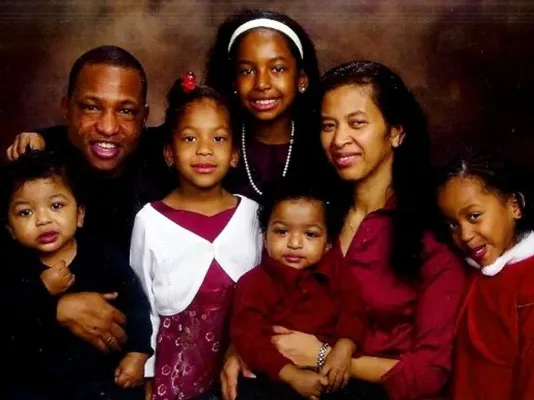
On January 27, 2009, in a quiet Los Angeles neighborhood, an entire family’s future was erased in a single morning.
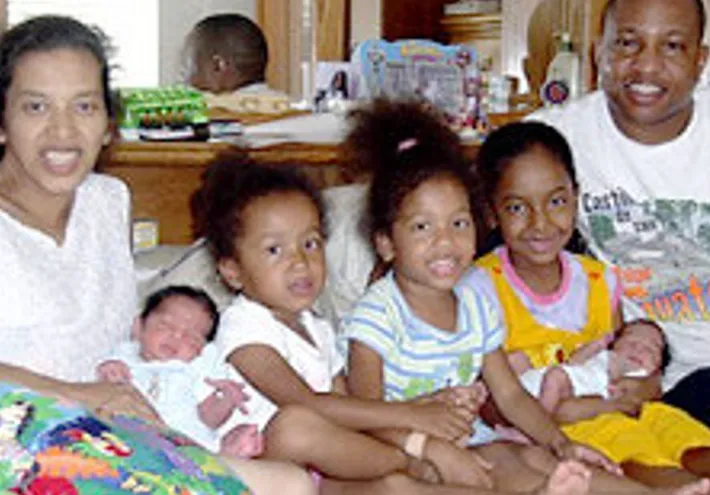
Five children — all under the age of eight.
A mother — loving, hardworking, devoted.
And a father whose despair spiraled into something unrecognizable.
Their names tell the story of a family once alive, once laughing, once planning for tomorrow.
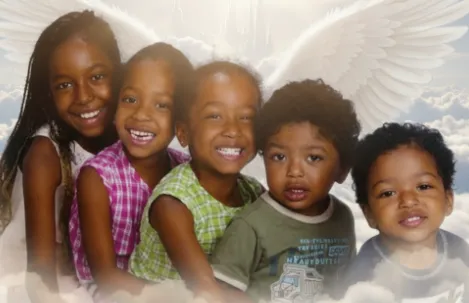
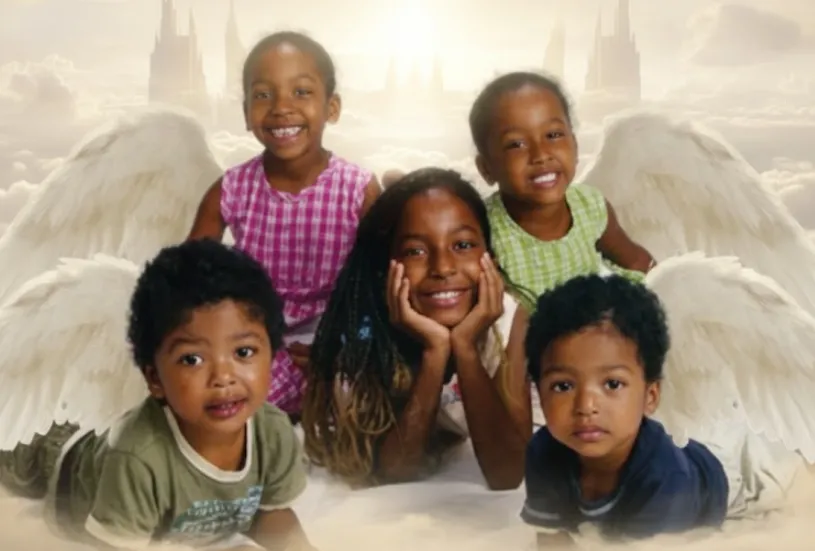
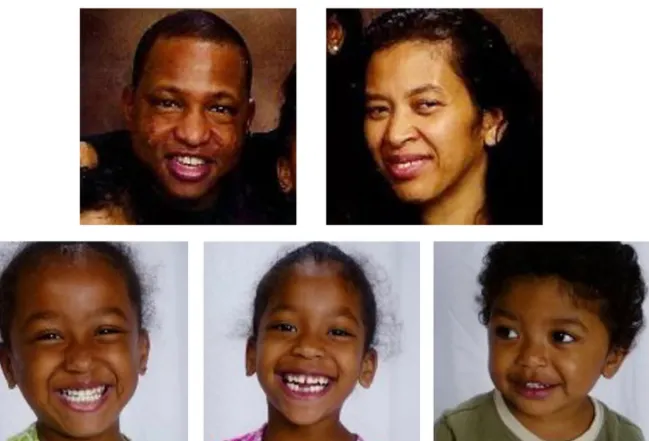
Brittney, 8.
Twins Jaszmin
and Jassely Lizbeth, 5.
And the youngest twins, Christen and Benjamin, just 2 years old.
Their mother, Ana Lupoe, 38.
All gone.
All shot in the head.
All victims of a tragedy that should never have happened.
The one who pulled the trigger was the children’s father, Ervin Lupoe.
A man who, in his final hours, faxed a long, chilling note to a local TV station and then called 911 pretending to be a man who had just discovered the murders, saying, “I just returned home and my whole family’s been shot.”
But the truth was darker.
The truth was that Ervin had planned this.
The truth was that he blamed the world — his job, his supervisors, his despair — for pushing him to the edge.
In the fax he sent before the killings, Ervin claimed he and Ana had been fired from their jobs at Kaiser Permanente Medical Center after being investigated for misrepresenting their employment to an outside agency in order to obtain childcare.
He wrote that an administrator told them on December 23:
“You should not even have bothered to come to work today — you should have blown your brains out.”
A sentence that, according to Ervin, planted something dark inside him.
Something lethal.
The couple filed a complaint, received an apology from human resources, but then — two days later — were fired anyway.
That termination, Ervin wrote, sealed their fate.
He described feeling abandoned, unsupported, and devoid of options while raising five small children.
In the letter, he asked bitterly:
“Why leave our children in someone else’s hands?”
It was a question no one wanted to hear.
A question that revealed the twisted reasoning that fueled his final decision.
A question that still haunts anyone who has read his words.
Police later clarified that although Ervin claimed Ana had agreed to the plan, there was no evidence she participated in or supported the idea.
Officers listed Ervin as the suspect.
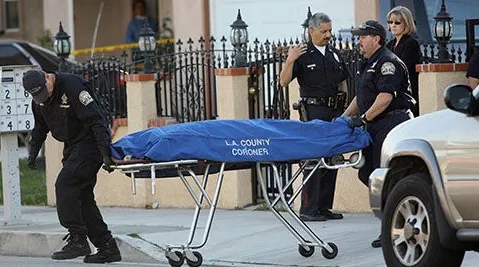
A revolver lay next to his body.
He shot Ana.
He shot all five children.
And then he shot himself.
The letter ended with a final, haunting line:
“Oh Lord, my God, is there no hope for a widow’s son?”
A cryptic question.
A desperate cry.
A sentence that captured the unraveling of a man who could no longer see beyond his own despair.
But no explanation — no matter how emotionally charged, no matter how desperate — can soften what he did.
The loss of five children is not just a tragedy.
It is a theft.
A theft of futures.
A theft of birthdays and graduations.
A theft of laughter that should still be echoing through hallways, of tiny shoes that should still be scattered by the door, of drawings that should still be taped to refrigerators.
Neighbours recalled seeing the children riding tricycles, chasing bubbles, holding their mother’s hands.
Never imagining that their lives would end inside their own home — a place that should have protected them.
The school principal later revealed that Ervin had removed three of the older children from school about a week and a half earlier, saying the family was moving to Kansas.
A lie.
A foreshadowing of the horror to come.
A silent goodbye that teachers didn’t know was a goodbye.
In the weeks after the tragedy, the community grappled with impossible questions.
How does a father reach such a breaking point?
How does despair evolve into murder?
What signs were missed?
Could someone — anyone — have intervened?
Kaiser Permanente issued a statement acknowledging that both Ervin and Ana had worked as medical technicians at the facility.
They expressed sorrow, offered condolences, and confirmed the couple had recently been under investigation for misrepresentation to obtain childcare.
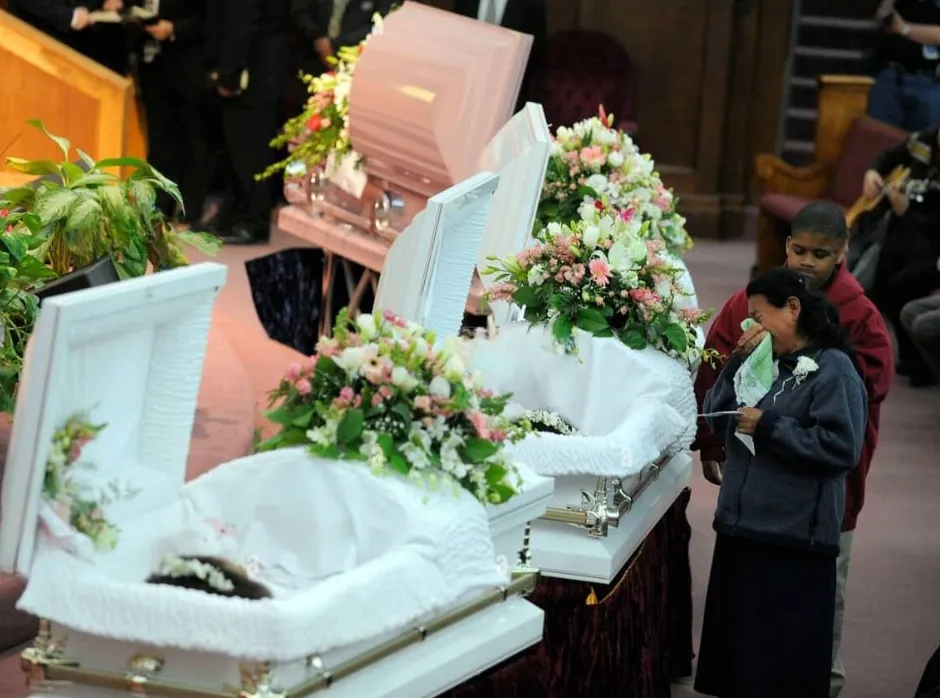
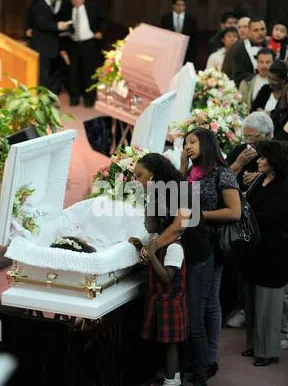
But statements, policies, and apologies mean little in the face of five small coffins.
The tragedy forced the nation to reconsider how job loss, financial stress, mental health, and systemic failures can merge into a catastrophic storm.
But even that discussion feels hollow.
Because the Lupoe children never had the chance to grow beyond the headlines.

Brittney, the oldest, already showing signs of leadership — a protector of her younger siblings.
Jaszmin and Jassely, the five-year-old twins, inseparable from birth, mirrors of each other’s laughter and mischief.
Christen and Benjamin, the toddlers, still learning to speak, still toddling through the world with soft, uncertain steps.
They never got to start second grade.
Never got to ride a bike.
Never got to celebrate another birthday.
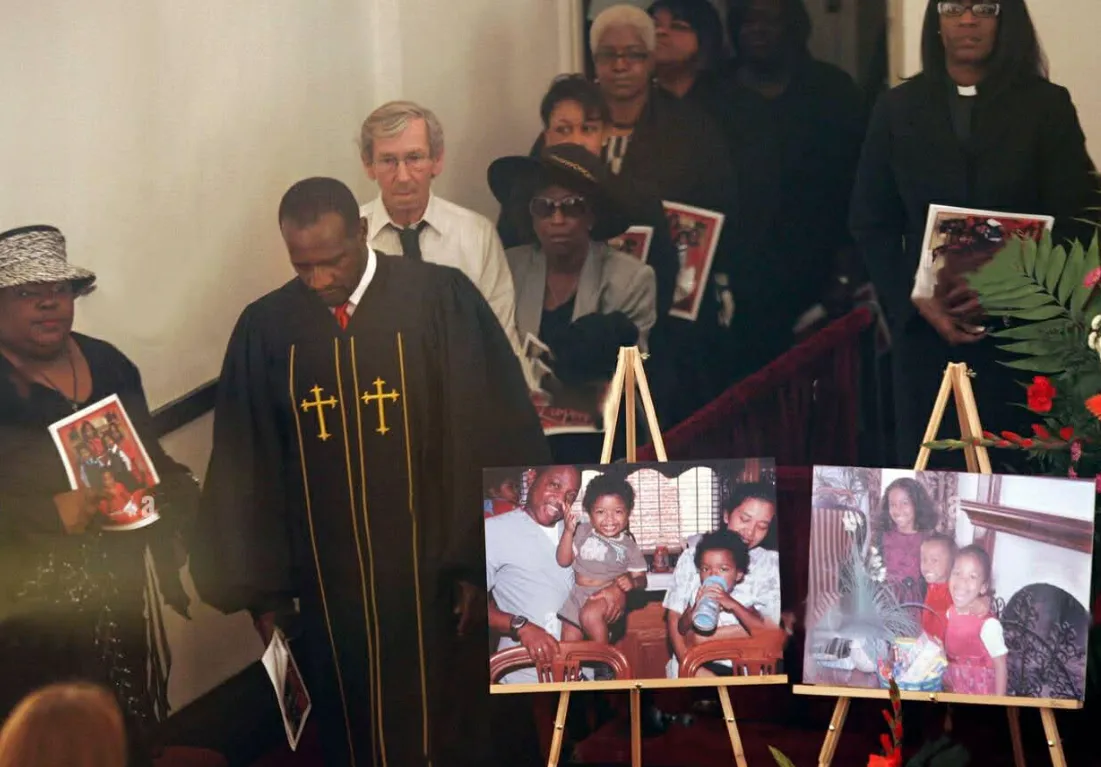
Their childhoods ended in the place where they should have been safest.
Their lives were stolen by the person they should have been able to trust the most.
And Ana — a mother, a wife, a woman who worked tirelessly for her family — was also erased by the man who promised to protect her.
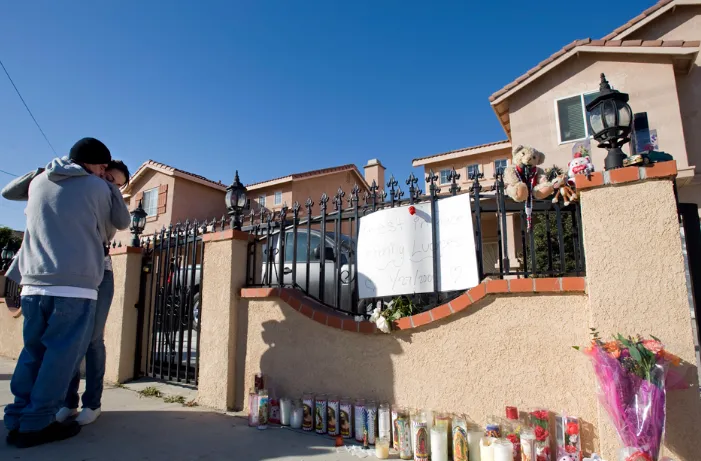
Tonight, as people revisit the Lupoe family tragedy, they remember not the fax.
Not the final gunshot.
Not the crime scene that forever changed a neighborhood.
But the children.
The mother.
The family that deserved so much more.
A tragedy like this leaves a scar on the soul.
A scar that forces us to ask ourselves how such darkness can grow unnoticed.
A scar that reminds us that desperation, untreated and unspoken, can turn catastrophic.
And a scar that calls out for the memories of six lost lives to be honored — not forgotten.
May they rest in peace.
May their names be spoken with tenderness.
And may the world learn from a tragedy that should never, ever have happened.
Saying Goodbye to Christina, Three Days Before Christmas.5819

We’re saying goodbye to Christina this morning.
Three days before Christmas.
Three days before her three-year-old son will wake up with that uncontrollable, breathless excitement only toddlers know, tearing into wrapping paper, shouting about toys, believing without question that magic is real.
Christina won’t be there to see Constantine jump for joy.
And that truth still feels impossible to hold.
I keep trying to understand it, and I can’t.

I feel too many emotions all at once—sadness so deep it feels physical, anger that flares without warning, confusion that circles back on itself no matter how many times I replay the facts. Six days ago, Christina returned to her Hoover home after an early morning jog, her body warm from movement, her lungs full of cold air, her mind likely already moving through the quiet checklist of the day ahead.
Minutes later, her life was gone.
She was the victim of a murder-suicide.
Those words sit heavy and wrong. They don’t fit the woman I knew. They don’t fit the life she lived. They don’t explain how something so senseless could erase someone so full of light.
I keep thinking about how unfair it all is.
How cruel.

How unnecessary.
Christina Chambers packed more life into thirty-eight years than most people manage in a lifetime.
She was the kind of person who didn’t just exist—she lived, intentionally and wholeheartedly. She loved running, not just as exercise, but as a celebration of what her body could do. She loved competition, the discipline, the challenge, the quiet pride that comes from pushing past limits. Running wasn’t just a hobby; it was part of who she was—early mornings, steady breaths, miles that cleared her mind and strengthened her spirit.
She loved her parents deeply, with a gratitude that never felt obligatory. She loved her four siblings in that layered way only siblings can—equal parts loyalty, laughter, shared history, and unconditional support. Family wasn’t something she talked about; it was something she showed up for, again and again.
And above all, she loved her son.

Constantine was her heart walking around outside her body. Every choice she made, every plan she formed, every prayer she whispered carried his name inside it. She spoke of him with joy and humility, as if motherhood wasn’t something she owned but something she had been entrusted with.
She loved baking pecan pies and Christmas sugar cookies with her mother, flour on the counters, laughter in the kitchen, traditions passed down through hands that had done this many times before. She loved the quiet joy of simple moments—the kind that don’t make headlines but build a life.
She loved life.
And she loved her Lord.
Christina Chambers lived a godly life in a way that never demanded attention. She never asked people to pray for her. Instead, she asked who she could pray for. In a world where so many seek affirmation, she sought service. Where others looked inward, she looked outward. Her faith wasn’t loud, but it was steady, sincere, and deeply lived.
I keep thinking about that.

About how rare it is.
About how easy it is to say we want to live like that—and how hard it is to actually do it.
Through the years, I’ve wondered if we should do more to Be Like Christina.
Not in grand gestures or public declarations, but in the quiet, daily choices that define who we are when no one is watching.
Don’t judge, but rather love.
Not the easy kind of love—the kind that feels natural—but the kind that takes patience, humility, and restraint. The kind that listens before speaking. The kind that leaves room for grace.

Be not spiteful, but kind.
Even when kindness costs something. Even when bitterness would feel justified. Christina had a way of choosing kindness without making it look performative. She didn’t weaponize goodness. She simply lived it.
Find a way to make others find the light.
She did that effortlessly. Not by preaching, but by example. By being someone whose presence felt safe, whose words felt thoughtful, whose actions reflected genuine care. People felt seen around her. Valued. Encouraged.
Yesterday, I visited Christina’s family during the visitation.
There is no adequate word for what I saw.
They are broken.
Not just grieving, but shattered by the kind of loss that doesn’t follow logic or fairness. The kind that leaves you asking questions no one can answer. A daughter. A sister. A mother. Taken in a way that defies understanding.
And yet—even in their brokenness—there was something else present.
Love.
Stories shared softly. Tears mixed with memories. A collective effort to hold one another upright when standing felt impossible. Grief was everywhere, but so was the unmistakable imprint of the woman they loved.
Christina’s life had shaped them.
And now, her absence does too.

I believe—truly believe—that if we all strive to Be Like Christina, we will comfort this family in ways words alone never can. We will honor her not just by remembering her, but by living differently because of her.
If we choose compassion over criticism.
If we choose kindness over cruelty.
If we choose to pray for others before asking for ourselves.
Then something good can still grow from this tragedy.
I think of Constantine.
Three years old.

Too young to understand why his mother won’t be there on Christmas morning. Too young to grasp the permanence of loss. Too young to know how deeply he was loved, how fiercely she dreamed for his future.
But one day, he will know.
He will hear stories.
He will see photos.
He will learn about a mother who ran hard, loved deeply, baked joy into holidays, and lived her faith with quiet strength. He will learn that her life mattered—that it still matters.
And maybe, in time, he will carry her light forward in ways none of us can yet imagine.

As we say goodbye to Christina today, I pray that the young woman with the word “Christ” in her name is resting at the side of Jesus. I pray that she knows how profoundly she was loved here, and how enduring her impact will be.
And as we move into the New Year—tender, shaken, uncertain—I pray that we remember her not only with sorrow, but with intention.
May we speak more gently.
May we judge less and love more.
May we look for ways to serve instead of be served.
May we ask, as Christina always did, Who can I pray for?
And may we all strive, every day, in small and meaningful ways, to Be Like Christina.