STEPHEN COLBERT AND THE NATIONAL UPROAR OVER THE MINNEAPOLIS ICE SHOOTING 009

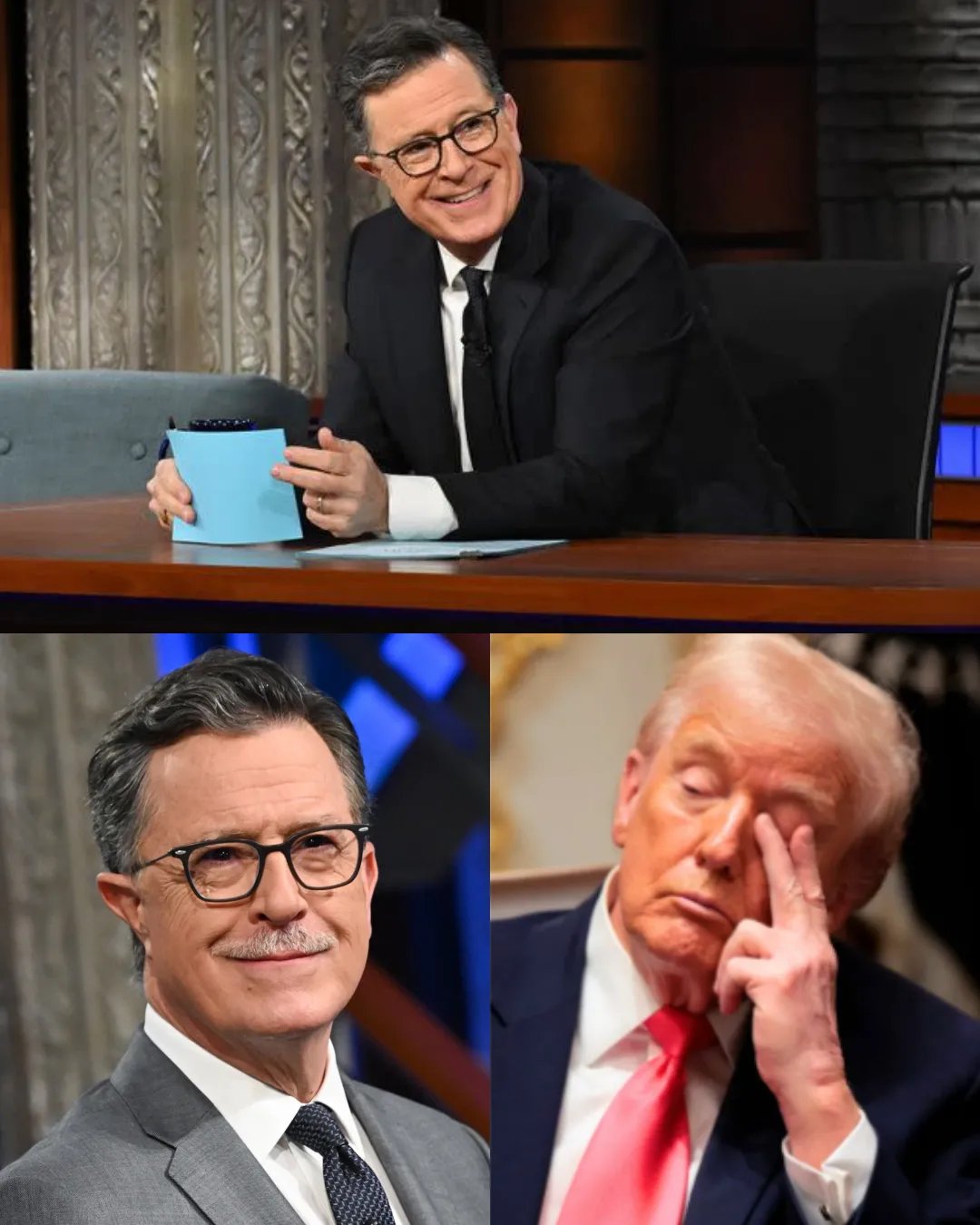
**“HOW STUPID DO YOU THINK WE ARE?” —
STEPHEN COLBERT AND THE NATIONAL UPROAR OVER THE MINNEAPOLIS ICE SHOOTING**
On a chilly winter morning in Minneapolis, the routine of everyday life was violently disrupted when a U.S. Immigration and Customs Enforcement (ICE) enforcement operation ended in the fatal shooting of a woman in her 30s. The incident occurred in broad daylight on a quiet residential street, transforming a quiet neighborhood into the epicenter of intense national debate.
Federal authorities characterized the encounter as an act of self-defense, claiming that the woman’s vehicle posed an imminent threat. Local officials and many eyewitnesses offered a very different account, leading to immediate questions about use of force, accountability, and transparency.
In the days that followed, the story took on a new dimension when The Late Show with Stephen Colbert dedicated a segment to questioning how national leaders were framing the event. Instead of satire or humor, Colbert delivered a pointed critique that rapidly became a defining moment in the national conversation.
The Fatal Encounter That Sparked Outrage
The incident began during a federal immigration enforcement action in south Minneapolis. According to official statements, ICE agents were conducting an operation in a residential area when a woman in her SUV suddenly drove toward agents. The federal narrative framed the moment as a sudden escalation, with agents opening fire in response to a perceived threat.
Inside the city of Minneapolis, local law enforcement officials and bystanders described a different scene. Video footage circulating widely on social media showed a woman slowing her vehicle, dropping off a child at school, and then being approached by an ICE agent. Within seconds, shots were fired. The footage did not clearly show the vehicle aggressively accelerating or striking anyone.
The woman, a mother and beloved member of her community, was pronounced dead shortly after the incident. Friends and neighbors described her as a compassionate person devoted to her family, making her sudden death all the more jarring for those who knew her.
From the outset, the story split public opinion. Supporters of federal immigration enforcement defended the agent’s actions as a tragic but necessary response to danger. Critics saw a needless use of lethal force, amplified by what they described as selective framing by federal officials.
Colbert Confronts the Narrative
When Stephen Colbert addressed the shooting on his late-night program, he broke sharply from the smooth comedic rhythm expected of such shows. Opening his segment with a calm but serious tone, Colbert laid out both the official account and the widely viewed footage. Then, instead of threading jokes between clips, he delivered a sustained critique.
Colbert directly challenged the language being used by national leaders and media spokespeople — questioning how a grim event was being described in terms that seemed disconnected from what the public was seeing with their own eyes. After presenting side-by-side comparisons of statements and footage, Colbert looked directly into the camera and asked:
“How stupid do you think we are?”
The line was more than a punchline. It was a razor-sharp rebuke of language that appeared to minimize the gravity of the shooting, and of messaging that many critics felt sidestepped accountability.
What set this segment apart was not just its tone, but its focus: Colbert did not mock or sensationalize. He dismantled the narrative framework surrounding the incident — contrasting official messaging with visual evidence and inviting his audience to make their own judgment.
He accused political leaders of dismissing evidence and redirecting attention away from fundamental questions about use of force and respect for human life. Throughout, his delivery remained intense, devoid of the comedic cushion audiences had come to expect.
A National Backlash Ignited
Once the episode aired, the response was immediate and widespread.
Across social media platforms, clips of Colbert’s segment were shared millions of times, often without commentary — the stark contrast between official language and public footage speaking for itself. On cable news channels, political commentators and pundits debated the segment’s implications, focusing not on the joke, but on Colbert’s central question about public perception and truth.
Different corners of the political spectrum responded predictably: some criticized Colbert’s approach as unfairly antagonistic toward federal law enforcement and the administration. Others lauded the segment for refusing to soften difficult issues, arguing that public figures have a responsibility to challenge official narratives that don’t align with visual evidence.
In Minneapolis, the shooting continued to galvanize local activism. Vigils were held in the victim’s memory, and community leaders publicly called for transparent investigations and cooperation between federal and local authorities. City officials framed the incident as part of a broader pattern of federal overreach, intensifying tensions between city and national leadership.
At the same time, state officials from Minnesota and neighboring regions pursued legal action seeking to limit federal agents’ authority and operation in local jurisdictions. They argued that the shooting highlighted systemic issues in how federal enforcement interacts with community safety.
Shifting the Terms of Public Debate
What distinguished Colbert’s segment was not merely the tone, but its structural logic. Rather than simply criticizing political figures or policies, he focused on the
gap between narrative and observable fact — a difference that resonated with audiences tired of ambiguity in public discourse.
The segment did not instruct viewers on what to think. Instead, it encouraged them to compare what was being said with what was being seen, and then to ask why those two accounts diverged so sharply.
In doing so, Colbert helped shift the national conversation from a series of competing statements to a debate over perception, language, and accountability.
Rather than merely reacting to official messaging, citizens began critically interrogating it — replaying footage, sharing timestamps, and scrutinizing phrasing in public statements. The phrase
“How stupid do you think we are?” quickly entered the lexicon of political discussion, not just as a bit of rhetoric, but as a broader critique of messaging tactics.
Beyond Comedy — Toward a New Public Role
The impact of Colbert’s segment speaks to a deeper transformation in the role of popular media in civic discourse. In an era where information is ubiquitous and attention spans are fractured, the line between entertainment and public accountability has blurred. Audiences increasingly look to cultural figures not merely for laughs, but for clarity, context, and confrontation when official channels seem inadequate.
Colbert’s decision to step away from satire and engage directly with a contentious issue reflected that shift. Rather than deflecting uncomfortable truths with humor, he leaned into the discomfort itself — and challenged his audience to do the same.
For many Americans, the segment was less about a television monologue and more about a collective refusal to accept simplified explanations for complex and painful events. It underscored the power of media platforms to shape not just conversation, but public consciousness.
A Moment That Won’t Be Easily Forgotten
The Minneapolis shooting and the national reaction to it — both on the ground and in the media — revealed fault lines in how modern America processes conflict, truth, and authority.
Stephen Colbert’s confrontation was not just a commentary. It became part of the story itself, helping to fuel a broader examination of how incidents of violence are framed, narrated, and understood.
When audiences watched that segment, they weren’t just hearing a late-night host challenge political messaging. They were being asked to do the same themselves — a call to look beyond polished narratives and confront the raw reality of what was happening in their country.
And for millions of viewers, that call has become impossible to ignore.
WHEN A COMEDIAN DROPS THE JOKE: WHY COLBERT’S MESSAGE ABOUT WEALTH, RESPONSIBILITY, AND ACTION HIT SO HARD 009
