“A Father Is Dead, a Teen Is in Custody — A Family Shattered in North St. Louis County”.6175


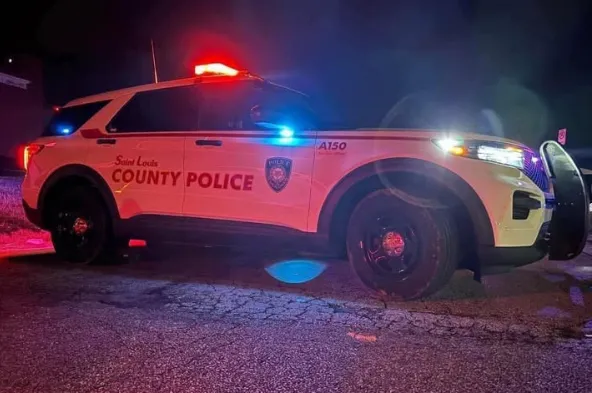
It was just before 5:00 p.m. on January 7 in Glasgow Village, North St. Louis County, when the call came in as a “suspicious death.”
The address placed officers in the 10800 block of Glen Garry Road, a stretch of neighborhood streets where people usually measure danger by what they hear, not what they see.
By the time patrol cars stopped and doors opened, the evening already felt wrong.
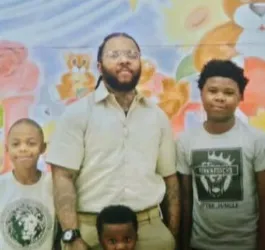
Inside, police found a 34-year-old man who would later be identified as Johnathan Brown.
He was suffering from what authorities described as an apparent gunshot wound, and there was no way to soften the reality that he was already gone.
He was pronounced dead, and the house became a place of tape lines, radios, and quiet voices.

In the first hours after a death like that, details don’t arrive like a clean story.
They arrive like fragments—where someone was standing, who called, what the scene suggested, what was missing, what didn’t fit.
Detectives from the Bureau of Crimes Against Persons began the slow, meticulous work of trying to stitch those fragments into truth.
Outside, neighbors watched from windows and porches, careful not to step too close.
In communities like Glasgow Village, the presence of multiple cruisers can feel like a siren even when the lights are off.
People begin counting, guessing, whispering names into the cold air.
Somebody’s life had ended inside that home, and the ripple moved fast.
Phones lit up, group chats sparked, and speculation did what it always does when grief meets uncertainty.
But on that street, the loudest sound was the silence of a house that would never be the same.
Police have said that a juvenile—15 years old—was later taken into custody.
Because of his age, authorities have not released his identity, and the public is left with a blank space where a name would normally go.
That blank space is where imagination rushes in, and imagination can be dangerous.

According to published reports, the juvenile is alleged to be facing charges including second-degree murder and armed criminal action.
Those words are heavy enough on their own, the kind of words that sound unreal when paired with “15-year-old.”
They carry the weight of adult consequences attached to a child’s age.
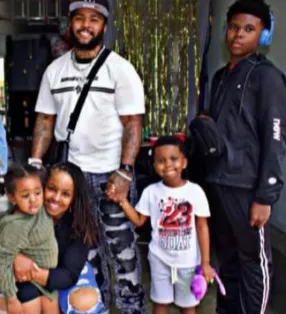
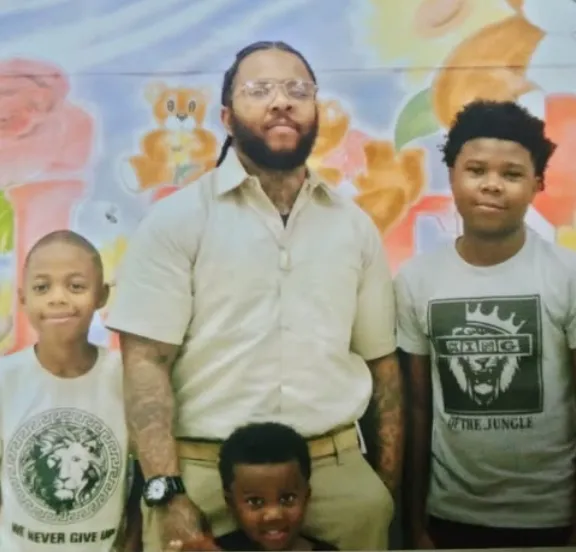
And then there is the claim that has traveled quickly online: that the teen was the victim’s son.
Authorities have not publicly laid out every relationship detail in the initial statements, and the most important facts are still the ones only investigators can see.
What remains clear is that law enforcement is treating the case as a homicide investigation.

In the absence of full information, social media fills the gap with certainty it hasn’t earned.
Posts and comments circulate with alleged backstories and dramatic details, but they are not verified in official reporting.
In cases involving minors, those rumors can harm families, contaminate public understanding, and turn tragedy into entertainment.
What can be said—because it comes from law enforcement statements and established reporting—is simple and devastating.
A man was found dead on Glen Garry Road after police responded to a suspicious death call.
A 15-year-old was taken into custody and faces serious charges as the investigation continues.
But the human story underneath those facts is where the real ache lives.
Because when a death happens inside a home, it doesn’t only end one life.
It collapses a whole structure of relationships—parent and child, family and future—into a single irreversible moment.
A home is supposed to be the safest kind of address.
Even in families with arguments and tension, the walls are meant to hold the messy, ordinary parts of life without turning them fatal.
When violence erupts inside that space, it feels like a betrayal of what “home” is supposed to mean.

Somewhere in the hours before police arrived, there were likely normal sounds.
A television in the background, footsteps on a floor, a door opening and closing, the kind of everyday noise no one remembers until it’s gone.
Then something happened that stopped time for everyone connected to that house.
Investigators treat scenes like this with a careful seriousness because everything matters.
The placement of objects, the silence of a room, the way a story doesn’t quite line up with the evidence.
Truth doesn’t announce itself, it has to be uncovered, piece by piece.
And while detectives measure facts, the neighborhood measures grief.
People think about the victim first, the finality of a life ended and the loved ones who will never get another ordinary day.
They also think about the juvenile, because fifteen is an age that still belongs to school schedules and growth spurts, not criminal courtrooms.
When a juvenile is charged with something as serious as second-degree murder, the entire community feels the shock.
Not only because of the death, but because it forces everyone to confront the question of how a child gets to that point.
The answer is rarely just one thing, and it’s rarely simple.

There are always people who respond to stories like this with a quick judgment.
They say a teen “should have known better,” as if knowledge is the same as stability, and as if impulse, fear, and access to weapons don’t change outcomes.
They forget that “knowing” and “being able to stop yourself” are not always the same in a developing brain.
There are also people who respond with grief layered on grief.
Because many adults can remember being fifteen and feeling emotions so large they seemed capable of swallowing the world.
A slammed door can feel like abandonment, a raised voice can feel like threat, and everything feels permanent even when it isn’t.
None of this excuses violence.
Nothing about adolescence turns harm into something acceptable.
But understanding how tragedies happen is different from excusing them, and communities need understanding if they want prevention.
What makes cases like this especially haunting is the closeness.
Not a stranger in a parking lot, not a random act on a street corner, but something that unfolded within a family’s orbit.
If it is, as alleged, a father and a son, then the grief will have no clean edge where one side ends and the other begins.
Because a family can lose a father and a child at the same time in different ways.
One life ends, and another becomes defined by a moment that cannot be undone.
And everyone around them is left with a mixture of anger, sorrow, disbelief, and unanswered questions.
Police agencies often release only what they can early in an investigation.
They guard details that could compromise witness statements, future charges, or the integrity of the case.
That can feel like silence to the public, but it is sometimes the difference between rumor and conviction.
In this case, law enforcement has publicly asked anyone with information to come forward.
A phone number circulates, a reminder that the truth often lives in small observations someone didn’t think mattered.
Sometimes a single tip clarifies a timeline, confirms a relationship, or explains a movement no one can otherwise prove.
In the meantime, the community tries to make sense of what it cannot fully see.
A man named Johnathan Brown is now a name spoken in past tense.
And a juvenile suspect remains unnamed, protected by law but not protected from the weight of public speculation.
That tension—between the public’s hunger for answers and the legal system’s need for due process—is where modern tragedy often lives.
People want a story with clear villains and clear motives because uncertainty feels unbearable.
But the truth, when it arrives, is often complicated, and sometimes it’s even more painful than the guesses.
On Glen Garry Road, there are likely still small signs of everyday life.
A trash bin at the curb, a porch light that flickers on at night, a neighbor’s dog barking at the mail truck.
Those ordinary details can feel cruel after a death, because they keep going as if nothing happened.
Inside the home, the ordinary has been replaced by evidence markers and memory.
A room becomes a scene, a hallway becomes a timeline, and objects become questions.
Investigators walk through spaces where a family once moved casually, now moving as carefully as surgeons.
For the people who knew the victim, grief will not be a single moment.
It will be an ongoing series of realizations—birthdays, holidays, and quiet evenings that now carry an empty chair.
The world will keep asking them to “move on,” and they will keep learning that you don’t move on from a loss like this, you move with it.
For the juvenile, the future—whatever it was supposed to be—now sits under the shadow of the court system.
Juvenile proceedings, charging decisions, and legal pathways vary, and the process can be long and complex.
What remains true is that the system will weigh accountability, public safety, and the reality of a fifteen-year-old mind.
And for everyone watching from the outside, the story becomes a mirror.
It forces families to talk about conflict, about anger, about the dangers of unresolved tension.
It forces communities to talk about access to firearms and what happens when a moment of crisis meets a lethal tool.
Cases like this also expose how quickly the internet can turn tragedy into narrative.
A single unverified post can become “fact” within minutes, repeated until it feels real.
That is why it matters—especially when a minor is involved—to draw a bright line between what is alleged, what is confirmed, and what is only rumor.
The confirmed pieces, as reported, are enough to break a heart.
A suspicious death call just before 5 p.m., a man found dead, a teenager taken into custody, serious charges filed.
It is already a story of irreversible loss and shock.
The rest will unfold in the way the justice system unfolds—slowly, methodically, sometimes painfully.
There will be hearings, filings, decisions about evidence and statements and what can be proven beyond doubt.
And there will be a family, or families, living inside the consequences every day.
Somewhere, people will ask how it got this far.
They will ask what the warning signs were, what could have been done, what someone should have noticed sooner.
Those questions do not bring back the dead, but they can be the beginning of preventing the next tragedy.
Because the hardest part of stories like this is that they don’t begin with violence.
They begin with a thousand smaller moments—stress, conflict, fear, dysfunction, access, silence—building pressure in a place that should have been safe.
Then one moment breaks open, and everything becomes aftermath.

On January 7, in Glasgow Village, aftermath arrived with flashing lights and a quiet pronouncement of death.
It arrived with a teenager taken into custody and a community trying to understand what it means.
And it arrived with the kind of grief that doesn’t fit neatly into headlines, because it lives inside a home.
For now, the most responsible thing anyone can do is hold tight to what is known.
Let investigators do their work, let the courts do theirs, and resist the urge to fill every gap with rumor.
Because when the full truth comes, it deserves to be heard clearly, without the noise of invented certainty.
A man is dead.
A juvenile faces life-altering allegations.
And a neighborhood on Glen Garry Road will remember this January not for winter, but for the moment ordinary life cracked and never fully sealed again.
They Were Traveling to a Wedding — A Plane Crash Took Them All.6116