A Legend Exits the Stage: Tony Geary, 78, Has Passed Away.5688

There are losses that don’t arrive like breaking news, but like a hush slipping through a room where everyone suddenly understands the same thing at once.
That is how the
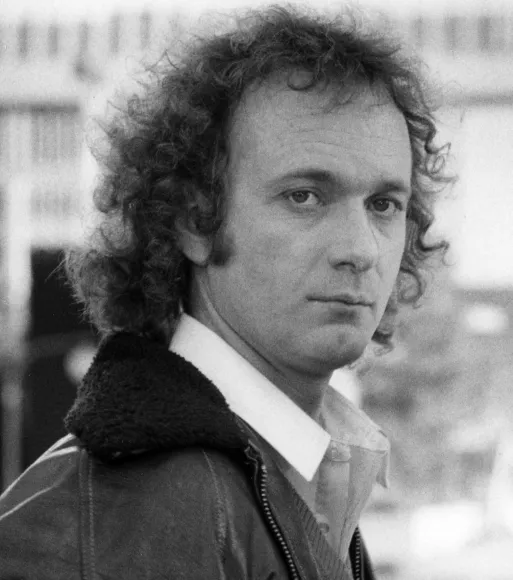
General Hospital community is describing the death of Anthony “Tony” Geary, the actor whose presence helped define an era of daytime television, and whose absence now feels impossible to measure.
Geary died on December 14, 2025, in Amsterdam, at the age of 78, after complications related to a surgical procedure, a detail that makes the sadness sharper because it sounds so ordinary and so final.

For longtime viewers, the name Tony Geary doesn’t just recall a performer, it opens a doorway to decades of afternoons, family routines, and storylines that somehow became part of the furniture of people’s lives.
He was Luke Spencer, and even saying that out loud still feels like saying a character’s name instead of a real person’s, because Luke long ago stopped being “a role” and started being a shared memory.
Luke arrived as a complicated anti-hero, the kind of man who could be charming and infuriating in the same breath, and Geary played him with the fearless precision of someone who understood that flaws are often what make a character unforgettable.
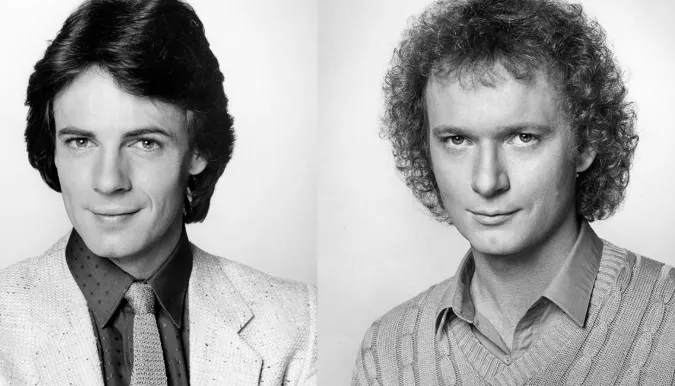
Daytime TV has seen plenty of leading men, but not many who could tilt a scene with a glance, derail a conversation with a half-smile, and still leave you believing that beneath the swagger there was a bruise you couldn’t quite name.
That’s the part fans are grieving today, because it wasn’t only Luke’s story they followed, it was Geary’s particular electricity that made the story feel alive, restless, and strangely intimate.
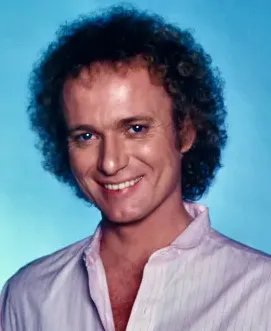
His legacy is inseparable from the Luke-and-Laura phenomenon, the pop-culture tidal wave that turned a soap opera romance into a national event and made General Hospital feel, for a time, like the center of America’s living rooms.

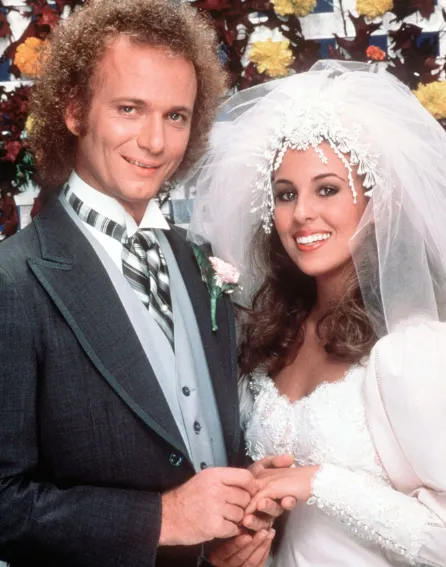
he 1981 wedding of Luke and Laura drew an audience reported at around 30 million viewers, a number that still reads like a myth in the modern age of fragmented screens and endless options.
But the truth is that millions showed up because Tony Geary and Genie Francis made the emotions feel larger than the set, larger than the camera, larger than the idea that it was “just a show.”

In the hours after the news broke, Francis shared a tribute that carried the rawness of someone mourning not a headline, but a bond, speaking about the shock of realizing he was gone.

It is one thing to admire a co-star, and another thing entirely to build an on-screen partnership so iconic that it becomes a language viewers use to describe love, chaos, loyalty, and betrayal for years afterward.
People keep using the same words about Geary—“brilliant,” “one of a kind,” “the bar”—because that is what truly great actors do to the people around them, they raise the ceiling without announcing they’re doing it.
He won a record eight Daytime Emmy Awards for his work, but even that achievement feels like the smallest way to describe what he meant, because awards count moments while his influence stretched across generations.

If you talk to fans, they won’t list trophies first, they’ll talk about specific scenes, specific tones of voice, the way Luke could walk into a room and instantly make the air feel more dangerous, more funny, or more tender.
They’ll talk about how Luke’s humor wasn’t just comedic relief, but a shield, and how Geary let you see both the shine of the shield and the trembling hand holding it.
They’ll talk about the strange comfort of knowing Luke Spencer existed somewhere in the universe of Port Charles, stirring up trouble, breaking hearts, stitching people back together, and occasionally surprising everyone by doing the right thing.
And then the conversation always drifts to the harder truth, the one that makes people pause mid-sentence, which is that the man behind that force is gone now, and no rewrite can bring him back.

Outside the spotlight, Geary lived a quieter life in Amsterdam, and the details that surface now—small, domestic, human—make the public grief feel more personal.
He shared his life with his husband, Claudio Gama, a partner of more than 30 years, and reports note they met in 1995 and married in 2019, a timeline that reads like devotion measured in decades rather than announcements.

It was Gama who confirmed the death, and the General Hospital family directed its condolences toward him, because even the biggest legends leave behind someone who simply misses the sound of their footsteps at home.
This is the quiet heartbreak behind every public tribute: while the world mourns a career, a spouse mourns a person, the daily presence, the private jokes, the life that never needed an audience.
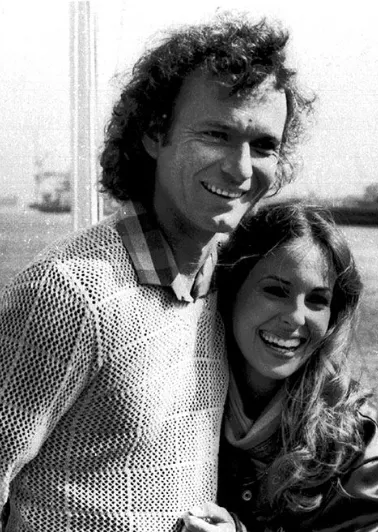
Still, the industry response matters, because it’s how a community says, “We saw what you gave, and we know we are different because you were here.”
The AP reports describe Geary’s career beyond General Hospital, including other TV appearances and a stage life, but the role of Luke Spencer remained the gravitational center of how most people met him.
That isn’t a limitation, it’s a testament, because it takes something rare to embody a character so fully that the character becomes a kind of folklore, passed down from older viewers to younger ones like a story you insist is worth hearing.
Even people who drifted away from the show still remember the feeling of his scenes, the way he could shift from playful to haunted so smoothly you barely noticed the seam.

And that is why the grief today feels larger than a typical celebrity farewell, because Tony Geary didn’t only entertain, he helped shape a ritual, the steady rhythm of daytime storytelling that kept people company through ordinary days and extraordinary pain.
In moments like this, fans often realize that what they loved was not simply drama, but continuity, the comfort of a familiar world where characters aged alongside them, where heartbreak was survivable because the next episode always came.

Now the next episode will still come, because television never stops, but something essential has changed, because the standard-bearer is gone, and everyone who cared can feel the weight of that absence.
What remains is a legacy that won’t sit quietly in a memorial post, but will keep resurfacing in clips, in rewatches, in conversations that begin with “Do you remember when Luke…,” and end with someone smiling through tears.

And perhaps that is the final gift of a performer like Tony Geary: he leaves behind a thousand doorways back into emotion, back into memory, back into the strange, beautiful truth that a story on a screen can become part of a life.

May he rest in peace, and may the people who loved him most—especially Claudio, and everyone who called him family on and off set—feel held by the enormous echo of what he meant.
Saying Goodbye to Christina, Three Days Before Christmas.5819

We’re saying goodbye to Christina this morning.
Three days before Christmas.
Three days before her three-year-old son will wake up with that uncontrollable, breathless excitement only toddlers know, tearing into wrapping paper, shouting about toys, believing without question that magic is real.
Christina won’t be there to see Constantine jump for joy.
And that truth still feels impossible to hold.
I keep trying to understand it, and I can’t.

I feel too many emotions all at once—sadness so deep it feels physical, anger that flares without warning, confusion that circles back on itself no matter how many times I replay the facts. Six days ago, Christina returned to her Hoover home after an early morning jog, her body warm from movement, her lungs full of cold air, her mind likely already moving through the quiet checklist of the day ahead.
Minutes later, her life was gone.
She was the victim of a murder-suicide.
Those words sit heavy and wrong. They don’t fit the woman I knew. They don’t fit the life she lived. They don’t explain how something so senseless could erase someone so full of light.
I keep thinking about how unfair it all is.
How cruel.

How unnecessary.
Christina Chambers packed more life into thirty-eight years than most people manage in a lifetime.
She was the kind of person who didn’t just exist—she lived, intentionally and wholeheartedly. She loved running, not just as exercise, but as a celebration of what her body could do. She loved competition, the discipline, the challenge, the quiet pride that comes from pushing past limits. Running wasn’t just a hobby; it was part of who she was—early mornings, steady breaths, miles that cleared her mind and strengthened her spirit.
She loved her parents deeply, with a gratitude that never felt obligatory. She loved her four siblings in that layered way only siblings can—equal parts loyalty, laughter, shared history, and unconditional support. Family wasn’t something she talked about; it was something she showed up for, again and again.
And above all, she loved her son.

Constantine was her heart walking around outside her body. Every choice she made, every plan she formed, every prayer she whispered carried his name inside it. She spoke of him with joy and humility, as if motherhood wasn’t something she owned but something she had been entrusted with.
She loved baking pecan pies and Christmas sugar cookies with her mother, flour on the counters, laughter in the kitchen, traditions passed down through hands that had done this many times before. She loved the quiet joy of simple moments—the kind that don’t make headlines but build a life.
She loved life.
And she loved her Lord.
Christina Chambers lived a godly life in a way that never demanded attention. She never asked people to pray for her. Instead, she asked who she could pray for. In a world where so many seek affirmation, she sought service. Where others looked inward, she looked outward. Her faith wasn’t loud, but it was steady, sincere, and deeply lived.
I keep thinking about that.

About how rare it is.
About how easy it is to say we want to live like that—and how hard it is to actually do it.
Through the years, I’ve wondered if we should do more to Be Like Christina.
Not in grand gestures or public declarations, but in the quiet, daily choices that define who we are when no one is watching.
Don’t judge, but rather love.
Not the easy kind of love—the kind that feels natural—but the kind that takes patience, humility, and restraint. The kind that listens before speaking. The kind that leaves room for grace.

Be not spiteful, but kind.
Even when kindness costs something. Even when bitterness would feel justified. Christina had a way of choosing kindness without making it look performative. She didn’t weaponize goodness. She simply lived it.
Find a way to make others find the light.
She did that effortlessly. Not by preaching, but by example. By being someone whose presence felt safe, whose words felt thoughtful, whose actions reflected genuine care. People felt seen around her. Valued. Encouraged.
Yesterday, I visited Christina’s family during the visitation.
There is no adequate word for what I saw.
They are broken.
Not just grieving, but shattered by the kind of loss that doesn’t follow logic or fairness. The kind that leaves you asking questions no one can answer. A daughter. A sister. A mother. Taken in a way that defies understanding.
And yet—even in their brokenness—there was something else present.
Love.
Stories shared softly. Tears mixed with memories. A collective effort to hold one another upright when standing felt impossible. Grief was everywhere, but so was the unmistakable imprint of the woman they loved.
Christina’s life had shaped them.
And now, her absence does too.

I believe—truly believe—that if we all strive to Be Like Christina, we will comfort this family in ways words alone never can. We will honor her not just by remembering her, but by living differently because of her.
If we choose compassion over criticism.
If we choose kindness over cruelty.
If we choose to pray for others before asking for ourselves.
Then something good can still grow from this tragedy.
I think of Constantine.
Three years old.

Too young to understand why his mother won’t be there on Christmas morning. Too young to grasp the permanence of loss. Too young to know how deeply he was loved, how fiercely she dreamed for his future.
But one day, he will know.
He will hear stories.
He will see photos.
He will learn about a mother who ran hard, loved deeply, baked joy into holidays, and lived her faith with quiet strength. He will learn that her life mattered—that it still matters.
And maybe, in time, he will carry her light forward in ways none of us can yet imagine.

As we say goodbye to Christina today, I pray that the young woman with the word “Christ” in her name is resting at the side of Jesus. I pray that she knows how profoundly she was loved here, and how enduring her impact will be.
And as we move into the New Year—tender, shaken, uncertain—I pray that we remember her not only with sorrow, but with intention.
May we speak more gently.
May we judge less and love more.
May we look for ways to serve instead of be served.
May we ask, as Christina always did, Who can I pray for?
And may we all strive, every day, in small and meaningful ways, to Be Like Christina.