Aiden Washburn’s Final Fight: A Story of Hope, Pain, and Unshakable Love.2700

The morning Aiden Washburn entered the world, the delivery room felt strangely still, as if time itself was holding its breath.
He arrived by emergency cesarean section, barely moments after doctors realized his heart rate was falling.
His mother, Josie, remembers the blur of voices, the flashing lights, and the sudden rush of fear that flooded her long before she ever saw her son’s face.
But when she finally heard his first cry—a small, fragile sound—it became the most powerful moment of her life.
Because she knew her child’s life would never be easy.
Aiden had been diagnosed before birth with hypoplastic left heart syndrome, a rare and devastating congenital defect in which the entire left side of the heart fails to develop properly.
The news had shattered her and her husband, Ryan, months earlier after a 23-week ultrasound and fetal echocardiogram revealed the unthinkable.
The left side of their baby’s heart—half the engine he would need to survive—simply wasn’t there.
And if that wasn’t enough, Aiden would come into the world with only one functioning kidney.
Nothing about his future was certain.
Nothing about it was fair.
Yet, from the first seconds of his life, Aiden fought.
At just 24 hours old, before most babies have even opened their eyes long enough to memorize their mother’s face, Aiden underwent his first open-heart surgery.
The surgical team used pulmonary artery banding, a delicate technique to protect his lungs and stabilize the blood flow his fragile body couldn’t control on its own.
Seven days later, he was wheeled back into the operating room for a second open-heart surgery—the Norwood procedure.
Surgeons spent hours reconstructing the tiny pathways of his heart, giving the right ventricle the job normally carried out by the left.
It was a massive assignment for a heart so small.
But Aiden made it through, proving once again that his spirit was far stronger than the defect attacking his body.
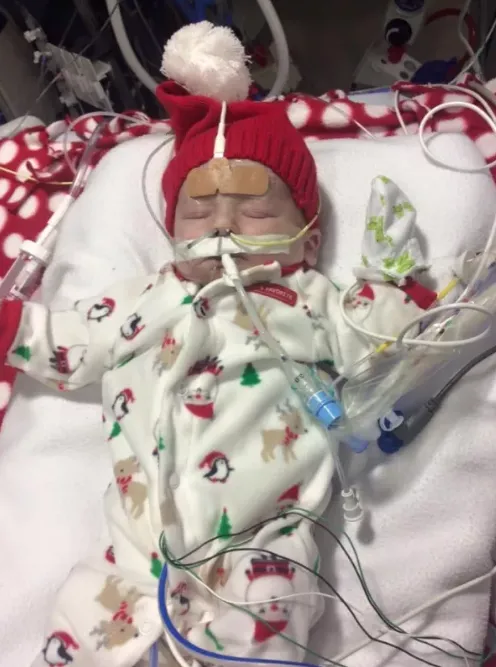
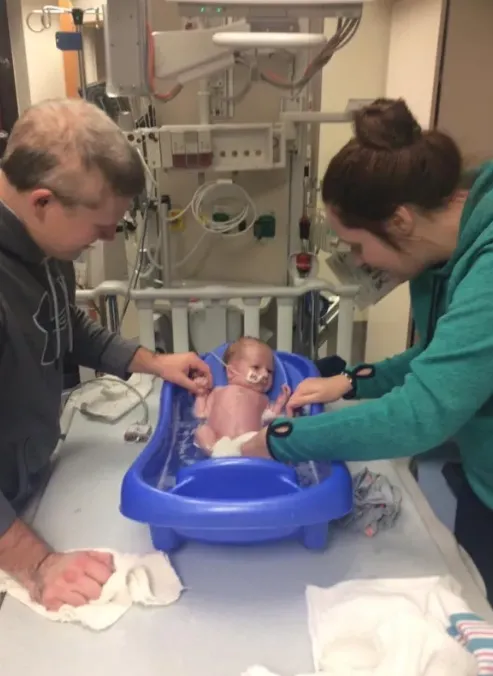
Josie remembers watching him in the Neonatal Intensive Care Unit, surrounded by wires, tubes, and machines that beeped rhythmically like artificial lullabies.
She remembers the fear of touching him, afraid she might break something, and the deeper fear of not touching him enough.
She remembers praying—sometimes whispering, sometimes screaming inside her head—that he would simply stay.
But she also remembers something else.
Aiden’s eyes.
Even as a newborn, they were full of something fierce and bright, as if he already understood he was fighting for his life.
After 41 long days in the hospital, Aiden was finally strong enough to go home.
But the journey was far from over.
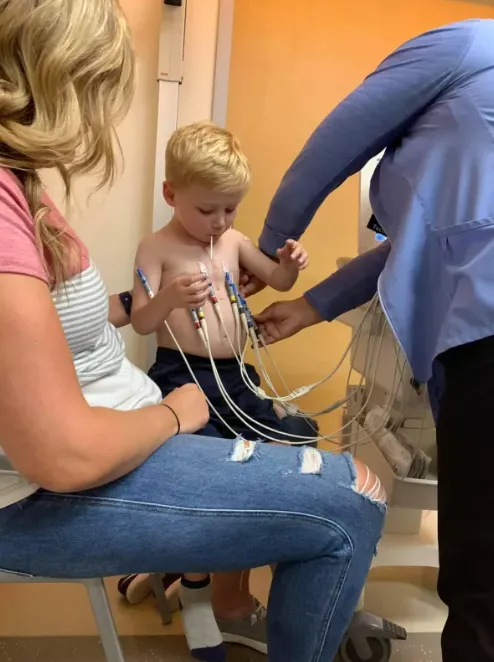
At six months old, he returned for a third open-heart surgery—the Glenn procedure.
This time, surgeons rerouted the superior vena cava directly to the pulmonary artery, letting the upper body’s blood flow straight to the lungs.
The procedure relieved pressure on his little heart, but it also reshaped his entire circulatory system.
It was another enormous step in a long, uncertain path.
At three and a half years old, Aiden faced his fourth major surgery: the Fontan procedure.
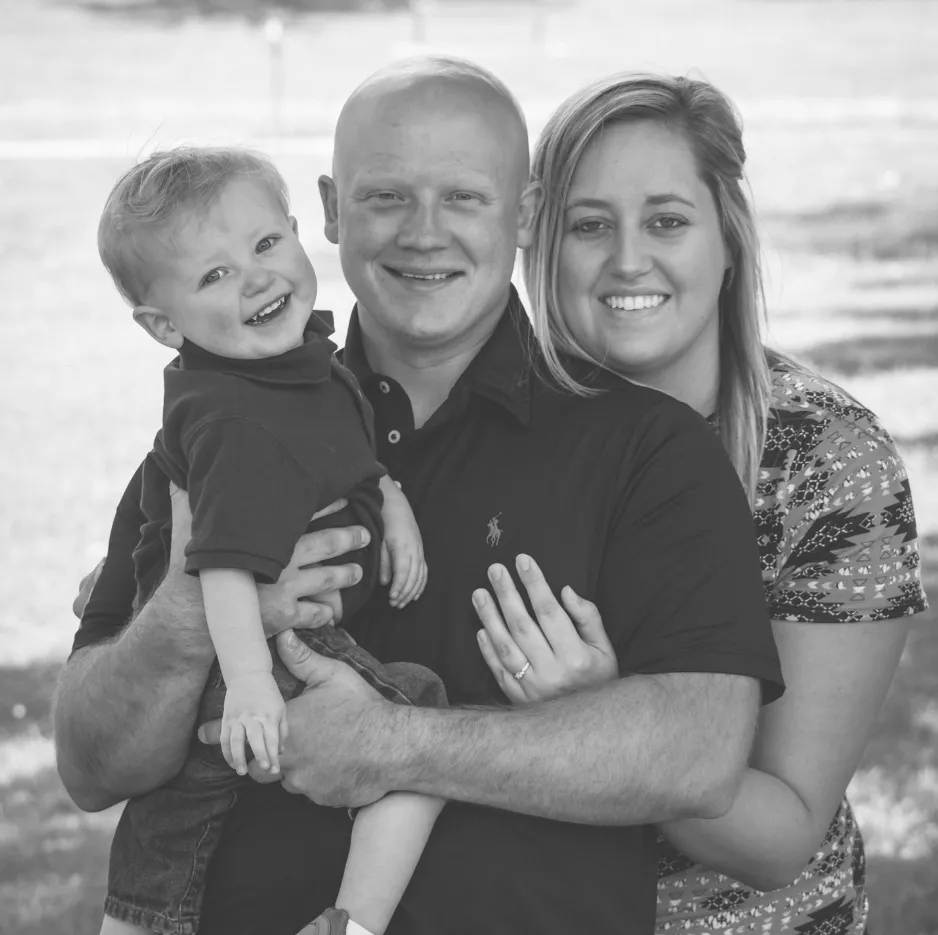
For children with hypoplastic left heart syndrome, this surgery is often considered the final reconstruction—the last big hurdle before attempting to live with a single-ventricle heart.
Surgeons connected the inferior vena cava to the pulmonary artery using a tube, carefully balancing the flow so his body could adjust without overwhelming his lungs.
Aiden recovered with the same quiet bravery that had defined his entire young life.
Even when his body was tired, his spirit was not.
Even when pain lingered in every breath, he found ways to smile.
His parents often said he didn’t just survive—he showed the world how to live.
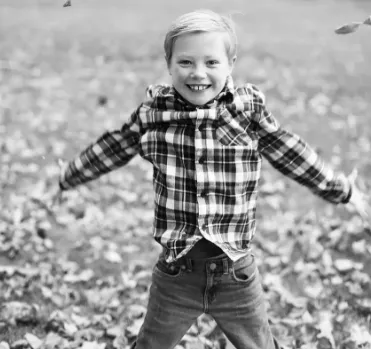
As he grew older, his personality blossomed.
He was funny, gentle, and impossibly kind.
He had a smile that lit up every room, every hallway, every waiting area he had ever been carried through.
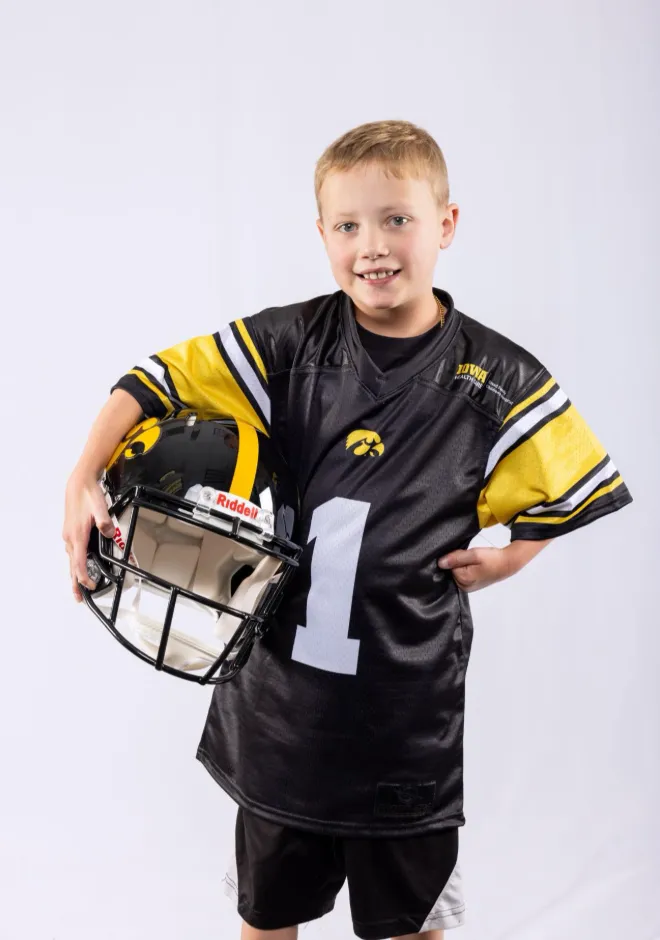
And he loved sports—especially Iowa football.
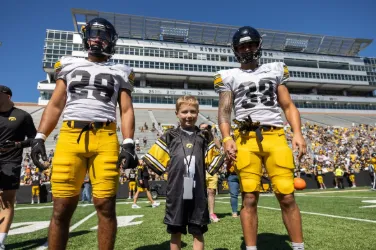
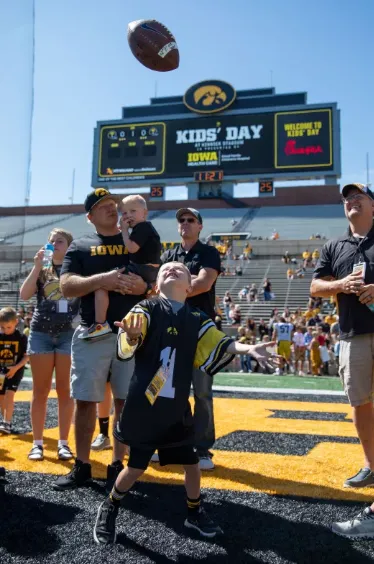
At just eight years old, he was chosen as a Kid Captain for the University of Iowa, a moment his family cherished more than any of the thousands of hospital memories that came before it.
On September 21, 2024, at an away game against Minnesota, Aiden sat proudly in his jersey, cheering for his team with all the strength his little body could muster.
His heart wasn’t built to last, but his courage was limitless.
His joy was contagious.
His love for life was unmistakable.
But the medical challenges never truly faded.
Because there is no cure for hypoplastic left heart syndrome.
The surgeries he had bravely survived weren’t fixes—they were lifelines, temporary reroutes, bridges built to buy time.
Extraordinary time.
Precious time.
Time his parents never took for granted.
Last year, things became harder.
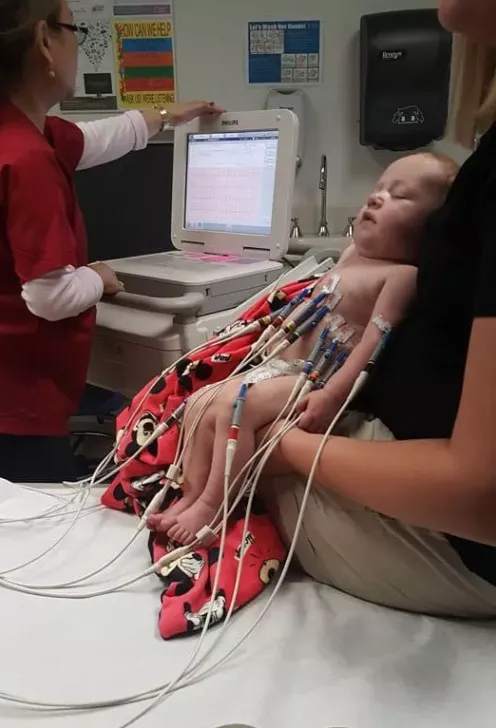
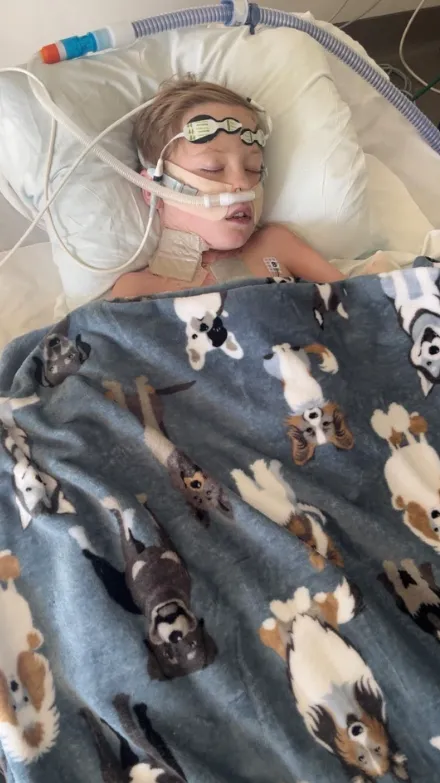
Aiden was diagnosed with protein-losing enteropathy, a condition where the body loses essential proteins through the digestive tract.
He became thinner.
Weaker.
His muscles faded, leaving behind only the bravery that never once abandoned him.
And the only treatment left—the only option that offered hope—was a heart transplant, a possibility that hung in the air like a storm that never broke.
Still, Aiden fought.
He fought through the exhaustion.
He fought through the pain.
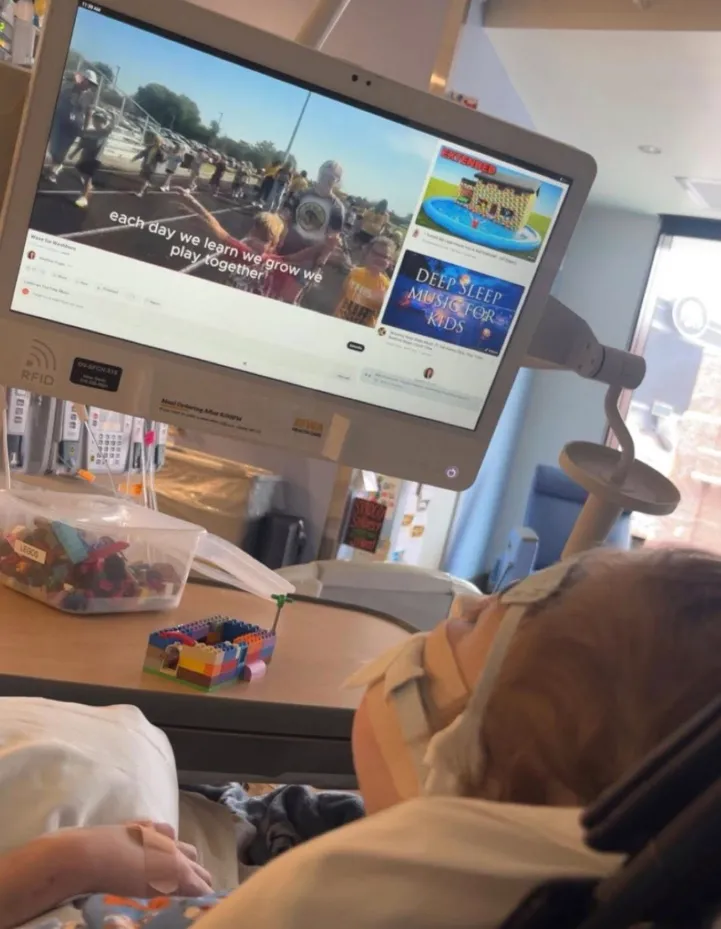
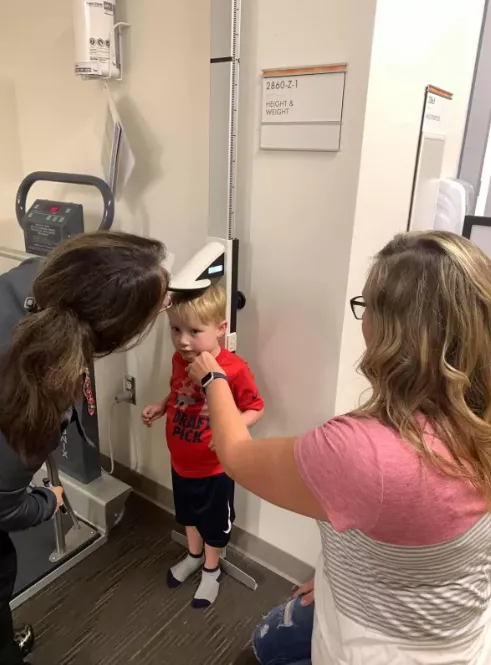
He fought through every doctors’ appointment, every test, every needle, every long night when his parents whispered encouragement into his hair just to keep his spirit from sinking.
And he didn’t fight alone.
His family, his community, his team, and everyone who had ever seen his bright smile or felt his gentle kindness rallied behind him.
To them, Aiden wasn’t just a patient.
He wasn’t just a diagnosis.
He wasn’t even just a fighter.
He was joy.
He was light.
He was love in motion.
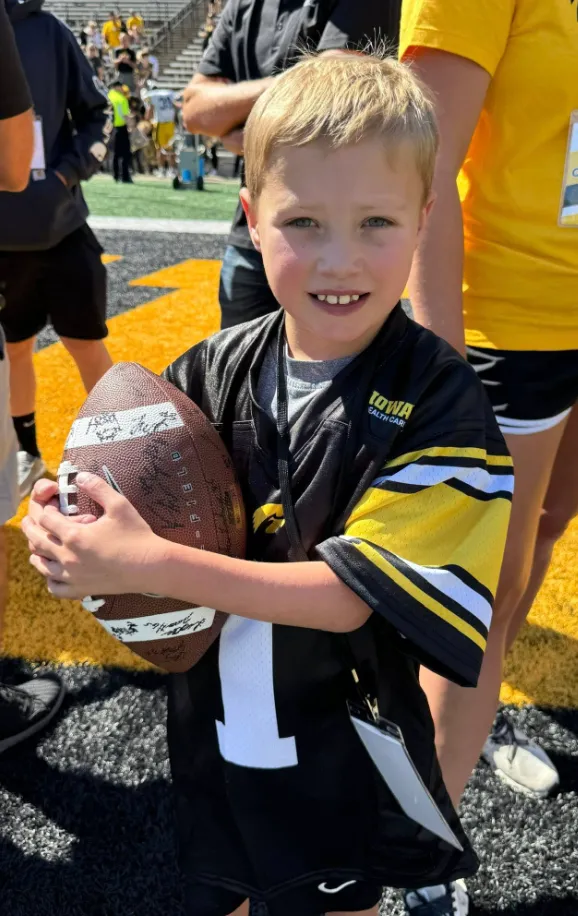
On Sunday, at only nine years old, Aiden’s brave heart finally grew tired.
His journey ended in the arms of the people who loved him most—his mother, his father, and everyone who had been blessed enough to witness his extraordinary life.
His family said, “His bright smile and kind heart made every day better for those around him.”
And they were right.
Aiden didn’t need decades to make an impact.
He didn’t need a lifetime to change lives.
He changed the world in the time he was given.
He showed what strength looks like when wrapped in the body of a child.
He showed what courage sounds like when whispered through breathless nights.
He showed what love can build, even in the face of impossible odds.
Aiden’s life was short, but it was immeasurable in its depth.
It was full of moments that felt like miracles and days that felt like borrowed light.
And though he is gone, the echo of his spirit remains—soft, steady, and unbreakable.
Aiden Washburn will be remembered not for the years he lived, but for the life he brought into every year.
He lived gently.
He lived bravely.
He lived beautifully.
And he will live on in every heart that learned to beat a little stronger because of him.
Smokey’s Last Comfort: A Stuffed Elephant.779

His paws clutched a tiny stuffed elephant, the only comfort he had left. The toy was worn, its fabric faded, but to Smokey, it meant everything. Once, in another life, that elephant had been part of his bedtime ritual—something to hold close as he drifted to sleep in the warmth of a family’s love. Back then, he had a home, people who adored him, and nights filled with the steady rhythm of belonging.
But life has a way of changing suddenly. Hardship struck his family, and with it came a cruel decision. They brought Smokey to a shelter, promising themselves it was temporary, maybe telling themselves it was what was best. But for Smokey, it was abandonment he could not understand. The people he trusted most had disappeared, and in their place was a cold kennel and unfamiliar faces.
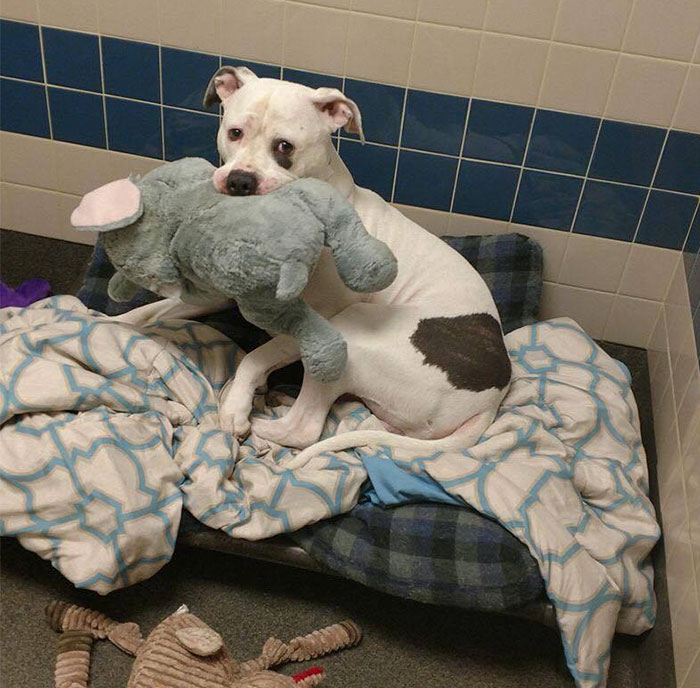
Day after day, Smokey lay curled on his thin bed, his elephant clutched tightly in his paws. He refused food. He trembled at the sound of footsteps. When volunteers tried to coax him with treats or soft words, he turned his face away. His spirit was slipping, one breath at a time, as if he was waiting for someone who would never come.
The shelter staff tried. They gave him blankets, spoke gently, even let him keep his stuffed toy. But nothing seemed to break through the wall of grief he had built around himself. The dog who once wagged his tail with joy was now a shadow of himself—silent, withdrawn, unreachable.
Eventually, the word no shelter worker ever wants to say was whispered about Smokey: “unadoptable.” He was added to a list no dog should ever be on. His future, once full of love and promise, seemed to be slipping away. A loyal soul, a small toy, and a clock quietly ticking toward the end.
But sometimes, even at the edge of despair, a spark of hope arrives. One volunteer noticed the way Smokey clung to his elephant and refused to give up on him. She shared his story—how this heartbroken dog carried a toy as if it were his lifeline, how his sorrow wasn’t aggression, just grief. The story spread, and people far beyond the shelter walls saw Smokey for what he truly was: not unadoptable, but unbearably lonely.
Messages began to pour in. Offers of adoption. Words of encouragement. Promises that Smokey’s story would not end in silence. For the first time in weeks, his world shifted. The same stuffed elephant that marked his despair now became a symbol of hope, carrying his story into the hearts of strangers willing to fight for him.
Smokey’s journey is not finished. Healing takes time, and broken trust is not easily mended. But now he has a chance—the chance every dog deserves—to find a family who will not let him go, who will help him sleep again without fear, with his elephant beside him not as a lifeline, but as a reminder of the love he never lost inside.
Because no dog should be defined by despair. No soul should be abandoned to loneliness. And Smokey, with his fragile heart and his tiny toy, deserves to know that the world still holds a place for him.