He Had No Home, No Title — But His Courage Helped Stop a Campus Killer.5793

In the midst of tragedy, courage often comes from the most unexpected places. For Providence, Rhode Island, that courage came in the form of a man known only as John
, a homeless individual whose vigilance and bravery helped law enforcement crack one of the most shocking campus shootings in recent memory.
John’s life before this act of heroism was far from ordinary. He was reportedly living in the basement of a university engineering building, quietly navigating the city streets, unseen by most.
Yet, it was precisely in that space—so removed from society’s attention—that John encountered
Claudio Neves Valente, the man who would go on to commit the fatal shootings at Brown University and later murder a Massachusetts Institute of Technology professor.
The encounter was subtle, almost mundane at first glance. Valente, scoping the area, appeared out of place in the engineering building.
John noticed immediately that something was wrong: the suspect’s clothing was “inappropriate and inadequate for the weather,” a detail that might have seemed trivial to anyone else but sparked John’s attention. T
hat small observation would later become a critical piece of evidence.

After Valente circled the block in his grey Nissan with Florida plates—a car John had noticed from his position in the building—John confronted him outside.
“Your car is back there, why are you circling the block?” he yelled, an instinctive response that demonstrated both awareness and courage.
Valente responded defensively, insisting he didn’t know John and asking why he was harassing him.
For many, that moment would have ended there. But John didn’t walk away. He remembered the details, the license plate, and the unusual behavior of a man whose intentions were unknowable but clearly suspicious.
For days following the Brown University shooting, authorities scrambled to identify the gunman.
Two students had been killed, and panic gripped the campus. Hundreds of tips flooded the Providence Police Department, but none came close to the clarity and precision of John’s account.
When he finally shared what he knew with investigators, the case broke open.
His observations, made hours before the attack, directly connected Valente to the shootings, allowing law enforcement to act with the urgency and accuracy the situation demanded.
John’s bravery did not go unnoticed. Local officials, including Providence Mayor Brett Smiley, publicly praised him, urging the FBI to award him the full $50,000 reward promised to the tipster who helped crack the case.
“John is no less than a hero,” the mayor wrote. “His bravery, selflessness, and stewardship on behalf of his community went far beyond what anyone could ever hope from a tip.
Our community is breathing easier today because of the extraordinary assistance John provided.”

The Rhode Island Attorney General, Peter Neronha, echoed these sentiments at a press conference, calling John’s tip “the key that unlocked the case.” It was not just the information John provided but the courage it took to act on his instincts despite his vulnerable circumstances.
John could have walked away, remained invisible, and avoided danger. Instead, he chose responsibility, choosing to protect the wider community even at personal risk.
For those who know him, John’s actions are unsurprising. A fellow homeless man, known only as
Frank, spoke at a church service in downtown Providence, calling John “the reason they caught the guy.”
Frank praised the authorities for taking care of John at the federal level, noting that he was being housed in a hotel, fed, and protected—a necessary measure to ensure both his safety and the integrity of the ongoing investigation.
The story of John underscores the complex intersection of invisibility and heroism. For weeks, he lived in the shadows of the very building Valente targeted, unnoticed and underappreciated.
Yet, it was from this obscurity that the critical observation emerged, a reminder that bravery is not confined to those with formal authority or visibility. Courage often resides in quiet, ordinary lives, waiting for the moment it is needed most.

John’s tip revealed critical details that would have gone unnoticed: Valente’s odd behavior, the repeated circling of the car, and his apparent awareness of surveillance measures.
These observations, corroborated with security footage and subsequent investigations, allowed authorities to pinpoint Valente’s movements and predict his next actions. In essence, John’s eyes and instincts became an extension of law enforcement, providing insight and immediacy that might otherwise have been impossible.
The FBI, Providence Police, and Rhode Island law enforcement have since credited John with saving countless lives by accelerating Valente’s identification and apprehension.
The danger he observed, captured in the mundane details of clothing and license plates, was transformed into actionable intelligence. The stakes could not have been higher: two students were already dead, and without rapid intervention, more lives could have been lost.
Public response to John’s heroism has been overwhelmingly positive. Across Rhode Island and beyond, citizens have applauded his bravery, advocating for him to receive full recognition and support.
Many have noted the irony that someone living on the margins of society—a homeless man often ignored or dismissed—was precisely the individual whose awareness and moral courage helped prevent further tragedy.
Yet, the story is also a reminder of the human cost of heroism. John, despite being celebrated, is still in a vulnerable position.
Temporarily removed from the streets, under federal protection, and awaiting the reward he earned, he embodies both triumph and precariousness. His life has been changed irrevocably, and the gratitude of the community cannot erase the risks he faced alone in the moments that defined the case.
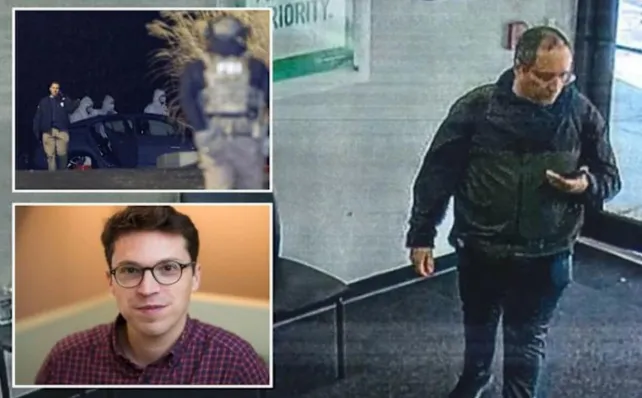
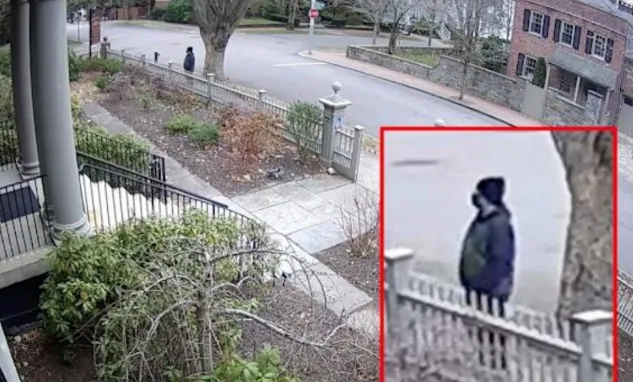
Security footage, which had initially puzzled investigators, now makes sense in light of John’s tip.
Images captured of Valente in the engineering building and outside the campus, including moments of unusual hesitation and attention to his vehicle, are now seen as vital pieces of the puzzle. His observations were instrumental in confirming behavioral patterns that led to Valente’s eventual capture.
Providence Mayor Smiley, in advocating for John, emphasized that “this went far beyond what you’d expect from a normal tipster.”
Josh Estrella, the mayor’s communications director, echoed that sentiment, noting that out of hundreds of tips, John’s stood out for its accuracy, detail, and direct impact. It is a rare moment where one individual’s vigilance altered the course of a complex and potentially catastrophic case.
In a broader sense, John’s story challenges societal perceptions of homelessness, invisibility, and heroism.
He lived on the fringes, unseen and underappreciated, yet his actions demonstrated extraordinary courage and presence of mind. Society often overlooks those without resources, status, or visibility, yet in John’s case, those very circumstances placed him in the perfect position to observe and act.
The aftermath of the case continues to unfold. John is currently off the streets, housed and cared for at the federal level, and pending the formal allocation of the $50,000 reward.
His identity remains private, and he has been shielded from the media spotlight to ensure his safety and the integrity of ongoing investigations.
For the community of Providence, John is a symbol of unexpected bravery.
He represents the idea that heroism is not limited by circumstance, that vigilance and moral courage can exist in the most unlikely places.
His actions will be remembered as a defining moment in the investigation of the Brown University shooting, and his story serves as a testament to the extraordinary impact one person can have on public safety.

As the investigation concludes and recognition of John’s heroism solidifies, the larger lesson remains clear: in moments of crisis, ordinary people, often overlooked, can become extraordinary agents of change.
His courage demonstrates that attentiveness, moral responsibility, and the willingness to act—even when unrecognized—can alter the trajectory of events, save lives, and prevent further tragedy.
John’s story will remain etched in the memory of Providence and beyond, not merely as a tale of crime-solving, but as a testament to human courage, resilience, and the profound difference one person can make when they choose to act with integrity and courage, even against overwhelming odds.
In the end, the streets he once called home cannot contain the scope of his impact. John, the homeless hero, has shown the world that bravery is not measured by wealth, status, or visibility, but by the willingness to step forward when the stakes are highest.
His vigilance saved lives, revealed truth, and proved that heroism can come from the most unexpected corners of society.
Saying Goodbye to Christina, Three Days Before Christmas.5819


