“I Had to Get Rid of Her”: A Guilty Plea That Shook Madison.5963

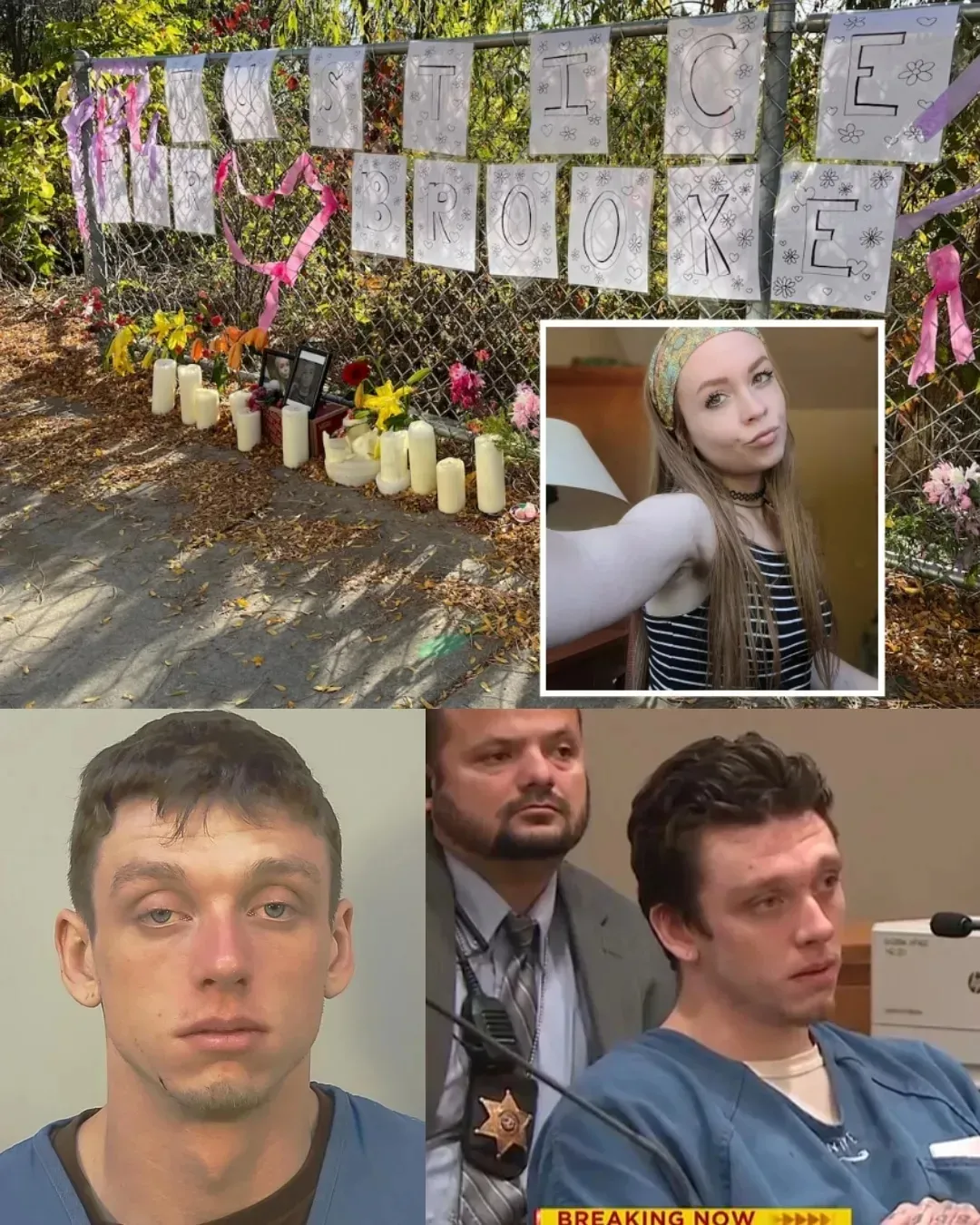

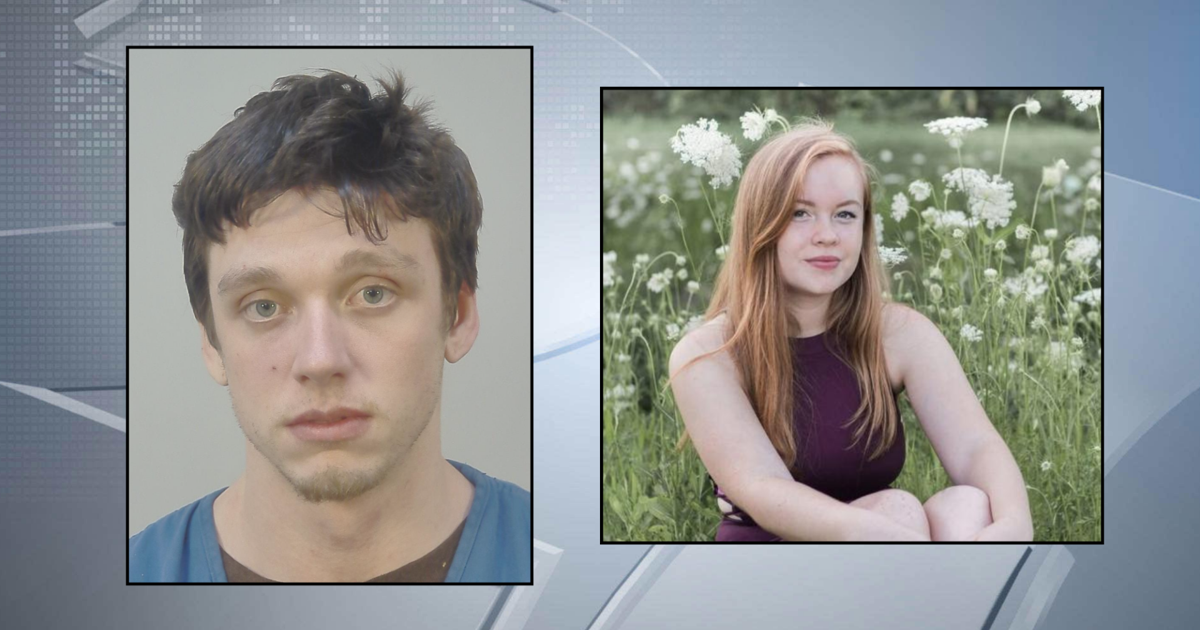
In a case that has sent shockwaves through the Madison community, a 26-year-old Wisconsin man, James Barnes-Morris, has pleaded guilty to first-degree reckless homicide in the death of his 24-year-old girlfriend,
Brooke Strattan, after chillingly telling friends how difficult it had been to hide her body in a pond.
The plea came on Monday, ending months of legal uncertainty and leaving a community grappling with the sheer brutality of the crime.
Barnes-Morris admitted he was responsible for taking Strattan’s life in the fall of 2024, a truth that friends, family, and neighbors are still trying to process.
Strattan, described by loved ones as bright, compassionate, and full of life, vanished after being last seen with Barnes-Morris on the morning of September 30, 2024. Her disappearance triggered frantic searches, public pleas, and widespread concern.
Days later, the search ended in horror when her body was recovered from a retention pond.
Court documents paint a picture of escalating tension and fear in the days leading up to Strattan’s death. Several friends recalled a public argument between the couple just days before her disappearance.
Witnesses said the disagreement was heated, and Strattan eventually left the scene with another friend. She confided in that friend her fear that Barnes-Morris “was truly going to kill her,” a fear that would tragically prove justified.
Hours after Strattan was last seen walking with Barnes-Morris, police say he appeared at a friend’s house.
According to detectives, he spoke with a casual cruelty that left the friend unnerved, saying, “I had to get rid of her,” while discussing needing “more bricks and rope” and noting how “the weeds made it hard.”
At the time, the friend observed that Barnes-Morris was wet and had bloody scratches on his legs—details that later became crucial evidence in the investigation.
Barnes-Morris remained elusive until October 3, 2024, when he was found hiding in a friend’s basement, the same day authorities discovered Strattan’s body.
At the time of his arrest, he was in possession of her phone and credit cards, suggesting a chilling attempt to continue using her identity even after her death.
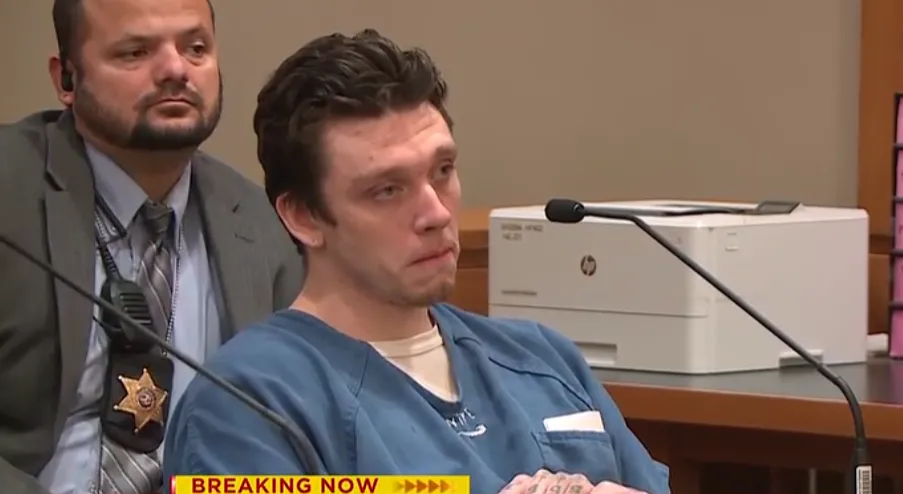
The legal proceedings that followed were tense and closely followed by local media.
The Dane County District Attorney’s Office initially charged Barnes-Morris with first-degree intentional homicide with a domestic abuse modifier, as well as first-degree reckless homicide with a domestic abuse modifier.
In a plea deal reached earlier this year, the intentional homicide charge was dropped, leaving Barnes-Morris to plead guilty to the reckless homicide count.
Under Wisconsin law, reckless homicide involves conduct that creates an unreasonable and substantial risk of death or great bodily harm, and results in a death.
The domestic abuse modifier underscores the intimate and personal nature of the crime, elevating the severity and signaling a breach of trust between partners. Barnes-Morris now faces up to 60 years in prison at sentencing, according to local NBC affiliate WMTV.
The case has prompted renewed attention on domestic violence and the warning signs that precede such tragedies.
Friends and family of Strattan have described her as a careful, thoughtful individual who had confided her fears about her relationship, yet her pleas went unheeded in ways that many now describe as heartbreaking.
“This wasn’t just a tragic accident or a sudden fight,” said one of Strattan’s close friends.
“She was scared. She told us she felt unsafe. And in the end, the fear she expressed became real.”
The details that emerged during the investigation cast a stark light on the chilling mindset of Barnes-Morris.
In his statements to friends before being arrested, he spoke with a detached practicality about hiding a human life.
The casual manner in which he referenced the tools and obstacles involved in disposing of Strattan’s body—bricks, rope, and even weeds—underscores a degree of premeditation that has horrified those following the case.
Authorities have said that the evidence collected from the scene, from witnesses, and from Barnes-Morris’s own statements, provided a clear and damning timeline of events.
The scratches on his legs, the wet clothing, and his possession of Strattan’s personal items contributed to a case that prosecutors argued left little room for doubt about his culpability.
While the plea agreement spares the court a lengthy trial, it does not spare the emotional toll on Strattan’s family, friends, and community.
Each day, they are forced to grapple with the knowledge that someone she trusted ultimately took her life.
Her parents, siblings, and close friends have spoken publicly about the grief and anger they feel, while advocating for more awareness about the dangers of domestic abuse.
“This is a loss that can never be undone,” said one family member.
“No sentence, no legal process, can bring her back. But we hope that by speaking out, we can prevent this from happening to someone else. Brooke’s voice deserves to be heard, even if she is no longer here.”
Barnes-Morris’s change of plea also illustrates the strategic decisions made in legal proceedings.
By pleading guilty to reckless homicide, he avoided the possibility of facing a first-degree intentional homicide conviction, which carries the potential for life imprisonment.
Nevertheless, the gravity of the reckless homicide charge, especially with the domestic abuse modifier, ensures that he will face decades behind bars and the full weight of public scrutiny.
Experts in domestic violence cases emphasize that incidents like this underscore the importance of recognizing early warning signs.
Friends and acquaintances of potential victims are often the first line of defense, yet they may feel powerless to intervene.
Authorities stress that threats should always be taken seriously, and that victims expressing fear of a partner’s violence require immediate and sustained attention.
In Madison, community organizations and local leaders have cited Strattan’s case as a wake-up call for both preventive education and robust support systems.
They have advocated for programs that empower friends, family, and co-workers to report threats, and for ensuring that law enforcement and social services respond promptly and effectively to domestic abuse concerns.
As sentencing approaches, Barnes-Morris’s fate rests with the judge, who will weigh the severity of the crime, the plea agreement, and the impact on the victim’s family.
Community members continue to follow developments closely, hoping that justice, in some form, will provide acknowledgment of the horror that Strattan endured.
For now, the memory of Brooke Strattan remains a stark reminder of how fragile life can be, how domestic violence can escalate to irreversible tragedy, and how important it is to listen to the fears of those we care about.
Her story, as recounted in court documents and media coverage, is one that will linger far beyond the courtroom, challenging individuals and institutions alike to act before words of fear become cries of despair.
This case is also a testament to the importance of accountability.
While the legal system moves through its processes, the voices of survivors, friends, and families ensure that Strattan’s life is not reduced to a statistic.
She is remembered as a real person, someone who laughed, loved, and feared—and whose life was tragically cut short by someone who should have cherished her.

As James Barnes-Morris awaits sentencing, the community grapples with a mixture of grief, outrage, and a desire for lessons to be learned.
His statements to friends, chilling as they were, have become part of the permanent record—a reminder of the human capacity for violence and the urgent need for vigilance and intervention in domestic situations.
Brooke Strattan’s story, though ending in tragedy, has sparked conversations, policy discussions, and community reflection.
It serves as a call to recognize danger signs, to support victims of abuse, and to ensure that no plea of fear goes unheard.
In the end, while justice in court may be measured in years of incarceration, the enduring impact of Strattan’s life and death reaches far beyond, touching hearts, challenging minds, and reminding everyone that even in moments of darkness, awareness and action can make the difference between life and death.
The Boy Who Won’t Wake Up — and the Parents Who Refuse to Give Up.4620
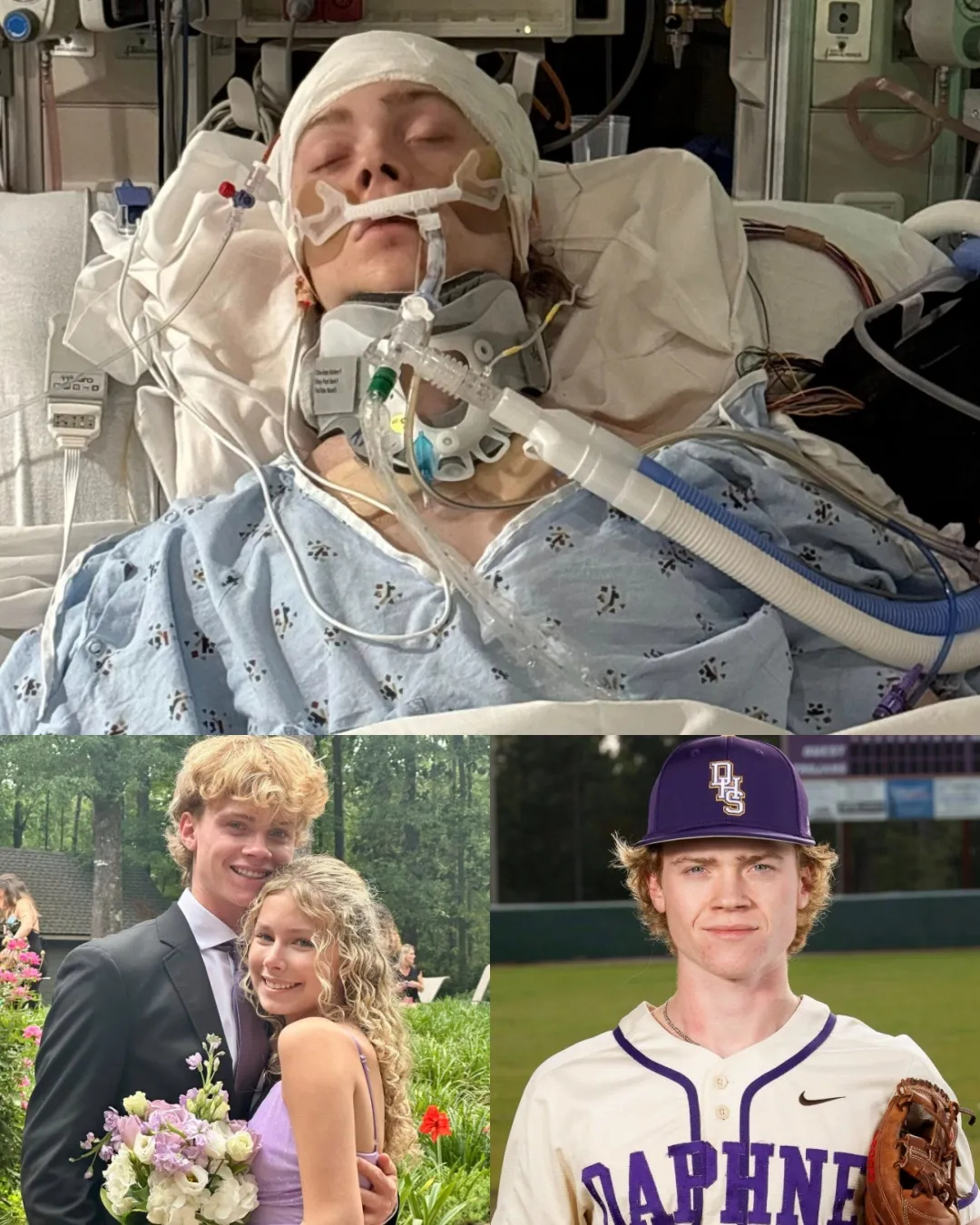
The room is quiet except for the rhythm of machines — breaths that aren’t his, beeps that measure time in fear instead of seconds. Tubes surround him. Monitors glow in the dim light. And beside the hospital bed where her 18-year-old son lies in a medically induced coma, Amy Strickland leans close and whispers the same words she has whispered every day since the accident:
“Let’s go, son.”
Twelve days have passed.
Twelve days without a blink.
Twelve days without a squeeze of her hand.
Twelve days without the smallest sign that Cleighton Strickland — athlete, brother, teammate, son — is still inside the silent body lying before her.
But Amy and her husband Scott refuse to believe this is where his story ends.
“We are believers,” Amy says quietly. “We are praying our son will recover and lead a normal life.”
And every whisper, every prayer, every hour spent at his bedside is a testament to a hope that refuses to die.

A Crash That Stopped Everything
November 5th should have been one of the brightest seasons of his life.
Cleighton had graduated from Daphne High School just months before — an All-County baseball player, a hard worker both in the classroom and on the field. He had been preparing to move to Auburn to live with his brother Gregory while attending Southern Union Community College. One chapter ending, another about to begin.
But in a single moment, on a stretch of road near Shug Jordan Parkway, all of those plans shattered.
The crash was severe. Violent. The kind that changes everything in seconds.
Cleighton suffered a traumatic brain injury so critical that local doctors put him on a helicopter immediately. Amy remembers hearing the words, remembers her stomach dropping, remembers the world blurring as she raced to Birmingham.
“Let’s go, son,” she prayed the entire drive. The same words she had said hundreds of times on baseball fields — now whispered through tears, desperation tightening around every syllable.
When she reached UAB Hospital, she was met with machines, sterile air, and the terrifying stillness of her firstborn lying motionless.
And since that moment — since November 5th — Cleighton has not woken up.

The Pitcher Who Knew How to Finish Strong
To understand the weight of this silence, you have to know who Cleighton is.
Last spring, during his senior baseball season, Cleighton became the team’s closer — the pitcher brought into the final innings when the game was on the line, the one trusted to shut the door and secure the win.
He was calm.
Focused.
Mentally tough in a way few teenagers are.
When he stepped onto the mound, Amy would always whisper the same encouragement from the stands:
“Let’s go, son.”
It was their thing.
Their ritual.
Their promise that no matter what happened on the field, he wasn’t alone.
Now, that whisper echoes through a hospital room.
Now, the game he needs to close out isn’t measured in innings — but in survival.

Twelve Days in the Dark
Scott and Amy stand at their son’s bedside every day, waiting for the smallest miracle. A twitch. A blink. The slightest movement of a finger. Anything that tells them Cleighton is still fighting his way back.
But brain injuries are unpredictable — brutal in their uncertainty. Swelling rises and falls. Days stretch into nights. And the body lies still while loved ones wage a war the patient cannot yet join.
What keeps them going is faith — and the memory of the boy who has always pushed harder than anyone expected.
“Cleighton has always had a strong mental fortitude,” Amy says. “We hope that drive helps him now.”
Doctors monitor swelling on his brain.
Nurses adjust his ventilator.
His parents pray he will one day breathe without it.
Every update is held with hope.
Every hour stretches painfully long.
Every day is a tightrope between fear and belief.

A Family Standing Guard
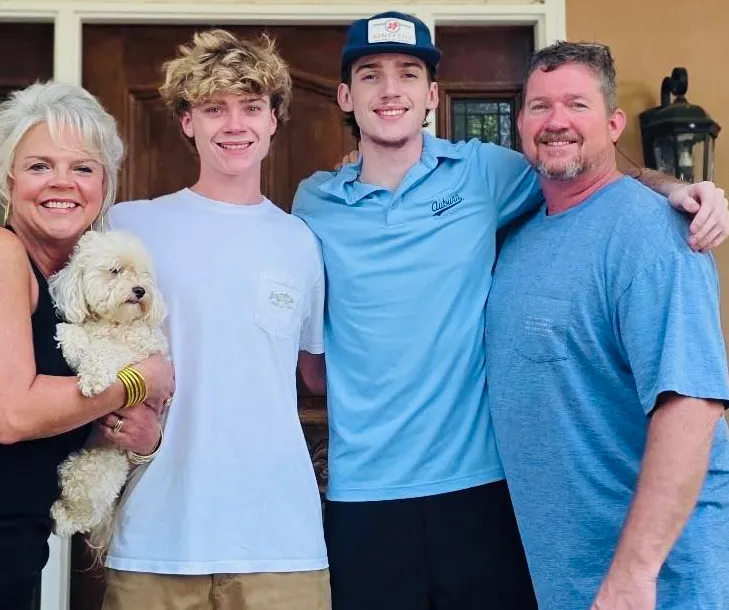
The Stricklands have not faced these twelve days alone. Love has poured in from every corner of their lives.
His brother Gregory.
His girlfriend, Mary Claire McTaggert.
His aunts — Kathryn, Rachael, Shae, and Marlo.
His teammates.
His friends.
An entire community that refuses to stop praying for him.
They come in waves, offering support, food, hugs, silence, and strength — whatever the Stricklands need in that moment.
And through it all, Scott and Amy remain at his side, a constant presence in a room where time feels frozen.
Every morning they repeat their ritual.
Every night they end it the same way.
“Let’s go, son.”
Words that once called him onto a pitcher’s mound now call him back into the world.

Who Cleighton Was Before the Impact
To speak of Cleighton only as a patient is to miss the boy behind the tubes and monitors.
He was the kid who stayed after practice to throw extra pitches.
The teenager who pushed himself academically even when no one was watching.
The athlete who didn’t crave attention — only progress.
Coaches admired his endurance.
Teachers admired his focus.
Friends admired his quiet determination.
He was the type of player you put on the mound when everything depended on one last inning.
And now, everything truly does.

The Battle Ahead
There is no timeline for waking up after a traumatic brain injury.
Doctors cannot promise when — or if — his eyes will open.
They cannot predict when swelling will drop enough for improvement.
They cannot say how much of him is still intact, waiting behind the silence.
But his family refuses to accept defeat.
They pray for brain swelling to subside.
They pray for movement.
They pray for breath without machines.
They pray for the return of his voice.
They pray for a miracle only time can deliver.
And as they pray, they stay.
Beside him.
With him.
For him.

A Community Holding Its Breath
News of the accident spread quickly.
Prayers came even faster.
Former coaches.
Old classmates.
Neighbors.
Teammates from years past.
People who watched him grow from a kid with a glove too big for his hand into a young man strong enough to chase a dream.
Everyone is waiting — waiting for the moment Amy and Scott announce that their son has opened his eyes, that he heard their voices, that he chose to fight his way back.
Until that moment comes, the message from the family remains simple:
Pray. Believe. Don’t stop.

Whispers That Refuse to Fade
In hospitals, victories often come in inches, not miles.
A flicker of a finger.
A change in pressure.
A tiny shift in the monitor’s rhythm.
Scott and Amy know this.
And still — every day, they lean close to their son, speak softly, and refuse to let him drift away.
“Let’s go, son.”
The words are no longer for a baseball field.
They are for a battlefield he cannot see — but is fighting on anyway.
They are the rope they use to pull him back toward consciousness.
The spark they hope he still hears.
The love they cannot give up on.

A Victory Worth Fighting For
The biggest win of Cleighton Strickland’s life will not happen on a mound or under stadium lights.
It will happen in a silent hospital room, with his parents watching, waiting, believing.
A blink.
A twitch.
A breath of his own.
And when that moment comes — when he closes out this match the way he has closed out so many others — Amy will say the words she’s been whispering for twelve long days:
“Let’s go, son.”
Because this time, the victory is not a game.
It’s his life.



In a case that has sent shockwaves through the Madison community, a 26-year-old Wisconsin man, James Barnes-Morris, has pleaded guilty to first-degree reckless homicide in the death of his 24-year-old girlfriend,
Brooke Strattan, after chillingly telling friends how difficult it had been to hide her body in a pond.
The plea came on Monday, ending months of legal uncertainty and leaving a community grappling with the sheer brutality of the crime.
Barnes-Morris admitted he was responsible for taking Strattan’s life in the fall of 2024, a truth that friends, family, and neighbors are still trying to process.
Strattan, described by loved ones as bright, compassionate, and full of life, vanished after being last seen with Barnes-Morris on the morning of September 30, 2024. Her disappearance triggered frantic searches, public pleas, and widespread concern.
Days later, the search ended in horror when her body was recovered from a retention pond.
Court documents paint a picture of escalating tension and fear in the days leading up to Strattan’s death. Several friends recalled a public argument between the couple just days before her disappearance.
Witnesses said the disagreement was heated, and Strattan eventually left the scene with another friend. She confided in that friend her fear that Barnes-Morris “was truly going to kill her,” a fear that would tragically prove justified.
Hours after Strattan was last seen walking with Barnes-Morris, police say he appeared at a friend’s house.
According to detectives, he spoke with a casual cruelty that left the friend unnerved, saying, “I had to get rid of her,” while discussing needing “more bricks and rope” and noting how “the weeds made it hard.”
At the time, the friend observed that Barnes-Morris was wet and had bloody scratches on his legs—details that later became crucial evidence in the investigation.
Barnes-Morris remained elusive until October 3, 2024, when he was found hiding in a friend’s basement, the same day authorities discovered Strattan’s body.
At the time of his arrest, he was in possession of her phone and credit cards, suggesting a chilling attempt to continue using her identity even after her death.
The legal proceedings that followed were tense and closely followed by local media.
The Dane County District Attorney’s Office initially charged Barnes-Morris with first-degree intentional homicide with a domestic abuse modifier, as well as first-degree reckless homicide with a domestic abuse modifier.
In a plea deal reached earlier this year, the intentional homicide charge was dropped, leaving Barnes-Morris to plead guilty to the reckless homicide count.
Under Wisconsin law, reckless homicide involves conduct that creates an unreasonable and substantial risk of death or great bodily harm, and results in a death.
The domestic abuse modifier underscores the intimate and personal nature of the crime, elevating the severity and signaling a breach of trust between partners. Barnes-Morris now faces up to 60 years in prison at sentencing, according to local NBC affiliate WMTV.
The case has prompted renewed attention on domestic violence and the warning signs that precede such tragedies.
Friends and family of Strattan have described her as a careful, thoughtful individual who had confided her fears about her relationship, yet her pleas went unheeded in ways that many now describe as heartbreaking.
“This wasn’t just a tragic accident or a sudden fight,” said one of Strattan’s close friends.
“She was scared. She told us she felt unsafe. And in the end, the fear she expressed became real.”
The details that emerged during the investigation cast a stark light on the chilling mindset of Barnes-Morris.
In his statements to friends before being arrested, he spoke with a detached practicality about hiding a human life.
The casual manner in which he referenced the tools and obstacles involved in disposing of Strattan’s body—bricks, rope, and even weeds—underscores a degree of premeditation that has horrified those following the case.
Authorities have said that the evidence collected from the scene, from witnesses, and from Barnes-Morris’s own statements, provided a clear and damning timeline of events.
The scratches on his legs, the wet clothing, and his possession of Strattan’s personal items contributed to a case that prosecutors argued left little room for doubt about his culpability.
While the plea agreement spares the court a lengthy trial, it does not spare the emotional toll on Strattan’s family, friends, and community.
Each day, they are forced to grapple with the knowledge that someone she trusted ultimately took her life.
Her parents, siblings, and close friends have spoken publicly about the grief and anger they feel, while advocating for more awareness about the dangers of domestic abuse.
“This is a loss that can never be undone,” said one family member.
“No sentence, no legal process, can bring her back. But we hope that by speaking out, we can prevent this from happening to someone else. Brooke’s voice deserves to be heard, even if she is no longer here.”
Barnes-Morris’s change of plea also illustrates the strategic decisions made in legal proceedings.
By pleading guilty to reckless homicide, he avoided the possibility of facing a first-degree intentional homicide conviction, which carries the potential for life imprisonment.
Nevertheless, the gravity of the reckless homicide charge, especially with the domestic abuse modifier, ensures that he will face decades behind bars and the full weight of public scrutiny.
Experts in domestic violence cases emphasize that incidents like this underscore the importance of recognizing early warning signs.
Friends and acquaintances of potential victims are often the first line of defense, yet they may feel powerless to intervene.
Authorities stress that threats should always be taken seriously, and that victims expressing fear of a partner’s violence require immediate and sustained attention.
In Madison, community organizations and local leaders have cited Strattan’s case as a wake-up call for both preventive education and robust support systems.
They have advocated for programs that empower friends, family, and co-workers to report threats, and for ensuring that law enforcement and social services respond promptly and effectively to domestic abuse concerns.
As sentencing approaches, Barnes-Morris’s fate rests with the judge, who will weigh the severity of the crime, the plea agreement, and the impact on the victim’s family.
Community members continue to follow developments closely, hoping that justice, in some form, will provide acknowledgment of the horror that Strattan endured.
For now, the memory of Brooke Strattan remains a stark reminder of how fragile life can be, how domestic violence can escalate to irreversible tragedy, and how important it is to listen to the fears of those we care about.
Her story, as recounted in court documents and media coverage, is one that will linger far beyond the courtroom, challenging individuals and institutions alike to act before words of fear become cries of despair.
This case is also a testament to the importance of accountability.
While the legal system moves through its processes, the voices of survivors, friends, and families ensure that Strattan’s life is not reduced to a statistic.
She is remembered as a real person, someone who laughed, loved, and feared—and whose life was tragically cut short by someone who should have cherished her.
As James Barnes-Morris awaits sentencing, the community grapples with a mixture of grief, outrage, and a desire for lessons to be learned.
His statements to friends, chilling as they were, have become part of the permanent record—a reminder of the human capacity for violence and the urgent need for vigilance and intervention in domestic situations.
Brooke Strattan’s story, though ending in tragedy, has sparked conversations, policy discussions, and community reflection.
It serves as a call to recognize danger signs, to support victims of abuse, and to ensure that no plea of fear goes unheard.
In the end, while justice in court may be measured in years of incarceration, the enduring impact of Strattan’s life and death reaches far beyond, touching hearts, challenging minds, and reminding everyone that even in moments of darkness, awareness and action can make the difference between life and death.
The Boy Who Won’t Wake Up — and the Parents Who Refuse to Give Up.4620
The room is quiet except for the rhythm of machines — breaths that aren’t his, beeps that measure time in fear instead of seconds. Tubes surround him. Monitors glow in the dim light. And beside the hospital bed where her 18-year-old son lies in a medically induced coma, Amy Strickland leans close and whispers the same words she has whispered every day since the accident:
“Let’s go, son.”
Twelve days have passed.
Twelve days without a blink.
Twelve days without a squeeze of her hand.
Twelve days without the smallest sign that Cleighton Strickland — athlete, brother, teammate, son — is still inside the silent body lying before her.
But Amy and her husband Scott refuse to believe this is where his story ends.
“We are believers,” Amy says quietly. “We are praying our son will recover and lead a normal life.”
And every whisper, every prayer, every hour spent at his bedside is a testament to a hope that refuses to die.
A Crash That Stopped Everything
November 5th should have been one of the brightest seasons of his life.
Cleighton had graduated from Daphne High School just months before — an All-County baseball player, a hard worker both in the classroom and on the field. He had been preparing to move to Auburn to live with his brother Gregory while attending Southern Union Community College. One chapter ending, another about to begin.
But in a single moment, on a stretch of road near Shug Jordan Parkway, all of those plans shattered.
The crash was severe. Violent. The kind that changes everything in seconds.
Cleighton suffered a traumatic brain injury so critical that local doctors put him on a helicopter immediately. Amy remembers hearing the words, remembers her stomach dropping, remembers the world blurring as she raced to Birmingham.
“Let’s go, son,” she prayed the entire drive. The same words she had said hundreds of times on baseball fields — now whispered through tears, desperation tightening around every syllable.
When she reached UAB Hospital, she was met with machines, sterile air, and the terrifying stillness of her firstborn lying motionless.
And since that moment — since November 5th — Cleighton has not woken up.
The Pitcher Who Knew How to Finish Strong
To understand the weight of this silence, you have to know who Cleighton is.
Last spring, during his senior baseball season, Cleighton became the team’s closer — the pitcher brought into the final innings when the game was on the line, the one trusted to shut the door and secure the win.
He was calm.
Focused.
Mentally tough in a way few teenagers are.
When he stepped onto the mound, Amy would always whisper the same encouragement from the stands:
“Let’s go, son.”
It was their thing.
Their ritual.
Their promise that no matter what happened on the field, he wasn’t alone.
Now, that whisper echoes through a hospital room.
Now, the game he needs to close out isn’t measured in innings — but in survival.
Twelve Days in the Dark
Scott and Amy stand at their son’s bedside every day, waiting for the smallest miracle. A twitch. A blink. The slightest movement of a finger. Anything that tells them Cleighton is still fighting his way back.
But brain injuries are unpredictable — brutal in their uncertainty. Swelling rises and falls. Days stretch into nights. And the body lies still while loved ones wage a war the patient cannot yet join.
What keeps them going is faith — and the memory of the boy who has always pushed harder than anyone expected.
“Cleighton has always had a strong mental fortitude,” Amy says. “We hope that drive helps him now.”
Doctors monitor swelling on his brain.
Nurses adjust his ventilator.
His parents pray he will one day breathe without it.
Every update is held with hope.
Every hour stretches painfully long.
Every day is a tightrope between fear and belief.
A Family Standing Guard
The Stricklands have not faced these twelve days alone. Love has poured in from every corner of their lives.
His brother Gregory.
His girlfriend, Mary Claire McTaggert.
His aunts — Kathryn, Rachael, Shae, and Marlo.
His teammates.
His friends.
An entire community that refuses to stop praying for him.
They come in waves, offering support, food, hugs, silence, and strength — whatever the Stricklands need in that moment.
And through it all, Scott and Amy remain at his side, a constant presence in a room where time feels frozen.
Every morning they repeat their ritual.
Every night they end it the same way.
“Let’s go, son.”
Words that once called him onto a pitcher’s mound now call him back into the world.
Who Cleighton Was Before the Impact
To speak of Cleighton only as a patient is to miss the boy behind the tubes and monitors.
He was the kid who stayed after practice to throw extra pitches.
The teenager who pushed himself academically even when no one was watching.
The athlete who didn’t crave attention — only progress.
Coaches admired his endurance.
Teachers admired his focus.
Friends admired his quiet determination.
He was the type of player you put on the mound when everything depended on one last inning.
And now, everything truly does.
The Battle Ahead
There is no timeline for waking up after a traumatic brain injury.
Doctors cannot promise when — or if — his eyes will open.
They cannot predict when swelling will drop enough for improvement.
They cannot say how much of him is still intact, waiting behind the silence.
But his family refuses to accept defeat.
They pray for brain swelling to subside.
They pray for movement.
They pray for breath without machines.
They pray for the return of his voice.
They pray for a miracle only time can deliver.
And as they pray, they stay.
Beside him.
With him.
For him.
A Community Holding Its Breath
News of the accident spread quickly.
Prayers came even faster.
Former coaches.
Old classmates.
Neighbors.
Teammates from years past.
People who watched him grow from a kid with a glove too big for his hand into a young man strong enough to chase a dream.
Everyone is waiting — waiting for the moment Amy and Scott announce that their son has opened his eyes, that he heard their voices, that he chose to fight his way back.
Until that moment comes, the message from the family remains simple:
Pray. Believe. Don’t stop.
Whispers That Refuse to Fade
In hospitals, victories often come in inches, not miles.
A flicker of a finger.
A change in pressure.
A tiny shift in the monitor’s rhythm.
Scott and Amy know this.
And still — every day, they lean close to their son, speak softly, and refuse to let him drift away.
“Let’s go, son.”
The words are no longer for a baseball field.
They are for a battlefield he cannot see — but is fighting on anyway.
They are the rope they use to pull him back toward consciousness.
The spark they hope he still hears.
The love they cannot give up on.
A Victory Worth Fighting For
The biggest win of Cleighton Strickland’s life will not happen on a mound or under stadium lights.
It will happen in a silent hospital room, with his parents watching, waiting, believing.
A blink.
A twitch.
A breath of his own.
And when that moment comes — when he closes out this match the way he has closed out so many others — Amy will say the words she’s been whispering for twelve long days:
“Let’s go, son.”
Because this time, the victory is not a game.
It’s his life.