Indianapolis Man Charged With Murder After Girlfriend Shot in Front of Child.6008

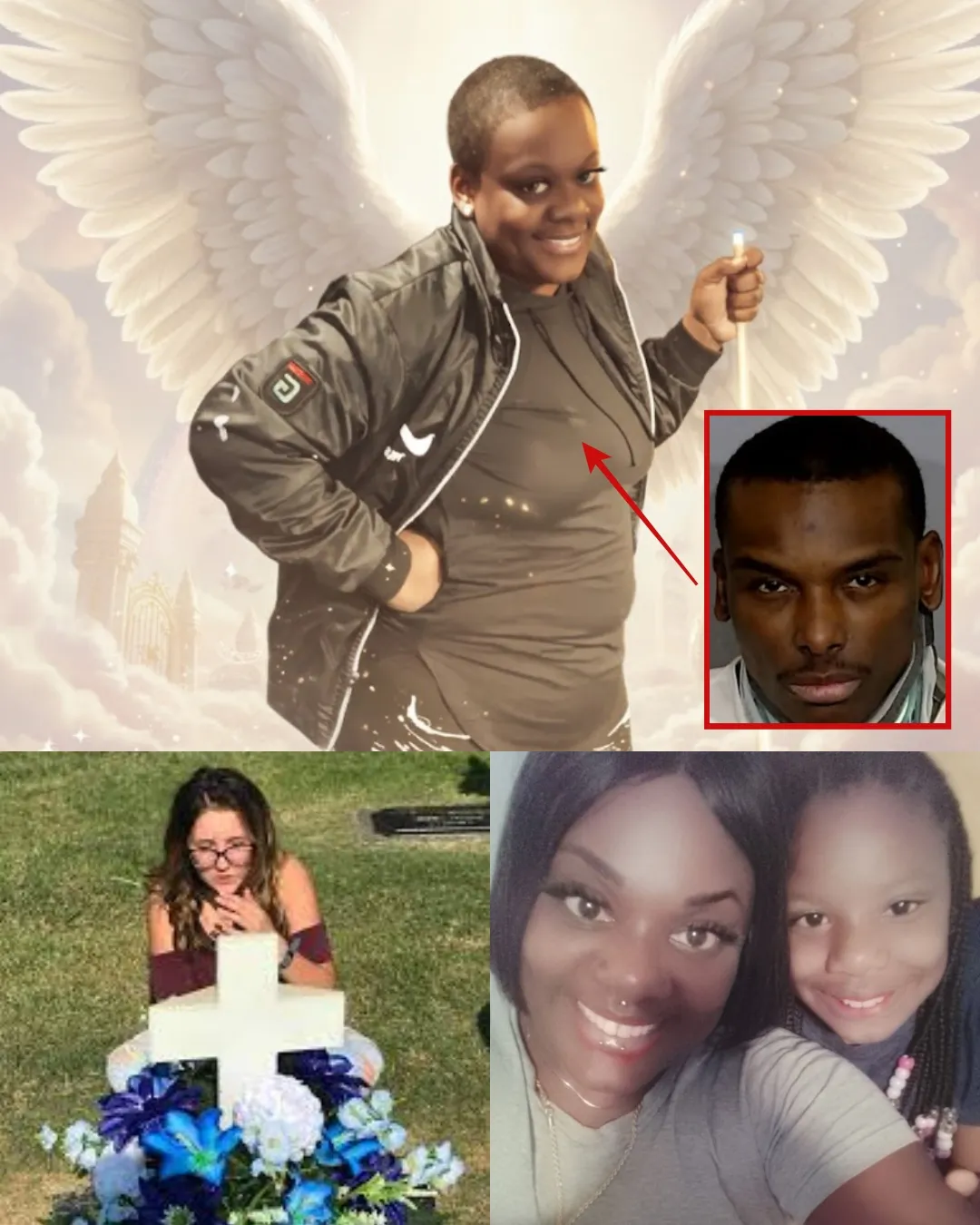

The night was supposed to be quiet.
Just before 2 a.m. on December 22, 2025, the city of Indianapolis lay mostly asleep, wrapped in winter darkness and routine silence.
Then a single gunshot shattered that silence inside an apartment on South Village Way.
Police say officers were dispatched to the 7500 block of South Village Way in Indianapolis after receiving a report of a person who had been shot.
Calls like that carry an urgency that cuts through everything—every red light, every empty street, every moment that might still matter.
Officers arrived knowing that seconds often decide whether someone lives or dies.
Inside the apartment, they found a woman lying unresponsive in a bedroom.
There was visible trauma to her head, the kind that leaves no ambiguity about what had happened.
The room told a story before anyone spoke.
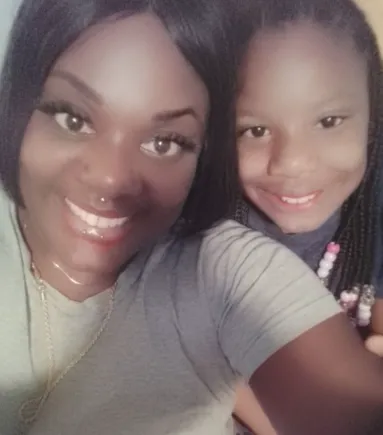
Emergency responders rushed her to Eskenazi Hospital, hoping against hope that intervention could change the outcome.
Doctors worked quickly, methodically, with the practiced urgency reserved for gunshot victims.
Despite their efforts, the woman was pronounced dead shortly after arrival.
Her name was Ashley Yunya Yarrell.
She was 36 years old.
An age where life is usually divided between responsibility and hope, not tragedy and finality.
Ashley was more than the details in a police report.
She was someone’s partner, someone’s presence, someone whose life extended far beyond the walls of that bedroom.
But in a matter of moments, her future was violently erased.
Authorities allege that the person responsible was her boyfriend, 41-year-old Al Fisher II.
Police say Fisher fled the apartment on foot immediately after the shooting.
By the time officers arrived, he was gone.

But he did not leave quietly.
He left behind something far more devastating than physical evidence.
He left behind a child who had witnessed everything.
Not long after the gunshot, a neighbor in the apartment building was startled awake by a knock at the door.
When they opened it, they were not met by an adult asking for help.
They saw a young child standing there, crying and visibly shaken.
The neighbor immediately knew something was terribly wrong.
When they asked the child what had happened, the answer came in broken, panicked fragments.
The child said they had just seen a man shoot Ashley.
According to court documents, the child kept repeating the same words over and over.
“He did it, he did it,” the child reportedly said.
“Why would he do that.”
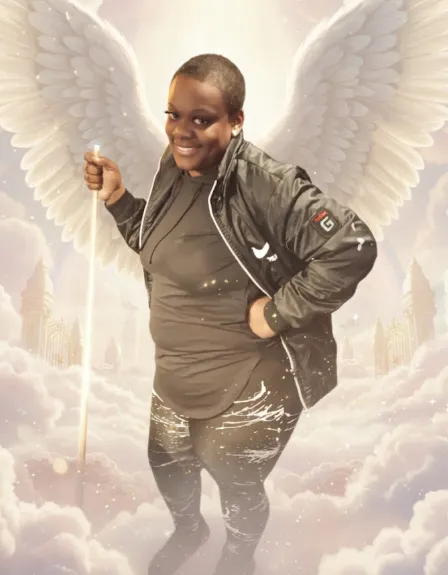
Those words would later echo through the investigation.
They were not rehearsed.
They were not filtered through adult logic.
They were the raw response of a child trying to make sense of violence they were never meant to see.
The neighbor did not hesitate.
They called 911 immediately, relaying what the child had told them.
That call became a critical piece of the timeline.
Detectives later interviewed the child in a controlled setting, trying to balance the need for information with the reality of trauma.
According to those interviews, the child said they had been in the living room wearing headphones when they heard Ashley and Fisher arguing.
Arguments are not unusual sounds in many homes, and the child initially stayed where they were.
But something about the argument changed.
The tone, the volume, the intensity reached a point that drew the child toward the bedroom.
That decision would alter the rest of their life.
When the child entered the bedroom, they witnessed the moment everything ended.
They heard the gunshot.
They saw Fisher shoot Ashley.
The child told detectives their ears were ringing afterward.
They said it smelled “like a bomb.”
Descriptions that only come from someone who experienced the blast of violence up close.

Investigators say Fisher then told the child to stay inside the apartment.
He allegedly took Ashley’s phone before fleeing on foot.
In those moments, he left not only a crime scene, but a child alone with unimaginable fear.
Once Fisher was gone, the child did the only thing they could think to do.
They ran out of the apartment and began knocking on doors in the building.
Door after door, looking for an adult who could help.
That image—the child running through the hallway, desperate and terrified—became one of the most haunting aspects of the case.
It is a reminder that violence never stays contained between two adults.
It spills outward, often landing hardest on the smallest witnesses.
As police worked the scene, the search for Fisher intensified.
Officers canvassed the area, gathered evidence, and issued alerts.
But Fisher had disappeared into the city.
For nearly two days, he remained at large.
During that time, the community watched closely, knowing a suspected murderer was still free.
And then the community did what law enforcement cannot do alone.
On December 24, multiple tips began coming in from the public.
People reported sightings, information, movements.
Those tips led Indianapolis Metropolitan Police Department Northwest District officers to the 5400 block of Georgetown Road, near West 56th Street and Guion Road.
There, police say they found Fisher sitting in a car.
What could have ended quietly instead escalated once again.
According to police, Fisher fled, leading officers on a chase.
The pursuit ended when Fisher crashed the vehicle he was driving.
Even then, authorities say he attempted to run from officers on foot.
He was quickly caught and taken into custody.
The arrest brought a measure of relief to a shaken community.
Less than 48 hours after the shooting, the suspect was no longer free.
But relief does not undo what had already been done.
In a statement following the arrest, IMPD emphasized the role the community played.
“This quick arrest was the result of strong collaboration between detectives, officers and the community,” the department said.
They noted that tips from community members were critical in locating Fisher so quickly.
The statement continued with a reminder that accountability often depends on collective action.
When people speak up, investigations move faster.
When silence breaks, justice has a chance to follow.
Fisher was arrested and charged on preliminary counts of murder and resisting law enforcement.
The legal process will now determine the outcome of those charges.
Courtrooms, filings, and hearings will follow in careful succession.
But outside the legal framework, there is a quieter reckoning taking place.
One that involves grief, trauma, and a child who cannot simply return to life as it was.
Because life as it was no longer exists.
Ashley Yunya Yarrell’s death is not just a statistic in a city grappling with gun violence.
It is a story of a woman killed in her own home.
A story of domestic conflict turning fatal.
And it is inseparable from the story of the child who saw it happen.
Children who witness violence often carry it in ways that are invisible to the outside world.
Nightmares, fear, confusion, guilt—these are the lasting echoes.

The child did everything right.
They ran for help.
They told the truth.
But no child should ever be placed in a position where bravery is required for survival.
No child should have to explain the sound of a gunshot or the smell of violence.
No child should be left knocking on doors in the middle of the night, asking the world to respond.
Domestic violence cases often begin with arguments that escalate behind closed doors.
Neighbors may hear raised voices but assume it is not their place to intervene.
By the time the danger becomes undeniable, it is often too late.
This case forces difficult questions.
How many warning signs go unrecognized?
How often are children present during volatile disputes?
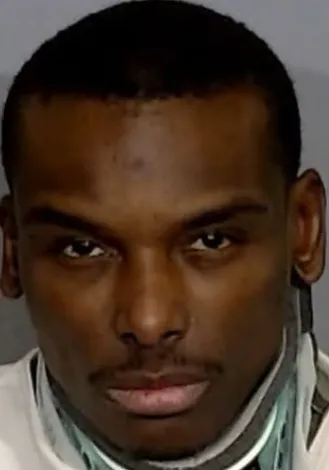
The investigation will focus on evidence—statements, timelines, physical proof.
But the moral weight of the case extends beyond the courtroom.
It challenges communities to look closer, listen harder, and act sooner.
Ashley’s life mattered.
Her death deserves accountability.
And the child who survived deserves safety, care, and long-term support.
As the case moves forward, updates will come in measured steps.
Bond hearings.
Court dates.
Legal arguments.
But the most important truths are already known.
A woman was killed.
A child witnessed it.
And a community was reminded—once again—that violence in the home leaves no one untouched.
A gunshot ended Ashley’s life.
A child’s voice carried the truth into the night.
And a city now waits for justice to catch up with loss.
Jailyn’s Wings — The Angel Who Earned Every Feather.2850
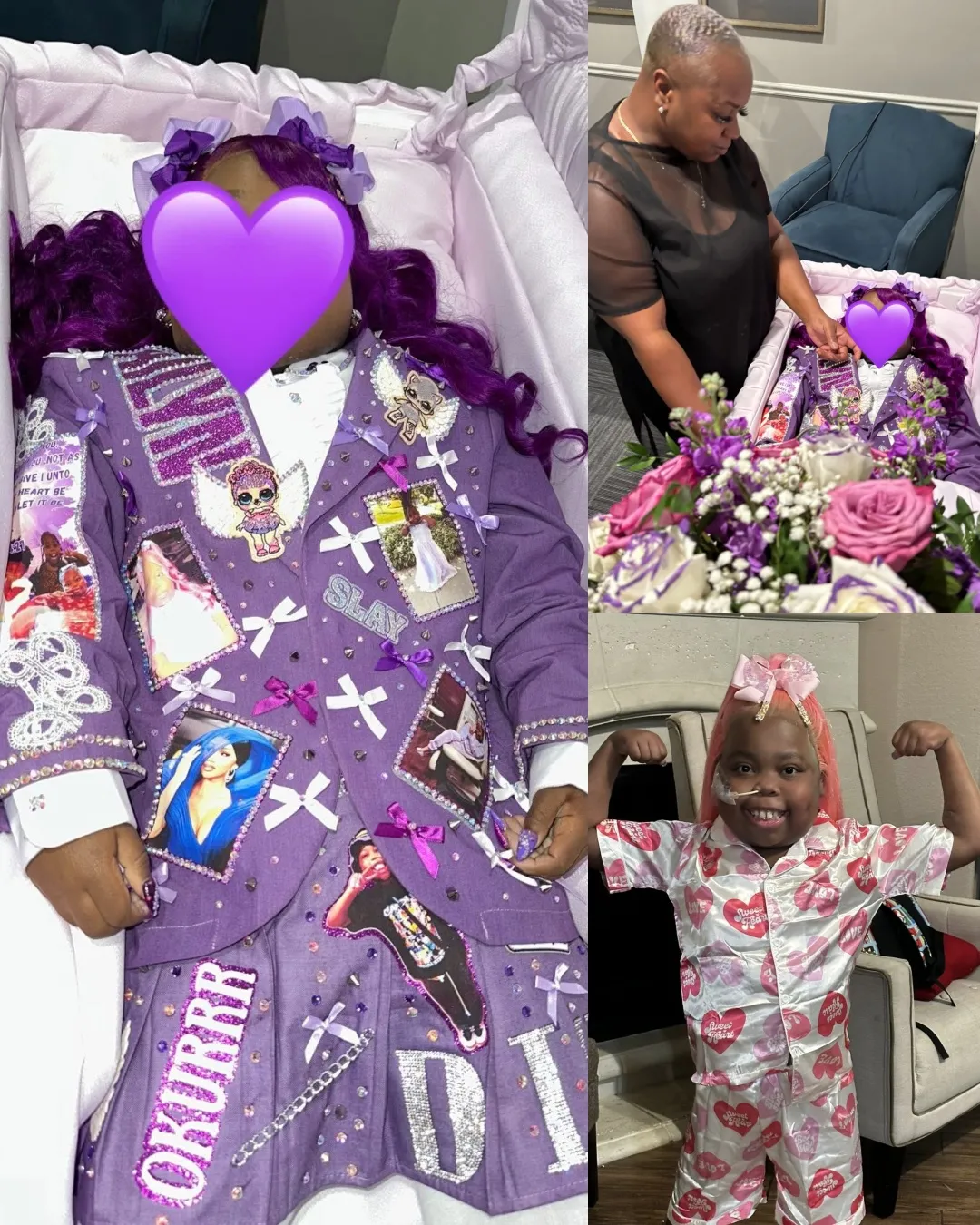
?️ Jailyn’s Wings — The Angel Who Earned Every Feather ❤️
At 2:45 a.m., the world stood still.
In the quiet of that early hour, a mother held her daughter’s tiny hand and whispered the words no parent ever wants to say. Her voice trembled, her tears fell freely, and between sobs she spoke softly — not goodbye, but “I’ll meet you in heaven one day.”

“This is not goodbye, my sweet girl,” she whispered. “You’ve earned every feather on your wings.”
And in that moment, little Jailyn gained her wings.

From the day she came into this world, Jailyn was pure light — a child whose laughter could soften even the hardest heart. She had a smile that felt like sunshine, eyes that sparkled with mischief and wonder, and a heart big enough to fill every room she entered.

Her mother always said, “She was born to make the world brighter.” And she did.
She loved to dance barefoot in the living room, twirling to songs only she could hear. She loved coloring outside the lines, watching cartoons with her favorite blanket wrapped around her shoulders, and cuddling up to her mom just to say, “You’re my best friend.”

There was something magical about her — something that made everyone who met her feel like they were in the presence of a rare, beautiful soul.
But behind her laughter, there were battles few could see.
Jailyn’s journey was not an easy one.
Her tiny body had faced more than most ever will in a lifetime — tests, hospital stays, and endless nights where pain tried to steal her light.

Yet, she never let it win.
Even when her strength began to fade, her spirit did not. She smiled through pain, found joy in small moments, and comforted others when they tried to comfort her. Nurses often said she had “the heart of an angel” long before she ever grew her wings.
Her mother was always by her side. Every single day, every single night. She learned the language of monitors and medications, but what she spoke most fluently was love.
When Jailyn cried, she held her close.

When Jailyn laughed, she laughed harder.
And when the pain became too heavy, she whispered prayers over her — gentle words asking heaven to wrap them both in mercy.

To love a child like that — fiercely, completely, knowing each day could be the last — is both a miracle and a heartbreak.
And that was the love they shared.

Her mother often said it was “an honor to be your mommy.”
And she meant it. Every single word.

Through exhaustion, fear, and endless uncertainty, she kept going — because Jailyn needed her.
Because love demanded it.

And even when the end began to whisper its approach, she refused to believe it was the end.
She believed in miracles.
She believed in her daughter’s strength.
She believed that somehow, love would be enough.

Then came that morning.
2:45 a.m.
The air was still, the monitors hummed softly, and the world seemed to hold its breath.
Her mother held her close, their foreheads pressed together, tears wetting both their cheeks.

“This isn’t goodbye,” she whispered. “Mommy will see you again.”
The room filled with a silence that felt sacred.
And in that silence, Heaven opened its doors.

Jailyn — the little girl who had fought so bravely, who had loved so deeply — took her final breath and stepped into eternity.
Her wings unfolded, bright and pure, and the pain that once weighed her down was gone.

The world feels emptier now without her laughter.
But for those who loved her, she isn’t truly gone.
Her spirit lingers — in the soft glow of sunrise, in the sound of laughter, in the warmth of memories that refuse to fade.

Her mother wrote later that morning:
“This is not goodbye. Mommy will meet you in heaven one day.
Rest, my sweet angel. You earned every feather on your wings.
It’s been an honor to love you, care for you, and to be your mommy.
The world loved you. You will forever be in our hearts.”
Those words, raw and unfiltered, carried the weight of both loss and love — a mother’s greatest heartbreak and greatest privilege woven together in one last goodbye.

Now, as the world mourns, they also remember.
People light candles.
They send prayers.
They whisper her name into the wind.

Because Jailyn’s story is not just one of sorrow — it’s a story of grace, courage, and a love that defied every limitation.
It’s the story of a child who taught those around her what it means to live fully, love deeply, and face pain with unshakable bravery.

Every feather on her wings was earned — through her laughter, her fight, her kindness, her faith.
And though her mother’s arms are empty now, her heart is full of the memories they built together — bedtime giggles, whispered “I love yous,” and the silent moments when love spoke louder than words ever could.

Somewhere far above, the heavens have a new light tonight — bright, golden, and endlessly pure.
Jailyn is there, dancing barefoot again, her laughter echoing across the stars.
Free. Whole. Home.

And down here, her mother looks to the sky and whispers,
“Fly high, my baby girl. I’ll see you soon.”

Fly high, sweet Jailyn.
You earned every feather on your wings.
The world loved you deeply, and you will forever live in every heart that remembers your name.



The night was supposed to be quiet.
Just before 2 a.m. on December 22, 2025, the city of Indianapolis lay mostly asleep, wrapped in winter darkness and routine silence.
Then a single gunshot shattered that silence inside an apartment on South Village Way.
Police say officers were dispatched to the 7500 block of South Village Way in Indianapolis after receiving a report of a person who had been shot.
Calls like that carry an urgency that cuts through everything—every red light, every empty street, every moment that might still matter.
Officers arrived knowing that seconds often decide whether someone lives or dies.
Inside the apartment, they found a woman lying unresponsive in a bedroom.
There was visible trauma to her head, the kind that leaves no ambiguity about what had happened.
The room told a story before anyone spoke.
Emergency responders rushed her to Eskenazi Hospital, hoping against hope that intervention could change the outcome.
Doctors worked quickly, methodically, with the practiced urgency reserved for gunshot victims.
Despite their efforts, the woman was pronounced dead shortly after arrival.
Her name was Ashley Yunya Yarrell.
She was 36 years old.
An age where life is usually divided between responsibility and hope, not tragedy and finality.
Ashley was more than the details in a police report.
She was someone’s partner, someone’s presence, someone whose life extended far beyond the walls of that bedroom.
But in a matter of moments, her future was violently erased.
Authorities allege that the person responsible was her boyfriend, 41-year-old Al Fisher II.
Police say Fisher fled the apartment on foot immediately after the shooting.
By the time officers arrived, he was gone.
But he did not leave quietly.
He left behind something far more devastating than physical evidence.
He left behind a child who had witnessed everything.
Not long after the gunshot, a neighbor in the apartment building was startled awake by a knock at the door.
When they opened it, they were not met by an adult asking for help.
They saw a young child standing there, crying and visibly shaken.
The neighbor immediately knew something was terribly wrong.
When they asked the child what had happened, the answer came in broken, panicked fragments.
The child said they had just seen a man shoot Ashley.
According to court documents, the child kept repeating the same words over and over.
“He did it, he did it,” the child reportedly said.
“Why would he do that.”
Those words would later echo through the investigation.
They were not rehearsed.
They were not filtered through adult logic.
They were the raw response of a child trying to make sense of violence they were never meant to see.
The neighbor did not hesitate.
They called 911 immediately, relaying what the child had told them.
That call became a critical piece of the timeline.
Detectives later interviewed the child in a controlled setting, trying to balance the need for information with the reality of trauma.
According to those interviews, the child said they had been in the living room wearing headphones when they heard Ashley and Fisher arguing.
Arguments are not unusual sounds in many homes, and the child initially stayed where they were.
But something about the argument changed.
The tone, the volume, the intensity reached a point that drew the child toward the bedroom.
That decision would alter the rest of their life.
When the child entered the bedroom, they witnessed the moment everything ended.
They heard the gunshot.
They saw Fisher shoot Ashley.
The child told detectives their ears were ringing afterward.
They said it smelled “like a bomb.”
Descriptions that only come from someone who experienced the blast of violence up close.
Investigators say Fisher then told the child to stay inside the apartment.
He allegedly took Ashley’s phone before fleeing on foot.
In those moments, he left not only a crime scene, but a child alone with unimaginable fear.
Once Fisher was gone, the child did the only thing they could think to do.
They ran out of the apartment and began knocking on doors in the building.
Door after door, looking for an adult who could help.
That image—the child running through the hallway, desperate and terrified—became one of the most haunting aspects of the case.
It is a reminder that violence never stays contained between two adults.
It spills outward, often landing hardest on the smallest witnesses.
As police worked the scene, the search for Fisher intensified.
Officers canvassed the area, gathered evidence, and issued alerts.
But Fisher had disappeared into the city.
For nearly two days, he remained at large.
During that time, the community watched closely, knowing a suspected murderer was still free.
And then the community did what law enforcement cannot do alone.
On December 24, multiple tips began coming in from the public.
People reported sightings, information, movements.
Those tips led Indianapolis Metropolitan Police Department Northwest District officers to the 5400 block of Georgetown Road, near West 56th Street and Guion Road.
There, police say they found Fisher sitting in a car.
What could have ended quietly instead escalated once again.
According to police, Fisher fled, leading officers on a chase.
The pursuit ended when Fisher crashed the vehicle he was driving.
Even then, authorities say he attempted to run from officers on foot.
He was quickly caught and taken into custody.
The arrest brought a measure of relief to a shaken community.
Less than 48 hours after the shooting, the suspect was no longer free.
But relief does not undo what had already been done.
In a statement following the arrest, IMPD emphasized the role the community played.
“This quick arrest was the result of strong collaboration between detectives, officers and the community,” the department said.
They noted that tips from community members were critical in locating Fisher so quickly.
The statement continued with a reminder that accountability often depends on collective action.
When people speak up, investigations move faster.
When silence breaks, justice has a chance to follow.
Fisher was arrested and charged on preliminary counts of murder and resisting law enforcement.
The legal process will now determine the outcome of those charges.
Courtrooms, filings, and hearings will follow in careful succession.
But outside the legal framework, there is a quieter reckoning taking place.
One that involves grief, trauma, and a child who cannot simply return to life as it was.
Because life as it was no longer exists.
Ashley Yunya Yarrell’s death is not just a statistic in a city grappling with gun violence.
It is a story of a woman killed in her own home.
A story of domestic conflict turning fatal.
And it is inseparable from the story of the child who saw it happen.
Children who witness violence often carry it in ways that are invisible to the outside world.
Nightmares, fear, confusion, guilt—these are the lasting echoes.
The child did everything right.
They ran for help.
They told the truth.
But no child should ever be placed in a position where bravery is required for survival.
No child should have to explain the sound of a gunshot or the smell of violence.
No child should be left knocking on doors in the middle of the night, asking the world to respond.
Domestic violence cases often begin with arguments that escalate behind closed doors.
Neighbors may hear raised voices but assume it is not their place to intervene.
By the time the danger becomes undeniable, it is often too late.
This case forces difficult questions.
How many warning signs go unrecognized?
How often are children present during volatile disputes?
The investigation will focus on evidence—statements, timelines, physical proof.
But the moral weight of the case extends beyond the courtroom.
It challenges communities to look closer, listen harder, and act sooner.
Ashley’s life mattered.
Her death deserves accountability.
And the child who survived deserves safety, care, and long-term support.
As the case moves forward, updates will come in measured steps.
Bond hearings.
Court dates.
Legal arguments.
But the most important truths are already known.
A woman was killed.
A child witnessed it.
And a community was reminded—once again—that violence in the home leaves no one untouched.
A gunshot ended Ashley’s life.
A child’s voice carried the truth into the night.
And a city now waits for justice to catch up with loss.
Jailyn’s Wings — The Angel Who Earned Every Feather.2850
?️ Jailyn’s Wings — The Angel Who Earned Every Feather ❤️
At 2:45 a.m., the world stood still.
In the quiet of that early hour, a mother held her daughter’s tiny hand and whispered the words no parent ever wants to say. Her voice trembled, her tears fell freely, and between sobs she spoke softly — not goodbye, but “I’ll meet you in heaven one day.”
“This is not goodbye, my sweet girl,” she whispered. “You’ve earned every feather on your wings.”
And in that moment, little Jailyn gained her wings.
From the day she came into this world, Jailyn was pure light — a child whose laughter could soften even the hardest heart. She had a smile that felt like sunshine, eyes that sparkled with mischief and wonder, and a heart big enough to fill every room she entered.
Her mother always said, “She was born to make the world brighter.” And she did.
She loved to dance barefoot in the living room, twirling to songs only she could hear. She loved coloring outside the lines, watching cartoons with her favorite blanket wrapped around her shoulders, and cuddling up to her mom just to say, “You’re my best friend.”
There was something magical about her — something that made everyone who met her feel like they were in the presence of a rare, beautiful soul.
But behind her laughter, there were battles few could see.
Jailyn’s journey was not an easy one.
Her tiny body had faced more than most ever will in a lifetime — tests, hospital stays, and endless nights where pain tried to steal her light.
Yet, she never let it win.
Even when her strength began to fade, her spirit did not. She smiled through pain, found joy in small moments, and comforted others when they tried to comfort her. Nurses often said she had “the heart of an angel” long before she ever grew her wings.
Her mother was always by her side. Every single day, every single night. She learned the language of monitors and medications, but what she spoke most fluently was love.
When Jailyn cried, she held her close.
When Jailyn laughed, she laughed harder.
And when the pain became too heavy, she whispered prayers over her — gentle words asking heaven to wrap them both in mercy.
To love a child like that — fiercely, completely, knowing each day could be the last — is both a miracle and a heartbreak.
And that was the love they shared.
Her mother often said it was “an honor to be your mommy.”
And she meant it. Every single word.
Through exhaustion, fear, and endless uncertainty, she kept going — because Jailyn needed her.
Because love demanded it.
And even when the end began to whisper its approach, she refused to believe it was the end.
She believed in miracles.
She believed in her daughter’s strength.
She believed that somehow, love would be enough.
Then came that morning.
2:45 a.m.
The air was still, the monitors hummed softly, and the world seemed to hold its breath.
Her mother held her close, their foreheads pressed together, tears wetting both their cheeks.
“This isn’t goodbye,” she whispered. “Mommy will see you again.”
The room filled with a silence that felt sacred.
And in that silence, Heaven opened its doors.
Jailyn — the little girl who had fought so bravely, who had loved so deeply — took her final breath and stepped into eternity.
Her wings unfolded, bright and pure, and the pain that once weighed her down was gone.
The world feels emptier now without her laughter.
But for those who loved her, she isn’t truly gone.
Her spirit lingers — in the soft glow of sunrise, in the sound of laughter, in the warmth of memories that refuse to fade.
Her mother wrote later that morning:
“This is not goodbye. Mommy will meet you in heaven one day.
Rest, my sweet angel. You earned every feather on your wings.
It’s been an honor to love you, care for you, and to be your mommy.
The world loved you. You will forever be in our hearts.”
Those words, raw and unfiltered, carried the weight of both loss and love — a mother’s greatest heartbreak and greatest privilege woven together in one last goodbye.
Now, as the world mourns, they also remember.
People light candles.
They send prayers.
They whisper her name into the wind.
Because Jailyn’s story is not just one of sorrow — it’s a story of grace, courage, and a love that defied every limitation.
It’s the story of a child who taught those around her what it means to live fully, love deeply, and face pain with unshakable bravery.
Every feather on her wings was earned — through her laughter, her fight, her kindness, her faith.
And though her mother’s arms are empty now, her heart is full of the memories they built together — bedtime giggles, whispered “I love yous,” and the silent moments when love spoke louder than words ever could.
Somewhere far above, the heavens have a new light tonight — bright, golden, and endlessly pure.
Jailyn is there, dancing barefoot again, her laughter echoing across the stars.
Free. Whole. Home.
And down here, her mother looks to the sky and whispers,
“Fly high, my baby girl. I’ll see you soon.”
Fly high, sweet Jailyn.
You earned every feather on your wings.
The world loved you deeply, and you will forever live in every heart that remembers your name.