Second-Degree Murder Conviction Ends Case of Woman Found Wrapped in Bike Trailer 3771c

Her Body Was Found on a Bike Trailer: The Life, Death, and 96-Year Sentence in the Case of Zaria Hardee

In the early hours of a July morning in Boulder, Colorado, a call came into police dispatch that would uncover a crime as disturbing as it was heartbreaking. A bike trailer had been abandoned along a quiet stretch of street. It didn’t look right. It hadn’t moved for days.
And something inside it was wrapped—carefully, deliberately—as if meant to be hidden from the world.
When officers arrived, they discovered the body of a young woman.
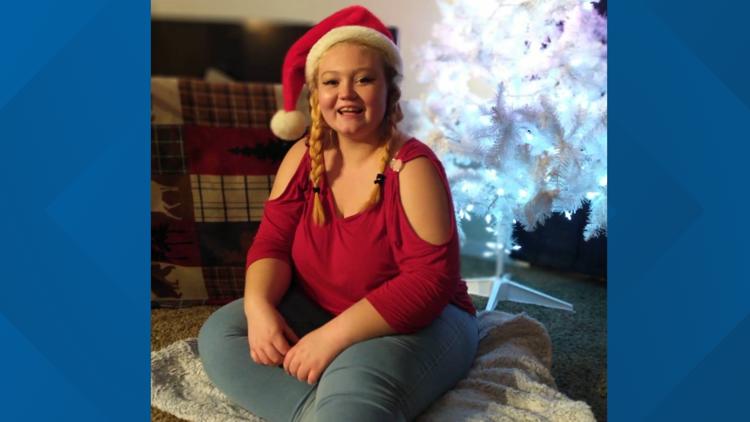
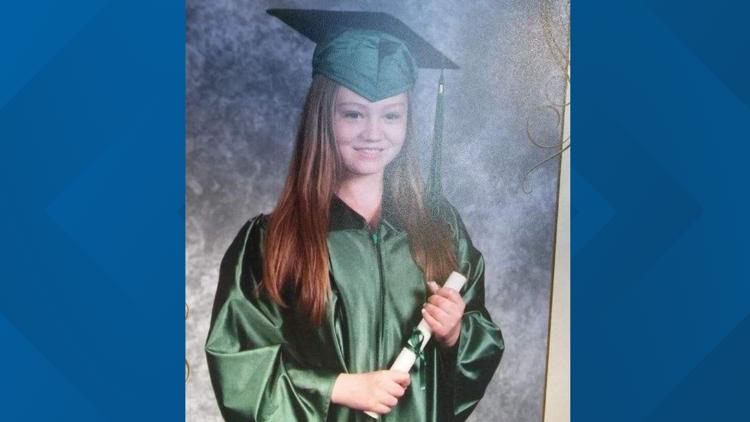
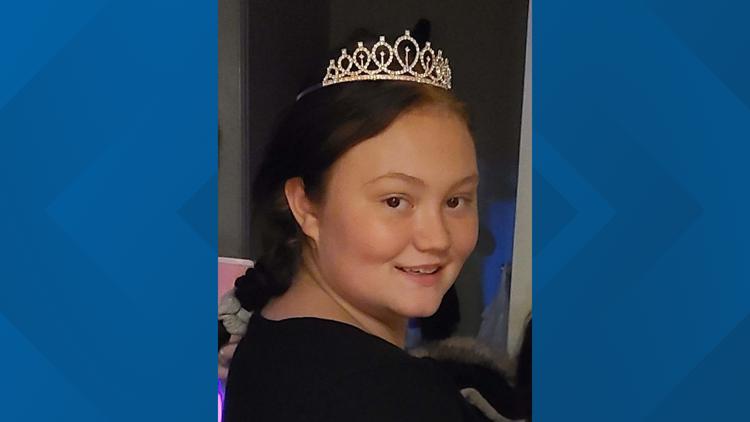
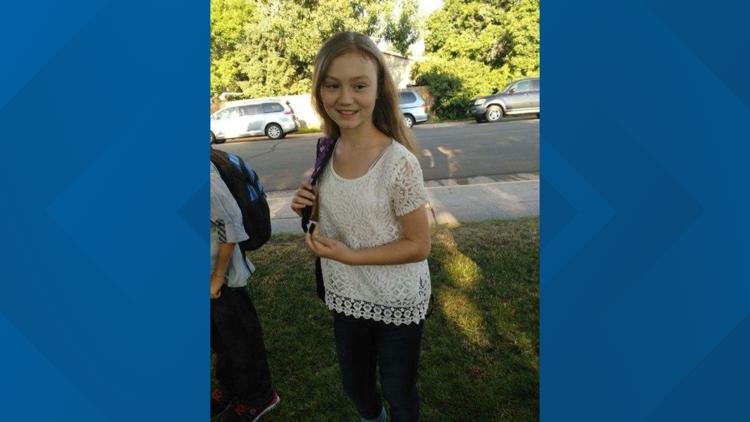
She was 19 years old. Her name was
Zaria Hardee. And the way she died would eventually lead to one of the longest prison sentences handed down in Boulder County in recent years.

A Trailer Left Behind
On July 14, 2024, officers with the Boulder Police Department responded to reports of an abandoned bike trailer near Goss Street, close to Canyon Boulevard and 18th Street in Boulder
.
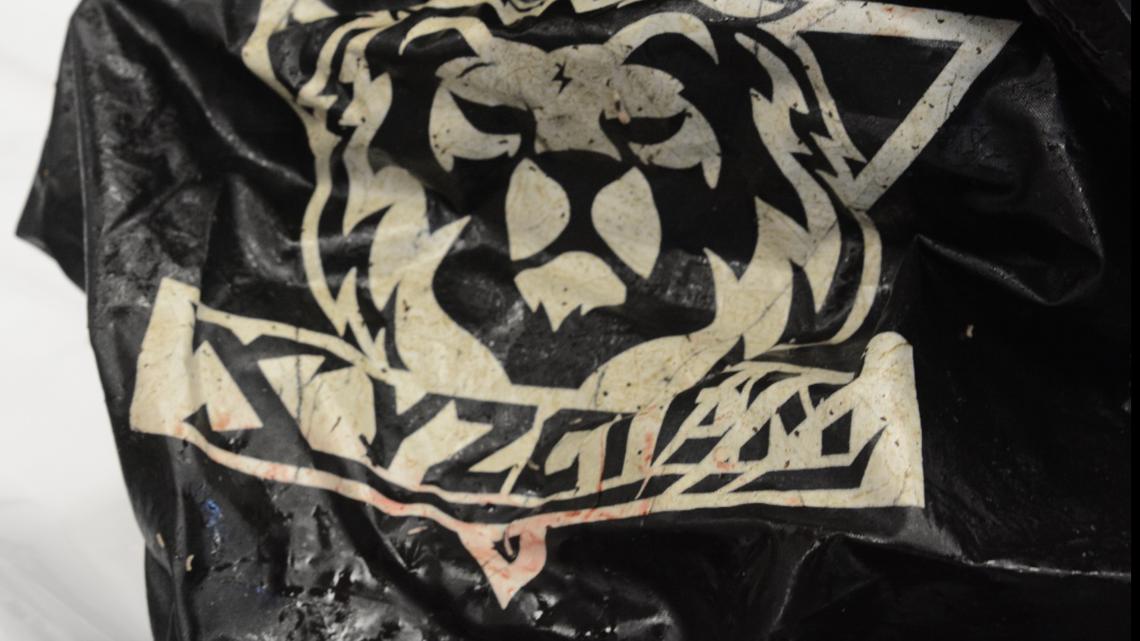
Inside the trailer, officers found Zaria’s body wrapped in multiple layers of material. Police later said they believed her remains had been there for several days before the discovery.
Investigators also determined that Zaria was unhoused at the time of her death, living on the streets of Boulder—part of a vulnerable population often overlooked, frequently unprotected, and tragically easy to exploit.
Her death was not immediately solved. But from the moment she was found, detectives suspected violence.
The Last Place She Was Seen Alive
As the investigation unfolded, detectives worked backward—retracing Zaria’s final days, searching for witnesses, and mapping her movements through Boulder’s street encampments.
According to an arrest affidavit, Zaria had been taken on July 10, 2024, to an encampment where a man named Jimmy West was living. That was the last confirmed sighting of her alive.
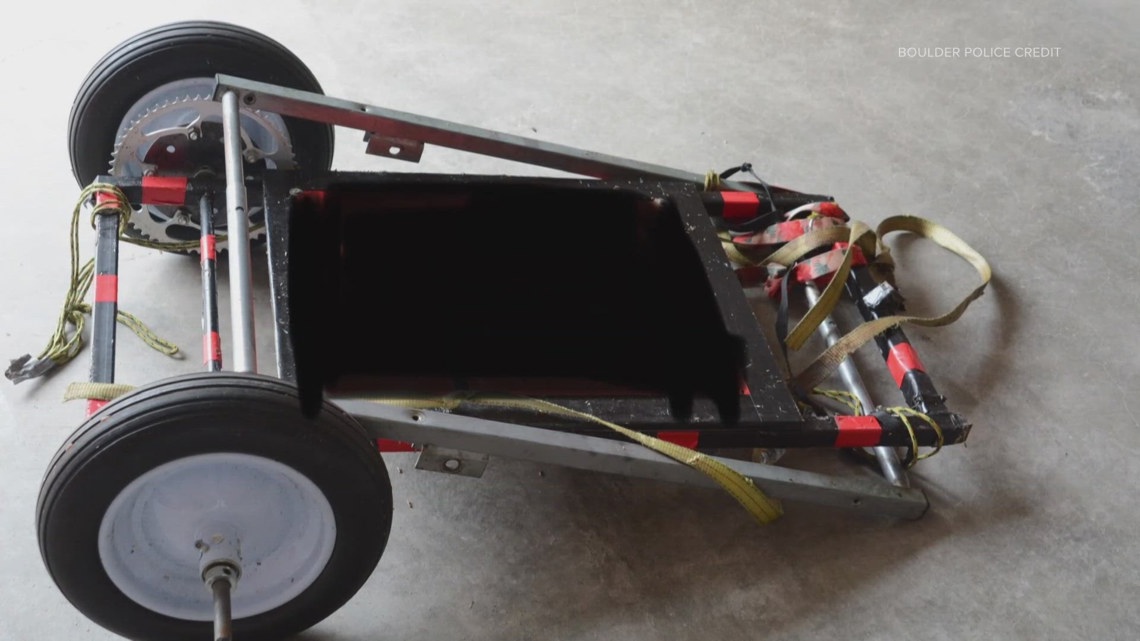
Detectives would later determine that the bike trailer where Zaria’s body was found belonged to West. He claimed it had been stolen prior to her death. Investigators did not believe him.
The evidence told a different story.

A Cause of Death That Told the Truth
The Boulder County Medical Examiner performed an autopsy that revealed the brutality of Zaria’s final moments.
She died from blunt force head injuries and asphyxia—suffocation.
This was not an accidental death. It was not exposure, overdose, or illness. The medical findings pointed clearly to homicide.
Someone had beaten her. Someone had prevented her from breathing. Someone had made sure she could not survive.
Arrest and Shocking Allegations
In January 2025, Boulder police announced they had arrested Jimmy West in connection with Zaria’s death. But as court documents were filed and testimony emerged, the case grew even darker.
According to court records, Zaria had been sold to West by her boyfriend.
The documents stated that her boyfriend “likely accepted drugs as payment” in exchange for her.
The language was clinical. The reality was horrifying.
Zaria—19 years old, unhoused, vulnerable—was treated as property. As something that could be traded. As someone whose life held no value in the eyes of the men around her.
Prosecutors would later charge West not only with second-degree murder, but also with human trafficking.
Life on the Margins
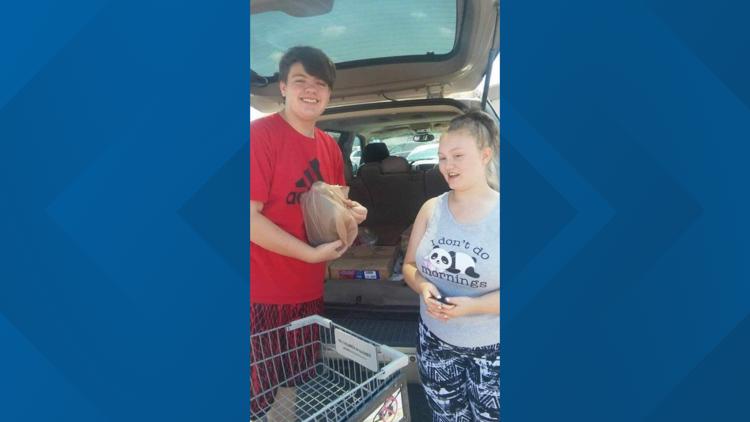
Friends and advocates described Zaria as someone struggling to survive. Like many young people experiencing homelessness, she moved between encampments, relying on others for safety, shelter, and food.
Living on the streets often means living under constant threat—especially for young women.
Violence, exploitation, and coercion are ever-present risks. Zaria’s case would become a devastating example of what happens when those risks turn fatal.
Detectives believed Zaria’s vulnerability made her an easy target. She trusted the wrong people. And that trust cost her everything.
The Trailer That Became a Crime Scene
The bike trailer itself became one of the most critical pieces of evidence.
West claimed it had been stolen. Investigators found no evidence to support that claim.
Instead, they determined the trailer belonged to him and had been used to transport Zaria’s body after her death. The fact that her body was wrapped in multiple layers suggested an attempt to conceal her remains and delay discovery.
But even careful wrapping could not erase the truth.
When police opened the trailer, the case changed forever.
A Trial That Revealed the Depth of Violence
As the case moved through the court system, prosecutors laid out a narrative of control, violence, and exploitation.
They argued that Zaria had been brought to West’s encampment against her own interests, traded like an object, and ultimately killed.
The blunt force injuries and asphyxia indicated a violent confrontation, not a moment of panic or accident.
Defense attorneys attempted to challenge the prosecution’s claims, particularly the trafficking charge.
They argued that while Zaria’s death was tragic, the evidence did not meet the legal threshold for trafficking under Colorado law.
The jury would ultimately agree—partially.
The Verdict
On December 17, 2025, the District Attorney’s Office announced the verdict.
Jimmy West was convicted of second-degree murder.
He was acquitted on the human trafficking charge.
The mixed verdict reflected the complexity of the case. While jurors found overwhelming evidence that West killed Zaria, they were not convinced—beyond a reasonable doubt—that the legal definition of trafficking had been met.
But the murder conviction alone carried devastating consequences.
A Sentence That Spoke Volumes
Immediately following the verdict, West was sentenced to 96 years in prison.
The length of the sentence was deliberate. It ensured that West would almost certainly spend the rest of his life behind bars.
For prosecutors, it was justice—though incomplete. For Zaria’s loved ones, it was accountability in a system that had failed her long before she died.
And for the city of Boulder, the case forced a reckoning with how society treats its most vulnerable.
A Young Life Reduced to Evidence
Throughout the trial, Zaria’s name appeared in police reports, affidavits, and court transcripts.
But beyond those documents, she was a teenager. A young woman with dreams she never got to chase. Someone who deserved safety, dignity, and care.
Instead, her life ended wrapped in layers of fabric, left in a bike trailer on a city street.
Her death was quiet. The consequences were not.
What This Case Reveals
The murder of Zaria Hardee exposed uncomfortable truths:
-
How easily unhoused individuals can disappear without immediate notice
-
How exploitation thrives in the shadows of addiction and homelessness
-
How violence against vulnerable women often goes unseen until it’s too late
While West’s conviction brought legal closure, it did not erase the systemic failures that allowed Zaria to be exploited, abused, and ultimately killed.
Remembering Zaria
In court, her story was told through evidence and testimony. Outside the courtroom, advocates for unhoused communities and women’s safety have continued to speak her name.
Zaria Hardee was not just a victim. She was a person whose life mattered—even when society failed to show it.
Her case stands as a reminder that justice, when it comes, often arrives too late. But memory—if preserved—can still carry meaning.
Judah’s Journey: A Family’s Hope, Faith, and Gratitude Amidst Struggles 3217c
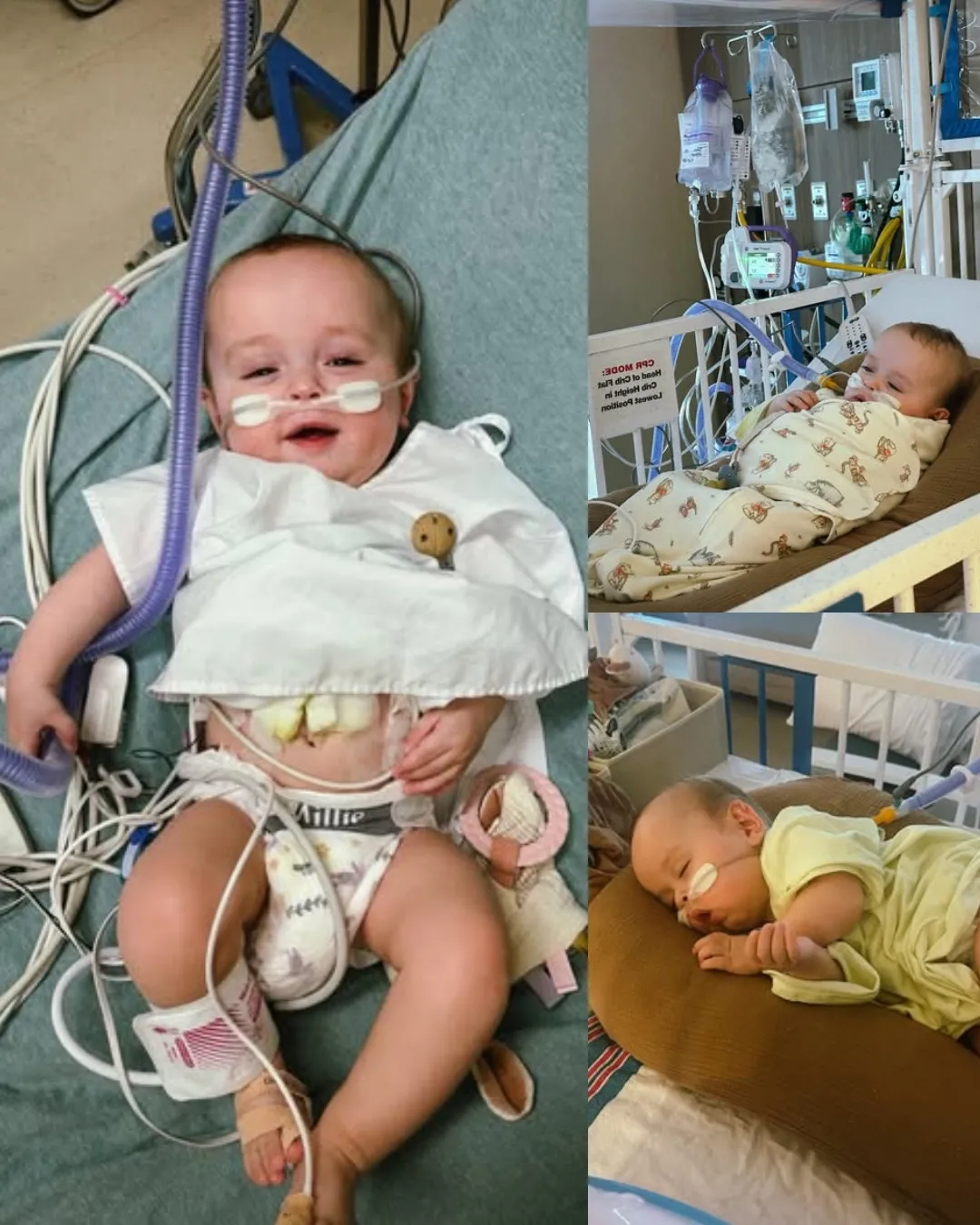
Every parent faces the daunting challenge of navigating their child’s health struggles. For Judah’s parents, this journey has been one filled with ups and downs, moments of hope interspersed with the harsh realities of watching their little one fight for every breath. Judah’s story is one of courage, resilience, and deep faith, and as his family faces each challenge, they lean into their love for him and their unwavering trust in God.
A Rocky Start
Judah, a young child who has captured the hearts of many, has been facing a critical health battle since birth. Born with underlying medical issues, he has been no stranger to hospitals, doctors, and treatments. His parents have always been by his side, doing everything they can to support him, and praying for his strength and recovery with every step of the way.
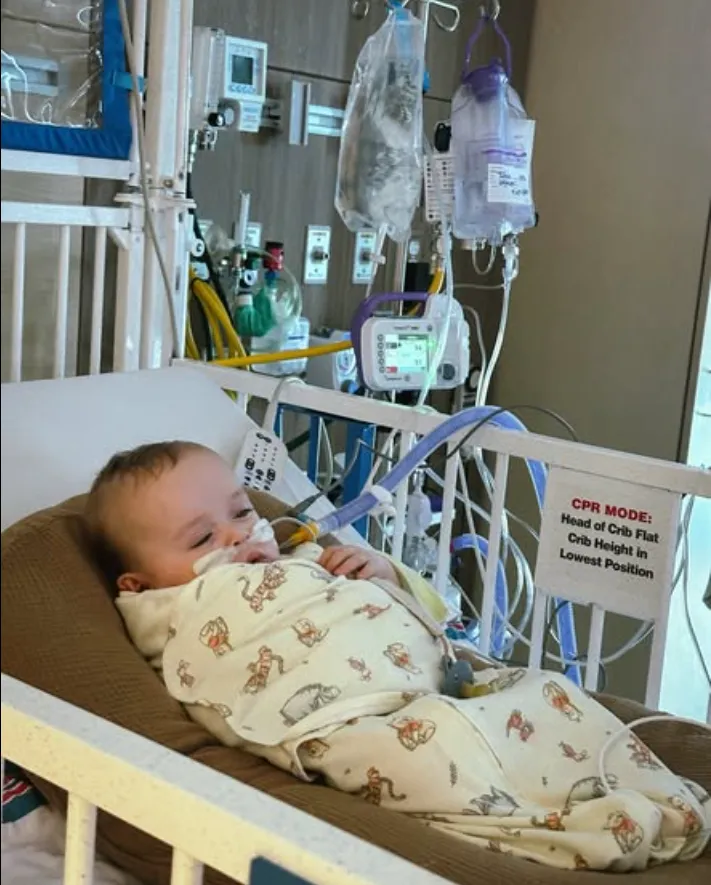
The latest chapter in Judah’s health journey started with the simple, yet often difficult, task of battling a rhinovirus. For most children, this common viral infection might cause nothing more than a slight cold or congestion. However, for Judah, with his complex medical history and ongoing treatments, the virus quickly turned into a serious challenge.
He had been discharged from the hospital on Friday, with instructions to continue his regular airway treatment regimen and to support him as he recovered from the virus. While Judah was still struggling with a lot of secretions—making it harder for him to breathe—the doctors reassured his parents that he wasn’t requiring more respiratory support than usual. The hope was that he would recover at home, with their vigilant care and support.
But life has a way of throwing curveballs, and on Sunday afternoon, just two days after his discharge, Judah’s condition began to worsen. His breathing became more labored, and his parents found themselves in the position of having to put him on supplemental oxygen at home. They immediately contacted Judah’s pulmonary team to discuss the best course of action, knowing that his health was fragile.
At that moment, a sudden turn of events forced them to rush to the hospital—Judah’s feeding tube broke. The timing couldn’t have been worse, but as it turns out, it was a blessing in disguise. Had the feeding tube not malfunctioned, Judah’s parents might have tried to continue treating him at home, hoping things would improve on their own. Instead, the broken tube prompted them to head to the hospital, where Judah was seen by doctors sooner than expected. This decision may have very well saved his life.
A Blessing in Disguise
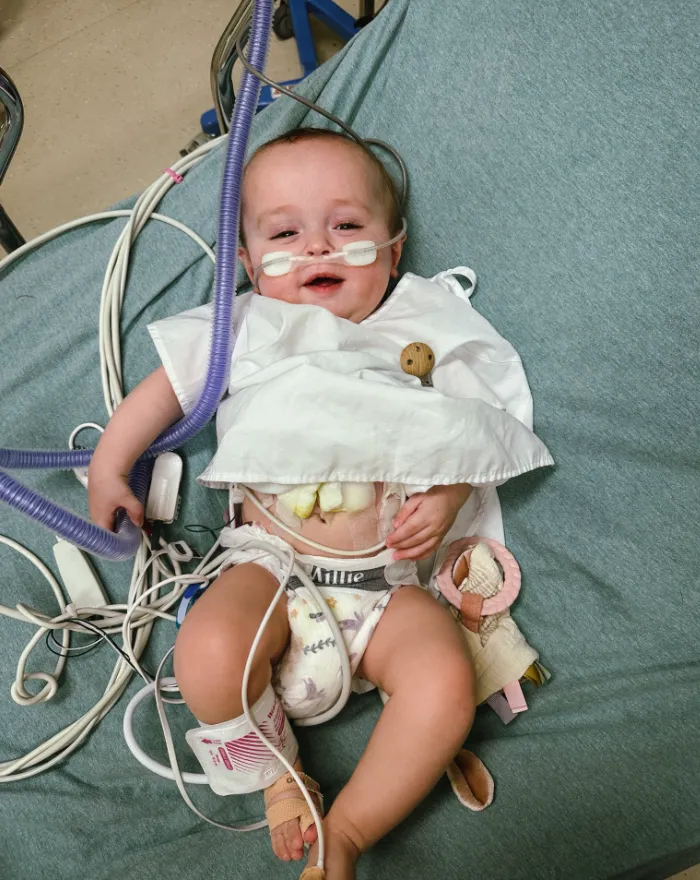
Upon arrival at the hospital, Judah’s breathing continued to worsen. His mother and father knew that their instincts had been right—they couldn’t have waited any longer. The hospital staff quickly assessed him, and a new feeding tube was successfully placed. The procedure went smoothly, which was a huge relief for Judah’s parents, who had already endured more than enough worry.
However, Judah’s breathing difficulties did not subside. He was placed on high-flow oxygen in the ER to help him breathe more comfortably. Despite the medical team’s best efforts, Judah’s respiratory support needs remained high. His body, still recovering from the viral infection, was struggling to manage the extra demands placed on it. For his parents, watching their son in distress was heartbreaking, but they remained hopeful. They knew that Judah was a fighter—his spirit was strong, and so was their faith.
The viral infection was taking a toll on Judah’s body, but it also served as a reminder of just how fragile his health could be. Every day brought new challenges. Each day, his parents prayed for their son’s recovery, asking for strength and healing, not just for Judah but for themselves as well. They continued to stand by their son’s side, holding his hand, offering comfort, and encouraging him through each difficult moment.
Faith in the Face of Struggle
For Judah’s parents, their faith has been the cornerstone of their journey. Throughout every hospitalization, every setback, and every terrifying moment, their trust in God has remained unshaken. Even in the darkest hours, they find strength in their belief that God is with them, guiding them and providing for their son’s healing.
“We thank you all for your prayers,” his mother shared with the community, expressing gratitude for the outpouring of support they’ve received. “Please pray that we can be a light to hospital staff and as we continue to build relationships with them, that we can share Jesus.”
This heartfelt plea for prayer is rooted in a desire not only for Judah’s healing but also for the opportunity to share the love and faith that have sustained them through their struggles. Despite the trials they’ve faced, Judah’s parents have maintained a sense of peace that comes from knowing that God’s plan is bigger than their understanding, and that His will is always at work, even in the hardest of times.
Judah’s parents are not just seeking healing for their son—they’re also praying for the wisdom and strength to be a witness to those around them. They want to use this difficult time as an opportunity to show others the love and grace that have carried them through. They believe that God has placed them in this position for a reason, and through their trials, they have an opportunity to shine a light in the darkness.
The Road Ahead
Judah’s journey is far from over. He still requires significant respiratory support, and his body remains vulnerable as it fights off the infection. His parents know that there are still many hurdles to overcome, but they also know that they are not alone. The hospital staff continues to care for Judah with skill and compassion, and they’ve been a source of comfort during this challenging time. But the most important source of comfort remains their faith.
Every day, Judah’s parents show up for their son, filled with love, hope, and prayer. They stand by him, believing that God is working through the medical team, through their prayers, and through their love for their son. No matter how difficult the road ahead may be, they trust that they are not walking it alone.
A Call for Continued Prayers
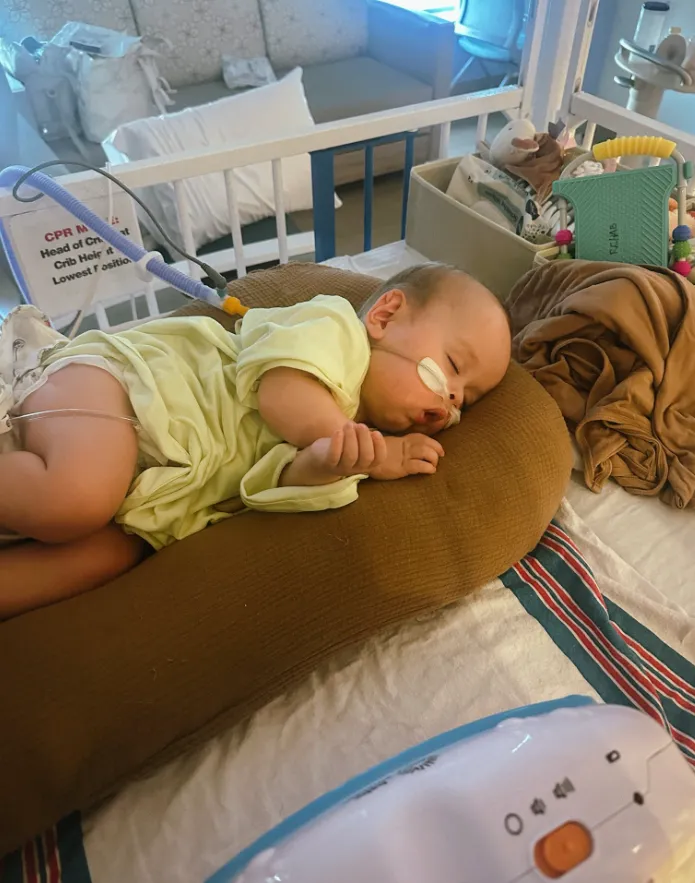
As Judah continues his fight, his family asks for continued support from their community and beyond. They are overwhelmed by the kindness and generosity shown to them, and they ask for prayers to continue surrounding their family.
They pray for Judah’s healing, for his strength, and for the doctors and nurses caring for him. They also pray for themselves—to remain strong in their faith, to trust in God’s plan, and to continue to be the light and love Judah needs.
“We will never stop fighting for our son,” Judah’s mother said. “We will continue to trust in God and the strength He gives us.”
Judah’s story is a story of resilience, faith, and hope. It is a reminder that no matter how difficult the journey may be, faith can sustain us, love can heal us, and miracles are possible. Judah has already shown incredible strength, and with the continued love and support of his family, community, and the medical team, he will continue to fight. And through it all, his parents remain committed to their son’s healing and to sharing the love of Christ with everyone they encounter.
Judah’s story is one of perseverance, and his journey is a testament to the power of prayer and the strength that can come from placing our trust in God during the most difficult times.