She Was Only 9: Remembering Aria Thorpe and the Life Taken Too Soon.5801

Aria Thorpe had turned nine only weeks earlier,and in the way children do, she wore that new age like a small crown,
as if the number itself made her taller, braver, more certain that the world was built to hold her plans. In Somerset, England, December is the kind of month that wraps streets in early darkness,
and makes homes feel like little islands of light,where families pull curtains closed and believe, for a few hours each evening, that what is inside is protected from whatever waits outside.
On the evening of December 15, 2025, that belief shattered in a way that still does not feel real when written down.
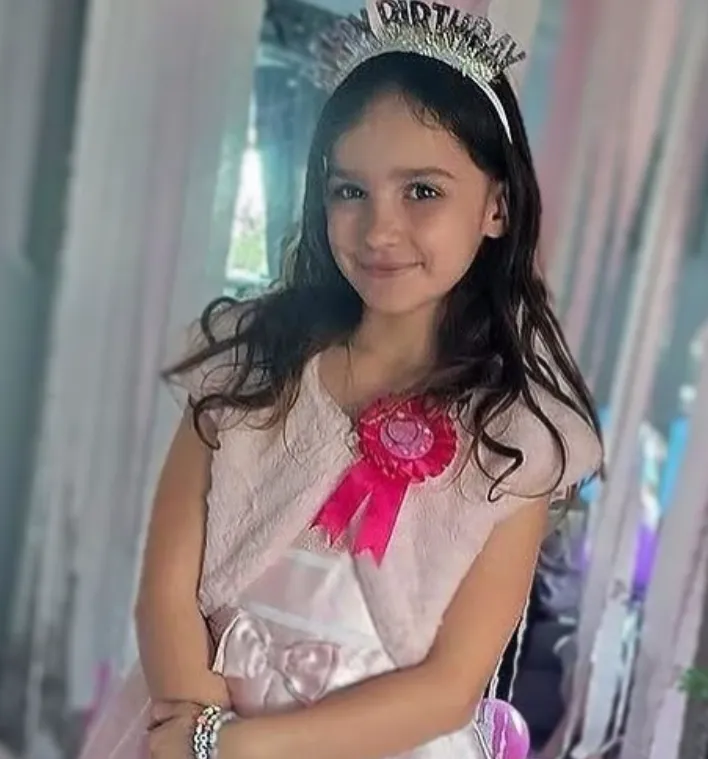
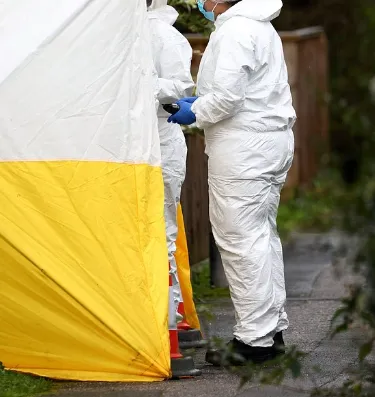
Emergency services were called to a home in Weston-super-Mare, Somerset,and when they arrived, they found Aria with a fatal stab wound.
She was pronounced dead at the scene,
taken not by illness, not by an accident of nature,but by an act that left a town asking the same stunned question again and again:
How can this happen to a child
In the hours that followed, police arrested a 15-year-old boy,and because he is a minor, his identity has not been publicly released under UK law.
Soon after, he appeared in court charged with Aria’s murder,and during a brief hearing he spoke only to confirm basic details.
He did not enter a plea at that stage. and the court set a provisional trial date of June 15, 2026,
with the next scheduled court appearance set for March 16, 2026.
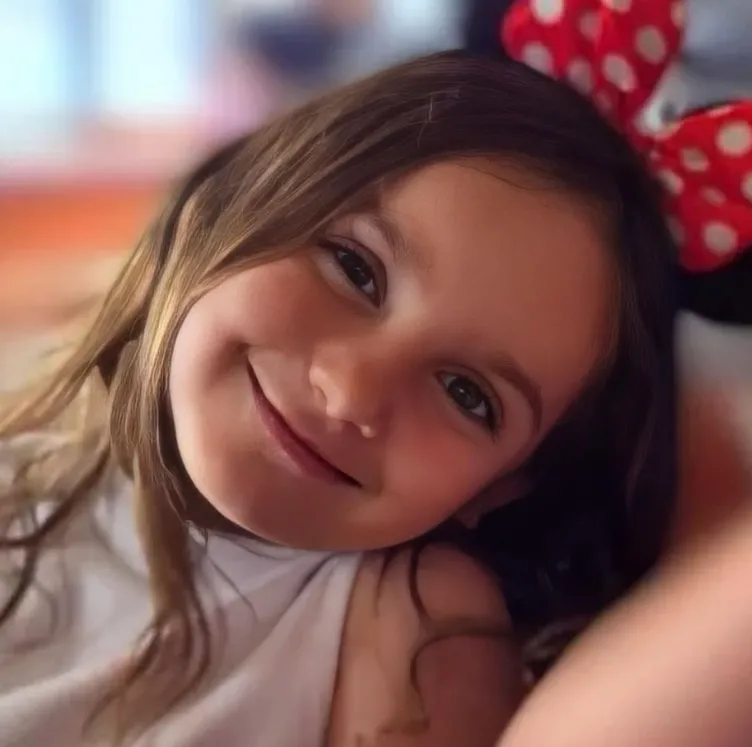
No motive has been publicly disclosed. Those are the facts as the public has been told them,
and facts are strange things in the wake of loss, because they can be accurate and still feel useless,
they can be true and still fail to explain the pain. Because the real story of a child is never found in court dates,
and never captured by the cold geometry of a timeline, and never fully represented by a single word like “victim.”
A child’s story lives in the small things, in the way they move through a room,
in the sounds they make when they are happy, in the habits that quietly become part of the household’s rhythm.
Aria was known for her bright spirit and gentle heart, and when her family spoke about her publicly, they described a joyful, kind-hearted child who loved singing, dancing, and dressing up.
Those details matter,
because they pull her out of the darkness of what happened and return her to the light of who she was. She was nine,
which means she existed in that golden space where imagination still runs ahead of everything else, where a living room can become a stage,
where a hallway can become a runway, where music is not background noise but a whole world opening up inside your chest. You can picture her,

barefoot or in socks, turning toward a mirror and seeing not only her own face,
but a future version of herself too, someone glamorous, someone brave, someone dazzling,
someone who would never have to learn the hard truths adults carry. Her family said she brought warmth and happiness to those around her,
and that her smile left an imprint on people who knew her. A child’s smile is an uncomplicated kind of light,
and the loss of it feels like someone switched off a lamp the whole street depended on. In towns like Weston-super-Mare, people still understand community in the old sense,
the sense that you are never fully anonymous, that children are seen not only by their own families but by neighbors and classmates and familiar faces at local shops.
That is why tragedy spreads so quickly there, because it does not strike a distant stranger,
it strikes someone’s daughter, someone’s friend, someone’s classmate, and the shock ripples outward until it reaches people who never met her but still feel their stomach drop when they hear her age.
Nine.

Nine is supposed to be spelling tests, and playground arguments that dissolve by lunchtime,
and December excitement building toward the holidays, and the small thrill of being trusted to do things “because you’re big now.”
Nine is supposed to be safety. In the days after her death, the details people clung to were the details of her life,
because grief will always reach for something soft to hold. People remembered what she loved.
People repeated the words “singing” and “dancing” like a prayer, because those words sound like movement,
and movement is what grief steals first, making everything feel frozen.
Somewhere in the middle of all the fear and horror, her family’s description of her kept surfacing, bright spirit, gentle heart,
a child who loved to dress up, a child who filled rooms with warmth.

And the more those words were repeated, the more you could almost see her again, not as a headline,
but as a real child in a real house, twirling to music, singing too loudly, laughing at her own jokes, asking for “five more minutes” before bedtime.
Then the mind would crash back into the truth, and the world would feel wrong again.
There is a moment in every tragedy where the ordinary world keeps doing ordinary things, and that is sometimes the most unbearable part.

Buses still run. Shops still open. People still go to work. The sea still moves in and out with the tide.
And yet one house has been split open by the unthinkable. One family has been forced into a new life they did not choose.
One child who should have grown up has been reduced, in the public eye, to a single sentence. That is why people gather,
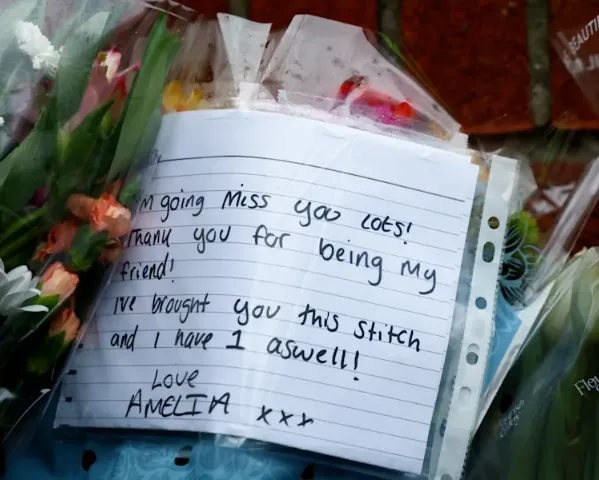
why communities light candles, why they stand close together even in cold weather,
because they are trying to push back against the idea that life can be stolen and the world will barely pause. When a child is killed, the grief that follows is not private grief alone.
It becomes a collective ache. Parents look at their own children and feel their hands tighten.
Teachers imagine an empty seat and feel sick. Neighbors picture the street at night and wonder what safety even means.
And still, for Aria’s family, there is no “collective” big enough to dilute the pain, because the pain belongs to them in the most intimate way,

in the way a missing voice can echo in a house, in the way silence gathers in places where laughter used to live.
A child’s absence is loud. It is loud in the morning when there is no small voice asking what’s for breakfast.
It is loud in the afternoon when school should be letting out. It is loud at night when bedtime should bring one last song, one last story, one last request for a hug.
In court, the teenager charged with Aria’s murder appeared briefly, and the report that he spoke only to confirm his name and details felt chilling not because it was surprising,
but because it highlighted the distance between legal procedure and human devastation. Courtrooms are built for process.
They are built for rules. They are built for measured language and controlled emotion.
But grief does not fit neatly into any of that. Grief is not orderly. Grief is not patient.
Grief does not wait for a provisional trial date. Grief begins immediately and then refuses to leave. For the public, June 15, 2026 is a date on a calendar,
a future moment when more answers may emerge. For Aria’s family, June 15, 2026 is simply far away,
a horizon that does not promise relief, only another day they must survive,
another day when they will be asked to endure hearing her name in a room full of strangers. And between now and then, there will be March 16, 2026,
another court appearance, another step in a process that moves forward no matter how shattered anyone feels. The fact that no motive has been publicly disclosed leaves a vacuum, and vacuums are dangerous because people try to fill them with guesses.
But the truth is, even a motive cannot make this make sense.

Even an explanation cannot restore the world that existed before December 15. Even the most detailed account cannot return a nine-year-old’s laughter to the rooms that are now quiet.
What remains, then, is the responsibility to remember her as she was. To say her name in full, not in a whisper that fades too fast.
To keep the focus on the child, not the accused. To refuse to turn her into a passing story that disappears when the next headline arrives.
Because when the public moves on, the family cannot.
They carry the weight in grocery store aisles, in car rides, in the pause before opening a door that used to lead to a child’s room.
They carry it in the way they will always measure time now as “before” and “after.” In tributes, her family described her as a “beautiful little soul,”
and anyone who has ever loved a child understands what that means, because children are not just small humans, they are concentrated life, pure presence, bright, immediate, completely themselves.
Aria’s love of singing suggests a child unafraid to be heard. Her love of dancing suggests a child who felt joy in her bones.
Her love of dressing up suggests a child who played with identity the way children should, trying on different versions of themselves like costumes,
learning that life can be creative, learning that happiness can be chosen in small ways. These are not minor details.

These are the fingerprints of who she was. And when people say she brought warmth and happiness to those around her,
they are naming the kind of child who changes a room just by entering it, the kind of child who makes adults smile even when they are tired,
the kind of child whose energy becomes part of a family’s identity. it is a strange, disorienting emptiness,
as if the house itself has lost its heartbeat. And then, slowly, there is memory.
Memory becomes both knife and medicine. It cuts because it reminds you what you had.
It heals because it proves she was here. It proves she existed beyond a single awful night.
In the coming months, people will speak about procedures and hearings and dates, because the justice system has its own language, and the public often clings to that language as if it can provide stability.
But for the people who loved Aria, the language that matters will be simpler. It will be the language of bedtime routines.
It will be the language of songs she liked. It will be the language of photos that capture her mid-laugh.
It will be the language of a memory that arrives suddenly and knocks the wind out of you, like the first time you hear a song she used to sing and you realize the world kept the melody but lost the voice.
This is what it means to lose a child. You do not only lose them once. You lose them again and again,
in moments that should have included them,in holidays,
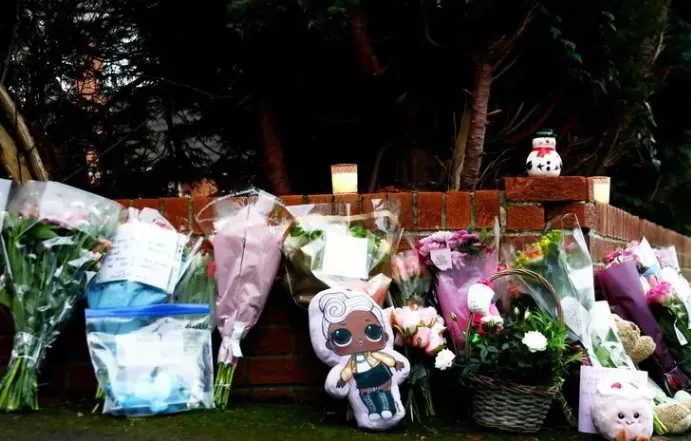
in birthdays that now feel like cliffs, in ordinary Tuesdays that suddenly break you in the supermarket because you saw a little dress in the wrong size and your brain thought, for half a second, “Aria would like that.”
And still, families endure. Not because they are strong in the way people like to say,
but because there is no alternative. They endure because the world demands it,
because morning keeps arriving, because the body keeps breathing,
because love does not disappear just because the person you love is gone.
Love becomes something else. It becomes remembrance. It becomes advocacy.
It becomes a refusal to let the child be reduced to the manner of their death. mIt becomes the decision to speak their name with tenderness even when it hurts.
Aria Thorpe was nine. She was a child who loved singing, dancing, and dressing up.
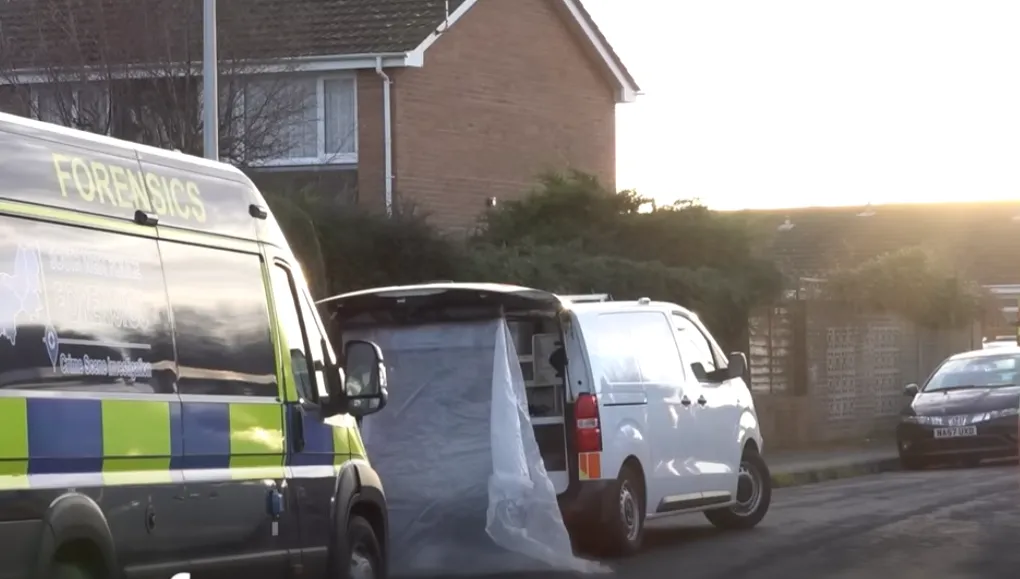
She was remembered as joyful and kind-hearted, bright and gentle, the kind of child whose smile stayed with people.
And while the court process will continue, while dates will be circled and documents filed,
while the public waits for details that may or may not ever feel satisfying, the truth that will remain unchanged is this:
A little girl’s light was here. Her family loved her. Her community saw her.
And even in the face of something so senseless, they will keep her memory alive, not because memory can replace her, but because memory is the only way love still gets to reach her now.
Saying Goodbye to Christina, Three Days Before Christmas.5819


