When a Playground Became a Crime Scene: Two 12-Year-Olds, One Stabbing.5832

The afternoon should have been ordinary.
Just another winter day slipping quietly toward evening, the kind where kids gather at a neighborhood playground to burn off energy, argue over games, and forget—at least for a little while—about everything waiting for them at home.
Instead, it became the kind of day that changes lives forever.
At a playground inside Betsy Head Park, two boys—both only twelve years old—crossed a line that cannot be erased.
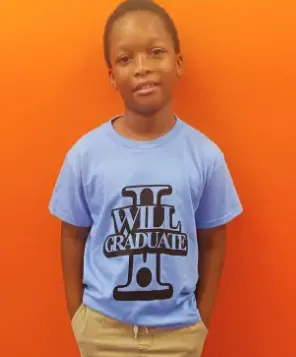
One of them, Khayell Dupree, would leave the park fighting for his life.
The other would leave in handcuffs.
According to police, the attacker was just 12 years old himself, charged as a juvenile with attempted murder after allegedly stabbing Khayell in the chest during what investigators believe was an ongoing neighborhood dispute.
A “beef,” as it was described—one word trying and failing to explain how children ended up with a knife between them.
For Khayell’s mother, Karerja Rerd, the word makes no sense.
Standing outside her building, just blocks from the playground, her voice carried disbelief more than anger.
“From what I know, allegedly, he had an issue with one of the kids in the neighborhood,” she said.
“I don’t know how it started. I don’t know how we got to that point.”
What she does know is what came next.
The knife.
The blood.
The sirens.
The phone calls that no parent should ever receive.
Police say the stabbing happened quickly.
One moment, children were gathered in the park.
The next, Khayell was on the ground, wounded in the chest, his life draining away while bystanders screamed for help.
Officers rushed to the scene and arrested the alleged attacker there.
A knife was recovered.
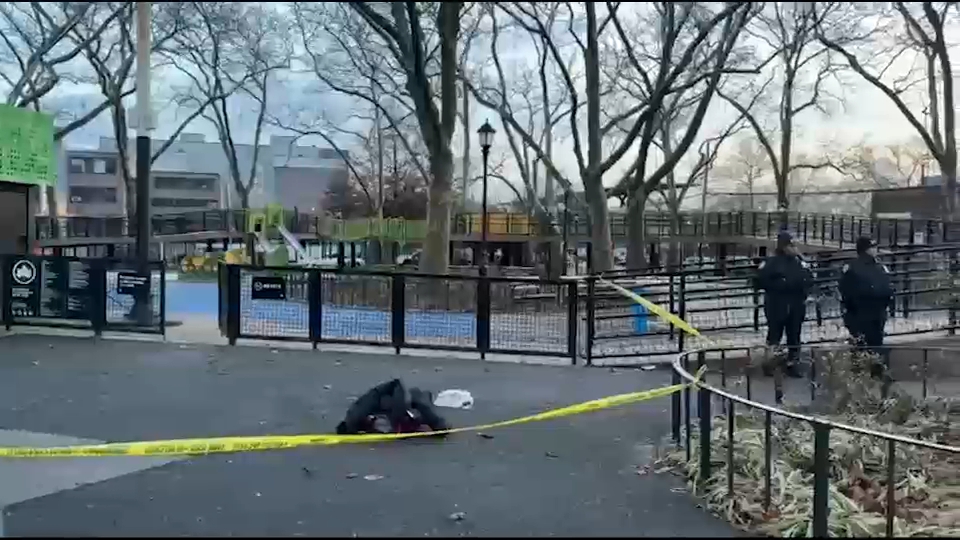
The playground—meant for laughter, scraped knees, and after-school freedom—was transformed into a crime scene, littered with blood-stained clothing and stunned silence.
Khayell was rushed to the hospital in critical condition.
Later, he would be transferred to a Queens facility that specializes in pediatric cardiovascular care—because the injuries were that severe.
Because a knife had punctured his left lung.
Because it had reached his heart.

“They had to cut from his collarbone down past his stomach to close his heart,” his mother said quietly.
“Then he started filling with fluid in his lungs.”
Her twelve-year-old son—still a child, still supposed to be worrying about homework and video games—was suddenly surrounded by machines.
Tubes.
Monitors.
Tools doing the work his body could not yet do on its own.
“So my baby is hooked up to tools all throughout his body,” she said.
Even as she spoke, she made it clear she had not left his side.
“When I still talk to him, I still touch him, I still kiss him,” she said.
“Just gently. On his hand.”
Doctors listed Khayell as critical but stable.
Those words offer hope—but they also carry fear.
Because “stable” does not mean safe.
And “critical” means every hour still matters.
To those who know him, Khayell is not a headline or a statistic.
He is quirky.
Goofy.
Funny.
A kid who laughs easily and smiles often.
“He’s happy all the time,” his mom said.
He loves Roblox.
He loves games.
He loves being a kid.
At home, he has a special bond with his five-year-old autistic sister, a relationship his mother describes as loving and gentle.
He also has three older brothers—15, 16, and 18—who now face the terrifying reality of possibly losing their little brother.
“My baby’s not one of them kids you gotta worry about,” Rerd said.
“He’s not one of them. I love him. That’s my baby.”
Her grief, however, is not limited to her own child.

In the middle of her pain, she acknowledges another truth that sits just as heavy.
“But those other kids—other people’s babies—that’s what they did,” she said.
“And now I almost lost my son, but they messed up their lives too.”
“Somebody else’s mother got to deal with their child being incarcerated.”
The alleged attacker now faces a serious felony charge and will be processed through Family Court, as required for juveniles.
He is twelve years old.
Barely old enough to fully understand the permanence of what he is accused of doing.
Barely old enough to legally ride certain amusement park rides.
Yet now old enough to be charged with attempted murder.
Whether he attended the nearby Mott Hall Bridges Academy—the same school as Khayell—remains unclear.
Investigators are still working to piece together what led to the violence.
What words were exchanged.
What grudges were carried.
What moments could have changed the outcome.
For Khayell’s mother, the questions are unbearable.
“Whatever issue they had, it was never that serious,” she said.
“It was never that bad.”
Her voice cracked as she spoke about what children are supposed to be doing at that age.
“You’re supposed to be playing Roblox,” she said.
“You’re supposed to go to VR and Nintendo and do fun stuff.”
“Christmas is coming up.”
Then she said something that cut deeper than any police report ever could.
“This is not Roblox.”
“You don’t get to do over.”
“You don’t get an extra life.”
“This is not Minecraft. You don’t have 10,000 hearts.”
“No. It don’t work like that.”
“This is real life.”
“When things happen, they happen.”

“And it’s real.”
“And it has real effects on you and the people around you.”
Her words echo far beyond one playground.
Because this stabbing did not happen in isolation.
Just two hours earlier, in a separate incident miles away, two more boys—ages 13 and 15—were stabbed during a fight outside the Seneca Avenue M train station in Queens.
One was stabbed in the chest.
The other in the back.
Both survived.
Both were taken to hospitals with non-life-threatening injuries.

A group of teens fled that scene and had not been caught by the following day.
Different locations.
Different faces.
The same pattern.
Children carrying knives.
Arguments escalating beyond control.
Moments of anger turning into lifelong consequences.
Back in Brownsville, the park has returned to quiet.
The swings hang still.
The ground looks ordinary again.
But nothing about it is ordinary anymore.
For Khayell’s family, every beep of a hospital monitor is a reminder of how close they came to losing him.
For the family of the accused boy, there is a different kind of devastation—one filled with shame, fear, and the haunting question of how a child ended up holding a knife.
And for the community, there is a growing sense of alarm.
Because when twelve-year-olds are stabbing twelve-year-olds, something is deeply broken.
Something that cannot be fixed with arrests alone.
Something that demands attention before another playground becomes another crime scene.
As of now, Khayell remains hospitalized, surrounded by machines, medicine, and the steady presence of a mother who refuses to let go.
She talks to him.
Touches his hand.
Kisses him gently.
And waits.
For healing.
For answers.
For a future that, just days ago, she never imagined would be uncertain.
This is not a game.
There are no extra lives.
And the cost of learning that lesson is far too high—especially when the ones paying it are still children.
Jakub’s Journey: From Silence, Illness, and Pain Toward Hope.2012
Jakub’s Fight for Health, Independence, and a Brighter Tomorrow
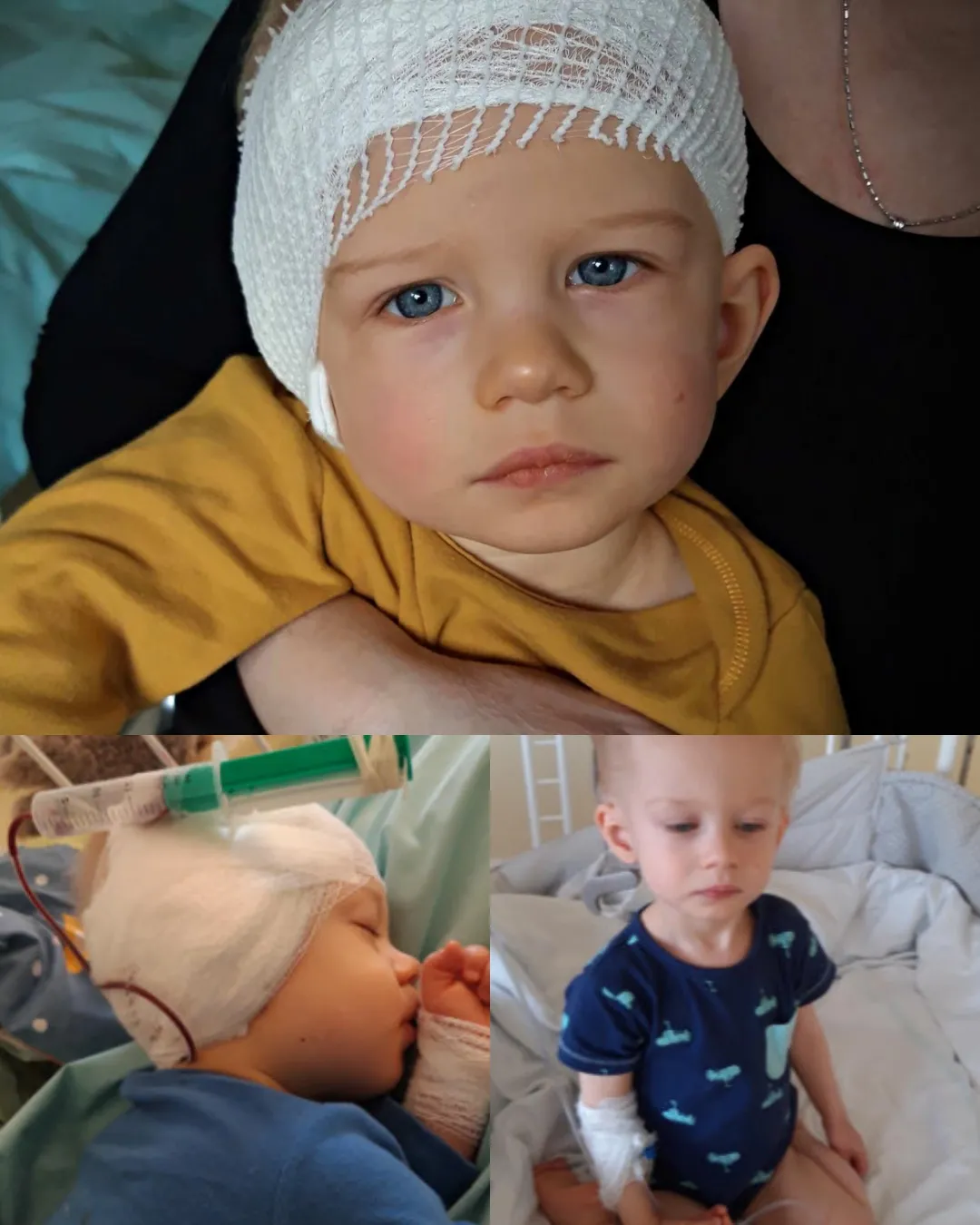
From the very beginning of his life, Jakub’s journey has been filled with challenges that most children should never have to face.
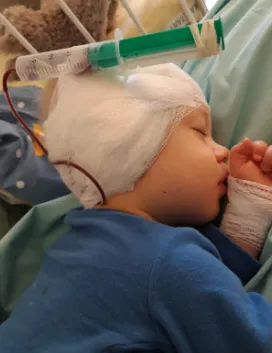
Even before he could open his eyes to the world, his small body was already fighting. Born with an infection, Jakub was given two powerful antibiotics in his head on the second day of life. It was the first of many hospital interventions that would mark his childhood—a childhood spent more in hospital rooms and clinics than on playgrounds or in classrooms.
At first, his parents hoped these early treatments would simply give him a stronger start. But over the years, the constant cycles of antibiotics, surgeries, and hospital stays left behind scars that no one could see but that weighed heavily on his small body. The treatments saved him at crucial moments, but they also brought with them side effects that continue to disrupt his health every single day.
Struggles with Health and Development
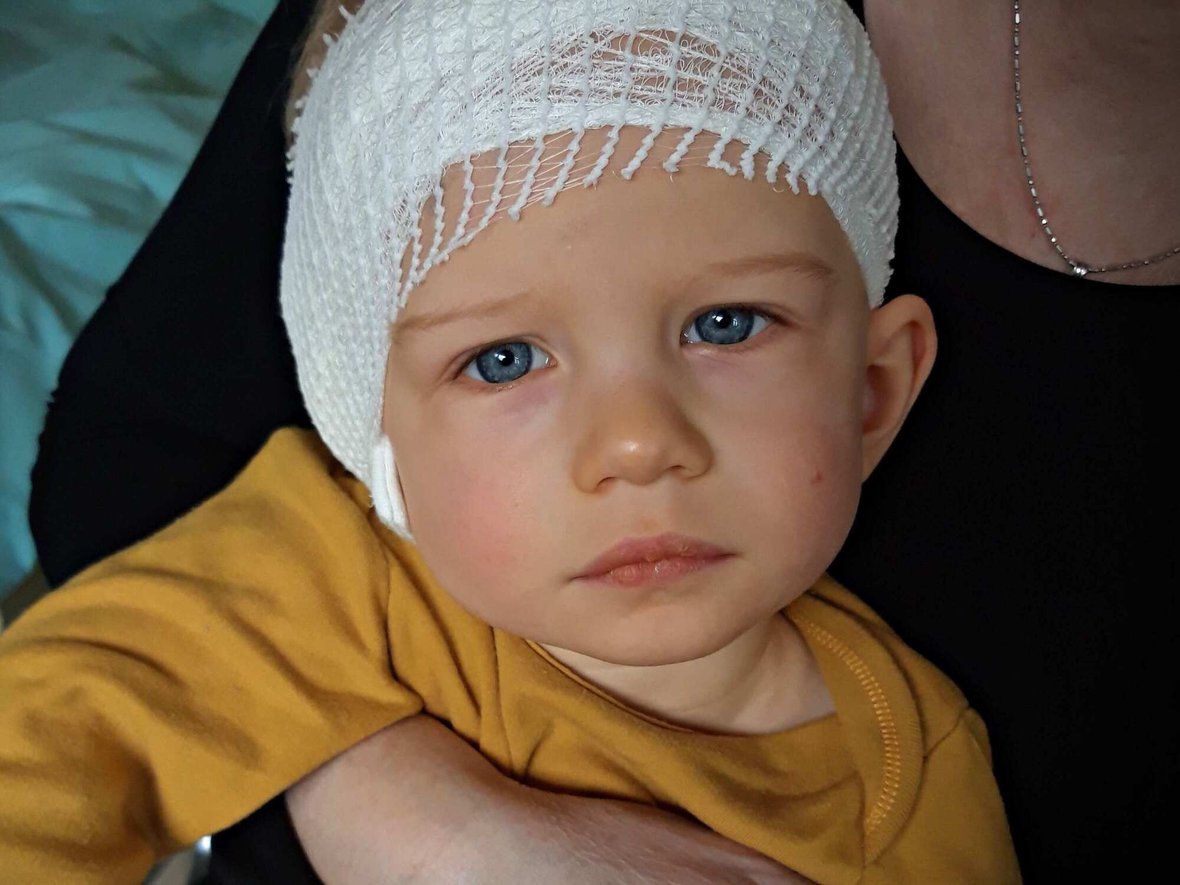
Jakub’s problems with concentration and his digestive system began to surface early. His parents noticed that he had frequent stomach issues, so severe that they often required hospitalization. His immune system, weakened by constant exposure to antibiotics and infections, failed to protect him like it should. His weight was dangerously low, his body fragile, and his resilience tested with every new illness.
Detailed diagnostics revealed the hidden battles he was fighting: infections caused by multiple bacteria, many of them pathogenic and resistant to medication. Doctors explained that years of antibiotics, though necessary, had left his system vulnerable and imbalanced. Each new hospital stay seemed to bring relief but also added to the cycle, leaving him with yet more complications to endure.
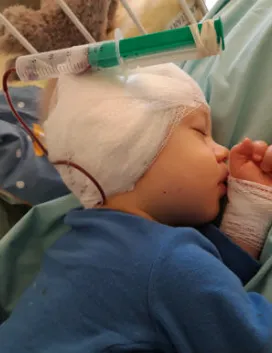
Born Without Hearing
As if these challenges weren’t enough, Jakub was also born deaf.
For his parents, learning this news was heartbreaking, but they refused to let it define his future. At just under two years old, Jakub underwent surgery to receive a cochlear implant in one ear. For the first time, there was hope that he would experience the sounds of the world—the voices of his parents, the laughter of children, the melodies of life.
But even here, the fight was not simple.
The maintenance of the cochlear implant is costly. Some parts are replaced and covered regularly, but other components, those that wear down or break with use, are not covered at all. These single parts can cost anywhere from hundreds to thousands of dollars each, leaving the family scrambling to find the resources to ensure that Jakub does not lose this precious connection to sound.
Living with Severe Autism
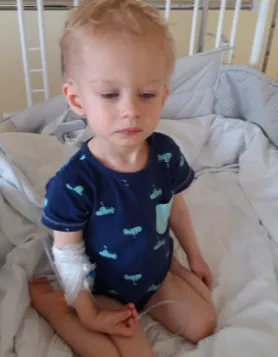
As Jakub grew, yet another layer of difficulty emerged: he was diagnosed with profound autism.
Now five years old, he still does not speak. His world is shaped by deep sensory challenges—sounds, textures, lights, and sensations that most people take for granted overwhelm and confuse him. Even something as simple as eating has become a struggle. He cannot chew solid food and survives only on puréed meals, further limiting his development and complicating his nutritional needs.
A psychologist working with Jakub sees potential in him, glimpses of what could be possible if only the right therapies, patience, and interventions are provided. But the road ahead is steep. Severe motor problems and multiple overlapping conditions delay his progress, making every step forward hard-won.
Endless Costs of Care
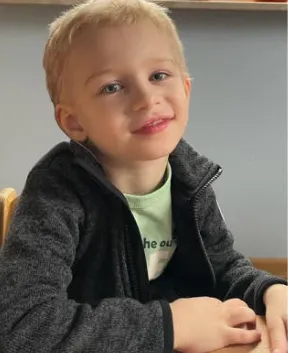
Jakub’s treatments are ongoing, both in Poland and abroad. They involve advanced diagnostic testing, expensive medications, and specialized therapies. The annual cost of his medical care is estimated at 40,000 złoty—a staggering sum for any family, and one that his parents cannot hope to cover alone.
And the uncertainties continue to grow. Doctors now suspect inflammation of the cerebellum, a frightening diagnosis that, if confirmed, could push the cost of treatment as high as 120,000 złoty. The thought is almost unbearable for his parents—how could they possibly find the means to cover such immense costs when they already struggle to manage the basics?
A Parent’s Unshakable Love
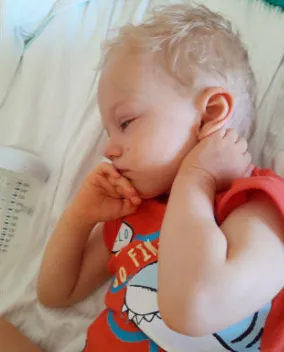
Jakub’s parents dream of a day when their son can experience the world with less pain and more independence. They dream of him eating a meal without struggle, walking into a classroom with confidence, perhaps one day speaking even a few words to share his thoughts and feelings.
But above all, they dream of giving him a chance at a life that is not defined by hospitals, infections, and limitations.
They want him to feel joy, to laugh freely, to find a place in a world that so often feels overwhelming and unwelcoming for a child with complex needs.
As his mother says, “We want to do everything possible to help him, to relieve his pain, and to give him the tools to live in this world with dignity. But the costs are beyond our reach. We cannot do it without help.”
The Road Ahead
Every doctor’s appointment, every test, every small piece of equipment for his hearing aid or therapy session adds up. The family finds themselves constantly facing new invoices, new treatment plans, new medications—all while trying to provide love, stability, and hope for their little boy.
The fight is exhausting, but giving up is not an option. Jakub is their child, their beloved son, and they will never stop fighting for him.
They know the journey will be long. They know there will be setbacks and tears. But they also know there will be victories—moments when Jakub responds to therapy, when he makes eye contact, when he reacts to sound, when he moves a step closer to independence.
A Call for Support
The truth is simple: without support, Jakub’s future is at risk.
The therapies he needs, the medications, the surgeries, the constant care—none of it is possible without help from people willing to stand with his family in this fight.
It is not just about paying for medicine. It is about giving Jakub a chance to live. A chance to discover the world, to connect with others, to feel joy in the everyday moments that most children take for granted.
Every contribution matters. Every donation, every shared story, every kind word helps lift the weight from his parents’ shoulders and brings them one step closer to giving Jakub the future he deserves.
Conclusion
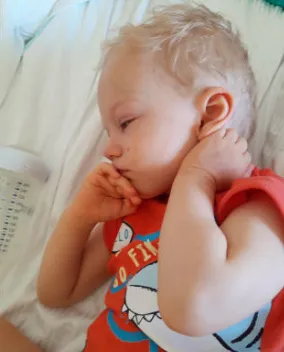
Jakub’s story is one of resilience against overwhelming odds. From infections at birth to deafness, from autism to complex bacterial infections, his life has been a constant battle. Yet through it all, he continues to fight, supported by the love of his parents and the determination of those who refuse to give up on him.
This little boy has already endured more than most people face in a lifetime. But with compassion, generosity, and solidarity, there is hope that his tomorrow can be brighter, healthier, and filled with possibilities.
Jakub is not just a patient or a diagnosis.
He is a beloved son, a child with a spirit worth fighting for, and a reminder that when we come together, even the heaviest burdens can be carried.