When Love Meets Tragedy: A Father’s Goodbye to His Only Surviving Daughter

The wind outside the Wyoming hospital carried the scent of snow and silence.
Inside, machines hummed softly, breaking the stillness that hung over the room where seven-year-old Olivia Blackmer lay motionless.
Her small chest rose and fell with mechanical rhythm — the faintest proof that she was still here, still fighting.
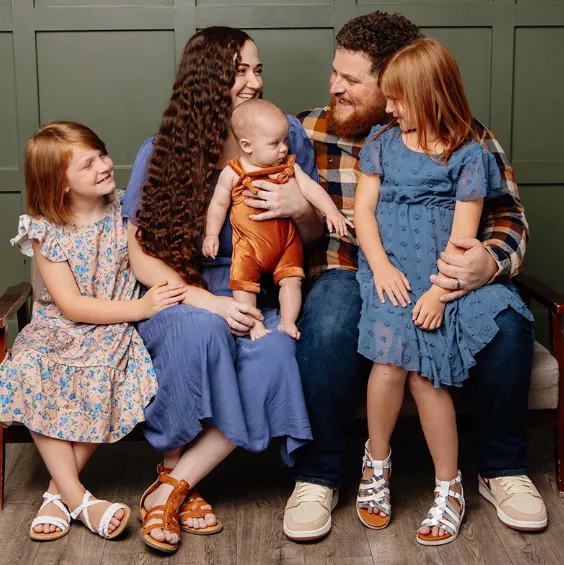
For five days, her father, Quinn Blackmer, refused to leave her side.
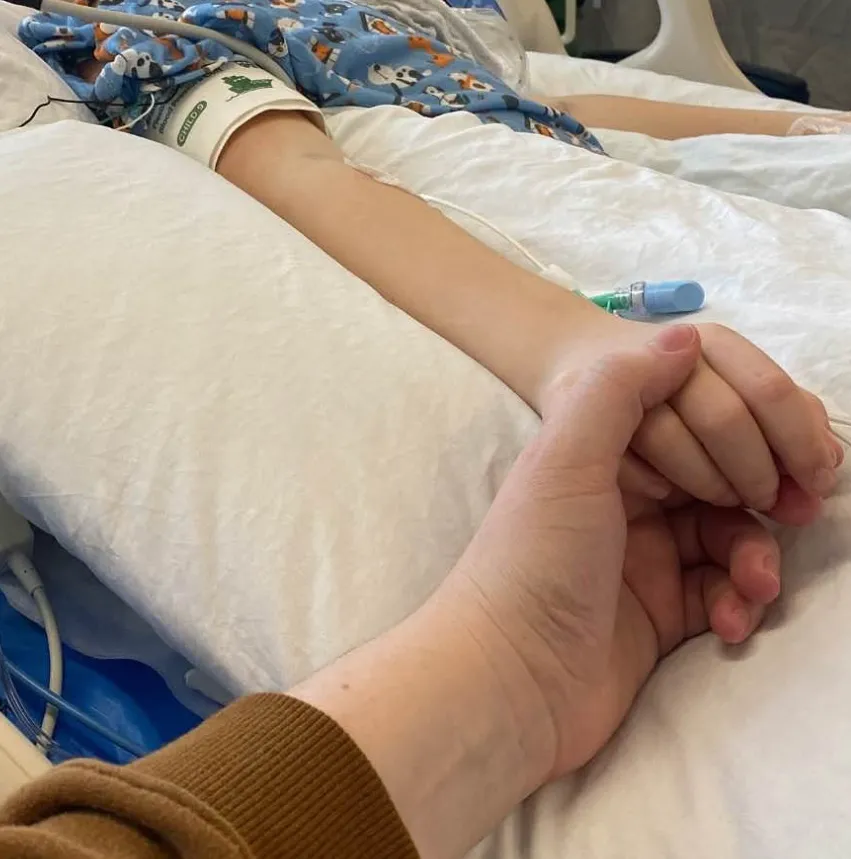
He held her hand through the tubes and bandages, whispering words she might not hear, but he said them anyway.
He spoke of the mountains she loved to climb, the way her laughter filled their kitchen, and how her big sister Brailey used to braid her hair every Sunday before church.
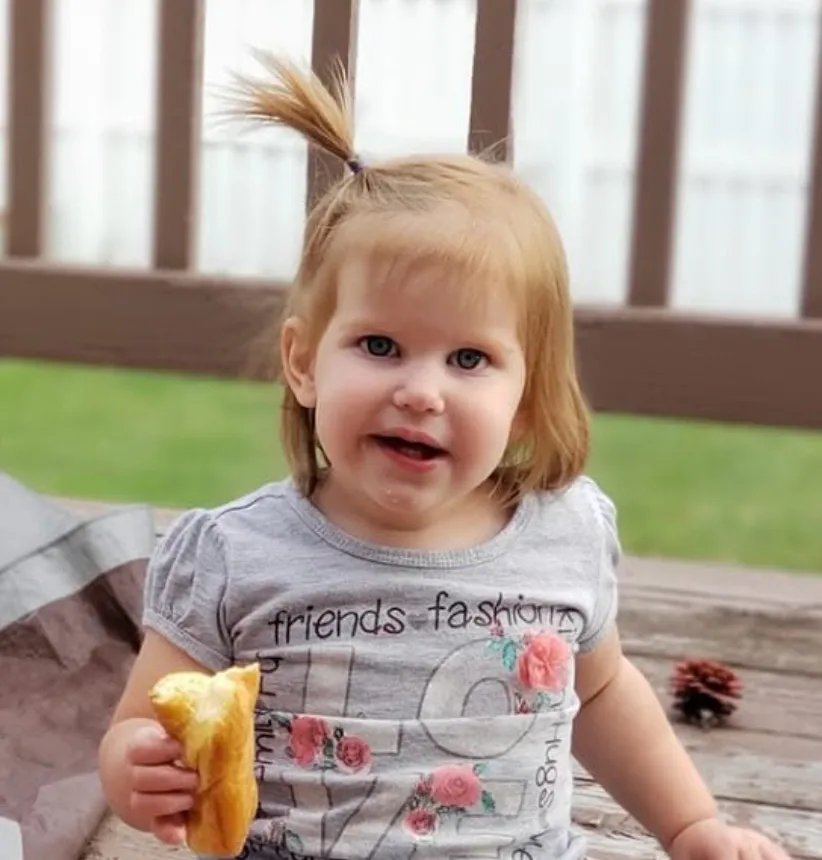
He told her that everyone was praying — people from towns he’d never been to, strangers sending messages of hope, lighting candles for a girl they would never meet.
Hope became the thin thread he clung to, weaving prayers into every breath she took.
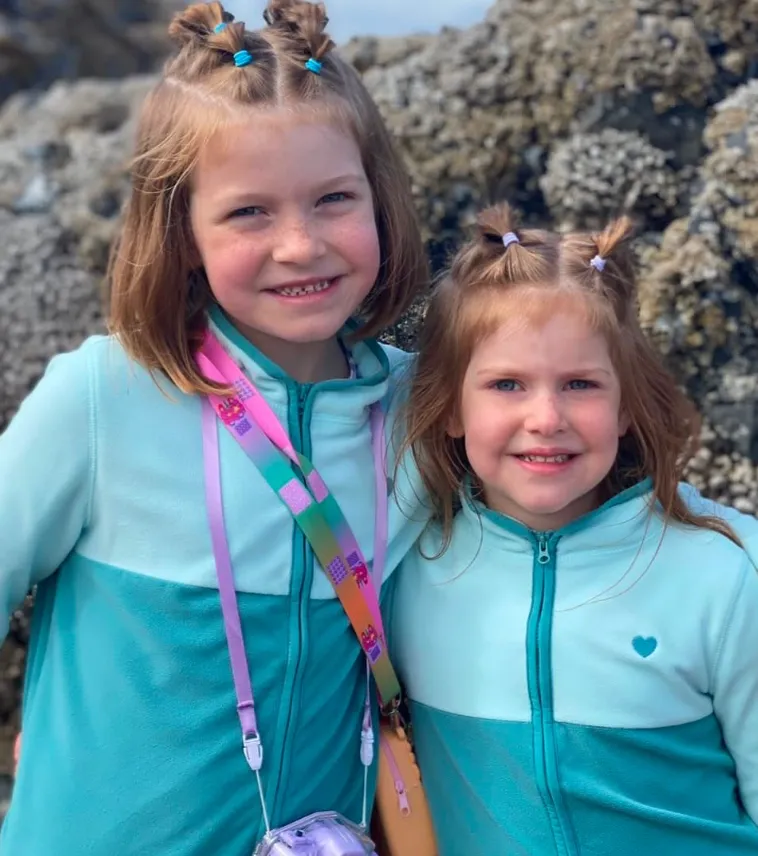
But deep down, he knew.
The doctors had explained the words no parent ever wants to understand: “traumatic brain injury,” “nonresponsive,” “no sign of improvement.”
Still, he whispered, “Daddy’s here, baby. You just rest.”
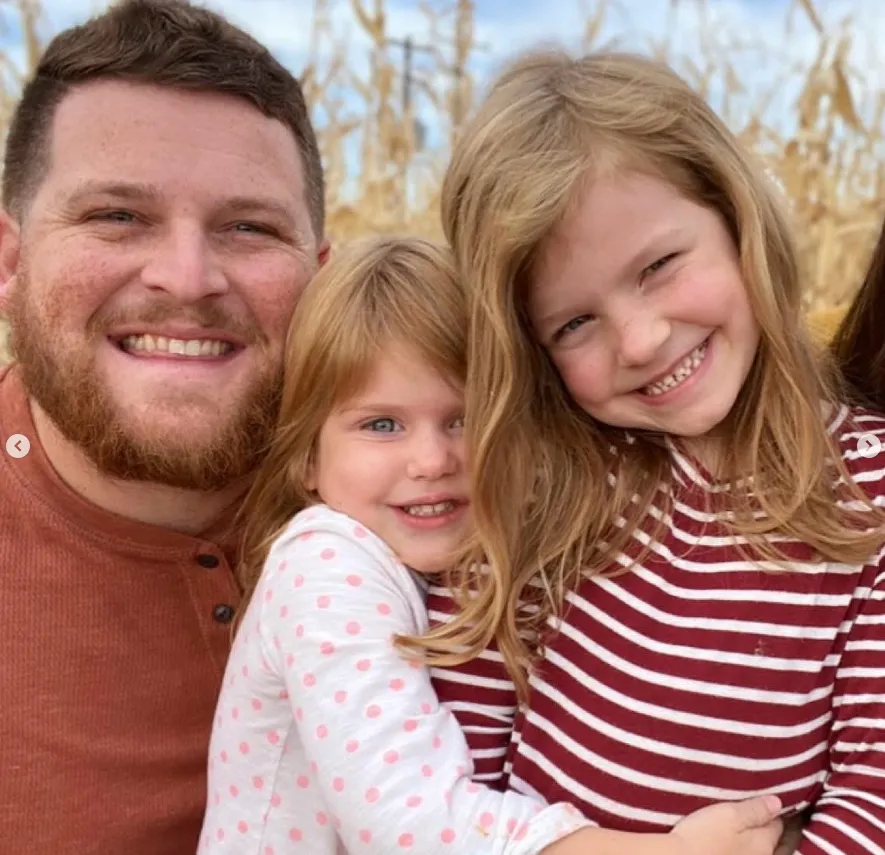
On the fifth day, at 3:44 p.m., Olivia’s heart gave one final beat.
The room went still.
Her stepmother, Katelynn Beatty, let out a sob that broke the sterile quiet.
Quinn pressed his forehead against Olivia’s small hand, whispering through tears, “You’re with your sisters now.”
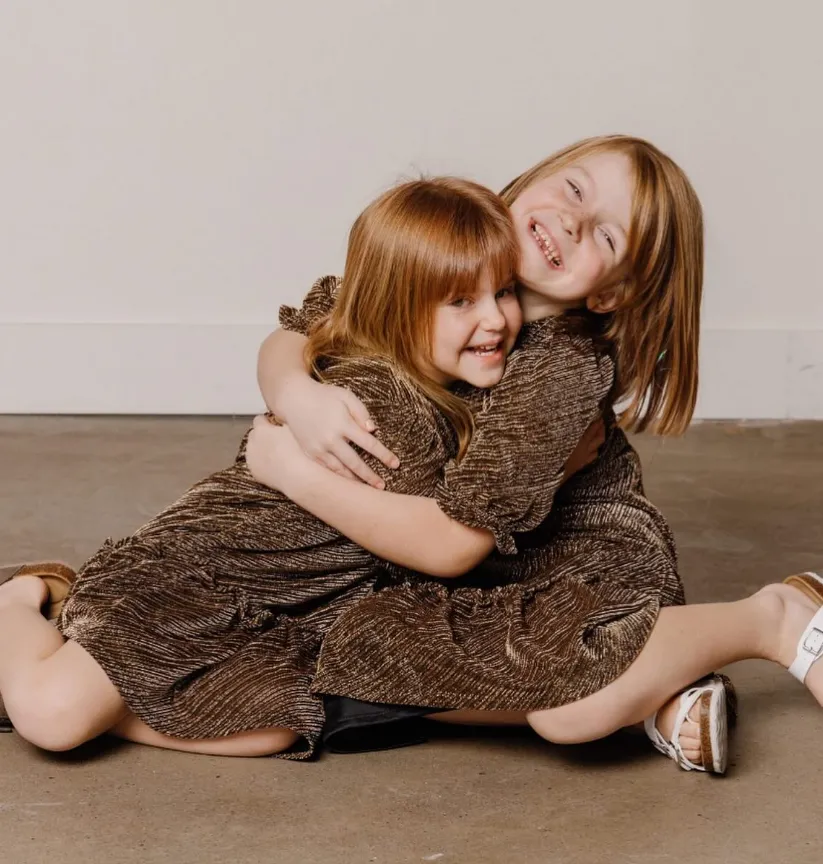
Just days earlier, he had buried Brailey, Olivia’s nine-year-old sister — bright, kind, the one who dreamed of becoming a teacher.
Two-year-old twins Brooke and Jordan, too, had been laid to rest, their cribs now empty, their laughter forever silenced.
All of them gone — all taken by the same unthinkable act.
On February 10, inside their home in Byron, a small Wyoming town where winters are long and the stars stretch forever, tragedy struck without warning.
Their mother, Tranyelle Harshman, 32 years old, ended four young lives — and her own.
She shot her daughters, called 911 to tell dispatchers where their bodies would be found, then turned the gun on herself.
By the time first responders arrived, the quiet home on Whaley Avenue had turned into a scene of unutterable horror.
Yet somehow, one heart still beat.
Olivia was still breathing.
Barely.
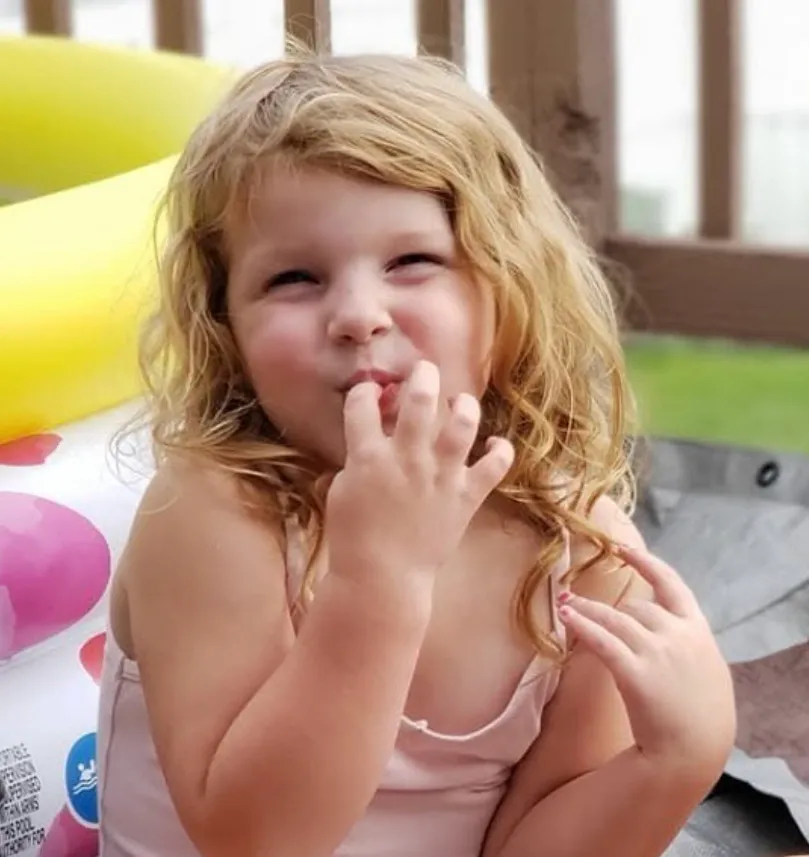
She was airlifted to Utah Children’s Hospital, where surgeons fought for hours to repair her shattered skull.
They worked under fluorescent light and quiet urgency, trying to save a child who had already lost everything.
For five days, Olivia lived in a fragile space between worlds — half in pain, half in peace.
The machines kept her alive, but her father’s hand was the only anchor she had left.
News of the tragedy spread quickly.
Neighbors brought flowers, toys, and hand-written prayers to the family’s porch.
Strangers sent donations through GoFundMe, their messages simple but heartfelt: “You are not alone.”
The campaign, first created to cover hospital costs, became a memorial overnight.
In an update, Katelynn wrote, “She fought so, so hard until the last minute. Her body had been through too much. Medication helped, but we reached a point where medical options were exhausted. Her heart just couldn’t hold on.”
The post ended with words that broke the internet’s heart:
“Olivia gained her angel wings at 3:44 p.m. She is with her sisters now.”
Elsewhere, another father grieved.
Cliff Harshman, husband of Tranyelle and father of the twins, was trying to comprehend what had happened.
He had been working out of state when he received the call that shattered his world.
His wife — the woman he’d loved, the mother who once spent hours rocking the twins to sleep — had done the unimaginable.
He said she had been struggling with postpartum depression and PTSD.
They had been getting her help.
Therapy, medication, prayer.
But somewhere in that invisible war inside her mind, something failed.
“She was not a monster,” he told a local reporter.
“She loved those kids. She was an incredible mom. This was so out of character — it’s like something inside her broke, and we didn’t see it in time.”
His voice trembled as he added, “As angry as I may be with her, I still love her. And I lost her, too.”
Both men — Quinn and Cliff — now found themselves bound by shared grief.
Two fathers mourning four little girls and a woman they had both once loved.
Two men trying to make sense of an act that made no sense at all.
Quinn’s home was now silent.
He would wake up expecting to hear the squeal of the twins, the soft hum of Brailey reading to Olivia, only to find stillness pressing down like fog.
He would reach for the coffee mug his daughter once painted with shaky hands, now chipped but sacred.
Every corner of the house held a memory too heavy to touch.
Friends say Quinn spends most days walking along the river near his home, talking to his girls as if they were still there.
He tells them about the sunrise, about the neighbors who planted pink tulips in their memory, about the strangers who sent stuffed animals and letters from across the country.
Sometimes, he sits at the hospital chapel — not to ask for miracles, but to thank God for five extra days with Olivia.
Five days to hold her hand, to kiss her forehead, to whisper goodbye.
“She kept fighting through it all,” he wrote later.
“Even when her body couldn’t anymore. I’ll never forget that strength. My baby fought for every heartbeat.”
When asked how he finds peace, Quinn said softly, “They’re together now. None of my babies have to be apart.”
It’s the only comfort left to hold.
The local community has since turned their grief into action — holding vigils, raising awareness for mental health, and creating support groups for families struggling with postpartum and PTSD-related crises.
Out of the ashes of tragedy, people began talking — really talking — about the silent battles too many mothers fight alone.
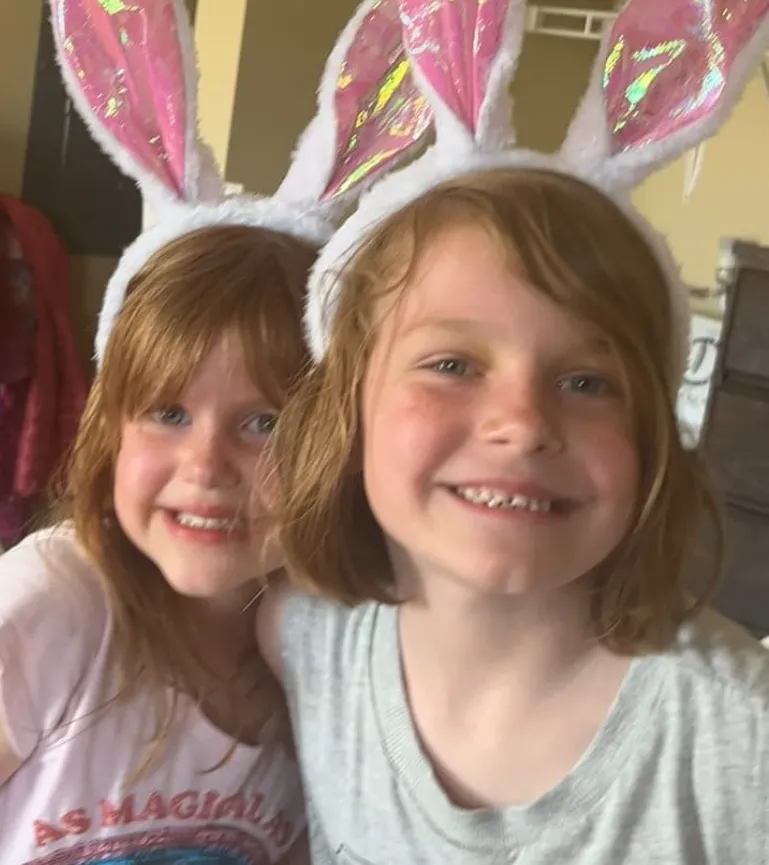
On the fifth night after Olivia’s passing, candles flickered outside the family’s home.
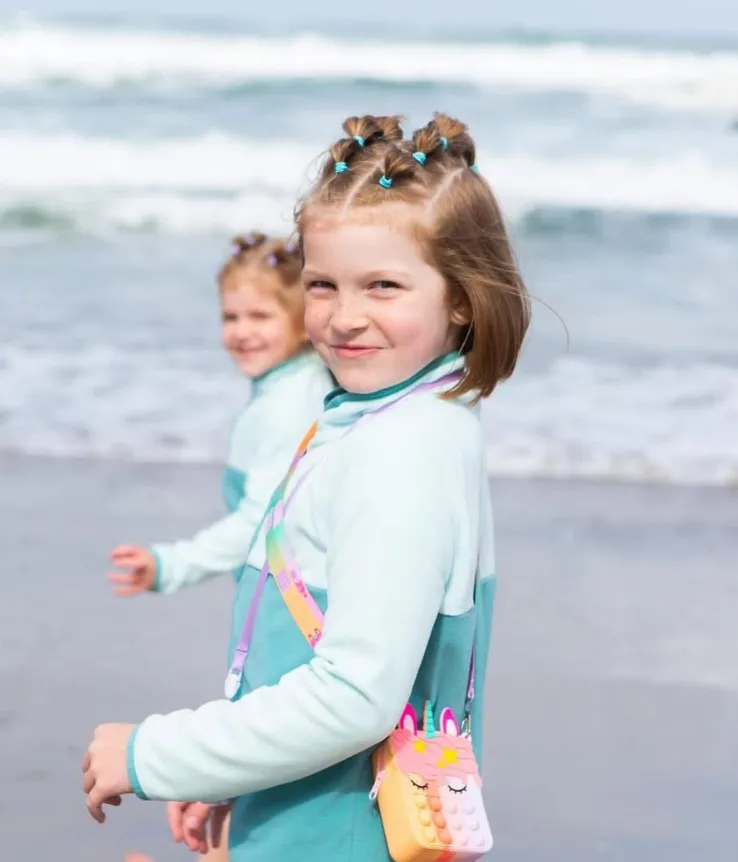
Hundreds gathered in the snow, their breath visible in the cold air, as names were spoken softly: Brailey. Olivia. Brooke. Jordan.
Four sisters.
Four lights gone too soon.
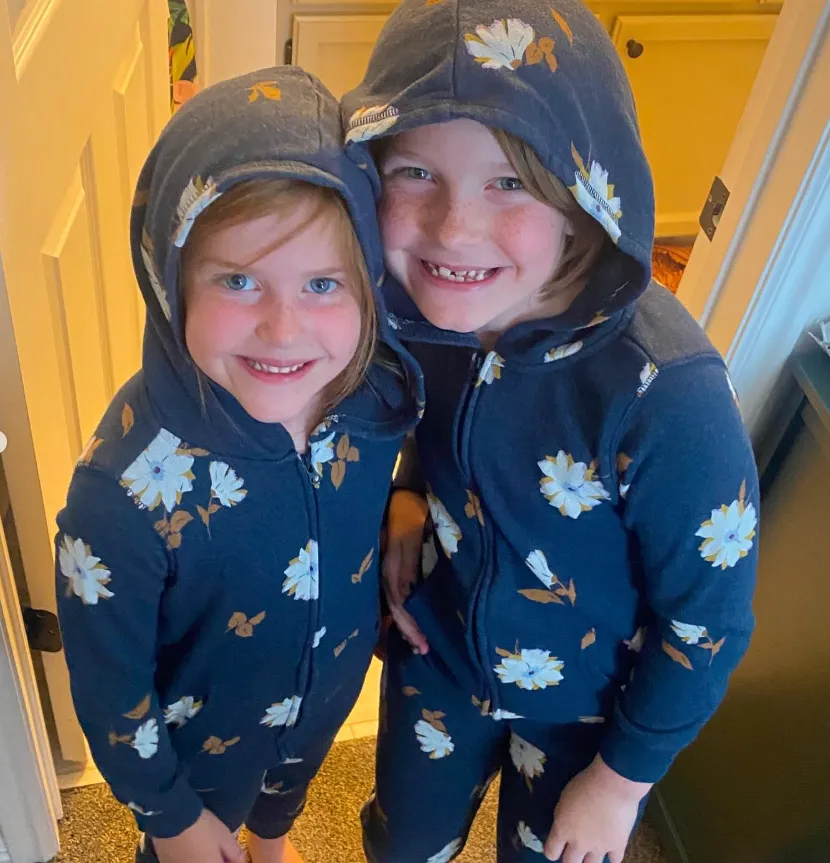
Quinn stood at the front, holding a single lantern.
As it rose into the night sky, he whispered, “Fly high, my loves. You’re free.”
And for a moment, as the lantern drifted upward, it seemed like four smaller lights rose beside it — unseen, but deeply felt — as if the heavens themselves had opened to welcome them home.
They Broke His Vertebrae to Reach the Tumor — And Now This Baby’s Fight for Life Has Only Just Begun.2770
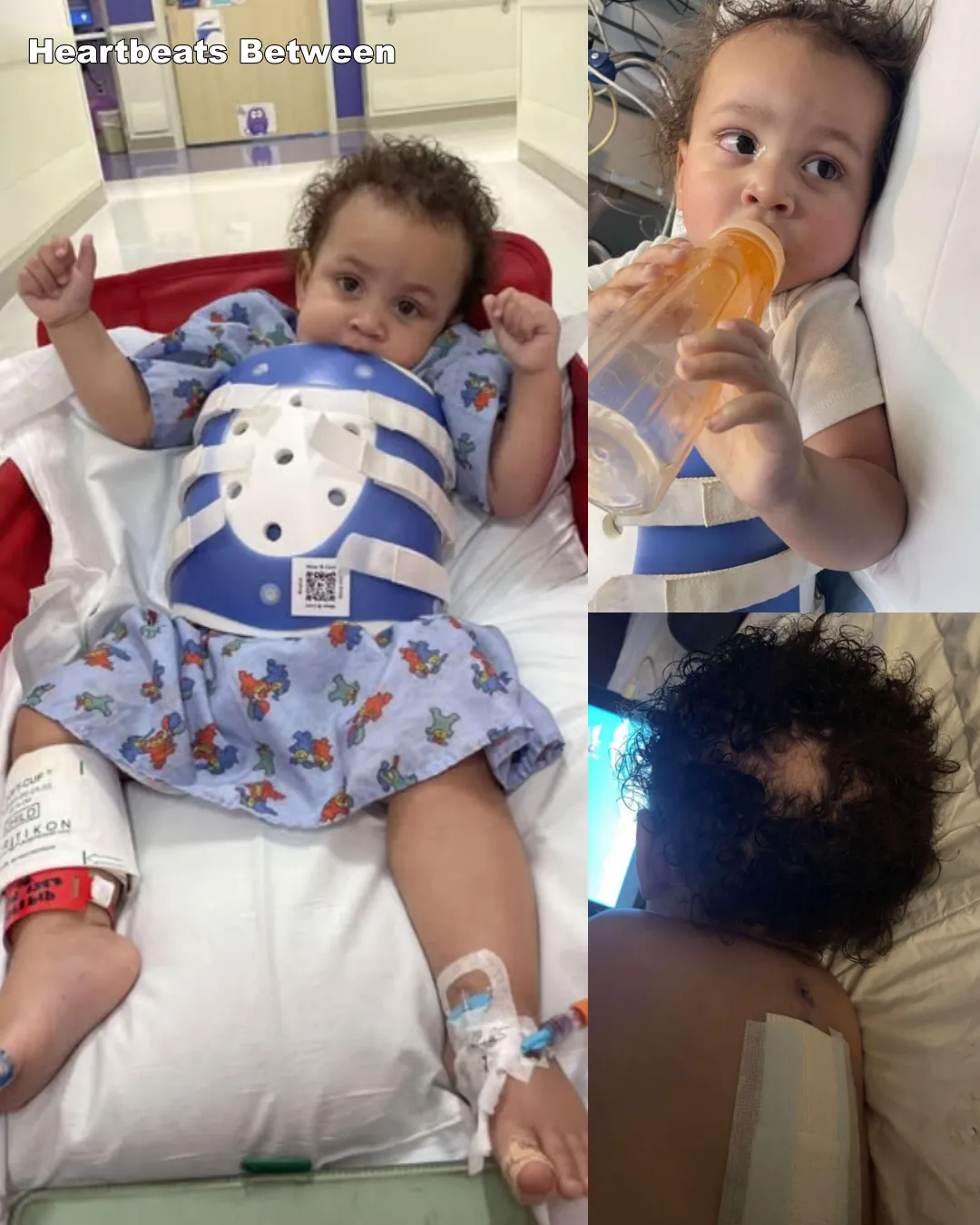
They had to break his vertebrae just to reach the tumor.
And that was the moment everything changed.
Two weeks earlier, little 16-month-old Jimmie had lost the ability to walk — a sudden, terrifying shift from toddling joy to limp, frightened stillness.
Doctors moved fast.
Scans lit up the truth no parent should ever have to face: a tumor wrapped tightly around his spine.
Neuroblastoma.
And right there, in that cold room, Briana — a mother of five — felt her world split open beneath her feet.
One moment she was holding her baby boy.
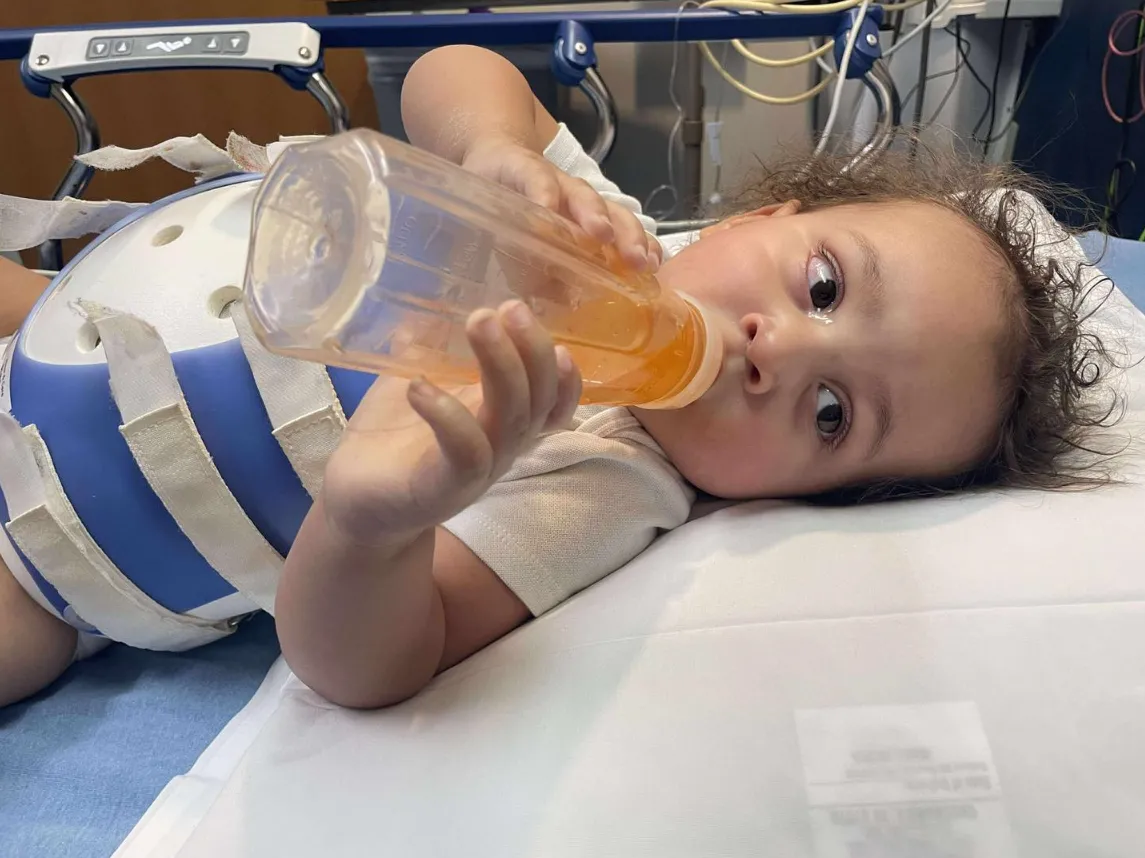
The next, she was holding a diagnosis that threatened to take him away.
She tried to breathe, tried to stand, tried to be the strong mother she had always been.
But the fear settled into her bones like ice.
Jimmie was rushed to St. Jude, where specialists prepared him for the kind of fight no child should ever face.
They warned her the journey would be long.
Painful.
Unpredictable.
And that the first step — the biopsy — would require something that shook her to her core: they needed to break one of his vertebrae just to reach the tumor.
She held his tiny hand before the procedure, whispering a promise she prayed she could keep:
“Mommy is right here.”
When she saw him afterward — fragile, small, fighting for breath — she felt a grief she couldn’t put into words.
Then came chemo.
His first round, a whirlwind of medicine meant to save him but brutal enough to shake his tiny body like a storm.
Within hours, Jimmie began vomiting uncontrollably.
He refused food.
His lips went pale.
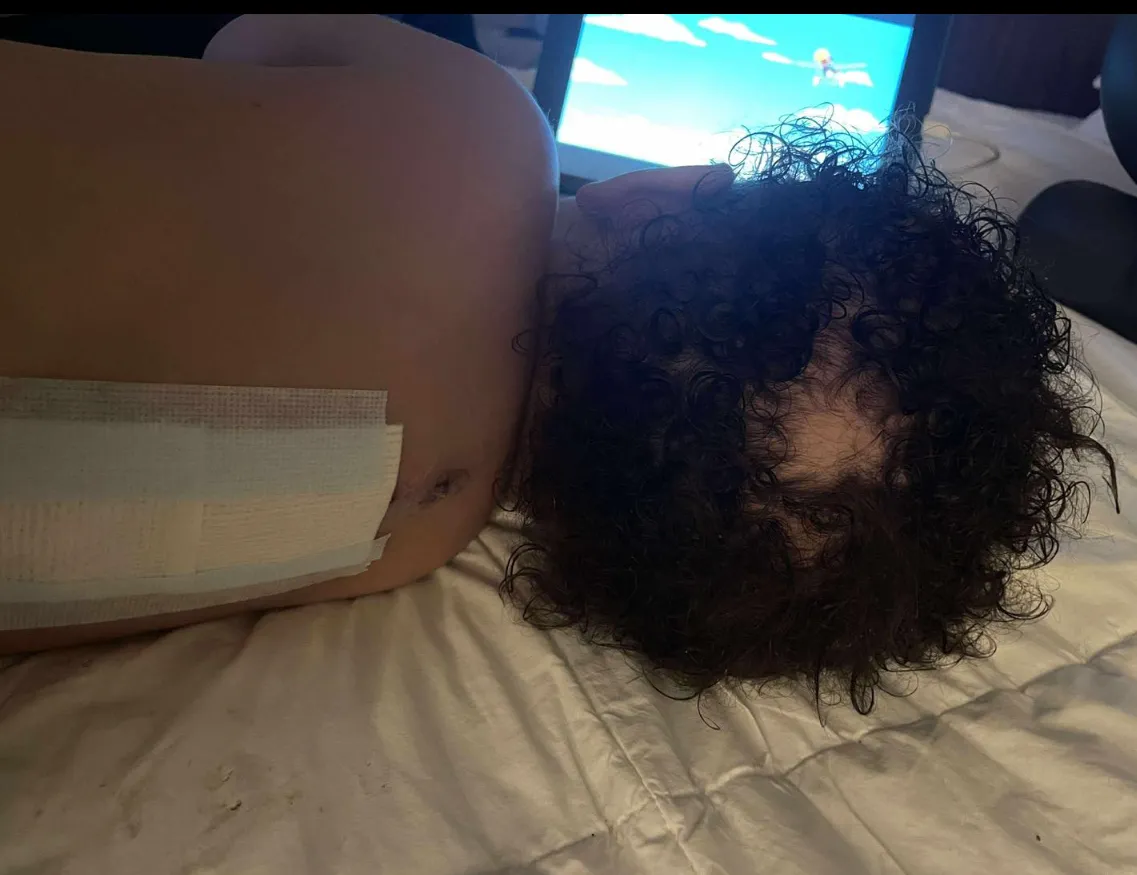
And as if cancer wasn’t cruel enough, he tested positive for rotavirus — a harsh infection that dragged him through days of painful diarrhea.
Fevers spiked again and again, climbing beyond 103 degrees.
He grew weaker.
Thinner.
Quieter.
Doctors rushed transfusions of both blood and platelets just to keep him stable.
Briana barely slept.
Every beep from the machine tightened her chest.
Every cry from her baby shattered her.
Every silence scared her even more.
She had already lived through the hardest parts of motherhood — sleepless nights, tantrums, scraped knees — but nothing prepared her for the sight of her baby suffering in a hospital bed.
Nothing prepared her for watching chemo steal the pieces of him she loved most.
Then one morning, as she lifted him into her arms, her fingers brushed the back of his head.
She froze.
Her heart sank.
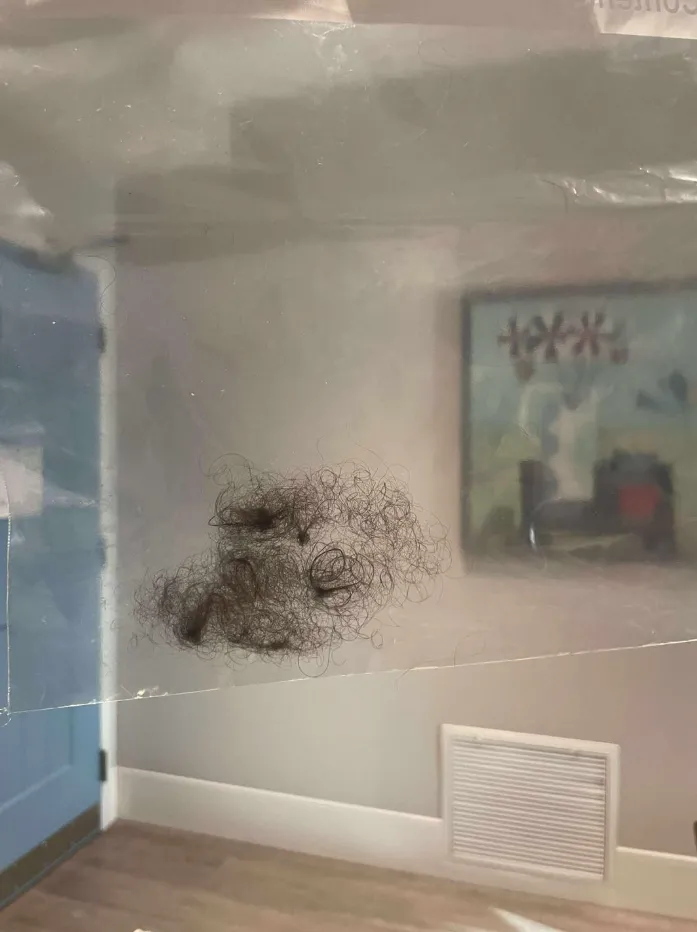
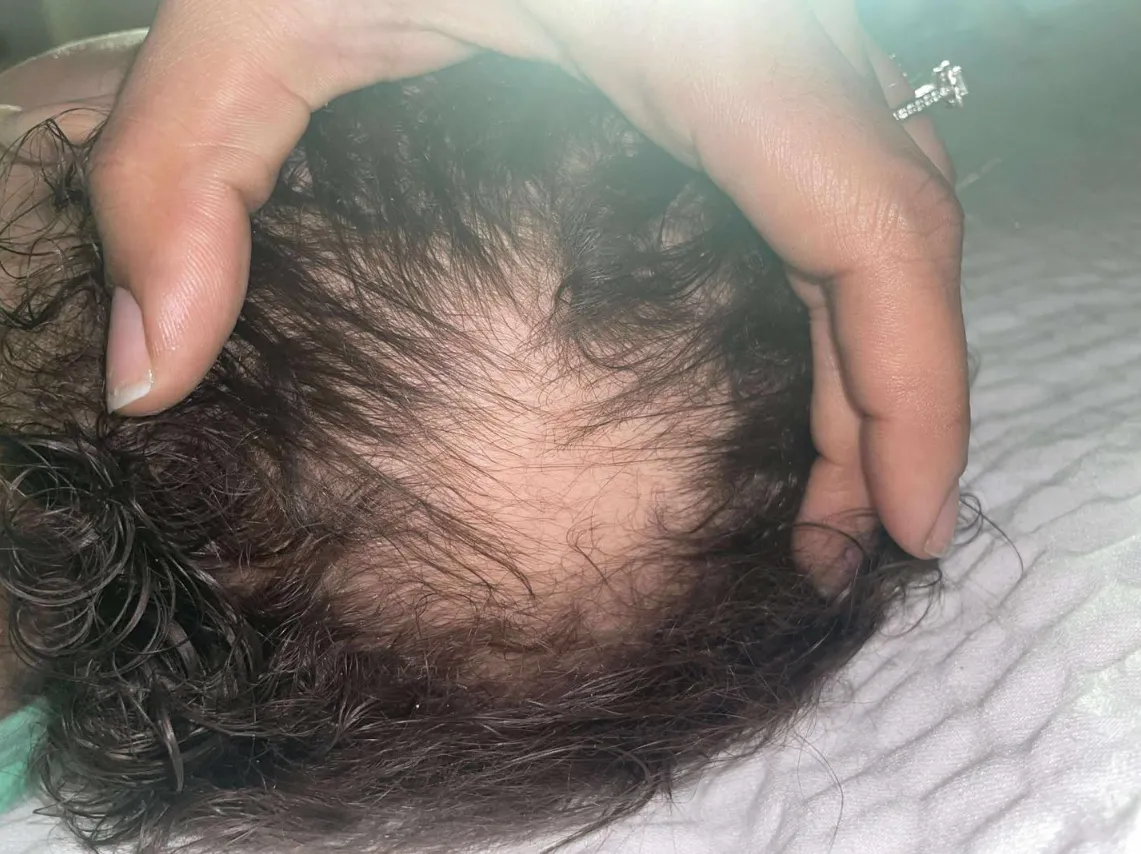
A large bald spot had appeared — smooth, sudden, undeniable.
His hair was shedding every day.
His smile fading.
His energy slipping away like sand through her fingers.
She had been warned it would happen.
But nothing could prepare her for the reality of seeing her baby change.
A mother can accept many things — but watching her child dim before her eyes is not one of them.
Through tears she whispered to him, stroking his soft cheek:
“You’re still beautiful, baby. You’re still my whole world.”
But inside, she broke.
Because she knew chemo was only beginning.
Jimmie’s next round is coming soon — stronger, more aggressive, necessary to fight the cancer threatening his tiny spine.
New scans will be done.
New bloodwork.
New sleepless nights.
And with those tests comes the question Briana fears most:
Has the cancer spread?
She tries to stay steady.
She tries to be brave.
But some nights she collapses on the floor beside his crib, begging God to give her baby mercy.
Some nights she hides in the hospital bathroom so her children — the four waiting at home — won’t hear her sob.
Because how do you explain to a toddler about cancer?
How do you tell a baby why he can’t walk anymore?
How do you prepare a mother for the possibility of losing a child?
You don’t.
You can’t.
You just love them through it.
And that is what Briana does every day.
She kisses his forehead even when he burns with fever.
She holds him upright when his body is too weak to sit.
She wipes every tear, every drop of vomit, every bead of sweat from his little face.
She sings to him when he’s in too much pain to speak.
She whispers prayers when the doctors leave the room.
She clings to hope even when fear claws at her chest.
“My biggest fear is losing my son,” she said softly one night, her voice shaking.
“He is just a baby.”
Sixteen months old.
Sixteen months of giggles, first words, clumsy steps, and warm cuddles.
Sixteen months of life — now threatened by a disease that shows no mercy.
She knows there will be more rounds of chemo.
More scans.
More procedures.
More moments that pull her apart.
But she also knows she cannot carry this alone.
So she lifts her eyes, her heart, her trembling hope — and asks the world for something simple but powerful:
“Please pray for my baby Jimmie. Please pray for healing, strength, and a miracle.”
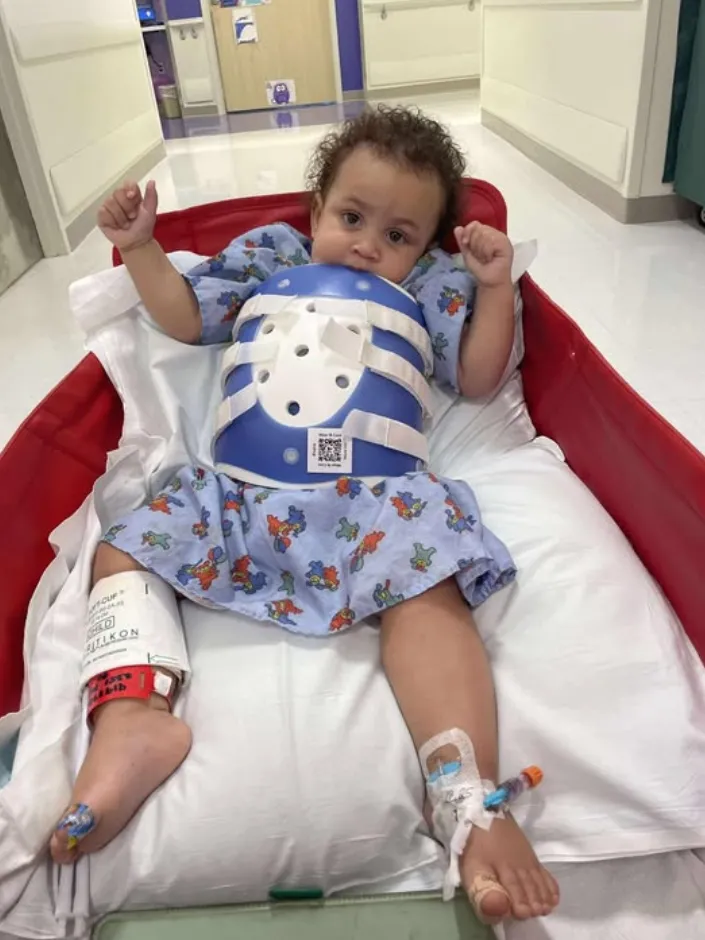
Because miracles happen every day at St. Jude.
And she is begging God for one more.
She doesn’t need perfect words.
She doesn’t need advice or judgment.
She needs love.
She needs community.
She needs people willing to lift her son in prayer when she is too exhausted to whisper the words herself.
She needs the world to see her baby not as a diagnosis, but as a little boy who deserves to live.
A boy who deserves to run, laugh, and grow up with his siblings.
A boy who deserves a childhood not robbed by cancer.
And she needs people to believe with her — that healing is possible.
That miracles still happen.
That Jimmie can beat this.
Tonight, as machines hum softly and moonlight falls across the hospital floor, Briana leans over her baby and kisses his forehead.
She breathes in the scent of him — medicine, sweat, baby lotion — and closes her eyes.
“Please, God,” she whispers.
“Don’t take him. Not my baby. Please let him stay.”
Outside the room, life goes on.
Families laugh.
Cars move.
People eat dinner, send texts, go to sleep.
But in this little room, a mother kneels beside a crib and holds the hand of her fragile, beautiful boy.
A boy with tubes and scars.
A boy with a shaved patch on his soft head.
A boy fighting for his life.
A boy loved beyond measure.
And she continues to pray — because prayer is the only thing stronger than her fear.
She’s asking all of us to join her.
To pray for healing.
To pray for strength.
To pray for a miracle.
To pray for Jimmie.